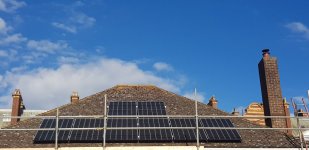
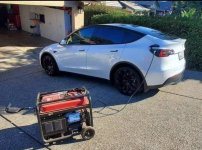
That's SUPER cheap!
Was it a "hybrid" inverter and the cost was only for the battery? I guess because you ordered as part of solar install, 0% VAT.
I did the same calculation and came to similar conclusion, you can also count the "free" energy from solar.
I'm looking at 9.5 kWh battery with AC inverter package at £3800 for the parts. Need to add 20% VAT and labour

But first, I've signed up for Indra V2H trial, we'll see if I get selected. £1600 for a V2H inverter only compatible with Nissan Leaf, but will give me ~18 kWh home battery, or 40 kWh in a few years when we change to a newer Leaf (wife don't like change, happy with Leaf).
Yesterday, I managed to get Tesla to charge at 1 Amp using their wonderful API calls with Home Assistant. Tesla API calls is 1000x better than Nissan EV, and they are always improving, I read this amp adjustment feature was only added a few months ago. This allows me to make use of vastly more solar production at ~240w adjustment increments. Charged 1 kWh for free yesterday despite the showers

Home battery will last many years, just like EV batteries. The GivEnergy LFP battery I'm looking at guarantees 70% advertised capacity and performance for 10 years. It can still be used for many years after that.
This link shows today's Agile pricing. Currently not worth going for them because it comes out more expensive than Go. But previously, before 2021, there had been many nights where people were getting paid to put demand on the grid. This will return when the energy market is reformed and cheap renewables are de-coupled from expensive fossil fuel.
Check Octopus Agile prices today, tomorrow & price history for all 14 UK regions. Join Octopus Energy, claim £50 credit.

www.energy-stats.uk
Off-peak tariff will always exist, it was Economy 7 and now also EV tariff. It will always exists to incentivise people to time-shift their usage away from peak periods. As more and more cheap but uncontrollable renewables are installed, able to be flexible with one's demand will allow massive savings. I predict we'll see many more demand-side incentives in the next ~10 years. Time of use tariff is a start, think fridges that allow a bit more temperature drift but able to turn on/off to assist with minor load variations, think air-con or heat pumps that use house thermal mass by pre-condition more before the peak periods to reduce demand during peak.