Mr Perceptive
Suspended / Banned
- Messages
- 9,347
- Name
- David
- Edit My Images
- Yes


I do like that. So often utility wires are just an annoyance, it's nice to see than used to enhance the image!
Thanks Chris. I know a lot of people dislike pylons and power lines, but I think they make for interesting subjects either as the focus of, or in support of a composition.I do like that. So often utility wires are just an annoyance, it's nice to see than used to enhance the image!


 www.flickr.com


I imagine that a scene like this is very difficult to get a brightness and detail balance. I'm sure that if tried this, most would be deep shadow or totally blown, or maybe both.... one for bracketing for me.
Pit Garage Exit - Lola T300 (Formula 5000) by David Yeoman, on Flickr
Fuji GM670 + 100mm
Ilford Delta 100
I imagine that a scene like this is very difficult to get a brightness and detail balance. I'm sure that if tried this, most would be deep shadow or totally blown, or maybe both.... one for bracketing for me.


I recognise that car:
Pit Garage Exit - Lola T300 (Formula 5000) by David Yeoman, on Flickr
Fuji GM670 + 100mm
Ilford Delta 100


Well e.g. a Canon T90 with 300TL flashgun would save on film waste as it measures the subject and background or ambient light and automatically works out/balances the exposure.I imagine that a scene like this is very difficult to get a brightness and detail balance. I'm sure that if tried this, most would be deep shadow or totally blown, or maybe both.... one for bracketing for me.


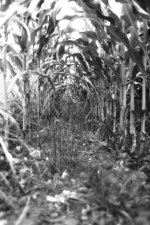
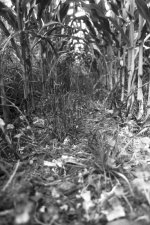

I'd also like to know how to deal with a scene like this.... It's one that I would not expect to work for me.Nikon F90X, 20-35 2.8, spot meter
Kentmere 200 at box
Adox HC 110 Dilution B, five and half mins @20.6 finish 21.7
Cornucopia
View attachment 460516
I am a bit disappointed with this shot, it has not turned out anything like I envisaged.
I think I have missed the focus slightly (now I mention it seems to be a common theme)
and the LHS is too bright
This one is a bit snappier but I have lost the "Tunnel" effect I was looking for.
View attachment 460518
Advice/comments please
Was it a bright day (I'm guessing it was from the highlights)? If so, I would suggest photographing it on an overcast day where the extremes of light are lessened and the dynamic range of the scene reduced. Or shoot it early / late in the day when the sun is much lower.Nikon F90X, 20-35 2.8, spot meter
Kentmere 200 at box
Adox HC 110 Dilution B, five and half mins @20.6 finish 21.7
Cornucopia
View attachment 460516
I am a bit disappointed with this shot, it has not turned out anything like I envisaged.
I think I have missed the focus slightly (now I mention it seems to be a common theme)
and the LHS is too bright
This one is a bit snappier but I have lost the "Tunnel" effect I was looking for.
View attachment 460518
Advice/comments please
Ideally, meter the scene if you have a suitable way of doing so. That way you can calculate the settings for how you envisage the picture. If not, them maybe bracket your shots, taking one 1-stop under, and another 2-stops under to see how they come out. It may require experimentation, especially if the conditions differ when you take the pictures.Hi Nige,
Thanks for taking the trouble to try and help.
It was very early in the morning, although bright, before rain was forcast, I reckon 6 - 6:30 ish and i just followed the meter- don't recall the exact setting
shutter speeds were low and probably accounts for the focus issue, its to close to the ground for a tripod so was thinking a box and timer or something.
It did go through my mind to pull out the two clumps of grass, but it was not my property so caution rather than valor was the order of the day.
I will have another look in the morning and take your advice and go a bit earlier, its quieter then.
One stop or more underexposure do you think?

The hardest part is getting up after being lied down on my belly.Ideally, meter the scene if you have a suitable way of doing so. That way you can calculate the settings for how you envisage the picture. If not, them maybe bracket your shots, taking one 1-stop under, and another 2-stops under to see how they come out. It may require experimentation, especially if the conditions differ when you take the pictures.
That's how I'd approach it. There are undoubtedly voices of greater experience on the forum who may be able to offer better advice.

 Thornham Marsh scan0017Edit20250815 by Keith Hudson, on Flickr
 Thornham Marsh scan0012Edit20250815 by Keith Hudson, on Flickr
 Thornham Marsh scan0009Edit20250815 by Keith Hudson, on Flickr