Photography Ban on Glasgow Subway?

The new rules add: ‘The only exception to byelaw 12.1 is if a passenger has the written permission of SPT in relation to the activity.

Yes but will that written permission be free? I bet there will be a charge involved.
 
Did it help ? :shake:

also you've missed the point that even prior to privitisation British Rail land wasnt public land per se in the context of 'photographers rights' (obviously it was owned by the govt/tax payer , but that didnt confer the right to go where you like on it and take photos wherever you wated)

I did as well,did it help, no to many people were greedy for short term gains :(
 
you seem to be labouring under the impression that a right is being eroded here. As you do not have a right to take photos on private land anyway that isnt the case.

photography on private property is by permmision of the owner only , and the owner has a perfect right to withdraw that permission

I think what was being pointed out was that there seem to be more and more restrictions on photography on private land (as technically there are no "rights" to do anything on private land, apart from perhaps breathing, without permission).

Often the reasons seem spurious and are based on notions of "security" and "safety" while far more intrusive activities such as talking loudly on a mobile phone, spitting, foul language and general obnoxious behavior are overlooked.
 
Not really, no evidence to make that conclusion.

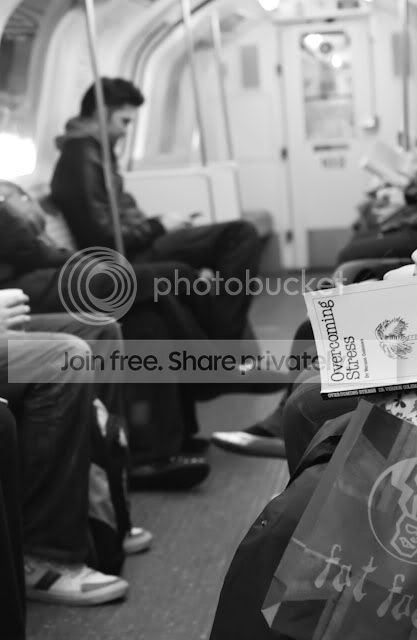
I took this shot on the Glasgow Underground.....

DSC_1767.jpg


at the next station a man in plain clothes boarded the train and flashed an SPT ID card at me and told me not to take any more photos.

That was one photo, taken no more than a minute before the train pulled into the station, which suggests they are watching and treating everyone as a potential criminal.

I'd say they're going to be rather busy if one of their employees is sent to intervene every time someone starts taking snaps with a camera or phone.

I'd also love to see them trying to enforce this ban in a carriage full of drunk Glaswegians on a Saturday night.....
 
Last edited:
So if I took a photo on my phone of someone in the act of committing a crime, or who had just done so, then presumably I couldn't hand it over to the authorities 'cos I'd incriminate myself ?
 
Did it help ? :shake:

Sadly they ignored me.

I have somewhere still a cookie cutter letter of reply from the Dept of Transport, singularly ignoring every point I'd made in mine and assuring me that deregulation of buses in the (then) forthcoming Transport Act 1985 would lead to lower fares, greater efficiency and a consequent great rise in the use of buses.

It didn't. Bus use outside London declined by 50 percent in the 20 years following the 1985 Act. Abolishing the Traffic Commissioners and outlawing cross-subsidy by operators between their different routes led to the predictable (to everyone but the DoT apparently) outcome that competition concentrated on busy city centre routes while suburban and especially rural services disappeared in vast numbers. After a prolonged series of industry mergers and acquisitions, only a few bus large operators remain running the majority of bus services in this country.

In London, which escaped the worst excesses of deregulation, bus use rose by 50% in the same period. Go figure.

I received a similar boiler-plate reply to the letter I sent suggesting that privatising the railways wouldn't be such a good idea, especially given the cockeyed way they were going about it, separating responsibility for infrastructure from what became a multitude of Train Operating Companies. The DoT's letter promised increased efficiency, lower fares, lower public subsidy, etc.

Well, the result was a four-fold increase in public subsidy of the privatised railway companies and efficiency of UK railways fell by 30% as the costs of running them went through the roof. Then we had Southall, Ladbroke Grove and Hatfield, and things got worse with Railtrack's effective bankruptcy.

also you've missed the point that even prior to privitisation British Rail land wasnt public land per se in the context of 'photographers rights' (obviously it was owned by the govt/tax payer , but that didnt confer the right to go where you like on it and take photos wherever you wated)

Possibly you didn't notice that I've not used the 'r' word thus far. Indeed, you were the first person on the thread to do so and it's not mentioned in the body of the AP article.

Ed Sutton put it nicely.

I don't think these sort of bans are really anything to do with erosions of right, more erosion of freedom.

Thirty years ago I took photos in all sorts of 'private' places - railway and bus stations, on trains and buses, in shopping centres and art galleries. It's quite possible that photography wasn't allowed in these places, but nobody bothered about it if it was.

There are many things we do freely in our daily lives that we don't have an explicit 'right' to (there, I've used the word). That's the way that the English constitution operates. A frivolous example might be using an umbrella in the street when it's raining. If someone sought to ban such an activity, then the burden would be upon them to demonstrate that it's clearly in the public interest and I shouldn't be surprised if a number of people got rather upset. Panglossian acceptance of such changes without at least challenging them is, in my opinion, unhealthy for society.

Strathclyde Partnership for Transport is a public body, BTW. Its 20 members are drawn from elected councillors of the local authorities in its operating area. [http://www.spt.co.uk/partnership/about/]


 
Railways are one of only a few places in Scotland that have enforceable trespass laws attached to them. This is nothing new

Yes, railways have had powers to set bylaws since the mid-19th century.

So? It doesn't change the point that the state backs them and is ultimately responsible for enforcing them, so it's not 'nothing to do with the state' (to which I was replying).
 
Last edited:
Yes, railways have had powers to set bylaws since the mid-19th century.

I like this one, proposed in the same document as the photography ban...

14 Dangerous items
14.1 Passengers must not bring or have with them in the subway any item which is likely to cause damage to or to soil people or property.

14.2 The only exception to byelaw 14.1 is if a passenger has the written permission of SPT in relation to the item.

Handy to know that if you are of a mind to take a machete down into the Subway on a Saturday night that there is a procedure in place for seeking permission to do so :thumbs:
 
I think what was being pointed out was that there seem to be more and more restrictions on photography on private land (as technically there are no "rights" to do anything on private land, apart from perhaps breathing, without permission).

Often the reasons seem spurious and are based on notions of "security" and "safety" while far more intrusive activities such as talking loudly on a mobile phone, spitting, foul language and general obnoxious behavior are overlooked.

Yep just us photographers,we must be some real badasses :D
 
People seem to forget that those in charge are responsible for safety. Someone who is there purely to take photographs is more likely to cause obstructions or accidents, therefore it makes sense to issue permits where they can let people know what they can/can't do and where they can/can't go. If they breach those rules, they can be asked to leave. Quite frankly, cmments about Police states and 'hitlers' are ridiculous and pretty typical of those who, when they read something that says they can't do something, immediately jump up and down screaming about erosion of rights without even considering why the rules are there.

As for cctv, do people think it's there because someone enjoys watching people get on and off trains?

Well, perhaps some see the world differently from you. Imagine that. Who knows where it might end? People photographing things, maybe.

Photography provides societies, particularly free societies, with a compelling historical and artistic record. Many iconic images have been taken in the street and in other public places, or on and around public transport. A visual narrative is a potent testimony to the richness of an ever-growing and evolving culture. If the only record that is allowed us is one captured through a police camera or a CCTV lens then we have lost yet another freedom and further coarsened and degraded the quality of our lives.

Nor can security be invoked as a reason for such a byelaw. I challenge anyone to produce a single example of a terrorist carrying out photographic reconnaissance. It doesn't happen. It is a fantasy, movie-plot scenario. SPT's interesting locations and the daily life of its public are already featured in hundreds of amateur pictures all over the web and SPT posts detailed engineering drawings of its tunnels as well as its own photos on the Internet. Are additional photographs taken in its public spaces going to make it less secure? Surely not.

The requirement to get permission for commercial photography and the banning of flash are justifiable and there are already laws preventing obstruction and harassment. I think that the victims of the byelaw would be the occasional amateur who stopped too long to get an interesting picture and had their collar felt by an over-zealous security guard.

Freedom is rarely taken from people in democracies overnight. It is slowly chipped away at by authorities who are frightened that they have too little power. We have sleepwalked into a permit-mad and rule-obsessed state where a sense of proportion has gone AWOL. One of the areas where this is particularly noticeable is in attitudes towards the simple act of taking pictures. It is quite reasonable for those of us who dislike this to push back against it.
 
Iceni said:
I challenge anyone to produce a single example of a terrorist carrying out photographic reconnaissance. It doesn't happen. It is a fantasy, movie-plot scenario.


How many do you want? It was standard operating Procedure for the IRA.

Btw, the people in green are Mods.
 
How many do you want? It was standard operating Procedure for the IRA.

and the INLA, and ETA, and Black September, and Islamic Jihad etc
recconaisance before a strike has been a sound millitary (in the widest sense of the word) tactic for pretty much ever

does anyone really beileve that prior to 7/7 the bombers hadnt first picked out their targets, do you think they just picked up some explosive vests and said " I know lets go and find somewhere nice to detonate these today" :cuckoo:

Also safety and security are not limited to terrorism,photos of alarm systems, ingress and egress routes etc are regularly used in planning crimes - less likely on the underground admittedly but a common reason for not being able to take photo's in places that might be a burgulary/robbery target.

Plus of course theres the much more pedestrian safety risks, like the photographer who is so intent on taking pictures that he doesnt notice an oncoming train and is sucked, bumped, pushed etc off the platform, or causes someone else to be.
 
Plus of course theres the much more pedestrian safety risks, like the photographer who is so intent on taking pictures that he doesnt notice an oncoming train and is sucked, bumped, pushed etc off the platform, or causes someone else to be.

I should have thought if risks of distracted passengers missing an oncoming train were such a concern that they had to ban photography, then SPT shouldn't have provided 3G mobile and WiFi access on the Glasgow Underground.

http://www.mobile-ent.biz/news/read/o2-switches-on-glasgow-subway-3g-coverage/04919

http://www.techradar.com/news/phone...-gets-uk-first-3g-underground-coverage-903234

Logically, they ought to ban the use of Twitter and Facebook while riding on SPT services too.

:D
 
and the INLA, and ETA, and Black September, and Islamic Jihad etc
recconaisance before a strike has been a sound millitary (in the widest sense of the word) tactic for pretty much ever

does anyone really beileve that prior to 7/7 the bombers hadnt first picked out their targets, do you think they just picked up some explosive vests and said " I know lets go and find somewhere nice to detonate these today" :cuckoo:

Also safety and security are not limited to terrorism,photos of alarm systems, ingress and egress routes etc are regularly used in planning crimes - less likely on the underground admittedly but a common reason for not being able to take photo's in places that might be a burgulary/robbery target.

Plus of course theres the much more pedestrian safety risks, like the photographer who is so intent on taking pictures that he doesnt notice an oncoming train and is sucked, bumped, pushed etc off the platform, or causes someone else to be.

That rubbish,anyplace could be a target for a burglary/ robbery,I would think most robbery/burglary,don't even no how to use a camera,most of theses days is drug based,plus google maps,would give as must info as you need.
Safety,your just a likely to be push into by someone talking on their mobile,or someone with an I- pod & headphone stuck in their ears,and not looking where they are going,so why not ban them ?
:(
 
How many do you want? It was standard operating Procedure for the IRA.

Btw, the people in green are Mods.

No it was not,they are many thing used in the planing of a bombing,no dout cameras are used,but they play only a small part,

Freedom come at a price,and stopping anything that might be used in an attack,aren't you then giving in to them :thinking:
 
That rubbish,anyplace could be a target for a burglary/ robbery,I would think most robbery/burglary,don't even no how to use a camera,most of theses days is drug based,plus google maps,would give as must info as you need.

it not rubbish - Granted its not relevant to tube stations - I mentioned it apropos the comments about 'all sorts of places' banning photography. It is for example the prime reason for museums, stately homes, art galleries etc not to permit photography - because people use photos of the alarm systems and security measures to work out ways of overcoming them. (ditto Hospitals, vets, doctors surgeries, police stations, banks, etc etc anywhere there might be valuables, medicines, or cash)

And such crimes arent usually committed by druggies to stupid to use a camera - if they were the polices job would be much easier - but most big knock offs are carried out by proffesional criminals who plan the crimes in meticulous detail- which is why they dont get caught

Safety,your just a likely to be push into by someone talking on their mobile,or someone with an I- pod & headphone stuck in their ears,and not looking where they are going,so why not ban them ?
:(

you arent however likely to be standing right on the edge of a platform just because you are wearing an ipod , nor are you likely to use it to fire a bright light into the drivers eyes.
 
No it was not,they are many thing used in the planing of a bombing,no dout cameras are used,but they play only a small part,

and you know this how ? - I've seen interviews with ex IRA ASU members where they describe it as part of their standard operating procedure , so i'm intrigued as to how you know better than they do. Of course you are right that other things are used as well but that doesnt mean that photography wasnt regularly used for reconaisance. (rather than being a movie fantasy plot as iceni would like to believe)

Freedom come at a price:

indeed it does - Thomas Jefferson said that "eternal vigilance was the price of liberty" - and 'eternal vigilance' does not mean closing ones eyes to a hazard because counter measures might be slightly inconvenient for a small section of society... I don't see how stopping things that could be used in an attack is 'giving in' - more the reverse that allowing attacks to happen because you are too liberal to take effective precautions would be the road that leads to surrender.
 
Last edited:
and you know this how ? - I've seen interviews with ex IRA ASU members where they describe it as part of their standard operating procedure , so i'm intrigued as to how you know better than they do. Of course you are right that other things are used as well but that doesnt mean that photography wasnt regularly used for reconaisance. (rather than being a movie fantasy plot as iceni would like to believe)


indeed it does - Thomas Jefferson said that "eternal vigilance was the price of liberty" - and 'eternal vigilance' does not mean closing ones eyes to a hazard because counter measures might be slightly inconvenient for a small section of society... I don't see how stopping things that could be used in an attack is 'giving in' - more the reverse that allowing attacks to happen because you are too liberal to take effective precautions would be the road that leads to surrender.

Yes,but why just cameras,mobile are used much more used in an attack,no to carrying large bags on the underground,they might have a bomb in them,the list go on and on,where do you stop. :(
 
Yes,but why just cameras,mobile are used much more used in an attack,no to carrying large bags on the underground,they might have a bomb in them,the list go on and on,where do you stop. :(

Do mobiles even work down the glasgow subway ? - I can never get a signal on the tube.

carrying large bags may not be prohibited but leaving them unattened is ( And i know that wouldnt stop a suicide bomber - but it was a rule brought in to counter the iRA threat as they didnt tend to do suicide attacks)

and so forth, the idea that only photography is prohibited is flawed - this is just one part of a much longer byelaw and the other things mentioned (unruly behavior, spitting, abusing staff etc) are also going to be covered.
 
big soft moose said:
Do mobiles even work down the glasgow subway ? - I can never get a signal on the tube.

.

An interesting point re mobiles, taking photographs with one will risk the user being handed a £1000 fine, however pointing the same smartphone at one of the numerous qr codes on the advertising on the walls (on the other side of the tracks) is not only legal, but obviously encouraged.

The question therefore is, would a member of the SPT staff, or for that matter the BTP, have the legal power to demand to view the contents of one's phone to ascertain whether a photograph had been taken?
 
on the platforms you get 3G and wifi

Do mobiles even work down the glasgow subway ? - I can never get a signal on the tube.

carrying large bags may not be prohibited but leaving them unattened is ( And i know that wouldnt stop a suicide bomber - but it was a rule brought in to counter the iRA threat as they didnt tend to do suicide attacks)

and so forth, the idea that only photography is prohibited is flawed - this is just one part of a much longer byelaw and the other things mentioned (unruly behavior, spitting, abusing staff etc) are also going to be covered.
 
Simon (and the previous poster who claims that photography and terrorism have never met) sorry, not correct.
I take your point about google etc, but of course they leave a foot print. Police and Security service ability these days to trace sites visited, mean that if you are Abdul the Anarchist, you are probably sensible enough to always work on the assumption you are being watched and one step away from hearing the works, "You're nicked". much easier for you very loose acquaintance to take some pictures for you and you have a look at a place where you can't be connected.
So I'm sorry what your suggesting, may well make sense at first glance, but really doesn't stand the test of reality.

Irrespective of that, we are assuming a bit here. There's a lot of reasons why SPT could have decided to ban photography. It could be yes, terrorism related. It could be because there is a problem with men taking photos up womens skirts or down blouses. It could be they have had complaints from customers who don't like or want their photo taken. And it could be because someones just decided to be bloody minded.
Irrespective of that, it's their football, and they are the ones who make the rules. So, you can object, and if you do, I wouldn't hold your breath. You can just go with it, and if you really want to photograph there, ask them. There's nothing in the proposed bye law that stops a station manager writing on a bit of bog roll, "I give Simon permission to take photos", and who knows it may be that simple.
The one thing this isn't though is an erosion of rights. It's private property, at any time any member of the company could tell you to stop taking pictures, and that would be that, its always been that way.
 
No it was not,they are many thing used in the planing of a bombing,no dout cameras are used,but they play only a small part.

I suspect that you really don't have a clue what you are talking about.
 
An interesting point re mobiles, taking photographs with one will risk the user being handed a £1000 fine, however pointing the same smartphone at one of the numerous qr codes on the advertising on the walls (on the other side of the tracks) is not only legal, but obviously encouraged.

:lol: ... prime point.

If we're doing what the state wants. its all fine. ;)
 
I've lived in Glasgow (just outside) for 8 years and have yet to see anyone take a photo on the underground.

I can't see the reasoning for the ban, unless they expect a hoard of tourists coming to see the commonwealth games in 2014 and taking photos to show the world how bad Glasgow subway really is :D.

Good job images don't allow you to smell it whhhoooo :gag:
 
Buck the Fifer said:
I've lived in Glasgow (just outside) for 8 years and have yet to see anyone take a photo on the underground.

I can't see the reasoning for the ban, unless they expect a hoard of tourists coming to see the commonwealth games in 2014 and taking photos to show the world how bad Glasgow subway really is :D.

Good job images don't allow you to smell it whhhoooo :gag:

It's going to leave a lovely impression of the city with tourists if they are accosted by SPT jobsworths.

It'll be just like the debacle in George Sq every year when barely-educated private security staff confront photographers with dslrs whilst leaving the dirty mac brigade, taking covert snaps of wee kids with their phones, alone.
 
An interesting point re mobiles, taking photographs with one will risk the user being handed a £1000 fine, however pointing the same smartphone at one of the numerous qr codes on the advertising on the walls (on the other side of the tracks) is not only legal, but obviously encouraged.

The question therefore is, would a member of the SPT staff, or for that matter the BTP, have the legal power to demand to view the contents of one's phone to ascertain whether a photograph had been taken?

For that matter can they demand that a photographer hand over their memory card or film as evidence that they had taken photos?

Quite often I will check things like focus and exposure settings without actually taking a photo, so simply looking through the viewfinder would not in itself be sufficient evidence to secure a conviction.
 
Can you stop talking to people like this please Mark, it so ****es me off. :gag:

its funny, I've always found mark to be quite temperate and moderate (far more so than Me or many other members) - and in that particular point I also think he's right it is self evident that simon's knowledge of what was or wasn't IRA operating procedure is , shall we say, lacking
 
Forbiddenbiker said:
Can you stop talking to people like this please Mark, it so ****es me off. :gag:

You've got a fair point Adam. However I'm responding like for like and as you probably remember I actually was in a position to know what the scrotes got up to.

If someone takes a side swipe at me, then I'm likely to reply in kind! :)
 
I suspect that you really don't have a clue what you are talking about.

Sorry More than you do,I was outside the Old Bailey,when a car bomb when of,took me a little while to recover.
I have been thought a few wars zones in my time,and yes I know how bomber works.
And not just from being a keyboard warrior :p
 
Some double standards at play, methinks, as SPT's official Twitter feed retweets a (n "illegal") pic taken on the Subway....

Screenshot2012-05-23at192934.png


to garner publicity for itself :suspect:
 
Sorry More than you do,I was outside the Old Bailey,when a car bomb when of,took me a little while to recover.
I have been thought a few wars zones in my time,and yes I know how bomber works.
And not just from being a keyboard warrior :p

you are just making yourself look foolish now - mark's far from being a keyboard warrior and as hes said was well placed to know what the scrotes were up to.

and the IRA killed my girlfreind when I was 18 (that was a bomb as well) so I've spent quite some time looking into and reading up on what they do , as part of the attempt to understand why.
 
Simon (and the previous poster who claims that photography and terrorism have never met) sorry, not correct.
I take your point about google etc, but of course they leave a foot print. Police and Security service ability these days to trace sites visited, mean that if you are Abdul the Anarchist, you are probably sensible enough to always work on the assumption you are being watched and one step away from hearing the works, "You're nicked". much easier for you very loose acquaintance to take some pictures for you and you have a look at a place where you can't be connected.
So I'm sorry what your suggesting, may well make sense at first glance, but really doesn't stand the test of reality.

Irrespective of that, we are assuming a bit here. There's a lot of reasons why SPT could have decided to ban photography. It could be yes, terrorism related. It could be because there is a problem with men taking photos up womens skirts or down blouses. It could be they have had complaints from customers who don't like or want their photo taken. And it could be because someones just decided to be bloody minded.
Irrespective of that, it's their football, and they are the ones who make the rules. So, you can object, and if you do, I wouldn't hold your breath. You can just go with it, and if you really want to photograph there, ask them. There's nothing in the proposed bye law that stops a station manager writing on a bit of bog roll, "I give Simon permission to take photos", and who knows it may be that simple.
The one thing this isn't though is an erosion of rights. It's private property, at any time any member of the company could tell you to stop taking pictures, and that would be that, its always been that way.

Bernie,your quite right for whatever reason,they can do it :(, but I think it's a waste of time,I think most people who misuse a camera for what ever reason,will just use the cameras in their phones theses days,you would spent the whole of your time chasing anybody who was using an phone.
 
Last edited:
Back
Top