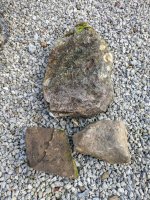
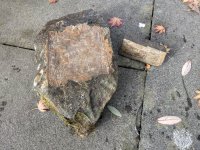
Thanks for all the interesting and entertaining posts. I feel slightly less nutty for you all taking the time to reply. I don't think I'll be making a mill

but fascinating to read that article. I have heard of people using pasta rollers to flake their oats.
If it saves anyone else going down the same wormhole...a few things I have gleaned below...
- Hand milling is extremely time consuming and you may not get the same fineness of flour. I like the idea, but I'm not sure my biceps are up to it. That metate looks hard work and this has just prompted a memory that my Grandad was involved in making millstones... I'd completely forgotten until I saw that link.
- Spelt and ancient wheats.... yes this is a real attraction. You can buy the flours of course, but you could always have fresh when needed.
- There is definitely a school of thought that the flour degrades... I've heard something like 90% of the nutrition is gone in a couple of days. I've struggled to find hard scientific evidence to back this up though...
- I've read that 40 of 44 essential daily nutrients exist in freshly milled flour and it is the best source of vitamin E - I'm not 100% convinced they all make it through the grinding/ baking process though there are plenty of believers
- they say the heat produced in milling the flour can degrade the nutrients... so it's best not to run the mills for too long... I think they shut down if they get hot unless you buy a professional model.
- I haven't found any used mills on ebay yet
- you can use a vitamix to make flour though I've read it's not as fine or consistent. I don't have one but I do have a blender. I haven't tried it.
- the stone grinding mills seem to use stones that are corundum - ceramic and stone - I do wonder if this is a good thing... plastic/adhesive?? Impact mills don't use stones, but have other limitations.
- commercial flour is aged and this helps with gluten development (an airier loaf). In the US they age flour more quickly by bleaching or using carcinogenic chemicals (potassium bromate I think it was) - thankfully these are not allowed in the UK. It can only be aged because the germ is removed which would make it go rancid quickly.
When making bread, there is a learning curve with freshly milled flour. The bread will most likely be denser and not rise so well. I note some people add lecithin or eggs to help. Personally I'm a fan of using only flour, salt, water and yeast/sourdough starter so I'd do a mix of commercial and home milled. They say home milled tastes superior.
Wheat can be purchased in a few places online. You do need the right wheat for the job... queue another wormhole - I'll spare you the details

. And some people do start growing their own.
For the moment I'm still waiting for the urge to pass




 .
.