Why resolution matters

eccles

Suspended / Banned
Messages
1,033
Name
Mike
Edit My Images
Yes
So many people say "Why do we need all those megapixels when 8 MP will enable you to print a sharp A3 image?" or "Give us clean high iso images rather than join the megapixel war."
As a photographer of nature (birds in Winter, bugs in summer) all I can say is, within reason give me the megapixels. They're cheaper than huge lenses, and in Sony's case they actually exist while large lenses are rather thin on the ground.
Here's an example shot yesterday with my SLT-A77 and 70-400mm zoom. Fairly nondescript because the bird is too small in the frame.
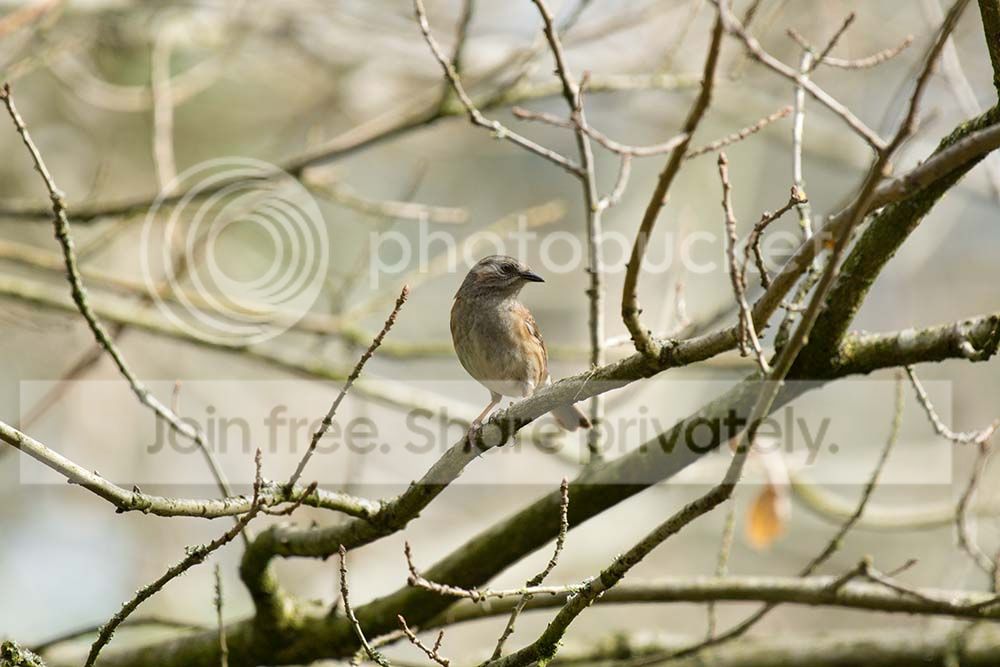
DSC00049F.jpg


But with 24 MP of resolution to play with (not to mention a very sharp lens when wide open at 400mm), I can still get a presentable image by some hefty cropping. Crop in this case was approximately 1/8 by area before resizing for web display.
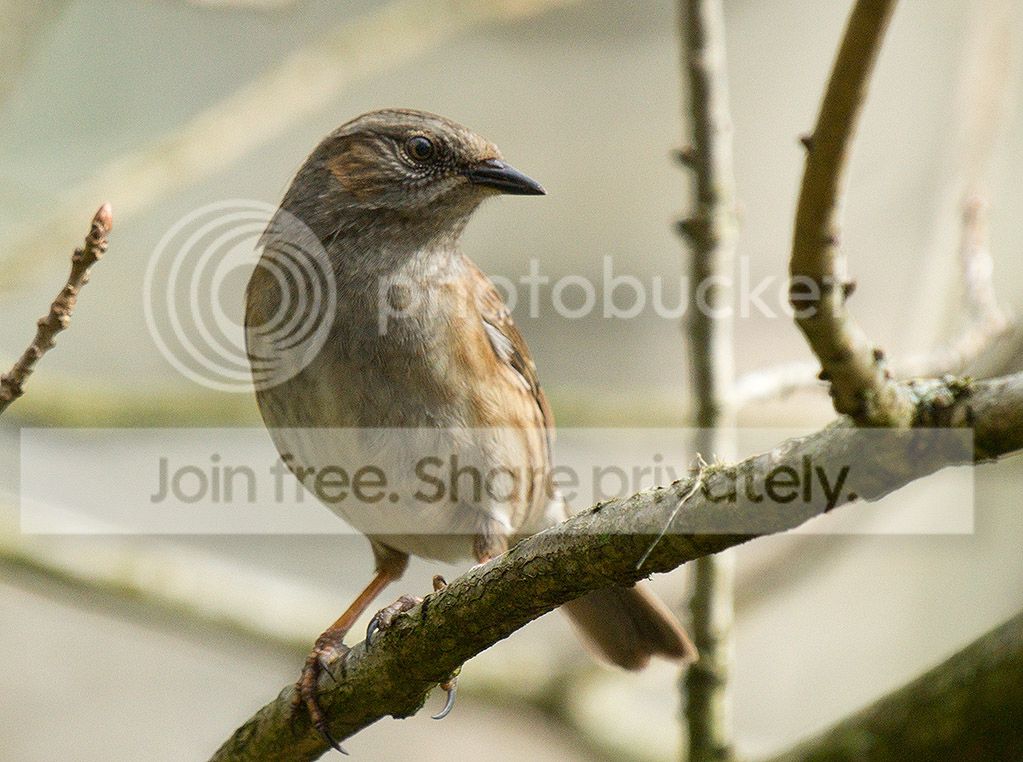
2012_03_30dunnock.jpg


Compared to my previous A700 it's like having a 1.4x TC available in post processing. Of course there are drawbacks. You have to be absolutely spot on with focussing and camera shake, and as soon as the iso rises you have to apply noise reduction, but I'm loving the reach that it gives me.

Mike.
 
Last edited:
More pixels works for birders, because it gives you 'cheap reach'. Though you need a very good lens to be able to resolve that level of detail clearly.

Why big numbers of pixels is less important for other folks, is because they don't crop the image like you have done above - or they shouldn't anyway, as it just throws away potential image quality.

The crop from your image is about 3x linear, or 9x area of the original. Or to put than another way, if the image is 12in wide on screen, it's a section from a print 36in wide, using only 2.7mp.
 
Couldn't agree more! Higher MP = longer reach...it is this reason I'm contemplating the D800.

In terms of 'pixel reach' it will be very similar to your D7000, pixel pitch is almost identical, ie D7000 scales up to the equivalent of to 36mp on full frame. And likewise, you will need a very sharp lens, and immaculate technique, to see it.

By all means get a D800, it's a great camera in every department, but in terms of extra pixel reach, you'll gain zip.
 
What is the subject distance Mike?
 
I'm not sure, Rich; my camera doesn't record distance in the exif detail. I guess it was around 20-30 feet.
 
Last edited:
So many people say "Why do we need all those megapixels when 8 MP will enable you to print a sharp A3 image?" or "Give us clean high iso images rather than join the megapixel war."

8mp will give a very nice A3 image and indeed so will fewer mp, probably, especially if like me you rarely crop or if you do it's only a reasonable crop.

The problems come when you throw away most of the image, which used to be thought of as something to be avoided. The ideal used to be to frame the image as precisely as possible in the first place and avoid cropping if at all possible.

I understand why you've expressed this view as you are able to get you what you want despite having thrown away a significant proportion of the captured image but it would be nice if others who don't crop so severely had the choice of buying a camera produced utilising the latest technologies and optimised for maximum image quality or for maximum low light shooting.

Choice is good.
 
When it comes to birds, I crop about 80% of the images I take, maybe even more. Sometimes I crop 100% (1:1 pixel crop) but usually 50%. Even though I have a 1.6x crop, a 1.4x TC and a 500mm lens it just never seems long enough. I am sure this applies to many birders. When I am concealed (i.e. camo or scrim net) I aim for full frame capture with no cropping, but this is only possible in a small proportion of situations, like my garden and a few other places off the beaten track. Can't do that at your local reserve right next to the feeders...

Unfortnately Sony just don't have any decent long primes, I know there is a 500mm in the pipeline and I am sure coupled with a SLT-A77 it will make a phenominal combo, but at a serious price (since I tend to buy used, otherwise probably similar to Canikon new). High MP helps albeit with added noise at higher ISOs.
 
In terms of 'pixel reach' it will be very similar to your D7000, pixel pitch is almost identical, ie D7000 scales up to the equivalent of to 36mp on full frame. And likewise, you will need a very sharp lens, and immaculate technique, to see it.

By all means get a D800, it's a great camera in every department, but in terms of extra pixel reach, you'll gain zip.

The D7000,the Holy Grail. :love:
 
HoppyUK said:
In terms of 'pixel reach' it will be very similar to your D7000, pixel pitch is almost identical, ie D7000 scales up to the equivalent of to 36mp on full frame. And likewise, you will need a very sharp lens, and immaculate technique, to see it.

By all means get a D800, it's a great camera in every department, but in terms of extra pixel reach, you'll gain zip.

Can you explain this a bit more (preferably like I'm a 2 year old...) The D800 is over twice the image size of the D7000 no?

Surely this means if I can comfortably crop to 50% whilst maintaining detail, I could crop to 100% with an image 2x the size???
 
kestral said:
The D7000,the Holy Grail. :love:

You can laugh, but he's right in this respect. There may be many good reasons to get a D800, but the ability to get "extra reach" by cropping isn't one of them. The people who say that haven't thought it through.
 
Can you explain this a bit more (preferably like I'm a 2 year old...) The D800 is over twice the image size of the D7000 no?

Surely this means if I can comfortably crop to 50% whilst maintaining detail, I could crop to 100% with an image 2x the size???

D7000 has a crop factor of 1.5x, which is linear. Area difference is crop factor squared, ie 1.5 x 1.5 = 2.25x, so the sensor area is just under half the size of full frame (if it was 1.4x, it would be exactly half).

So if you crop a D800 down to the same sensor area as the D7000, you end up with 16.4mp (37/2.25 = 16.4).

In other words, if you're getting a D800 just to crop it down, you'd gain nothing in terms of the number of pixels you could put over a subject, with the same lens. The advantage of the D800 is that when you don't need to crop, you have the benefits of full frame. It also has a newer sensor/processing engine than the D7000, so a theoretical upside there, but probably moot.

There are lots of good reasons to get a D800, but pixel reach is not one of them :)
 
Last edited:
HoppyUK said:
D7000 has a crop factor of 1.5x, which is linear. Area difference is crop factor squared, ie 1.5 x 1.5 = 2.25x, so the sensor area is just under half the size of full frame (if it was 1.4x, it would be exactly half).

So if you crop a D800 down to the same sensor area as the D7000, you end up with 16.4mp (37/2.25 = 16.4).

In other words, if you're getting a D800 just to crop it down, you'd gain nothing in terms of the number of pixels you could put over a subject, with the same lens. The advantage of the D800 is that when you don't need to crop, you have the benefits of full frame. It also has a newer sensor/processing engine than the D7000, so a theoretical upside there, but probably moot.

There are lots of good reasons to get a D800, but pixel reach is not one of them :)

I see...thanks...here's hoping the D400 I a DX MP monster then I suppose...
 
Good resolution is also handy in my case, with a physical disability, the framing and composition is not always optimal. By using a slightly wider lens, then there are lots of options to crop during postprocessing to get the desired image I was imagining at the time of taking it.
 
Point of order... what we're talking about here is pixel density (which is why the D7000 and D800 are similar here). As has been said above, whether you can make use of that pixel density is down to lens and technique.
 
I would love to see a side by side example of the same subject taken at the same distance but one with the subject filling the frame due to cropping and the other filling the frame without cropping but by using a longer lens. It would be interesting to see how cropping with the large mp sensors stack up against pure optics.
 
I would love to see a side by side example of the same subject taken at the same distance but one with the subject filling the frame due to cropping and the other filling the frame without cropping but by using a longer lens. It would be interesting to see how cropping with the large mp sensors stack up against pure optics.

The trouble with that is that you'd be introducing different lenses into the equation and so the comparison would illustrate the difference between the cropping and the lenses.
 
I would love to see a side by side example of the same subject taken at the same distance but one with the subject filling the frame due to cropping and the other filling the frame without cropping but by using a longer lens. It would be interesting to see how cropping with the large mp sensors stack up against pure optics.

You can do it yourself with any camera. Shoot one pic full image area, then move back (or zoom back) and enlarge that image to match. Same relative difference.

To make the maths easier, double the distance (or focal length) and crop 50% of the area. That would give you a 1.4x crop factor, so Nikon's 1.5x would be a slightly smaller area, and Canon's 1.6x a bit smaller than that. To simulate 4/3rds format, enlarge one quarter of the area.
 
I'm thinking more with the Nikon D800 because of the massive MP and to see how good it really is.

Keeping it simple and with the same lens then to keep things as fair as possible, could someone focus on a small object in the scene, similar distance as one would if shooting a bird, and then with the D700 use the same lens but walk right up to the focus point so it fills the frame.

Then compare a crop from the D800 so the subject fills the frame against the D700 one. It's really just for curiosity reasons, if anyone has both cameras it should only take a few minutes?
 
[Deleted - misread question. I thought he was talking about D7000, not D700.]
 
Last edited:
You can laugh, but he's right in this respect. There may be many good reasons to get a D800, but the ability to get "extra reach" by cropping isn't one of them. The people who say that haven't thought it through.

Very well put,if your croping all the time,your using the wrong lens :)
 
Although the forum is called Talk Photography I often find myself wondering why there aren't more photographic tests or photographic examples done to back up people's opinions? Fair enough, it would take a little time on occasion, but for me it would make things a lot more interesting and time doesn't appear to be something many on here are short of! lol

As the OP has done, rather than just saying he's managed an excellent crop he has actually shown and demonstrated it, which for me draws my interest into the thread and to start thinking more deeply about it all - hence my curiousity about cropping vs optics. I've no doubt the latter will be better but by how much and what with the cropping ability of the D800 being such a focus point, surely this would be of interest to a lot of people? It's easy to quickly jump in with an opinion, but some photographic backup would make it so much more interesting :)
 
Stewart, I'm thinking along the same lines and I only chose the D700 as an example for having less MP than the D800, you could use a D7000 instead, in fact perhaps it would be more accurate to do so because the pixel density is more similar to the D800?
 
Stewart, I'm thinking along the same lines and I only chose the D700 as an example for having less MP than the D800, you could use a D7000 instead, in fact perhaps it would be more accurate to do so because the pixel density is more similar to the D800?
OK, so here's the thought experiment.

Take two photos of the same subject, with the same lens, from the same position. Use the D800 for one and the D7000 for the other.

Crop the 36MP image from the D800 down to 16MP, so that it's the same size as the image from the D7000.

My point is that there is no significant difference between the two images. They are both 16MP; they both frame the subject the same way; they were taken using the same lens and they both used the central part of the image circle.

Any differences you do see will depend on the subtle technical differences between the two sensors, in aspects such as colour rendition and noise handling. That's all.


So all those people who are saying they might buy a D800 for its ability to crop images ... they might as well save some money and buy a D7000. (I'm sure there are many reasons to buy a D800, but this isn't one of them.)
 
Last edited:
I'm not sure if I'm explaining myself very well so I've tried to do a diagram...excuse the quality please.

Ignoring cropped sensors etc, let's stick to full frame. Would it be correct to say that because the D800 sensor is three times the resolution then you can be three times further away and then crop in post production by three times to bring the D800 image to the same resolution as the D700? I'm not sure to be honest.

Anyway, if you were to take the shots as per the diagram and then in post with the D800 image crop in on the subject by three times but don't crop at all on the D700 image so that the subject is the same dimensions at 100% in both images, which would show the higher quality image (ignoring dynamic range etc)?

D800_Resolution.jpg
 
Last edited:
I'm not sure if I'm explaining myself very well so I've tried to do a diagram...excuse the quality please.

Ignoring cropped sensors etc, let's stick to full frame. Would it be correct to say that because the D800 sensor is three times the resolution then you can be three times further away and then crop in post production by three times to bring the D800 image to the same resolution as the D700? I'm not sure to be honest.

Anyway, if you were to take the shots as per the diagram and then in post with the D800 image crop in on the subject by three times but don't crop at all on the D700 image so that the subject is the same dimensions at 100% in both images, which would show the higher quality image (ignoring dynamic range etc)?

<snip>

This is getting confusing. It's a really simple experiment, providing you have both a D800 and a D7000. Not a D700, that's not the comparison being discussed.

Very sharp lens, f/5.6 to optimise sharpness below the diffraction ceiling, then just swap cameras and crop the D800 image to the same framing as the D7000.

They will be practically indistinguishable.
 
Whichever camera is being discussed, more pixels covering the subject generally speaking gives better crop ability. Therefore a D800 will be sharper than a D700 when shooting with the same lens from the same distance, but it won't be significantly sharper than a D7000 shot from the same distance with the same lens because the D800 and D7000 have similar pixel densities.
As for 'ignoring cropped sensors', excuse me! This was my thread and my cropped sensor. :D

BTW, nice dunnock Scott. :)
 
Last edited:
Ignoring cropped sensors etc, let's stick to full frame.
I thought this thread was about high-pixel-count cameras allowing you to crop your images? In which case the D800 / D7000 comparison is the one to make, because the D7000 image is essentially just a D800 image that's already been cropped.

Would it be correct to say that because the D800 sensor is three times the resolution then you can be three times further away and then crop in post production by three times to bring the D800 image to the same resolution as the D700? I'm not sure to be honest.

Anyway, if you were to take the shots as per the diagram and then in post with the D800 image crop in on the subject by three times but don't crop at all on the D700 image so that the subject is the same dimensions at 100% in both images, which would show the higher quality image (ignoring dynamic range etc)?
No, the D800 has 3 times the pixel count of the D700, so the multiplication factor you'd have to use in your experiment would be the square root of 3, which is 1.732.

But the other big issue is that in your experiment your two photos aren't the same. By moving 1.732 times closer with the D700 you've changed the perspective.
 
Forget reach and forget cropped sensors, I'm talking about the difference with image quality using the same lens:

-> being further away and cropping in post production with the D800
-> and not cropping and being physically closer with the D700.

(Or staying the same position but using a long reach lens on the D700 but then that brings into question lens quality differences as mentioned earlier)

In otherwords, can the higher resolution resolve detail good enough to rival a longer reach lens, and if not would the extra cost of having a lens that could resolve the detail well enough negate the cost of a longer reach lens with a lower resolution sensor.


EDIT: Good point about the perspective, well would there be two lenses of different focal lengths for the purpose of this experiment that could be considered equal quality? But would using a different focal length also effect perspective?
 
Last edited:
It's a really simple experiment, providing you have both a D800 and a D7000. Not a D700, that's not the comparison being discussed.

Very sharp lens, f/5.6 to optimise sharpness below the diffraction ceiling, then just swap cameras and crop the D800 image to the same framing as the D7000.

They will be practically indistinguishable.
Agreed 100%.
 
Forget reach and forget cropped sensors, I'm talking about the difference with image quality using the same lens:

-> being further away and cropping in post production with the D800
-> and not cropping and being physically closer with the D700.

(Or staying the same position but using a long reach lens on the D700 but then that brings into question lens quality differences as mentioned earlier)

In otherwords, can the higher resolution resolve detail good enough to rival a longer reach lens, and if not would the extra cost of having a lens that could resolve the detail well enough negate the cost of a longer reach lens with a lower resolution sensor.
Sorry, but you're really not being very clear here.

Firstly you say you're talking about the image quality using the same lens. But then you ask about whether the higher resolution saves you needing a longer lens, which is a completely different question.
 
As said, because different lenses have different levels of quality it seems only fair if the same lens was used but then you'd have to move closer but then as you say that would effect perspective, although that doesn't necessarily mean quality I guess?

I'm giving up here as it's wrecking the hell out of the OP's thread. Sorry.


whether the higher resolution saves you needing a longer lens
..... and achieve the same or near to the same level of quality.

Yes, this is what I'm asking and have been all along. I just don't know how it could be accurately tested in practice in order to prove.
 
Last edited:
OK, let's try to sum up this in three separate thought experiments.


Experiment 1
D800 vs D7000. Same lens, same subject distance.
Crop the D800 images from 36MP down to 16MP.

The cropped D800 image will be practically identical to the D7000 image.


Experiment 2
D800 vs D700. Same subject distance, longer lens on D700 (e.g. 170mm vs 100mm).
Crop the D800 image from 36MP down to 12MP.

Which image is better depends critically on which lenses you use.
There's no simple black-and-white answer.
However, if you're not using a top quality lens, then it's quite likely that the D700 image will be better, because it's not demanding such high resolution from the lens.


Experiment 3
D800 vs D700. Same lens, subject further away with D800 (e.g. 17m vs 10m).
Crop the D800 image from 36MP down to 12MP.

I don't think this is a meaningful experiment.
The two images aren't the same because the perspective has changed.
And anyway, nobody's talking about getting a D800 so that they can stand further away from their subject.


OK? The only experiment that really means anything is Experiment 1, and I think we can all agree on the outcome.
 
Last edited:
In otherwords, can the higher resolution resolve detail good enough to rival a longer reach lens.
In my case, I believe it does but I can only go on personal experience. A more accurate AF system and lower vibration shutter of the later camera also helps but I can definitely crop more heavily with my 24MP A77 when compared with my 12MP A700. This is important for me since Sony has been someone slow in developing its range of long primes (current range, 300mm f/2.8, i.e. one :().
 
OK, let's try to sum up this in three separate thought experiments.


Experiment 1
D800 vs D7000. Same lens, same subject distance.
Crop the D800 images from 36MP down to 16MP.

The cropped D800 image will be practically identical to the D7000 image.


Experiment 2
D800 vs D700. Same subject distance, longer lens on D700 (e.g. 170mm vs 100mm).
Crop the D800 image from 36MP down to 12MP.

Which image is better depends critically on which lenses you use. this is why I suggested using the same lens and changing position instead, but as said the perspective changes but does that mean quality changes?

Experiment 3
D800 vs D700. Same lens, subject further away with D800 (e.g. 17m vs 10m).
Crop the D800 image from 36MP down to 12MP.

I don't think this is a meaningful experiment.
The two images aren't the same because the perspective has changed.
And anyway, nobody's talking about getting a D800 so that they can stand further away from their subject. But the subject could be further away from them (wildlife etc), hence the cropping being required without needing a longer reach lens.
 
Last edited:
In my case, I believe it does but I can only go on personal experience. A more accurate AF system and lower vibration shutter of the later camera also helps but I can definitely crop more heavily with my 24MP A77 when compared with my 12MP A700. This is important for me since Sony has been someone slow in developing its range of long primes (current range, 300mm f/2.8, i.e. one :().

If you had the A700 with a longer reach and equally as high quality lens, do you reckon the quality of the image woudl be roughly the same or far superior on the longer lens?

This is the kind of test I'm talking about :)
 
<snip>

Experiment 2
D800 vs D700. Same subject distance, longer lens on D700 (e.g. 170mm vs 100mm).
Crop the D800 image from 36MP down to 12MP.

Which image is better depends critically on which lenses you use.
There's no simple black-and-white answer.
However, if you're not using a top quality lens, then it's quite likely that the D700 image will be better, because it's not demanding such high resolution from the lens.

<snip>

I can't believe that, almost regardless of lens, the D700 wouldn't win that one hands down.
 
Back
Top