Tyke Tiler
Suspended / Banned
- Messages
- 3,980
- Name
- Tomas
- Edit My Images
- No
When your thinking about flash photography for the first time, one can become a little intimidated by the seemingly elusive and complex subject.
Whether you shooting as a hobby, for pleasure or to earn a living, all of the points covered in this text will help to understand the differences between the available systems.
The Three Typical Categories Of Flash System.
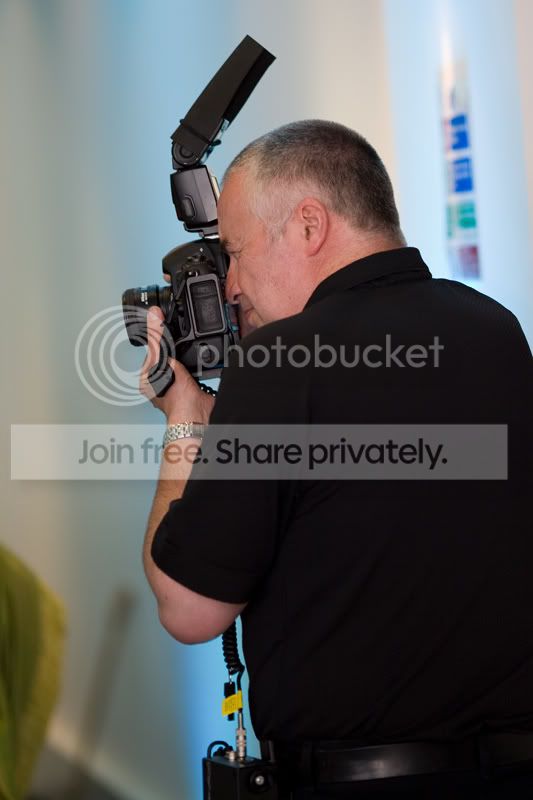
The most common type of flash units are designed for camera's directly. Excluding the onboard flash unit that can come fixed to a camera body, these are the typical AA battery powered 'flash gun' units that are seated onto a camera's hotshoe.
These are also referred to as 'speedlights', 'strobes' and 'hotshoe' flashes.
Hotshoe flashes can be used on or off camera.
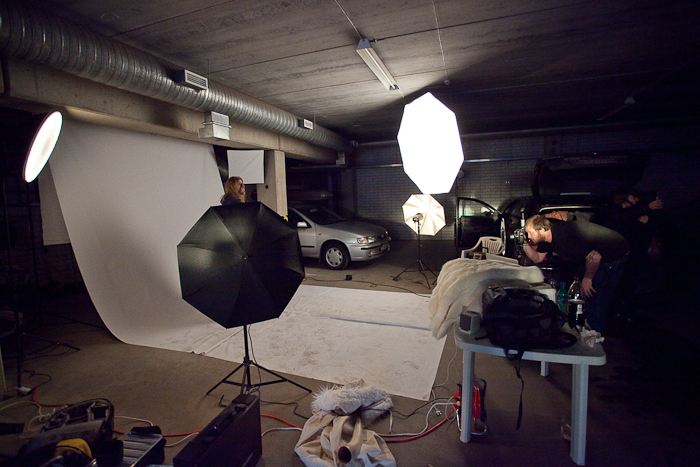
Then there are the much more powerful flashes, also known as 'monoblocs' or 'studio flashes'. These are typically designed as stand alone units, they have the electrics and the head in a single housing and require mains power.
The third options are designed to provide power with portability, powered by hi capacity batteries and are usually referred to as 'head and pack' systems as the electrics and the head are housed separately.
All the options require synchronising or triggering systems to ensure that when you press the shutter on your camera, all of your flash units will fire simultaneously. These also are available in a series of options, pc sync cords, optical slaves and radio triggers.
As the fundamental principles of using flash in your photography are identical with each available system; to place, position and shape the flash to achieve a desired result.
Photographers will utilise all three flash options during their ventures and for varying reasons based on the situations and circumstances they encounter.
The Pro's & Con's Of Each System.
For a beginner to flash photography, one must first review our requirements. What do we want to achieve and how were going to achieve it?
Making a sensible decision is a mixture of recognising the limitations of each option, keeping within the budget and of course considering the category that you intend to shoot.
Maybe you have a spare room in your house and fancy building a small studio, you may also have no intention of venturing outdoors just yet so choosing one of the many monobloc/studio starter kits could be a better option for you.
Alternatively, If you intend to light a scene or portrait with a limited budget and portability in mind, then a hotshoe set up can be far more suited to your needs.
If your budget has no real limitation, intend on shooting on the move/outdoors, need to overpower the sun or light larger scenes, then a head and pack system can be the better choice long term.
There are many routes to follow so lets look at the limitations of each option and how it can effect our decision making process.
Hotshoe flashes.
Pro's.
Monoblocs.
Pro's.
Head & Packs.
Pro's.
Once the aspects of each system are acknowledged and the limitations are respected, a productive decision can be made as to which system to buy or to use in any given circumstance.
Environments & Circumstances.
The variations of environments and circumstances we can encounter are infinite. During an assignment or project, there may be such restrictions as time, budget, safety, available space etc, so the knowledge that one can benefit from all three systems individually is invaluable.
If a studio environment is more to your needs or interests, then investing in portability may not be so much of a priority.
You'll have access to a constant mains power supply, a suitably spacious area in which to install your lighting indefinitely, a monobloc system will offer the most effective solution.
If portability is your most prominent concern, be it situations you can encounter in journalism for example, a swift set up is going to be an important factor so lighting with monoblocs systems maybe be highly inconvenient.
A hotshoe set up offers the most compact and rapid multiple light source option whereas a head and pack, though heavier and larger, will offer more power.
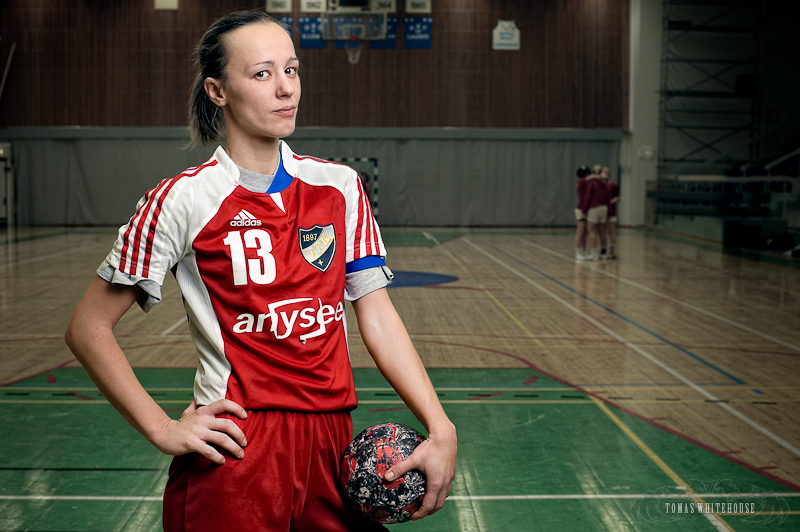
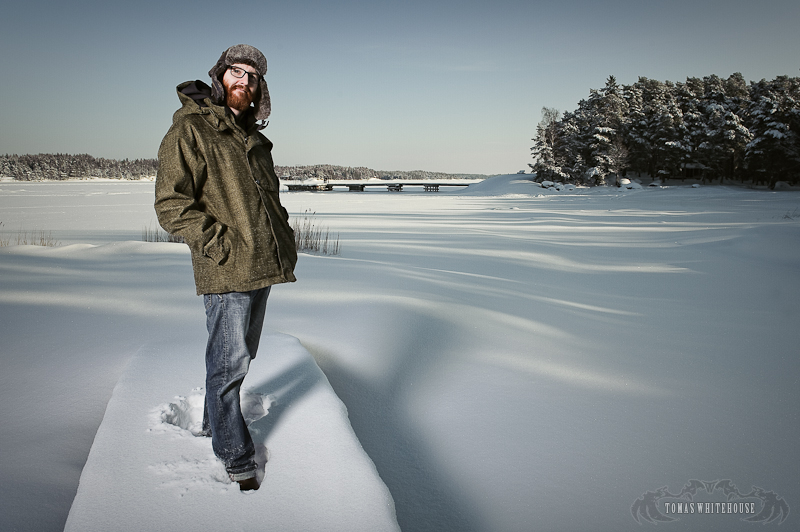
Power capability is an element that's importance can be overestimated as well as underestimated. There are many compromises when it comes to power output, for example a hotshoe set up, despite it's limited power can also be used to creatively light a portrait outdoors and even in difficult circumstances.
Primarily, we do not have to raise ISO sensitivity to compensate for lower power, instead we bring a lower power light closer, where it's far more effective.
Bright sunlight cannot be overpowered with hotshoes or even by monoblocs from the lower end of the power spectrum.
Typically 600ws is suggested to over power the sun, however this can be compromised by choosing an area of shade as opposed to direct sunlight, we can also choose to shoot later in the day, when the sun is lower on the horizon and during sunset.
Rolling With Today's Punches.
We will always want to use the very best, the most powerful or the most proficient systems available but we also have to accept that this is not always possible nor is it detrimental to achieve successful results.
Clients requirements can be largely effected by time frames, budget and of course their ideals.
In order to remain flexible and competitive, one should assess these elements and provide solutions. There is little point in enforcing your will on a client that has a non traversable restriction rooted in their requirements.
Their needs are your problem to solve and they will be more than happy to move to the next photographer who will comply more suitably.
There can be situations were time is extremely sensitive and the luxury of installing a location based studio environment is simply out of the realms of the time frame and budget.
You may be without assistance and need to utilise lightweight and quickly collapsible units.
You may wish to light family shots, children's birthdays, children playing, family get togethers and all the associated family events. Discreet, unobtrusive, compact and portable are just some of the important elements to consider.
Special moments happen quickly and your reactions have to be fairly rapid to capture them, even more so when choosing to light them creatively.
There are no real rules for which system to use, once we familiarise ourselves with each of the tools, acknowledged and accept the limitations, our decisions will become more productive and the results more successful.
Tell Your Story!
Now by no means is this a concise guide, it's a typical breakdown of the most common systems. So, for the next section, 'Out In The Field' we can get a TP group contribution going on to provide many views and experiences on the subject.
Everyone at all levels is invited to contribute and join in.
Let's hear about what systems you have used and why.
For further reading on the mechanics, principals and tips on flash photography please visit:
www.strobist.com
The Hot Shoe Diaries
How To Choose Studio Lighting
Tutorials by Lencarta
Where to buy:
There is a huge array of varying brands and manufacturers to choose from when it comes to lighting, with hotshoe flashes we have Nikon, Canon and the like and then theres Interfit, Elinchrom, Bowens, Profoto, Hensel, Broncolor etc for monoblocs, head and pack options.
Here are a few examples that you can receive some personal assistance through TP forum:
Hot shoe flashes and Accessories:
http://www.talkphotography.co.uk/forums/showthread.php?t=208644
Monoblocs & Head & Packs
http://www.lencarta.com/
Huge thanks to these fellow members for their contributions
Colin Greenlees aka Hacker
Richard Hopkins aka HoppyUK
Whether you shooting as a hobby, for pleasure or to earn a living, all of the points covered in this text will help to understand the differences between the available systems.
The Three Typical Categories Of Flash System.
The most common type of flash units are designed for camera's directly. Excluding the onboard flash unit that can come fixed to a camera body, these are the typical AA battery powered 'flash gun' units that are seated onto a camera's hotshoe.
These are also referred to as 'speedlights', 'strobes' and 'hotshoe' flashes.
Hotshoe flashes can be used on or off camera.
Then there are the much more powerful flashes, also known as 'monoblocs' or 'studio flashes'. These are typically designed as stand alone units, they have the electrics and the head in a single housing and require mains power.
The third options are designed to provide power with portability, powered by hi capacity batteries and are usually referred to as 'head and pack' systems as the electrics and the head are housed separately.
All the options require synchronising or triggering systems to ensure that when you press the shutter on your camera, all of your flash units will fire simultaneously. These also are available in a series of options, pc sync cords, optical slaves and radio triggers.
As the fundamental principles of using flash in your photography are identical with each available system; to place, position and shape the flash to achieve a desired result.
Photographers will utilise all three flash options during their ventures and for varying reasons based on the situations and circumstances they encounter.
The Pro's & Con's Of Each System.
For a beginner to flash photography, one must first review our requirements. What do we want to achieve and how were going to achieve it?
Making a sensible decision is a mixture of recognising the limitations of each option, keeping within the budget and of course considering the category that you intend to shoot.
Maybe you have a spare room in your house and fancy building a small studio, you may also have no intention of venturing outdoors just yet so choosing one of the many monobloc/studio starter kits could be a better option for you.
Alternatively, If you intend to light a scene or portrait with a limited budget and portability in mind, then a hotshoe set up can be far more suited to your needs.
If your budget has no real limitation, intend on shooting on the move/outdoors, need to overpower the sun or light larger scenes, then a head and pack system can be the better choice long term.
There are many routes to follow so lets look at the limitations of each option and how it can effect our decision making process.
Hotshoe flashes.
Pro's.
- Most compact, lightweight and portable option currently available.
- AA battery powered.
- Swift set up and installation.
- Utilising coloured gels to creatively colour the light and also balance colour temperature is highly accessible.
- External and compact battery packs are available to prolong use.
- Typically have a rapid flash duration to freeze fast action.
- Innovative shaping accessories in abundance, an array of effective D.I.Y alternatives to manufactured products such as snoots, grids and gobo's etc.
- As hotshot flashes are small, they can be clamped or fixed into very tight spaces.
- Price. A single hotshoe flash plus stand, umbrella swivel and basic modifier can be bought for less than £100.
- Power output is limited, approx 60ws.
- Cheaper equivalents can offer slower recycle times.
- Limited access to all light shaping tools and modifiers. Light modifiers above 80cm can be highly ineffective with single hotshoe units for example.
- No modelling lamps.
- When mixing varieties of differing brands, colour temperature can vary, causing tints and colour casts.
Monoblocs.
Pro's.
- Power capability. Typical values range from 100ws to 2400ws and higher.
- Mains powered. No recharging of batteries.
- Faster recycle times.
- Access to all available light shaping tools and modifiers.
- Modelling lamps.
- Provided flash tubes and brands are not mixed, there's consistent colour temperatures, so no casts or tints.
- Price. A twin light starter kit including, stands, accessories and modifiers can be bought for less than £200
- Size
- Weight.
- Portability.
- Larger scale shoots can require assistance.
- Limited to mains power.
- Cheaper equivalents can have slow flash durations, rendering them useless at freezing fast action.
- When mixing varieties of differing brands, colour temperature can vary, causing tints and colour casts.
- Cables can present serious hazards in certain circumstances.
Head & Packs.
Pro's.
- Power capability. Typical values range from 100ws to 2400ws and higher.
- Portability.
- Swift set up and installation.
- Access to all available light shaping tools and modifiers.
- Provided flash tubes and brands are not mixed, there's consistent colour temperatures, so no casts or tints.
- Price. A single head and pack system typically starts at £600. Multiple units can be extremely expensive.
- Weight.
- Battery packs offer limited use per charge.
- Large scale shoots can require assistance.
- Modelling lamps drain batteries rapidly.
- Cheaper equivalents have slower recycle times.
- Cheaper equivalents can have slow flash durations, rendering them useless at freezing fast action.
- When mixing varieties of differing brands, colour temperature can vary, causing tins and colour casts.
Once the aspects of each system are acknowledged and the limitations are respected, a productive decision can be made as to which system to buy or to use in any given circumstance.
Environments & Circumstances.
The variations of environments and circumstances we can encounter are infinite. During an assignment or project, there may be such restrictions as time, budget, safety, available space etc, so the knowledge that one can benefit from all three systems individually is invaluable.
If a studio environment is more to your needs or interests, then investing in portability may not be so much of a priority.
You'll have access to a constant mains power supply, a suitably spacious area in which to install your lighting indefinitely, a monobloc system will offer the most effective solution.
If portability is your most prominent concern, be it situations you can encounter in journalism for example, a swift set up is going to be an important factor so lighting with monoblocs systems maybe be highly inconvenient.
A hotshoe set up offers the most compact and rapid multiple light source option whereas a head and pack, though heavier and larger, will offer more power.
Power capability is an element that's importance can be overestimated as well as underestimated. There are many compromises when it comes to power output, for example a hotshoe set up, despite it's limited power can also be used to creatively light a portrait outdoors and even in difficult circumstances.
Primarily, we do not have to raise ISO sensitivity to compensate for lower power, instead we bring a lower power light closer, where it's far more effective.
Bright sunlight cannot be overpowered with hotshoes or even by monoblocs from the lower end of the power spectrum.
Typically 600ws is suggested to over power the sun, however this can be compromised by choosing an area of shade as opposed to direct sunlight, we can also choose to shoot later in the day, when the sun is lower on the horizon and during sunset.
Rolling With Today's Punches.
We will always want to use the very best, the most powerful or the most proficient systems available but we also have to accept that this is not always possible nor is it detrimental to achieve successful results.
Clients requirements can be largely effected by time frames, budget and of course their ideals.
In order to remain flexible and competitive, one should assess these elements and provide solutions. There is little point in enforcing your will on a client that has a non traversable restriction rooted in their requirements.
Their needs are your problem to solve and they will be more than happy to move to the next photographer who will comply more suitably.
There can be situations were time is extremely sensitive and the luxury of installing a location based studio environment is simply out of the realms of the time frame and budget.
You may be without assistance and need to utilise lightweight and quickly collapsible units.
You may wish to light family shots, children's birthdays, children playing, family get togethers and all the associated family events. Discreet, unobtrusive, compact and portable are just some of the important elements to consider.
Special moments happen quickly and your reactions have to be fairly rapid to capture them, even more so when choosing to light them creatively.
There are no real rules for which system to use, once we familiarise ourselves with each of the tools, acknowledged and accept the limitations, our decisions will become more productive and the results more successful.
Tell Your Story!
Now by no means is this a concise guide, it's a typical breakdown of the most common systems. So, for the next section, 'Out In The Field' we can get a TP group contribution going on to provide many views and experiences on the subject.
Everyone at all levels is invited to contribute and join in.
Let's hear about what systems you have used and why.
For further reading on the mechanics, principals and tips on flash photography please visit:
www.strobist.com
The Hot Shoe Diaries
How To Choose Studio Lighting
Tutorials by Lencarta
Where to buy:
There is a huge array of varying brands and manufacturers to choose from when it comes to lighting, with hotshoe flashes we have Nikon, Canon and the like and then theres Interfit, Elinchrom, Bowens, Profoto, Hensel, Broncolor etc for monoblocs, head and pack options.
Here are a few examples that you can receive some personal assistance through TP forum:
Hot shoe flashes and Accessories:
http://www.talkphotography.co.uk/forums/showthread.php?t=208644
Monoblocs & Head & Packs
http://www.lencarta.com/
Huge thanks to these fellow members for their contributions
Colin Greenlees aka Hacker
Richard Hopkins aka HoppyUK