

Too much shadow with Stofen + bounce flash ?

mikeyw

Suspended / Banned
Messages
1,436
Edit My Images
Yes
I had a tricky task today to shoot some operatic photos mainly on a staircase so I used a SB600+ stofen difuser to give some forward light where there was little ceiling to bounce off. They've worked reasonably ok

However I had to get some quick results with the same setup in an area with a lower ceiling and this yielding a lot more shadow than i expected. I was shooting with the flash at about 60degrees up - maybe i have to shoot 90degrees to reduce the shadows to an absolute minimum but still get some light to the subject faces from the front and not just above ?

Any thoughts here if I can achieve very little shadow with the stofen + sb600 in this sort of shoot with lower ceiling ?
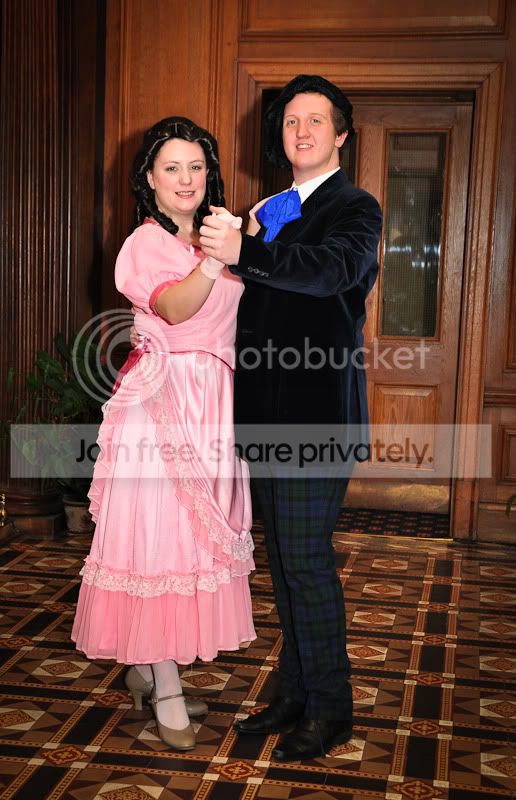
DSC_1414.jpg
 
Last edited:
You have too much light going forward although looking at the shadows, strangely the light is from slightly to the right, did you also have the flash off camera?

So, what can you do to prevent this, practise with the stofen/flash to see what you get BEFORE you go out to do a job, you should not be learning on the hoof, you should already know what you are doing.

You need to soften the flash more to reduce the shadows, this may be acheived just using the flash aimed at the ceiling with the small pop up reflector to bounce some light into the couples faces, if you have a assistant they can hold a reflector up behind you and fire the on camera flash directly into it giving you a similar result to using an umbrella, take the flash off the camera set it on a stand and fire it into a brolly.

I suspect the flash was on the camera in portrait mode thus to the side, this is never going to give you the type of image you are looking for.

It sounds to me like you are using a Pap type setup but wanting portrait type images, not going to happen I'm afraid.
 
Last edited:
It looks to me like you have harsh shadows from the waist up, and not below. That implies that by having the flash at 60 degrees, you actually got some of the subject in direct light, and some only in bounce. As a starting point, try not to use a half way approach. Either bounce, with or without a reflector/stofen/white card for direct light, or don't and use the flash direct.

If the ceilings are a no-go, look for other things to bounce off. Walls, reflectors, paper, even people!

My personal opinion, not really related to your shadows, - ditch the stofen! They are the worst lighting invention ever, and are great at loosing you light and control, for very little benefit. Use a white reflector, either pop up or one taped on the flash head.
 
Looks to me as if the Stofen was pointing straight at the subject, rather than 60 degrees. Assuming that there is indeed a light coloured ceiling at something like normal height.

I know that Stofen suggest 60 degrees as the default position, but at normal shooting distance it needs to go straight up.

I think Stofens work fine if you know how to use them, and when not to, but I much prefer the Lumiquest Quik Bounce - does far more, and does it better.

Anyway, the answer is angle of reflection equals angle of incidence - light bounces off a surface at the same angle that it strikes it, like a snooker ball off the cushion.
 
When you really can't bounce, that's when a flash bracket can help by maintaining the position of the flash above the lens instead of beside it. That way the shadows fall below and behind your subject rather than beside it.

http://www.youtube.com/watch?v=XLof2xCvAvw

If you don't have, or don't want a flash bracket then you could also shoot landscape and crop to portrait. You would not be the first to utilise that technique. It may also reduce the amount of faffing about adjusting AF points too. Of course, the tradeoff is that you are throwing away a whole bunch of surplus pixels, and with them some IQ too.

I also note that you shot this at f/5 and 800 ISO, which means the flash was having to work hard to lift the levels. This is clearly demonstrated by the density of the shadows behind the couple. By shooting at something like f/2.8 and 1600 ISO, and maybe slowing the hutter to 1/60, you should pick up more ambient light and the flash would be working less hard and thus make its use less apparent.
 
Last edited:
Just looking at this again, I think the problem is that the ceiling is actually doing nothing. It must be pretty high, and the flash is not pointing at it anyway.

Stofens have a fixed bounce-fill ratio. They work in an 'average' room. You would also expect normally to get something back from the surroundings, but the dark panelling isn't helping there.

A flash diffuser where you can do something about the ratios would help, even a simple bounce card. A small card (like the little pull-out hilite panels) only sends a very small amount of light directly forward, and the lion's share goes to bounce. It is more versatile in this way, as too much bounce is rarely a problem, whereas the opposite as here, can be. And with a high ceiling, you can put even more light up there by zooming the flash head.

And as Tim says, the ambient light is always worth utilising. Camera settings of 1/100sec at f/5 ISO800 (according to Exif) have cut the ambient contribution to zero. With a static subject like that, dropping the shutter speed, the f/number and raising ISO could easily put at least three stops or more ambient in there, gelling the flash with a CTO to match the colour, for a completely different result.
 
Back
Top