To UV Filter, to not UV Filter, That is the question.

  • Thread starter Thread starter Deleted member 25799
  • Start date Start date
D

Deleted member 25799

Guest
Seems to be a bit of a religious topic after much discussion with some friends.

Do you have a UV filter on your lens/es? Do you think even if you get a good (say B+W MRC) it's going to decrease the quality of picture? Or is it worth it for that extra bit of 'protection'?

Be quite nice to hear some thoughts.
 
I'm in the "always have a filter on" camp & they all are UV filters. I prefer to have a filter on as they are easier (IMO) to keep clean.

My UV filter of choice is the Hoya Pro1 and I can't say that I've noticed any quality degradation with the filter on....
 
I use lens hoods and UV filters. Hoods stop flare but don't prevent against anyone or anything poking, scratching the front element on the lens. Hoya PRO HMC UV filters are between £20 and £40 on Amazon sold by a seller called CameraKing that cause no loss in sharpness or contrast. Obviously I take the UV filter off if using ND or ND grads. If you get a decent quality UV then it shouldn't affect the image quality to any noticeable affect unless you're pixel peeping at 400% :lol:
 
I asked the question "UV or Protector filter?" a few weeks ago, having never used filters before on my lenses.

I did wonder whether it was worth spending £35 on a Hoya Pro1D Protector filter as I always use the lens hood, but bought one anyway hoping it might protect my lens from dust while on holiday.

First evening, left the lens hood in the room as I was going to be using my pop-up flash, went down the stairs, slipped on a wet tile and just caught my lens on the wall.

Scratched the filter but thank goodness it wasn't the lens element :lol:

Am SO glad I bought a filter and no, I cannot see any difference in image quality with it on (even the small scratch doesn't show up)
 
Always have a filter on, always use a lens hood. Even indoors.

Thirty years of smashing my kit into walls, trees, vehicles and other stuff has proved the wisdom of this.
 
I use the Pro-1 UV filter and lens hood and see no degradation of image quality :)
 
I use B&W MRC filters on mine, havent seen any difference but i keep the hoods on too
 
I've just done a series of comparison shots with a range of filters, from the very best Hoya Pro1 to the cheapest from 7dayshop. I have to tell you that, as I suspected, they range from bad to horrendous.

I'll post them up later. Gotta dash!

Edit: update below post #22
 
Usually find after a period of use, all sorts of marks appear on my UV filters, which I find astonishing, as I always try to take care of my equpment. Even though I pay top dollar for the best Hoya available pro series filters, I feel much more comfortable cleaning these, than I would trying to clean a dirty lens, that cost hundreds. How much difference to they make to image quality, well Hoya claim the following with their new Protector filters

http://www.hoyafilter.com/products/hoya/pro1d-02.html

'' This is the ultimate in clear filters. It will not affect the color balance or performance of your lenses in the slightest. However, constant use will protect your valued lenses from expensive front element damage which could be caused by dirt, knocks or scratches ''
 
I've just done a series of comparison shots with a range of filters, from the very best Hoya Pro1 to the cheapest from 7dayshop. I have to tell you that, as I suspected, they range from bad to horrendous.
I'll post them up later. Gotta dash!

just got a 17-70 Sigma here and been searching the web for information on 72mm UV and C-PL filters for it

most impressed with lab tests here for UV..."here" and C-PL..."here"

the quality Hoyas in first 3 places for UV but
B+W and Marumi joint first for C-PL
 
Like justinitus I also purchased the Hoya protector filter. I have taken many test shots with and without and can't see any difference myself.

The reason I use it is because I scratched a fairly new lens not that long ago. Don't know how, but I'd much rather scrach a filter than another lens.
 
I always use a UV and lens hood but never use a lens front cap... speed is of the essence! :D
 
I always use hood and use B+W mrc on my 24-70.
Re: Hoya Pro1 vs. B+W Mrc, I did my own test before and the Hoya has slightly degraded image quality whereas I cant see any image degradation with B+W
 
Always have a filter on, always use a lens hood. Even indoors.

Thirty years of smashing my kit into walls, trees, vehicles and other stuff has proved the wisdom of this.

Agreed 100% !

There *is* a difference in quality between using a UV filter and not doing so, but I'll be buggered if I can see it in 99% of the shots I take.

And if I do see it, I can always remove it.
 
Thanks for all your answers! Personally I use B+W MRC UV Filters + Lens hoods. Glad to see i'm not in the minority!
 
Agreed 100% !

There *is* a difference in quality between using a UV filter and not doing so, but I'll be buggered if I can see it in 99.9% of the shots I take.

And if I do see it, I can always remove it.

And that's the key: if your work is hyper-critical (copying, forensics etc.)then remove the filter by all means.
But for 99% of the time you'll never be able to tell the difference in a real-world shooting situation.
 
I've just done a series of comparison shots with a range of filters, from the very best Hoya Pro1 to the cheapest from 7dayshop. I have to tell you that, as I suspected, they range from bad to horrendous.

I'll post them up later. Gotta dash!

I have a cheapie from 7dayshop [ on my Tamron 70-300 on Nikon D40 ], my reason for getting it was mainly lens glass protection, [ I use a hood also ].
I have`nt used any other filter so would be very interested in seeing the comparison shots you have taken if you do get time to post them, in case there is enough difference for it to be worth me spending out on a better filter :)
 
I've just been trawling the classifieds and have read yet another post from someone who, upon closer inspection has noticed a couple of tiny scratches on the front element 'that do not affect image quality'...
And he still hopes to get upwards of £180 for it...

Better that they'd been on a £30 UV filter and not the front element, eh?
 
I've just done a series of comparison shots with a range of filters, from the very best Hoya Pro1 to the cheapest from 7dayshop. I have to tell you that, as I suspected, they range from bad to horrendous.

I'll post them up later. Gotta dash!

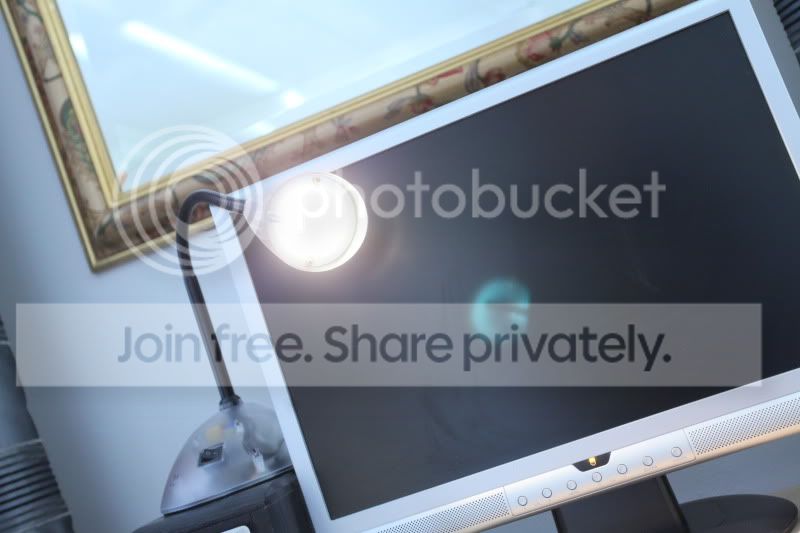
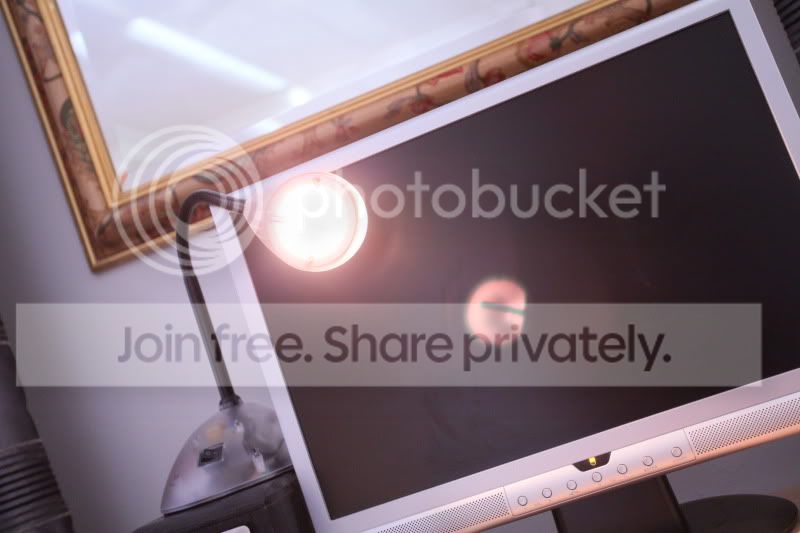
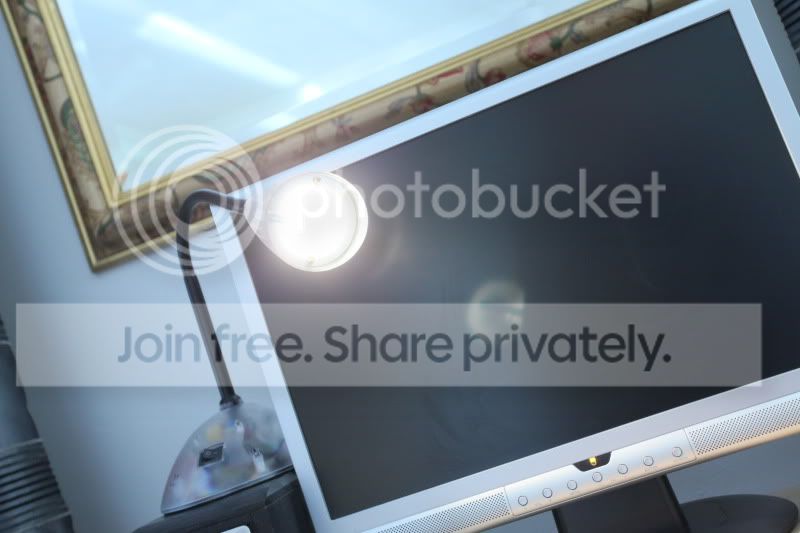
Here we go then. This question comes up regularly so I thought I'd do a quick test. Flare and ghost images are the problems with filters, mainly, and even the best ones suffer from it. Sharpness is not usually an issue, though it can be with lower quality filters on long lenses, which magnify any imperfections.

For these photos I simply switched off my screen to give a dark background and moved the desk lamp to point at the camera. Canon 5D2 on a tripod with 17-40L lens, all at f/4, ISO1600, tungsten WB. Shutter speed adjusted to match the filter, ranging from 1/30sec to 30 seconds for the 10-stop ND.

This is quite a tough test, but not at all extreme. If you shoot sunsets, you might get this effect. If you shoot night scenes with bright street lights or car headlights, there's a danger too. In fact, it's happening all the time with every shot you take though of course it's not usually noticeable without comparison shots with and without the filter.

These pictures were taken at f/4 and the effect is reduced at higher f/numbers. That has more to do with the characteristics of this particular lens - they all behave slightly differently, but the problem is always there to some degree.

The bright splodge you see in the centre of the PC screen is a reflection of the lamp, bounced off the surface of the sensor and back again off the rear of the filter. Uncoated filters are worst for this, single-coated filters are better and multi-coated filters really should be pretty good. I was expecting better TBH.

1) No filter. Flare and reflection obvious, but not too bad. Easy winner!

2) Hoya Pro1-Digital UV. This is a very high quality multi-coated UV filter. I'm disappointed it wasn't a bit better than this.

3) 7DayShop ND Grad. Uncoated cheapo, rotated so that the dark area is down the left hand side. Nasty.

4) Tiffen HT 1.2 ND. This is high quality four-stops multicoated ND, from Tiffen's premier HT range, in titanium mount an' all. Ken Rockwell rates them highly. Less reflection than the uncoated filters, but still disappointing. It's a tad green.

5) B+W 3.0 ND. This is the famous ten-stops ND filter and as you might guess from the reflections it produces, it's uncoated. This comparison pic is a fraction under-exposed which makes it look better than it is (it's actually about 10.5 stops ND). Don't point it at the sun and expect perfect images. It also has a slight orange cast.

6) Hoya HD CPL. I think this is the best polariser you can buy, multi-coated top of the range from Hoya. It looks to be the best of the bunch, though far from perfect for almost £100 in 77mm.

1) No filter
IMG_0424.jpg


2) Hoya Pro-1 UV
IMG_0425.jpg


3) 7DayShop ND Grad
IMG_0426.jpg


4) Tiffen HT 1.2 ND
IMG_0427.jpg


5) B+W 3.0 ND
IMG_0429.jpg


6) Hoya HD Circ Pol

IMG_0431.jpg
 
This is the 1% of times we speak about - low lighting conditions with a point source of light in the frame.
How many times do you shine a bright light straight into the lens?
 
This is the 1% of times we speak about - low lighting conditions with a point source of light in the frame.
How many times do you shine a bright light straight into the lens?

It's happening all the time Rob. Sunsets and night scenes obviously, but any time you have the sun close to the frame you are asking for trouble.

I did the test because I don't think people realise what can happen, and they believe the sales guff about protecting their precious new investement - the profit margin on filters is huge :eek: If you work in dusty, wet, muddy situations (as you do) then it obviously makes sense. But I don't, and I've not damaged a lens in any way in 40 years (always use a hood though). I keep the UV to hand for my odd trips to the coast, as sea spray is really horrible stuff.

If folks want to fit protection filters then that's fine, but to say that they don't reduce quality as is so often heard, is clearly rubbish, even with the best.

If people are aware of potentially difficult situations, they have a choice.
 
Better that they'd been on a £30 UV filter and not the front element, eh?

i read that modern sensors already have a filter against UV...??

would it be better then to have a quality plain glass "Protector" - like the Hoya HD Protector - and so not degrade the image [however small] with a lens-mounted UV filter
 
i read that modern sensors already have a filter against UV...??

would it be better then to have a quality plain glass "Protector" - like the Hoya HD Protector - and so not degrade the image [however small] with a lens-mounted UV filter

Sensors are filtered for both UV and infrared light. I don't think that it makes any difference if you use a UV filter or one of the plain 'protectors' from that point of view.

You'll still get flare and those sensor reflections, caused by two shiny flat surfaces parallel to eachother, basically acting like two mirrors bouncing light between them.
 
After ruining a few night shooting sessions due to forgetting to remove the filters and suffering terrible lens flare, I prefer to use hoods now :)
 
Hoods only for me most of the time, UV filter gets fitted only if there's adverse conditions like sea spray or danger of flying grit etc.
 
I was using a UV filter all the time, but had a few gig photos semi ruined by flare from the stage lighting - so I don't bother any more.
 
I think the 'digital protection' filters are a bit of a scam - pay more for fewer coatings...? Hmmm...
I'll just stick with good-quality UV filters...

As Hoppy has pointed out, there are drawbacks and if your shooting-style warrants it then you should put as little between thee lens and the subject as possible if the utmost quality is your objective and the subject demands it.
Unfortunately I've learned the hard way that lenses get damaged even when you're being really careful...

There are situations where I'll take the filters off...at night mostly where point light sources will create ghost reflections.

It's just that for 99% of the time that additional gain will be totally unnoticable to the human eye.
 
I have filters on but take them off for varying lighting conditions, day to day snapping though i rarely notice a difference :)
 
"It's just that for 99% of the time that additional gain will be totally unnoticable to the human eye."

Yup. Gotta agree with that. I think you can probably use a "protection" filter for decades and never have a significant real world real shot problem.
 
"It's just that for 99% of the time that additional gain will be totally unnoticable to the human eye."

Yup. Gotta agree with that. I think you can probably use a "protection" filter for decades and never have a significant real world real shot problem.

Think that depends what kind of shooting you do. I have only had my camera a month or two and already had some shots ruined by using a UV filter - it was admittedly a cheapo one.
 
I suppose it depends upon the lens design too. I suppose some lenses are going to be more prone than others because of their design and that if you've got lenses that are less prone you might never see the problem.
 
Think that depends what kind of shooting you do. I have only had my camera a month or two and already had some shots ruined by using a UV filter - it was admittedly a cheapo one.

Which is agreed...
If your bread and butter is gig photography where the stage lights are in your face all night, or shooting light-trails of cars in city centres at night, then a filter will have a noticable and possibly detrimental effect...

No-one is denying that a filter will have an effect, merely that the amount of noticable effect under 99% of shooting situations is negligable...
 
This is the 1% of times we speak about - low lighting conditions with a point source of light in the frame.
How many times do you shine a bright light straight into the lens?
It applies to most night shots and some others. At the moment its night 50% of the time.

Also note on most lenses its a lot harder to damage the lens element than a filter even without a hood, although a hood further adds protection from damage and flare.

Also worth noting the more expensive coatings are softer and scratch easier.
 
It applies to most night shots and some others. At the moment its night 50% of the time.

Also note on most lenses its a lot harder to damage the lens element than a filter even without a hood, although a hood further adds protection from damage and flare.

Also worth noting the more expensive coatings are softer and scratch easier.

I'm not totally convinced of that. Even if you're absolutely correct, I'd still rather unscrew a damaged filter, chuck it in the nearest bin and screw on another one, than send the lens away to have a new front element fitted.

And before anyone pipes in with the info that some of the on some lenses the front elements are designed to be "sacrificial" it's still a hell of a lot easier to change a filter.
 
For all those folks smashing their lenses into everything, how about a lens cap?
 
Awww come on Hoppy, hard to take a pic through a lens cap! :lol::lol:
 
Back
Top