
- Messages
- 14,819
- Name
- Richard
- Edit My Images
- No
Thanks, yes excellent programme.Excellent programme. I challenge anyone who still imagines we've done a relatively good job in the UK to watch this (now available on demand at that link).

Thanks, yes excellent programme.Excellent programme. I challenge anyone who still imagines we've done a relatively good job in the UK to watch this (now available on demand at that link).
Excellent programme. I challenge anyone who still imagines we've done a relatively good job in the UK to watch this (now available on demand at that link).

I challenge anyone who still imagines we've done an extremely good job in the UK to watch this (now available on demand at that link).No, I don't think they have done a relatively good job; I think they are extremely good. It depends where you take your news from though:
Channel 4:
https://mediabiasfactcheck.com/channel-4-news-uk/
The Guardian:
https://mediabiasfactcheck.com/the-guardian/
The independent:
https://mediabiasfactcheck.com/the-independent/
The BBC:
https://mediabiasfactcheck.com/bbc/
I challenge anyone who still imagines we've done an extremely good job in the UK to watch this (now available on demand at that link).


So you think the UK Government have done a good job?We won't change each others minds no matter what we say on here - only end up falling out so i will leave it at that on the Channel 4 doc.

I challenge anyone who still imagines we've done an extremely good job in the UK to watch this (now available on demand at that link).
So you think the UK Government have done a good job?
I'd hate to see what a s*** job would look like....
I note Your source says BBC was founded by John Reith which is clearly inaccurate and amateurish so I looked them up in Wikipedia:No, I don't think they have done a relatively good job; I think they are extremely good. It depends where you take your news from though:
Channel 4:
https://mediabiasfactcheck.com/channel-4-news-uk/
The Guardian:
https://mediabiasfactcheck.com/the-guardian/
The independent:
https://mediabiasfactcheck.com/the-independent/
The BBC:
https://mediabiasfactcheck.com/bbc/

I don’t see how you can say that. If they had acted earlier (and better) that would have protected the economy better surely? As seen in S Korea (and even China really). Lack of any strategic planning.I think they have done an excellent job in terms of protecting the economy as best they can. .

I’m assuming you’ve provided those links to show those news sources have a left of centre bias and not because it shows they have a high level of factual reportingNo, I don't think they have done a relatively good job; I think they are extremely good. It depends where you take your news from though:
Channel 4:
https://mediabiasfactcheck.com/channel-4-news-uk/
The Guardian:
https://mediabiasfactcheck.com/the-guardian/
The independent:
https://mediabiasfactcheck.com/the-independent/
The BBC:
https://mediabiasfactcheck.com/bbc/

I don’t see how you can say that. If they had acted earlier (and better) that would have protected the economy better surely? As seen in S Korea (and even China really). Lack of any strategic planning.
(Agree with rest of what you wrote)
That's possibly the only commendable thing they've done.I meant in terms of reacting to the crisis with furlough etc.

I wasn't suggesting that you change your mind, only that you watch the programme.We won't change each others minds no matter what we say on here - only end up falling out so i will leave it at that on the Channel 4 doc.
I wonder if they replicate the Stanford study now it will show a different result? I think it's highly likely.Coronavirus: New 100% accurate COVID-19 antibody test approved for use in UK http://news.sky.com/story/coronavir...antibody-test-approved-for-use-in-uk-11987924
At last there seems to be a reliable antibody test. Hopefully this can be rolled out to the public soon and we can learn how many people have actually had the virus and now have some immunity.

We should give credit where it's due. For example, the Nightingale field hospitals have been criticised (in retrospect) as white elephants. Personally, I thought they were a perfectly sensible response to an uncertain situation, put together in an impressively short time. Nobody wanted to see the scenes of terribly ill patients lying in corridors reported elsewhere. Far better to overprepare than to underprepare (as we sadly did in other areas).
 The field hospitals may yet have to be used sadly.
And a useful, if expensive, exercise which may prove useful experience for the coming other pandemics.We should give credit where it's due. For example, the Nightingale field hospitals have been criticised (in retrospect) as white elephants. Personally, I thought they were a perfectly sensible response to an uncertain situation, put together in an impressively short time. Nobody wanted to see the scenes of terribly ill patients lying in corridors reported elsewhere. Far better to overprepare than to underprepare (as we sadly did in other areas).

You wouldn't be able to, we'd all be dead.So you think the UK Government have done a good job?
I'd hate to see what a s*** job would look like....

And a useful, if expensive, exercise which may prove useful experience for the coming other pandemics.

No, I don't think they have done a relatively good job; I think they are extremely good. It depends where you take your news from though:
Channel 4:
https://mediabiasfactcheck.com/channel-4-news-uk/
The Guardian:
https://mediabiasfactcheck.com/the-guardian/
The independent:
https://mediabiasfactcheck.com/the-independent/
The BBC:
https://mediabiasfactcheck.com/bbc/

Thread below on specificity of antibody test used in California studies (other problems with methods and stats have also been raised). In comparison, the data sheet on the Roche test claims 99.80% specificity (95 % CI: 99.58 – 99.92 %) in the largest group of samples tested (3420 routine diagnostic) which looks much better for this sort of study.I wonder if they replicate the Stanford study now it will show a different result? I think it's highly likely.
Mediabiasfactcheck is run and owned by an armchair researcher on media bias and is based in North Carolina USA who's methods have been described as in no way scientific. Now I'm not saying that the US is to the right of the UK politically but my brother in-law who has voted conservative as long as I have known him and would if on here be defending Boris at least as vigorously as his staunchest supporter and who I would generously describe as being a bit to the right is described by most of his US friends as a bit of a liberal lefty. So maybe we need to start factchecking our factcheckers.


If I recall correctly, didn't Johnson call the pandemic a 'once in a century event' in parliament yesterday?
I hope he meant that in terms of how widespread and severe the current pandemic is, and not the likelihood of a different pandemic occurring.
Apart from the experience we have gained at huge cost and the Nightingale hospitals (which I presume are meant to be temporary), I cannot see that we are now any better prepared for the outbreak of a different lethal virus than we were at the beginning of the year.
One thing about the Americans I've met is that they can be the loveliest most friendly and caring people you'd ever meet but if the conversation goes to another area I've at times been just... astonished.
.
You have to hope that people learn from this.
I'd love to see new hospitals built with lots of unused capacity and I'd love to see manufacturing and testing capacity built up in the UK. I'd love the UK to be a true centre of excellence and an example and a help when need be to the world.
. Once might be unlucky, twice ... .
My guess is you would find the same with, say, the Taliban. I wonder what the common factor is
(Or even among some English, Welsh, Scots, Irish (N &S), Indians, Pakistanis & so on.)
Unfortunately it’s not going to happen, it was always going to be difficult after losing our reputation for good sense and now we’ve lost our reputation for efficiency
I very nearly married a Muslim.
I’ve had a lot of Muslim friends in the past, luckily no women I think, but I agree..She is a complete babe and a wonderful person in every way but if the wrong news items comes on the TV or radio her attitudes could appear shocking to some. I think it helps to try and understand how people get where they are. Don't judge until you've walked a mile.... etc. I can see how some extreme views are arrived at but... and I'm sorry to say this... I haven't been able to fully understand where some Americans are coming from yet other than of course handed down through the generations and peer pressure but I don't see what there is in American history that's the starting point.
Oops
But then I did marry a Fiorentina and the Tuscans have a saying “moglie e buoi di Paese tuoi“ (wife and oxen of your own country) and although it was not entirely true in our case there was always that bit of grit ...
I wonder if you could travel back to Victorian Britain at the height of Empire if you wouldn’t find similar attitudes?
You can still find some 'interesting' attitudes in people who only remember the tail end of the Empire in the 20th century...I wonder if you could travel back to Victorian Britain at the height of Empire if you wouldn’t find similar attitudes?
Xenophobia is more common than some people might care to admit. The incidence in a place fades as generations grow up together but it never entirely fades away. If truth be told, I have xenophobic tendencies that I have to keep under control. When we recognise it as a common disease, we can deal with it.You can still find some 'interesting' attitudes in people who only remember the tail end of the Empire in the 20th century...
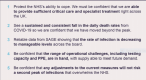
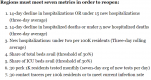
You could nit pick both approaches for example the Americans don't mention ppe.
If at all possible I'd prefer an approach that isn't triggered by a sequence of statistical events as I'm sure we could come up with a scenario in which it wouldn't work well at least for some areas of the country so if forced to choose I'd probably go for the UK government one.
Xenophobia is more common than some people might care to admit. The incidence in a place fades as generations grow up together but it never entirely fades away. If truth be told, I have xenophobic tendencies that I have to keep under control. When we recognise it as a common disease, we can deal with it.
I'm not arguing that the New York State (sadly I don't think all states in the USA are governed as effectively, so I won't use the word 'American') is a model of perfection. As you rightly say, there is no mention of PPE.
It just seems to me that the UK's five tests are vague and lacking in detail. Whether that's a strength or weakness, I don't know.
Xenophobia is more common than some people might care to admit. The incidence in a place fades as generations grow up together but it never entirely fades away. If truth be told, I have xenophobic tendencies that I have to keep under control. When we recognise it as a common disease, we can deal with it.
). It’s undesirable and counterproductive in modern mostly urban societies but sadly unless people take that on board it’ll never be managed/eliminated,
I suppose both approaches have both plus and minus points going for them but I'm wary of systems that rely on stats triggering something. I think I prefer human input and decisions. Of course it all falls down if you have no confidence in the humans involved and would prefer the computers deciding for us.