Speed limiters to be fitted on all new cars by 2022

The point isn't newer or older car is safer to drive, that is a very selfish view of the world. The point is that in the event of a crash, where human driver were not able to react in time, current heavier cars carry more kinetic energy and thus will do more damage to the trees, pedestrian, buildings, anything it hits.

There's also the dangerously high grills in today's most popular car shape: SUV's.

What is selfish about pointing out a fact?

I tell you what is selfish, White Van Man doing 90 on a motorway 2 metres off the back of another vehicle. The guy sitting in lane 2 doing 65 mph and effectively reducing a 3 lane dual carriageway to 2 lanes. The guy that can't be bothered to link his phone with the bluetooth in his car so he can work hands free. I am amazed at just not how many people I still see with a phone in their hand, but in cars under 10 years old which almost all have BT functionality. Now, that's selfish.
 
Current cars being heavier will only do more damage if there is no attempt to disperse the increased kinetic energy, which would be don't brake.
Because older lighter cars didn't have crumple zones, you are more likely to hurt someone inside and outside an older lighter car than a newer car.
As for dangerous high grills on SUV, as I wrote before, the front of all cars have to meet certain standards for pedestrians since at least 2000.
On cars prior to that, the highest source of injury to pedestrians, was head injuries from the pedestrian crumbling the bonnet and as good as hitting their head on the engine.
Since the new legislation all cars have a higher bonnet line to make a bigger gap between the bonnet and engine and the front has to meet certain criteria as far as pedestrians etc are concerned.
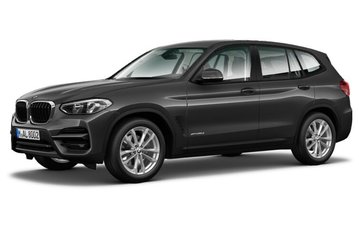
As an example a BMW 3 series has a pedestrian safety rating of 78%
Whilst the X3 SUV has a rating of 70%. Earlier NCAP ratings were just given star ratings rather than including a percentage rating, but a 1997 BMW 3 Series rated just 2 out of 4 stars for pedestrian impact safety, which I am assuming is around 50%. Which gives an indication of how much difference has been made since 97. A 1960's car will rate far worse.

Aye, my car has two air bags inside the engine bay which blows the bonnet hinges to buggery and force the bonnet up by about 13 inches if the front accelerometers detect an impact. Only works between 5-29mph but birds/animals can also set it off as can going over a speed bump too fast.

Costs up to £4k to replace and refit, so rather annoying if it is their fault.
 
Most of my daily commute is on a 70mph dual carriageway, it's not uncommon to find someone driving at 60mph in the right hand lane whilst the inside lane is empty. Where I used to work, people would get in the middle lane and drive at 50mph because they knew the inside lane would change into a slip road for a turn off at least 3 miles down the road. :(
 
Aye, my car has two air bags inside the engine bay which blows the bonnet hinges to buggery and force the bonnet up by about 13 inches if the front accelerometers detect an impact. Only works between 5-29mph but birds/animals can also set it off as can going over a speed bump too fast.

Costs up to £4k to replace and refit, so rather annoying if it is their fault.
Ouch. As the vehicle gets older that would write it off as far as an insurance company is concerned.
 
Because older lighter cars didn't have crumple zones, you are more likely to hurt someone inside and outside an older lighter car than a newer car.
Crumple zone doesn't seem to work against more vulnerable road users:
View: https://youtu.be/SEa0dce3xg4?t=205


(now we are back to discussing driving assist tech. Something I thought you are not in favour?)

meet certain standards for pedestrians since at least 2000.
The standard seems to be very lax.....

In the Michigan crashes, SUVs caused more serious injuries than cars when impacts occurred at greater than 19 miles per hour. At speeds of 20-39 mph, 3 out of 10 crashes with SUVs (30 percent) resulted in a pedestrian fatality, compared with 5 out of 22 for cars (23 percent). At 40 mph and higher, all three crashes with SUVs killed the pedestrian (100 percent), compared with 7 out of 13 crashes involving cars (54 percent).


What is selfish about pointing out a fact?
No, when have I said that?

If you actually read my post, it's clear we are talking about the same thing:
"I'm alright Jack, F*** everyone else"...... Lovely attitude to take.
 
Last edited:
No, when have I said that?

If you actually read my post, it's clear we are talking about the same thing:

I don't think we are. And if you gauge the feedback here (this is a photography forum, not a driving enthusiasts site) it looks like I'm not the only one who feels the same way. When I did my HGV in the army, I was taught "try not to hold up other vehicles, if you can, pull over and let them pass" which I do, when I have somebody who obviously wants to drive faster behind me. When you look in your mirror and see a chain of 5 or so vehicles behind you, does it not ever cross your mind that YOU are holding them up, therefore being selfish?

And I did say these sluggish drivers annoy me, I never said it wasn't their right to drive slowly, even if that could show signs of a lack of confidence in their own ability. If you drove like that with a Police car behind you, they well pull you over and check that you are fit to drive.
 
When you look in your mirror and see a chain of 5 or so vehicles behind you, does it not ever cross your mind that YOU are holding them up, therefore being selfish?

At 80 on a motorway...?
 
Crumple zone doesn't seem to work against more vulnerable road users:
View: https://youtu.be/SEa0dce3xg4?t=205


(now we are back to discussing driving assist tech. Something I thought you are not in favour?)


The standard seems to be very lax.....


No, when have I said that?

If you actually read my post, it's clear we are talking about the same thing:
Did you even bothering to read what I have written properly?
Modern cars are much safer than older lighter cars. Older cars were all metal including their bumpers up until the early 80's. Then plastic bumpers were used. Slam panels were all metal, now they are plastic. Headlamps were glass, albeit safety glass, now they a polycarbonate.
Your link about SUV's being more dangerous to pedestrians just supports the 70% safety rating of an SUV against the 78% from a car. You are ignoring the fact that the SUV still offers better protection to pedestrians than a 20yr old saloon car let alone 40yr old lighter cars. Even if you hit a pedestrian with a normal saloon car like the SUV does in your video, it will still have a similar result to the SUV.
The automated assistance from the vehicle is only really necessary if the driver is not paying attention. The system is warning the driver when still a distance from the pedestrian, if the driver is paying attention, they should have already seen the pedestrian. There will still be instances where a pedestrian steps out when the vehicle is too close and the system would be unable to react. I have seen a school kid try to run across the road and the car was so close the kid ran into the side of the wing and rolled over the bonnet. Fortunately the car was only doing around 10mph. If it had been doing even 20mph, it would probably have spun him around and he would have been more likely to have hit his head on the kerb. No pedestrian collision detection software can prevent that.
 
At 80 on a motorway...?
Even at 80 on the motorway. All traffic should use the left hand lane only unless overtaking or instructed by signs or police to use the other lanes.
Members of the public have no right to govern other road users speed. If someone wants to drive at 80mph, it is for the police or speed cameras to do something about it, not you or anyone else.
 
At 80 on a motorway...?

Who mentioned 80 and a motorway ? Those straws you're grasping for are a bit out of reach.

However, as you mention it, why would there be a line of vehicles behind you on a motorway, unless of course you have poor lane discipline ? But it sounds to me that you'd be quite happy doing that.

Do you drive wearing a flat clap & gloves by any chance? My Dad (a long distance lorry driver for over 30 years) always used to tell me to watch out for "the old boy with a flat cap and gloves, they usually have no idea what's around them, their speed, and where they're going". Never was that driven home so hard until I started using a bike more often.
 
Who mentioned 80 and a motorway ? Those straws you're grasping for are a bit out of reach.

However, as you mention it, why would there be a line of vehicles behind you on a motorway, unless of course you have poor lane discipline ? But it sounds to me that you'd be quite happy doing that.

Do you drive wearing a flat clap & gloves by any chance? My Dad (a long distance lorry driver for over 30 years) always used to tell me to watch out for "the old boy with a flat cap and gloves, they usually have no idea what's around them, their speed, and where they're going". Never was that driven home so hard until I started using a bike more often.
The old boys like that I always come across seem to be wearing a Trilby and gloves. Just like Richard in Keeping Up Appearances
_105436523_swift1_bbc.jpg

:)
 
Who mentioned 80 and a motorway ? Those straws you're grasping for are a bit out of reach.

However, as you mention it, why would there be a line of vehicles behind you on a motorway, unless of course you have poor lane discipline ? But it sounds to me that you'd be quite happy doing that.

Do you drive wearing a flat clap & gloves by any chance? My Dad (a long distance lorry driver for over 30 years) always used to tell me to watch out for "the old boy with a flat cap and gloves, they usually have no idea what's around them, their speed, and where they're going". Never was that driven home so hard until I started using a bike more often.

Hey, you are a bit wound up.

I'm simply pointing out a flaw in your assertion. You have made assumptions about the person in front of you because they do not seem to be doing what you think they should, and that's potentially dangerous.

Driving is about everyone and includes not getting all frothy in the mouth about someone in front of you...
 
Hey, you are a bit wound up.

I'm simply pointing out a flaw in your assertion. You have made assumptions about the person in front of you because they do not seem to be doing what you think they should, and that's potentially dangerous.

Driving is about everyone and includes not getting all frothy in the mouth about someone in front of you...
So what has that got to do with someone doing 80 on a motorway.
As I pointed out earlier, someone who doesn't show enough confidence or make enough progess ( causing an obstruction or congestion) by driving too slowly will not pass their driving test. So if that means they aren't fit to drive then, what makes you think it is ok after they have passed a test.
My wife isn't confident in driving long distances on dual carriageways, so she doesn't.
There are some people that are lucky enough not to be in an accident, but it's not to say they don't cause them.
 
I don't think we are. And if you gauge the feedback here (this is a photography forum, not a driving enthusiasts site) it looks like I'm not the only one who feels the same way. When I did my HGV in the army, I was taught "try not to hold up other vehicles, if you can, pull over and let them pass" which I do, when I have somebody who obviously wants to drive faster behind me. When you look in your mirror and see a chain of 5 or so vehicles behind you, does it not ever cross your mind that YOU are holding them up, therefore being selfish?

And I did say these sluggish drivers annoy me, I never said it wasn't their right to drive slowly, even if that could show signs of a lack of confidence in their own ability. If you drove like that with a Police car behind you, they well pull you over and check that you are fit to drive.
I feel the same against sluggish drivers or hessitant:
The thing that gets on my nerve is when people cannot seem to maintain a constant speed. 40 road? They drive 30-45 to their heart's content (probably due to distraction). If I were to slowly overtake at speed limit when they were driving 35 but during overtake they realise it and speed up slightly, increasing my overtake time. The speed limiter would be quite dangerous.
But the point isn't about sluggish drivers. It's about the amount of damage heavier vehicle can do in a crash. The point regarding selfishness comes from only thinking "I'll be alright in a crash". Not thinking of other vulnerable road users.

I never ever mentioned holding people up........


Did you even bothering to read what I have written properly?
Modern cars are much safer than older lighter cars. Older cars were all metal including their bumpers up until the early 80's. Then plastic bumpers were used. Slam panels were all metal, now they are plastic. Headlamps were glass, albeit safety glass, now they a polycarbonate.
Your link about SUV's being more dangerous to pedestrians just supports the 70% safety rating of an SUV against the 78% from a car. You are ignoring the fact that the SUV still offers better protection to pedestrians than a 20yr old saloon car let alone 40yr old lighter cars. Even if you hit a pedestrian with a normal saloon car like the SUV does in your video, it will still have a similar result to the SUV.
Yes I did read. But I never compared old cars against new SUV's. You've made the connection which led to your long winded posts. I'm only pointing out counter points to your claims (crumple zone, SUV meeting a standard)

The automated assistance from the vehicle is only really necessary if the driver is not paying attention. The system is warning the driver when still a distance from the pedestrian, if the driver is paying attention, they should have already seen the pedestrian. There will still be instances where a pedestrian steps out when the vehicle is too close and the system would be unable to react. I have seen a school kid try to run across the road and the car was so close the kid ran into the side of the wing and rolled over the bonnet. Fortunately the car was only doing around 10mph. If it had been doing even 20mph, it would probably have spun him around and he would have been more likely to have hit his head on the kerb. No pedestrian collision detection software can prevent that.
Neither can a driver react to that, so your entire example is not really supporting your opening point.


I'm simply pointing out a flaw in your assertion.
I think my problem is similar to yours, I'm too pedantic ;)
 
Hey, you are a bit wound up.

I'm simply pointing out a flaw in your assertion. You have made assumptions about the person in front of you because they do not seem to be doing what you think they should, and that's potentially dangerous.

Driving is about everyone and includes not getting all frothy in the mouth about someone in front of you...

Road rage, obviously..... :D
 
But the point isn't about sluggish drivers. It's about the amount of damage heavier vehicle can do in a crash. The point regarding selfishness comes from only thinking "I'll be alright in a crash". Not thinking of other vulnerable road users.

I never ever mentioned holding people up........
Ah, misunderstood. But then I'm confident with my driving and I drive to the conditions of the road, weather, and traffic. My point is that somebody that isn't confident or has a tendency to be negligent shouldn't be driving.

"Speed" isn't the factor here, it's "excess speed".
 
Ah, misunderstood. But then I'm confident with my driving and I drive to the conditions of the road, weather, and traffic. My point is that somebody that isn't confident or has a tendency to be negligent shouldn't be driving.

"Speed" isn't the factor here, it's "excess speed".
Agree.

Also variation in speed on a perfectly clear road with no good reason to change speed.
I can understand if people drive slower, I can understand if people slow down more for bends, I can understand if people drive slightly over speed limit. But I CANNOT stand people speeding up and slowing down as they please for zero good reason. (speed camera is not a good reason)
 
Ouch. As the vehicle gets older that would write it off as far as an insurance company is concerned.

Aye for sure, it's a bit of a double edged sword for the ditsy pedestrian staring at a phone whilst crossing though because if they survive my car they will then have to outrun me and my torque wrench :punch: :D
 
I feel the same against sluggish drivers or hessitant:

But the point isn't about sluggish drivers. It's about the amount of damage heavier vehicle can do in a crash. The point regarding selfishness comes from only thinking "I'll be alright in a crash". Not thinking of other vulnerable road users.

I never ever mentioned holding people up........


Yes I did read. But I never compared old cars against new SUV's. You've made the connection which led to your long winded posts. I'm only pointing out counter points to your claims (crumple zone, SUV meeting a standard)


Neither can a driver react to that, so your entire example is not really supporting your opening point.
Yes a heavier object will sustain more damage than a lighter object travelling at the same speed. But in terms of cars, if both an old light car and a modern heavier car brake from the same point and same speed, the modern car will stop much quicker, due to its superior brakes, tyres and suspension. If the lighter old vehicle was travelling at 60mph and braked heavily but still hit an obstruction at 30mph, the heavier modern car would do less damage, not just because it would be travelling slower but it's construction is more likely to absorb the energy better and reduce the damage on the obstruction..
You were the one who tried to say SUV's were dangerous. All I did was prove that a typical SUV scores only 8% lower than a modern car, but scores 20% better than a 23 year old car. That 23 year old car still has much better crash protection for pedestrians etc., than a 53 year old car.

My opening point of automated crash avoidance systems was that in most cases, they start with warnings at a distance from the potential crash, a driver should have observed the potential danger themselves. It's only when the driver isn't paying attention that such systems are really needed.
A few years ago I was driving along a country road in the dark, I was approaching a cross roads and as I was on the main road, I had right of way, as I approached the cross roads I could see the headlights of a vehicle on the road from the right, I could see the vehicle was travelling too fast and wouldn't be giving way, so I stated to slow, at the last second the driver of the other vehicle realised their error, slammed their brakes on, and came to a stop in the middle of the junction, fortunately I had already stopped before the junction, the other driver waved his apology, he was probably about shaken as to what had happened and waved me past whilst he calmed himself. The point of that is you don't just watch the road in front, you have to watch all around you as well. The faster you travel, the further you look ahead as well to anticipate things, just like the adaptive headlights on my car, at 30mph the light beam concentrates a normal distance along the road, at 70 mph the beam moves to encompass a greater distance in front of the car.

 
Thanks for proving my point ;)

Even so, I still demand a source for that claim!
I haven't proved your point at all. Just because an SUV is rated 8% lower than a car from the same year, it doesn't make it dangerous which was your original claim. If you think a 70% rating is dangerous, I just hope you don't go hitting any pedestrians with your Nissan Leaf as it is only rated at 65%.
Safety ratings for most cars are on the ncap site where they use proper crash test dummies to simulate various sized passengers and pedestrians and not mannequins as used in the video you posted.


This video will give an indication of a modern cars pitted against the highway codes braking distances, ok it's a Porsche so the brakes will be working better than an equivalent year family car, but the Porsche still stops in a shorter distance at 40mph than the highway codes 30mph braking distance.
View: https://youtu.be/0zbZweqlZPw


1960's medium sized family car against a heavier 1990's medium sized family hatchback
View: https://youtu.be/KGkKDaYd3Mo


If you don't like that how about these lorries? Same weight but 20yrs difference in improvements.


https://youtu.be/Vo6C3HEpfsQ
 
I don’t see any crashing in any of those video. All it talks about is what you’ve been saying, which I don’t disagree. But it is different to what I’ve been saying.

SUV are rated more dangerous than cars, that proves my claim that SUV are on average more dangerous than cars. Last time I checked, rating of 70 is less safe, thus more dangerous, than rating of 78. If that isn’t the definition of more, I don’t know what is?


The Nissan Leaf have been tested many years ago. I believe euroNCAP changes their rating every (few?) years. So not sure how comparable it is and what point it makes.... other than you have a good memory
 
The braking ability of trucks is pretty awesome considering their weight. Check out this video:


And this video I've always remembered:

 
SUVs are just people squashers but like I have been saying, people behind wheels of cars care nothing for other road users, its all about them, which is why i go about my business gently so as to keep everyone safe especially me :-)
 
SUVs are just people squashers but like I have been saying, people behind wheels of cars care nothing for other road users, its all about them, which is why i go about my business gently so as to keep everyone safe especially me :)
You could say the same about MPVs, vans, minibuses, trucks & buses.
 
I don’t see any crashing in any of those video. All it talks about is what you’ve been saying, which I don’t disagree. But it is different to what I’ve been saying.

SUV are rated more dangerous than cars, that proves my claim that SUV are on average more dangerous than cars. Last time I checked, rating of 70 is less safe, thus more dangerous, than rating of 78. If that isn’t the definition of more, I don’t know what is?


The Nissan Leaf have been tested many years ago. I believe euroNCAP changes their rating every (few?) years. So not sure how comparable it is and what point it makes.... other than you have a good memory
Just because an SUV has a lower rating than an equivalent year doesn't mean it is dangerous, it just a lower score. Most cars now achieve 5 star ncap ratings, some may score 90% another scores 85%, it doesn't make the lower scoring vehicle dangerous.
The 65% for the Leaf is easily found by searching for ncap Leaf rating on Google, just as it is for many other cars. If they have crash tested it, it will be on their site.
A BMW X3 SUV still has a 5 star rating.
The 2011 Leaf was tested in 2012, it also achieved a 5 star rating, but its pedestrian rating is lower than a 2017 BMW X3, So by your definition, your car must be dangerous, even more so infact.

Ncap crash testing first started in 1997, they tested 7 cars, some achieving a 3 star rating. The Rover 100 (Metro) didn't fare too well and was awarded just 1 star. As I mentioned before, they didn't break down their star ratings into percentages like they do now, but they gave the Rover a 2 out of 4 star rating for pedestrians, which I assume to be in the region of 50%, and it was said to have fared better than average than other cars in that respect in 1997.

 
SUVs are just people squashers but like I have been saying, people behind wheels of cars care nothing for other road users, its all about them, which is why i go about my business gently so as to keep everyone safe especially me :-)
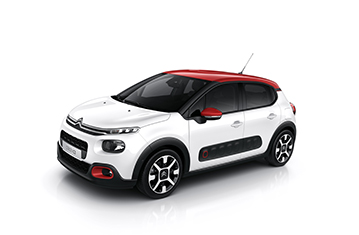
Your Citroen C3 is newer than a 2009 model, I believe, but this rating is for the cars up until 2015. As you refer to the car as the snail, it is safe to assume it is the same model. A pedestrian rating (33%) is shockingly low for a fairly recent car


The replacement model was tested in 2017, only 4 stars and a 59% pedestrian rating.

SUV's are obviously safer than people give credit for.
 
Any motor vehicle regardless of size, shape, or weight is capable of killing in the hands of a driver who is not paying attention, or is disobeying the road traffic regulations, or is under the influence of alcohol or drugs, legal and otherwise.

Many years ago my employer insisted that all its company car drivers attend a defensive driving course as the accident rate across its company car fleet had reached a level that was unacceptable. We had two days of intensive driving on the public roads and were assessed by the instructors at the end. At the time my company car was a Volvo 850 T5R estate, we were taught how to get the car balanced to maintain pace when going into a bend rather than hitting the brakes on entry and hitting the throttle coming out..

It was an eye opener and I learned so much. We were encouraged to drive safely & economically but not to be afraid to use all the road or hold back on speed (within the law, limits and allowing for road/traffic conditions). The key message I took away with me was anticipation.....

I am convinced something similar should be mandatory for every driver after they pass their test. As has been said previously passing the driving test equips the driver with the basic skills to safely operate a motor vehicle, being able to drive efficiently comes with experience.
 
Any motor vehicle regardless of size, shape, or weight is capable of killing in the hands of a driver who is not paying attention, or is disobeying the road traffic regulations, or is under the influence of alcohol or drugs, legal and otherwise.

Many years ago my employer insisted that all its company car drivers attend a defensive driving course as the accident rate across its company car fleet had reached a level that was unacceptable. We had two days of intensive driving on the public roads and were assessed by the instructors at the end. At the time my company car was a Volvo 850 T5R estate, we were taught how to get the car balanced to maintain pace when going into a bend rather than hitting the brakes on entry and hitting the throttle coming out..

It was an eye opener and I learned so much. We were encouraged to drive safely & economically but not to be afraid to use all the road or hold back on speed (within the law, limits and allowing for road/traffic conditions). The key message I took away with me was anticipation.....

I am convinced something similar should be mandatory for every driver after they pass their test. As has been said previously passing the driving test equips the driver with the basic skills to safely operate a motor vehicle, being able to drive efficiently comes with experience.

That's similar to a lot of what you learn with the IAM. Anticipation & hazard perception are the two big things they focused on (this was a number of years ago). Road positioning, spacial awareness, use of mirrors, use of brakes etc. I loved it, and learned a lot.
 
speeding kills even speeding cyclists and runners they can kill, pop a 2 ton SUV in to the mix and you're done for.
 
DAS did me the world of good for improving my driving. I'm far from perfect, but I do try and be courteous for all the effort it takes and at the least pay attention to what's going on ahead (why do some people find this so hard to look ahead, especially at a lane closure or obstruction?). I don't think I've had an at fault accident since I did my DAS, so that's surely got to be worth something?
 
You make it sound like all road deaths are due to speeding.......
It is certainly one of the most frequent factors.

Regarding this idea off putting speed limiters on cars, it will be very welcome in urban and suburban areas. Here in Wales we will be introducing a 20 mph speed limit in residential areas and there is zero chance of that being adhered to without something like this being put in place. There are some roads now with a 20mph limit and not even the buses are sticking to the limit!
 
It is certainly one of the most frequent factors.
Fairly sure someone has already provided evidence to the contrary in an earlier post. But here is Confused.com's percentages.
5% for cars exceeding the speed limit
6% for excessive speed for the conditions.
The only mention of speed in the most frequent causes of accident is being unable to determine the speed or path of other vehicles, which has nothing to do with speeding.
 
Back
Top