

goinggreynow
Suspended / Banned
- Messages
- 862
- Edit My Images
- No
OM Zuiko 135mm F3.5, either wide open or @ F5.6 on G80. Prefocused. Very litte (if any) PP.
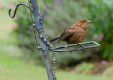



Err... you disagree I bought an electric picture maker, and an M42 adapter? ;-)




I've only ever really used a few, and never gotten a steal or great bargain. If anything I seem to end up paying more for old lenses than most. The Helios 44-2 being a good example, I paid £50 for mine, where others claim to get them 'mint' for £20 odd. I'd love to know where! I plan on buying more once I get hold of my G80, should be even better with that stabilization.

I've got an a6000 and done the exact same. I bought a canon 50mm with adaptor for £30 and a vivitar 28mm for £20. Like you say not sharp but great fun.

You're right Im probably being a little harsh. I must admit stopping down on the canon yields really good results but the vivitar has a bit of fringing and is tad soft at the edges even between f8 and f11. Nothing a little crop and post processing can't usually sort mind you.Many of these old lenses are very sharp when stopped down a little. Not having AF has no bearing on sharpness, it's more to do with the lack of modern coatings on the elements that makes some of them a tad softer.
 and whilst my Sony 55mm f1.8 may be one of the best lenses on sale my Rokkor 55mm gives me puctures that look different.

Ah! A Yashica manThis fell into my mail box,,, just want to say I use Yashica lenses for their brightness. I stay in the 6 numbers for serial numbers this keeps me in the range I use, plus quality. I have 5 infrared conversions, two 20D's with another two that were bought new. Also upgraded to 50D and grabbed three more to make up another set. Manual lenses fill my need as I use two converted and one color to blend on my computer. These bright lenses work top notch with infrared. The wonderful world of invisible light lives on the edges of the color spectrum. Also I was lucky to get a 1D MK4, an excellent camera for wildlife and portraits. Cheers,,,,no name calling please.
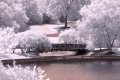

Thanks Kendo,,, i have been pleasantly surprised at the great condishion my lenses are in. I have a conversion ultraviolet body, the one lens that works good with it is over a 1000 dollars. The Canon 50mm f1.8 is the main stay,, it works pretty good with that camera. I also use Pentax,,, these people built lenses for every body,,,,even Carl Zeiss. Nikon made a quarts lens and it is still made today in Japan. Now days my kit or pack has some good new glass brought just because they are designed for the cameras I use. It was written that the small zooms yashica made were made for the small spaces they live in. I love to take them with the girls on their day out to get low light pictures in the restraunts. It was written that those lenses pull in the light, I believe it.
View attachment 114390
View attachment 114391
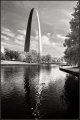
 St. Louis Gateway Arch by K G, on Flickr
Blimey, I had over 300+ vintage lenses at one point, when I was shooting with either a Canon EOS 5D or 6D. However, I don't find the experience as satisfying when using mirrorless (which I switched to a couple of years ago). In fact I quite dislike shooting manual focus lenses with an evf.
Anyway, I sold most of my manual lenses and invested in a bunch of Fujinon lenses.
Of the MF lenses left, my favourites are the Pentacon 135/2.8 (preset version), Carl Zeiss Jena Sonnar 135/3.5, Helios 44 (all M42), Carl Zeiss Distagon 28/2.8, Carl Zeiss Planar 50/1.4, Carl Zeiss Sonnar 85/2.8, Carl Zeiss Makro-Planar 100/2.8, Carl Zeiss Vario-Sonnar 35-70/3.4, Carl Zeiss Vario-Sonnar 100-300/4.5-5.6 (all C/Y).
Edit: Totally missed off my favourite long lens - a 1960s T-mount Tamron Nestar 400/6.9, a really great old lens with virtually no CA. Amazing.
Blimey, I had over 300+ vintage lenses at one point, when I was shooting with either a Canon EOS 5D or 6D. However, I don't find the experience as satisfying when using mirrorless (which I switched to a couple of years ago). In fact I quite dislike shooting manual focus lenses with an evf.
Anyway, I sold most of my manual lenses and invested in a bunch of Fujinon lenses.
Of the MF lenses left, my favourites are the Pentacon 135/2.8 (preset version), Carl Zeiss Jena Sonnar 135/3.5, Helios 44 (all M42), Carl Zeiss Distagon 28/2.8, Carl Zeiss Planar 50/1.4, Carl Zeiss Sonnar 85/2.8, Carl Zeiss Makro-Planar 100/2.8, Carl Zeiss Vario-Sonnar 35-70/3.4, Carl Zeiss Vario-Sonnar 100-300/4.5-5.6 (all C/Y).
Edit: Totally missed off my favourite long lens - a 1960s T-mount Tamron Nestar 400/6.9, a really great old lens with virtually no CA. Amazing.


 West Bay Panorama by Jon, on Flickr
 Born by Jon, on Flickr
 Dark Angel by Jon, on Flickr
 Tonge Fold Cemetery by Jon, on Flickr
 Sheild Bug by K G, on Flickr
 _DSF0920 by K G, on Flickr
 Tiny Irish garden snail by K G, on Flickr

Not me, can't find any enjoyment in buying old lenses that are possibly knackered and fungus contaminated.
Strange really as I'm usually bit of a nostalgia nut, but this doesn't appeal at all.
Good luck to those that do and just wonder do you enjoy the hunt more than the end result?
It's dangerous to sell stuff you think you might rebuy in the future because as mirrorless becomes more popular more people are getting interested in old lenses which is driving prices up and availability down.
No, it's using them that I enjoy and I haven't had a fungus contaminated one yet, if I did get one I'd send it back. As for them being knackered, my old lenses will still be useable long after any Canikon lens bought today is a paperweight because the solder, circuits, motor or ribbon cable has failed.


I've done a a bit of the "using old lenses with adaptors" - and on the whole it's been fine for experimenting, and playing around with...
though there is ONE lens that I'd really love to get "properly" converted from FD to EF fitting... partly, because I'll probably never be able to justify the expenditure of buying the EF version, and partly because, to be honest, the AF of the "proper" EF lens isn't exactly stunning anyway. It's my old FDn 85mm f1.2L - and i'd want it done "properly" - rather than just stuffing a FDn to EF converter (which, by the nature of the conversion, require additional lenses, in effect they're a "short" teleconverter, something like a 1.1 or 1.2x converter IIRC - but, there's always "The Lens Doctor" who can replace the entire back end of the mount with a re-engineered setup that keeps the correct focal lengths and doesn't lose any stops of light...
Actually, looking at that page, I'm also half tempted to get the lovely FDn 35-105mm F3.5 (macro) converted...
I asked on another thread about the effect of adaptors. I was told very definitively that they had no effect at all. They do not act as an extender and there is no effect on the light.
So who is right?
I asked on another thread about the effect of adaptors. I was told very definitively that they had no effect at all. They do not act as an extender and there is no effect on the light.
So who is right?
That was my thinking too. I started a thread about it but was told that adapters are made to place the lens in the identical position that they were originally designed to be in with regard to their position in front of the film/sensor.If an extender is just a short connecting tube with no lens in, wouldn't an adapter be the same and so presumably cause the same effect?
Just thinking logically as I don't own and have never used either
I asked on another thread about the effect of adaptors. I was told very definitively that they had no effect at all. They do not act as an extender and there is no effect on the light.
So who is right?

If an extender is just a short connecting tube with no lens in, wouldn't an adapter be the same and so presumably cause the same effect?
Just thinking logically as I don't own and have never used either
There again would an adapter place the lens at the right distance from the mount thereby not affecting its properties
If an extender is just a short connecting tube with no lens in, wouldn't an adapter be the same and so presumably cause the same effect?
Just thinking logically as I don't own and have never used either
There again would an adapter place the lens at the right distance from the mount thereby not affecting its properties
 - now macro EXTENSION TUBES, they're just tubes full of the finest air - moving the closest focus point nearer but losing ability of the lens to focus to infinity
most adaptors for the "mirrorless" cameras are basically just a tube with mounts on either end - the length of the tube makes up the "registration distance" of the lens to be the correct distance - the problem with canon FD to EF lenses is that the FD registration distance is shorter than the EF's - in effect the FD lens would have to be mounted "inside" the hole of the EF mount - obviously, this can't happen, so you either have a short adaptor with no lens in it, and the FD lens won't focus to infinity - effectively it becomes an "extension tube" - so it's fine for macro lenses... OR if you want something that works at infinity focus, then you need to add an additional lens to re-focus the image at the correct registration distance...
Canon issued its own FDn > EF adaptor, which was in effect a 1.26x converter and only really worked with the 200mm and above lenses.
most extenders (ie teleconverters like the 1.4x or 2.0x ones) are a short tube with some very complex lenses in them
Extension tubes, that's the kiddies, so the same as an adapter in design , but different in function
 133e
133e Blue tit
 Female finch
 Fuzzy
Fuzzy