So, who loves adapting old lenses?

It's no big deal focusing with a manual lens. Just a bit of practice.
Carl Zeiss Tele-tessar 200 f4 T* on a Nex 6:
133e by Ken, on Flickr
 
A few I took just today with the SMC Takumar 200mm F4: They are all cropped in a fair bit, should be cool with the G80, the stabilization will help a lot too. These were shot though the kitchen window

Blue tit by K G, on Flickr

Female finch by K G, on Flickr

Fuzzy by K G, on Flickr
 
Last edited:
Err... you disagree I bought an electric picture maker, and an M42 adapter? ;-)

I don't care what you buy or what you use and that's not why I disagree with you. I disagree with you because of your views and what you posted but I can't write any more as reading your posts saps my will. Sorry :D

Minolta 50mm f1.2.

1-DSC07734.jpg

I can't remember what I took this with and I think this is another advantage of using old lenses... there's no exif and what I took the shot with is often forgotten.

DSC07620.jpg
 
Last edited:
I've only ever really used a few, and never gotten a steal or great bargain. If anything I seem to end up paying more for old lenses than most. The Helios 44-2 being a good example, I paid £50 for mine, where others claim to get them 'mint' for £20 odd. I'd love to know where! I plan on buying more once I get hold of my G80, should be even better with that stabilization.

My local charity shop had a virtually mint 44-2 attached to virtually mint Zenit e camera last week for 6 quid :)
 
I've got an a6000 and done the exact same. I bought a canon 50mm with adaptor for £30 and a vivitar 28mm for £20. Like you say not sharp but great fun.
 
I've got an a6000 and done the exact same. I bought a canon 50mm with adaptor for £30 and a vivitar 28mm for £20. Like you say not sharp but great fun.

Many of these old lenses are very sharp when stopped down a little. Not having AF has no bearing on sharpness, it's more to do with the lack of modern coatings on the elements that makes some of them a tad softer.
 
Many of these old lenses are very sharp when stopped down a little. Not having AF has no bearing on sharpness, it's more to do with the lack of modern coatings on the elements that makes some of them a tad softer.
You're right Im probably being a little harsh. I must admit stopping down on the canon yields really good results but the vivitar has a bit of fringing and is tad soft at the edges even between f8 and f11. Nothing a little crop and post processing can't usually sort mind you.
 
I've not used the Vivitar 28mm but the Canon 50mm should be sharp enough (I have the f1.8 and f1.4 and they are sharp enough for me) but results on smaller systems are probably not going to look as sharp as FF because of the higher magnification. My old lenses are certainly sharper on my FF than when used on my MFT.
 
If you step outside of the sharpness obsession, older lenses render images differently to more modern lenses. I still sell more pictures taken with Carl Zeiss Tessar lenses than I do with Canon's computer designed lenses. Not as sharp, not as well colour corrected, lower micro contrast, definite barrel distortion but also less 'clinical' and less cold.
 
I can't say that I agree with language such clinical or cold as this is too negatively critical for me and to me the better newer stuff is just technically better but I do agree about the look old lenses give. The way the technical goodness falls away and produces the less technically good coupled perhaps with light fall off and a touch of softness can create a nice look.

For me it's like comparing a Lotus Elise to an MGB. The Elise will thrash the MG by any measureable criteria but there are those who will chose the MG. I've had both :D and whilst my Sony 55mm f1.8 may be one of the best lenses on sale my Rokkor 55mm gives me puctures that look different.
 
Last edited:
This fell into my mail box,,, just want to say I use Yashica lenses for their brightness. I stay in the 6 numbers for serial numbers this keeps me in the range I use, plus quality. I have 5 infrared conversions, two 20D's with another two that were bought new. Also upgraded to 50D and grabbed three more to make up another set. Manual lenses fill my need as I use two converted and one color to blend on my computer. These bright lenses work top notch with infrared. The wonderful world of invisible light lives on the edges of the color spectrum. Also I was lucky to get a 1D MK4, an excellent camera for wildlife and portraits. Cheers,,,,no name calling please.
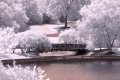
 
This fell into my mail box,,, just want to say I use Yashica lenses for their brightness. I stay in the 6 numbers for serial numbers this keeps me in the range I use, plus quality. I have 5 infrared conversions, two 20D's with another two that were bought new. Also upgraded to 50D and grabbed three more to make up another set. Manual lenses fill my need as I use two converted and one color to blend on my computer. These bright lenses work top notch with infrared. The wonderful world of invisible light lives on the edges of the color spectrum. Also I was lucky to get a 1D MK4, an excellent camera for wildlife and portraits. Cheers,,,,no name calling please.
Ah! A Yashica man :)
I have loads of them, and, of course, a few Zeiss...
 
Thanks Kendo,,, i have been pleasantly surprised at the great condishion my lenses are in. I have a conversion ultraviolet body, the one lens that works good with it is over a 1000 dollars. The Canon 50mm f1.8 is the main stay,, it works pretty good with that camera. I also use Pentax,,, these people built lenses for every body,,,,even Carl Zeiss. Nikon made a quarts lens and it is still made today in Japan. Now days my kit or pack has some good new glass brought just because they are designed for the cameras I use. It was written that the small zooms yashica made were made for the small spaces they live in. I love to take them with the girls on their day out to get low light pictures in the restraunts. It was written that those lenses pull in the light, I believe it.
IMG_0097.JPG
Yashica 28mm f2.8
IMG_0562.JPG
17-40L shown for difference between lenses.
 
Last edited:
Blimey, I had over 300+ vintage lenses at one point, when I was shooting with either a Canon EOS 5D or 6D. However, I don't find the experience as satisfying when using mirrorless (which I switched to a couple of years ago). In fact I quite dislike shooting manual focus lenses with an evf.

Anyway, I sold most of my manual lenses and invested in a bunch of Fujinon lenses.

Of the MF lenses left, my favourites are the Pentacon 135/2.8 (preset version), Carl Zeiss Jena Sonnar 135/3.5, Helios 44 (all M42), Carl Zeiss Distagon 28/2.8, Carl Zeiss Planar 50/1.4, Carl Zeiss Sonnar 85/2.8, Carl Zeiss Makro-Planar 100/2.8, Carl Zeiss Vario-Sonnar 35-70/3.4, Carl Zeiss Vario-Sonnar 100-300/4.5-5.6 (all C/Y).

Edit: Totally missed off my favourite long lens - a 1960s T-mount Tamron Nestar 400/6.9, a really great old lens with virtually no CA. Amazing.
 
Last edited:
Thanks Kendo,,, i have been pleasantly surprised at the great condishion my lenses are in. I have a conversion ultraviolet body, the one lens that works good with it is over a 1000 dollars. The Canon 50mm f1.8 is the main stay,, it works pretty good with that camera. I also use Pentax,,, these people built lenses for every body,,,,even Carl Zeiss. Nikon made a quarts lens and it is still made today in Japan. Now days my kit or pack has some good new glass brought just because they are designed for the cameras I use. It was written that the small zooms yashica made were made for the small spaces they live in. I love to take them with the girls on their day out to get low light pictures in the restraunts. It was written that those lenses pull in the light, I believe it.
View attachment 114390
View attachment 114391


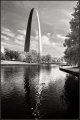
Nice, I've been looking at some Yashica lenses. Also, I think I rec that arch :)

St. Louis Gateway Arch by K G, on Flickr

Blimey, I had over 300+ vintage lenses at one point, when I was shooting with either a Canon EOS 5D or 6D. However, I don't find the experience as satisfying when using mirrorless (which I switched to a couple of years ago). In fact I quite dislike shooting manual focus lenses with an evf.

Anyway, I sold most of my manual lenses and invested in a bunch of Fujinon lenses.

Of the MF lenses left, my favourites are the Pentacon 135/2.8 (preset version), Carl Zeiss Jena Sonnar 135/3.5, Helios 44 (all M42), Carl Zeiss Distagon 28/2.8, Carl Zeiss Planar 50/1.4, Carl Zeiss Sonnar 85/2.8, Carl Zeiss Makro-Planar 100/2.8, Carl Zeiss Vario-Sonnar 35-70/3.4, Carl Zeiss Vario-Sonnar 100-300/4.5-5.6 (all C/Y).

Edit: Totally missed off my favourite long lens - a 1960s T-mount Tamron Nestar 400/6.9, a really great old lens with virtually no CA. Amazing.


I find MF lenses waaaaaaaaaaaaaaaaaay better on mirrorless. If it's not for you, so be it. I weirdly find most modern AF lenses boring in comparison, but of course I use them. I mean, they're convenient and easy and there's no skill to them, they get the job done ... but there's something about forcing yourself into manual focusing, it does draw something within you outward - got a good eye? good artsy mind? MF lenses will work your creativity
 
Last edited:
Blimey, I had over 300+ vintage lenses at one point, when I was shooting with either a Canon EOS 5D or 6D. However, I don't find the experience as satisfying when using mirrorless (which I switched to a couple of years ago). In fact I quite dislike shooting manual focus lenses with an evf.

Anyway, I sold most of my manual lenses and invested in a bunch of Fujinon lenses.

Of the MF lenses left, my favourites are the Pentacon 135/2.8 (preset version), Carl Zeiss Jena Sonnar 135/3.5, Helios 44 (all M42), Carl Zeiss Distagon 28/2.8, Carl Zeiss Planar 50/1.4, Carl Zeiss Sonnar 85/2.8, Carl Zeiss Makro-Planar 100/2.8, Carl Zeiss Vario-Sonnar 35-70/3.4, Carl Zeiss Vario-Sonnar 100-300/4.5-5.6 (all C/Y).

Edit: Totally missed off my favourite long lens - a 1960s T-mount Tamron Nestar 400/6.9, a really great old lens with virtually no CA. Amazing.

It's completely the opposite for me.

Using manual lenses back in the day on the cameras they were intended to be used on was fine but DSLR's are IMO a disappointment due to the simple fact that they're just not built for manual focus. AF if their forte. Mirrorless however allows extremely precise focusing and arguably more precise focusing than is possible with AF, if you have the time to accurately MF. If you want precise manual focus DSLR's are just a lesson in frustration because they're not built for it but they're ok for zone and hyperfocal use.
 
Last edited:
I like using a nifty 50 (or 55) plus a focal reducer for street work, especially at night. Focusing is sometimes a challenge, but basically you just set a focus zone and wait for people to walk into it, rather than trying to follow them. Or take people who are sitting still :-)


Focus
by dave.hallett on Talk Photography
 
I probably do more than half my photography with legacy glass. Over the last few years I have bought and tested a number of old lenses, mainly Minolta and Pentax lenses, and now have a selection of primes I am more than happy with. I don't find focusing a major problem, especially with the A7m2 (I also use them on an A7s and IR converted Nex5N.) I find a lot of older lenses give a look to images that I don't see with my newer lenses, even though the newer lenses are often sharper. I also use them with extension tubes. Older lenses tend to work better in IR, too.

Here's a few from my favourite lenses

Pentax smc-A 50mm f1.4.(5 stitched images, taken wide open from a boat) My first legacy prime, and it impressed me so much I was soon hooked on legacy lenses.

West Bay Panorama by Jon, on Flickr


Minolta Auto-Rokkor PF 55mm f1.8. I bought this by accident. It's more famous brother, the f1.7 version, is well known. This lens left me wondering how it's slipped under the radar. It's one of my favourite lenses, and very sharp across the frame..

Born by Jon, on Flickr


Pentax K 28mm f3.5 (in infrared). It took me a while to find one of these, but I am very glad I did. It's nothing short of superb, albeit with not a very fast aperture. It's a great landscape lens, too.

Dark Angel by Jon, on Flickr


Zeiss Distagon T* 28mm f2.0. More expensive, but superbly sharp in the centre at all apertures. Stopped down it's sharp across the frame. I bought it for night aerial work, but I use it more than any of my other legacy primes. It also focuses to 24cm.

Tonge Fold Cemetery by Jon, on Flickr

My other favourites are the Takumar 200mm f3.5 preset and the Helios 44-2 (another preset lens), which, at 5 quid, has to be the best bargain in my collection. Preset lenses are clickless, so great for video too.
A great lens on APS-C or MFT is the Sigma Super-Wide II 24mm f2.8; however, on FF the edges let it down.
 
Last edited:
I'm sorry I sold my Helios, A guy came to inspect my CZJ 135 F3.5 and ended up leaving with that and the Helios. He was willing to pay in cash what I had paid for it, so i thought I'll grab another, hopefully cheaper, later on. Must have a peek around. I mostly locked it to F2 - 2.8, and only stopped it down more when I was using it for macro.

A few macro shots using the Helios 44-2 -

Sheild Bug by K G, on Flickr

_DSF0920 by K G, on Flickr

Tiny Irish garden snail by K G, on Flickr
 
It's dangerous to sell stuff you think you might rebuy in the future because as mirrorless becomes more popular more people are getting interested in old lenses which is driving prices up and availability down.
 
Not me, can't find any enjoyment in buying old lenses that are possibly knackered and fungus contaminated.
Strange really as I'm usually bit of a nostalgia nut, but this doesn't appeal at all.

Good luck to those that do and just wonder do you enjoy the hunt more than the end result?
 
No, it's using them that I enjoy and I haven't had a fungus contaminated one yet, if I did get one I'd send it back. As for them being knackered, my old lenses will still be useable long after any Canikon lens bought today is a paperweight because the solder, circuits, motor or ribbon cable has failed.
 
Not me, can't find any enjoyment in buying old lenses that are possibly knackered and fungus contaminated.
Strange really as I'm usually bit of a nostalgia nut, but this doesn't appeal at all.

Good luck to those that do and just wonder do you enjoy the hunt more than the end result?


Both, I like scouting about to see what's worthy of a chase, and it can feel great when you finally track a very nice copy down for a good price.

Good sellers will state any issues, and i would never buy a lens with even a hint of fungus. Some do, as they take them apart and treat them, that side I wouldn't be bothered with.

It's dangerous to sell stuff you think you might rebuy in the future because as mirrorless becomes more popular more people are getting interested in old lenses which is driving prices up and availability down.

This is true, every time someone like the Angry photographer hails an old piece of glass the prices shoot up. It is a bit of a trend, but honestly, I like them just as much for being cheap. If I buy a lens for £30 and get even a hand ful of nice images from it, that's a result in my book. They are easy to sell on too.
 
No, it's using them that I enjoy and I haven't had a fungus contaminated one yet, if I did get one I'd send it back. As for them being knackered, my old lenses will still be useable long after any Canikon lens bought today is a paperweight because the solder, circuits, motor or ribbon cable has failed.

Only honestly answered the question posed in the thread title, just don't get it, not keen on vinyl either even though I still have some and two turntables.

Weird really as I spend loads of time at places like bygone transport museums, very fond too of a nice example of art deco or streamline moderne
 
Last edited:
If anyone is after a Helios 44-2, there's currently a few on eBay attached to cameras for about 25 quid......just put Zenit camera in the search.
 
I've done a a bit of the "using old lenses with adaptors" - and on the whole it's been fine for experimenting, and playing around with...

though there is ONE lens that I'd really love to get "properly" converted from FD to EF fitting... partly, because I'll probably never be able to justify the expenditure of buying the EF version, and partly because, to be honest, the AF of the "proper" EF lens isn't exactly stunning anyway. It's my old FDn 85mm f1.2L - and i'd want it done "properly" - rather than just stuffing a FDn to EF converter (which, by the nature of the conversion, require additional lenses, in effect they're a "short" teleconverter, something like a 1.1 or 1.2x converter IIRC - but, there's always "The Lens Doctor" who can replace the entire back end of the mount with a re-engineered setup that keeps the correct focal lengths and doesn't lose any stops of light...

Actually, looking at that page, I'm also half tempted to get the lovely FDn 35-105mm F3.5 (macro) converted...
 
I asked on another thread about the effect of adaptors. I was told very definitively that they had no effect at all. They do not act as an extender and there is no effect on the light.
So who is right?
 
I've done a a bit of the "using old lenses with adaptors" - and on the whole it's been fine for experimenting, and playing around with...

though there is ONE lens that I'd really love to get "properly" converted from FD to EF fitting... partly, because I'll probably never be able to justify the expenditure of buying the EF version, and partly because, to be honest, the AF of the "proper" EF lens isn't exactly stunning anyway. It's my old FDn 85mm f1.2L - and i'd want it done "properly" - rather than just stuffing a FDn to EF converter (which, by the nature of the conversion, require additional lenses, in effect they're a "short" teleconverter, something like a 1.1 or 1.2x converter IIRC - but, there's always "The Lens Doctor" who can replace the entire back end of the mount with a re-engineered setup that keeps the correct focal lengths and doesn't lose any stops of light...

Actually, looking at that page, I'm also half tempted to get the lovely FDn 35-105mm F3.5 (macro) converted...


Not being a Canon shooter I have never heard of that service, but it's a great idea! Seems pricey though, but if you have lenses like that Beastly 85 1.2, might be well worth it.

Me, I have a bunch of Russian 50mm lenses and some PK mount ones too in my 'watch list' on ebay, finding it hard to decide on those even.


I asked on another thread about the effect of adaptors. I was told very definitively that they had no effect at all. They do not act as an extender and there is no effect on the light.
So who is right?

In general they do not have any effect, they are merely bridging the gap to make up the original distance to the sensor, they are wider on mirrorless because of this. The case above is different as it's old Canon mount to the newer, there's probably naff all difference in spacing so there will be some work around involved I guess.
 
Last edited:
I asked on another thread about the effect of adaptors. I was told very definitively that they had no effect at all. They do not act as an extender and there is no effect on the light.
So who is right?

If an extender is just a short connecting tube with no lens in, wouldn't an adapter be the same and so presumably cause the same effect?
Just thinking logically as I don't own and have never used either

There again would an adapter place the lens at the right distance from the mount thereby not affecting its properties
 
Last edited:
If an extender is just a short connecting tube with no lens in, wouldn't an adapter be the same and so presumably cause the same effect?
Just thinking logically as I don't own and have never used either
That was my thinking too. I started a thread about it but was told that adapters are made to place the lens in the identical position that they were originally designed to be in with regard to their position in front of the film/sensor.
Seemed wrong to me but the opinions were very definite so I accepted it.
Still seems wrong but who am I to take sides?
 
I asked on another thread about the effect of adaptors. I was told very definitively that they had no effect at all. They do not act as an extender and there is no effect on the light.
So who is right?

most adaptors for the "mirrorless" cameras are basically just a tube with mounts on either end - the length of the tube makes up the "registration distance" of the lens to be the correct distance - the problem with canon FD to EF lenses is that the FD registration distance is shorter than the EF's - in effect the FD lens would have to be mounted "inside" the hole of the EF mount - obviously, this can't happen, so you either have a short adaptor with no lens in it, and the FD lens won't focus to infinity - effectively it becomes an "extension tube" - so it's fine for macro lenses... OR if you want something that works at infinity focus, then you need to add an additional lens to re-focus the image at the correct registration distance...

Canon issued its own FDn > EF adaptor, which was in effect a 1.26x converter and only really worked with the 200mm and above lenses.
 
here's a list of lens mounts and registration distances... http://www.graphics.cornell.edu/~westin/misc/mounts-by-register.html

basically, if the lens registration distance is longer than the lens mount distance in your camera (which is the case for pretty much ALL mirrorless cameras, that's one of the big reasons why they're great for using with legacy cameras) then the lens adaptor is basically just a tube of the correct length to make up the difference - for example

fujifilm x cameras - registration distance is 17.7mm. To mount a Canon FDn lens with a 42mm registration distance, the adaptor will effectively be a tube of 24.3mm length. To mount a Yashica/Contax with a 45.5mm registration distance, the tube will just be 3.5mm longer at 27.8mm


the Canon FDn > EF Problem is this...

FDn = 42mm Canon EOS (ef/ef-s) = 44mm - effectively, the FDn needs to be 2mm further back into the camera than the lens mount on the camera will allow...
 
If an extender is just a short connecting tube with no lens in, wouldn't an adapter be the same and so presumably cause the same effect?
Just thinking logically as I don't own and have never used either

There again would an adapter place the lens at the right distance from the mount thereby not affecting its properties

As per the post above, most adaptors to mount one lens onto a different body are just moving the lens forwards to match the original flange depth (distance between rear element and film plane).

In the case of mirrorless bodies, the adaptor doesn’t change the field of view, the sensor does if it’s a crop sensor as the original film cameras the lenses came from were designed for full frame coverage. If you mount an OM Zuiko 50mm lens (for example) onto a Sony A7, the field of view is exactly the same as the original OM film body as they’re both full frame. If you mount the same lens to an A6000, the field of view will be 1.5 times narrower (more telephoto, 75mm equivalent) as the sensor is ‘cropped’. Mount the same lens to a micro 4/3rd body and you get 100mm equivalent field of view.
 
Last edited:
If an extender is just a short connecting tube with no lens in, wouldn't an adapter be the same and so presumably cause the same effect?
Just thinking logically as I don't own and have never used either

There again would an adapter place the lens at the right distance from the mount thereby not affecting its properties

most extenders (ie teleconverters like the 1.4x or 2.0x ones) are a short tube with some very complex lenses in them ;) - now macro EXTENSION TUBES, they're just tubes full of the finest air - moving the closest focus point nearer but losing ability of the lens to focus to infinity
 
most adaptors for the "mirrorless" cameras are basically just a tube with mounts on either end - the length of the tube makes up the "registration distance" of the lens to be the correct distance - the problem with canon FD to EF lenses is that the FD registration distance is shorter than the EF's - in effect the FD lens would have to be mounted "inside" the hole of the EF mount - obviously, this can't happen, so you either have a short adaptor with no lens in it, and the FD lens won't focus to infinity - effectively it becomes an "extension tube" - so it's fine for macro lenses... OR if you want something that works at infinity focus, then you need to add an additional lens to re-focus the image at the correct registration distance...

Canon issued its own FDn > EF adaptor, which was in effect a 1.26x converter and only really worked with the 200mm and above lenses.


Pretty much what I said above, but you explain it better :D
 
Last edited:
most extenders (ie teleconverters like the 1.4x or 2.0x ones) are a short tube with some very complex lenses in them ;) - now macro EXTENSION TUBES, they're just tubes full of the finest air - moving the closest focus point nearer but losing ability of the lens to focus to infinity

Extension tubes, that's the kiddies, so the same as an adapter in design , but different in function
 
Extension tubes, that's the kiddies, so the same as an adapter in design , but different in function

An extension tube fits between an adaptor and lens to move the lens further forward from its ‘proper’ flange depth. As well as bringing the closest focus distance nearer (macro) you also lose the ability to focus at infinity.
 
Think I will carry on in the same vein as in not bothering with either, but cheers for the explanation
 
Back
Top