Shooting stars for a beginner

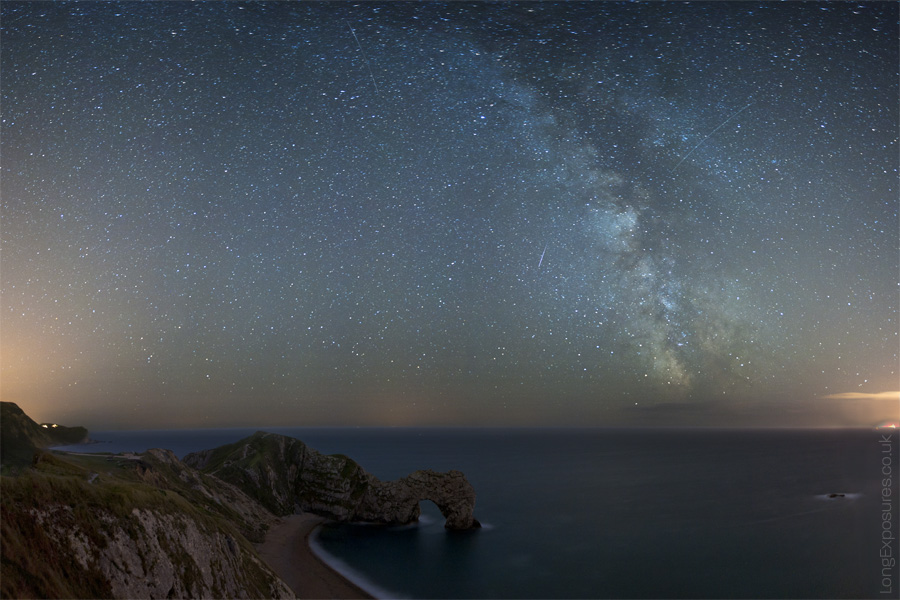
I think may you and I are talking about a different types of star photography, surely your not thinking of just a dark image with just stars in it, something like this is stunning

astro.jpg


But just a 17mm photo of a star covered sky with nothing else, you may as well just use a camera with a ruined sensor full of dead pixels IMO :(


But that's a proper astro shot through a scope... that's not what's being discussed here..... as you say, a shot of the sky with no foreground in it with a 17mm lens, will be boring. Even if you have a glorious milky way in it... so what.. we've seen that a million times. It's like sunsets... just the sunset itself, and so what? It needs something else to make it interesting no matter how wonderful the sunset.


:cuckoo:


You need to get out somewhere properly dark and see what a wide angle will do. Not just a few dots. Clearly you have never seen a great shot of the Milky Way. This is another reason you need to watch what you say about polluted skies.

http://www.flickr.com/photos/57078694@N04/6965889718/

14mm for example.

But that DOES have foreground detail LOL. We're discussing shots of JUST the sky. They get boring pretty quickly, because it's the same sky no matter where you are in the northern hemisphere.... seen one milky way shot, you've seen them all. The one you just linked to has foreground detail to give scale, and illustrate the massiveness and majesty of the night sky.

I think you're missing the point I was making.


I've got some pretty exciting sky around me!! :thumbs:


No doubt... but take a shot of it, and .. so what? Its the same sky that's been shot a million times already. Shoot an exciting location with a stunning sky and that's now something else entirely. Just sky? How dull is that? Been done to death already.

A decent astrophotography shot becomes something else though: we're now into the realm of scientific challenge and immense skill that goes FAR beyond merely pointing a camera at the sky.


Really? I know nothing about capturing stars?

Okay, this is a little one from in the middle of one of the most light polluted areas of the country


No one's saying you can't take shots in light polluted areas, but come on... it's immeasurably better if there is none. Look how weak your milky way looks compared to those shot in dark sky sites, and there's nothing you can do about that, as the sky is simply not dark enough to record any lower magnitude stars because they are below the luminance levels of the light pollution.

I see no point in arguing.... just get in your car and go somewhere dark.. it's not difficult, and your results will be better... unless you wanted to include the city itself in the shot, in which case that would be interesting.
 
Each to their own I guess.

Well.. you linked to a photograph of the sky with a foreground subject. I'm not sure what your point it.
 
Pookeyhead said:
No doubt... but take a shot of it, and .. so what? Its the same sky that's been shot a million times already. Shoot an exciting location with a stunning sky and that's now something else entirely. Just sky? How dull is that? Been done to death already.

A decent astrophotography shot becomes something else though: we're now into the realm of scientific challenge and immense skill that goes FAR beyond merely pointing a camera at the sky.

I was joking... :D
 
But that's a proper astro shot through a scope... that's not what's being discussed here..... as you say, a shot of the sky with no foreground in it with a 17mm lens, will be boring. Even if you have a glorious milky way in it... so what.. we've seen that a million times. It's like sunsets... just the sunset itself, and so what? It needs something else to make it interesting no matter how wonderful the sunset.

A decent astrophotography shot becomes something else though: we're now into the realm of scientific challenge and immense skill that goes FAR beyond merely pointing a camera at the sky.

Exactly :clap: and this is the point of I trying to get accross, will the picture I put up is just stars, it's interesting because of the detail, a picture of stars with just a standard lens, no scope is as you say a bit dull :(

No one's saying you can't take shots in light polluted areas, but come on... it's immeasurably better if there is none. Look how weak your milky way looks compared to those shot in dark sky sites, and there's nothing you can do about that, as the sky is simply not dark enough to record any lower magnitude stars because they are below the luminance levels of the light pollution.

I see no point in arguing.... just get in your car and go somewhere dark.. it's not difficult, and your results will be better... unless you wanted to include the city itself in the shot, in which case that would be interesting.

Indeed, get away from the light pollution and you'll get the very best photo's :thumbs: and also why I said my milky way wouldn't even rank in the top 1 million of photo of the milky way, lets face it the location is not even close to optimum on the light pollution front, and it was the wrong time of year too ,as the optimum period or milky way photo's is July/August :thumbs:

But the point I was making was that while in an idea world you'll be going to dark sky areas do feel you have to discount areas out of hand that have light pollution as it will not stop you getting the shot, it just makes it that little bit harder ;)
 
Of course if you go to one of the poles the speed-of-rotation problem virtually vanishes.


No it doesn't. I think you'll find it makes no difference whatsoever.
 
Last edited:
Of course if you go to one of the poles the speed-of-rotation problem virtually vanishes. And not much light pollution if you go at the right time of year.

Simples.:D

No it doesn't. I think you'll find it makes no difference whatsoever.

Think about it. At the equator, a person travels around 24,000 miles in a day: speed about 1,000mph. At the pole, you just turn on the spot in the same time. Speed: slightly above zero mph. :D
 
Think about it. At the equator, a person travels around 24,000 miles in a day: speed about 1,000mph. At the pole, you just turn on the spot in the same time. Speed: slightly above zero mph. :D

Now really think about it. At the pole a star that is at declination 60º, such as Dubhe in UMa, will travel once around the sky in 24 hours. At my latitude, 52ºN, Dubhe will also travel once around the sky in 24h. The length of the path it travels will be identical in the two locations, therefore its speed will be identical in the two locations.
 
Now really think about it. At the pole a star that is at declination 60º, such as Dubhe in UMa, will travel once around the sky in 24 hours. At my latitude, 52ºN, Dubhe will also travel once around the sky in 24h. The length of the path it travels will be identical in the two locations, therefore its speed will be identical in the two locations.

*sigh*. That didn't really work as a joke, did it? :shake:
 
Now really think about it. At the pole a star that is at declination 60º, such as Dubhe in UMa, will travel once around the sky in 24 hours. At my latitude, 52ºN, Dubhe will also travel once around the sky in 24h. The length of the path it travels will be identical in the two locations, therefore its speed will be identical in the two locations.


Another analogy: A vinyl record spinning at 45rpm - imagine you were small enough to sit on that record. Whether you are at the edge, or perched on the centre spindle, you're still rotating at 45rpm. At the edge, you will be travelling faster in terms of velocity, yes, but if you look up, the ceiling is still spinning at the same RPM.
 
Another analogy: A vinyl record spinning at 45rpm - imagine you were small enough to sit on that record. Whether you are at the edge, or perched on the centre spindle, you're still rotating at 45rpm. At the edge, you will be travelling faster in terms of velocity, yes, but if you look up, the ceiling is still spinning at the same RPM.

It's the same with beer and wine, drink copious amounts of either and that room will be spinning just the same :D
 
Thanks for pointing towards my Milky Way shot Matt. Here it is for those who CBA to follow the link.


mind:blown

There's some good points being made in between the bitching, seems people like to type more than they like to read...

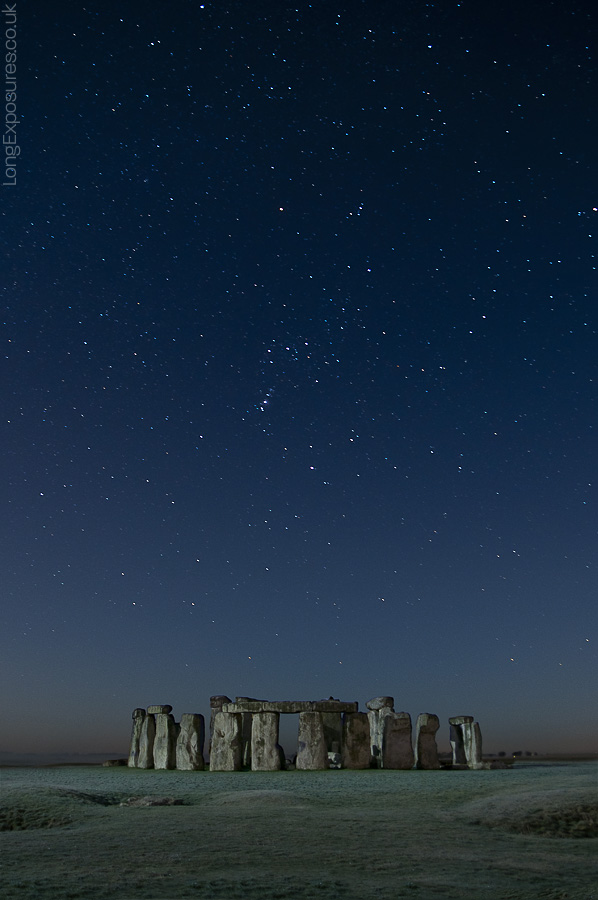
Location is everything IMO. To paraphrase Matt, if you don't have a killer location or even some generic foreground interest- if all you're doing is pointing your camera at the sky- your image has every chance of looking like dead pixels on a tired old sensor. Location places the stars in context.

I've intentionally posted the large size of this portrait image to introduce a little suspense (ok, a *tiny bit* of suspense) whilst scrolling down; until you reach the stones, it's just white dots on a blue background, right?


As old as...

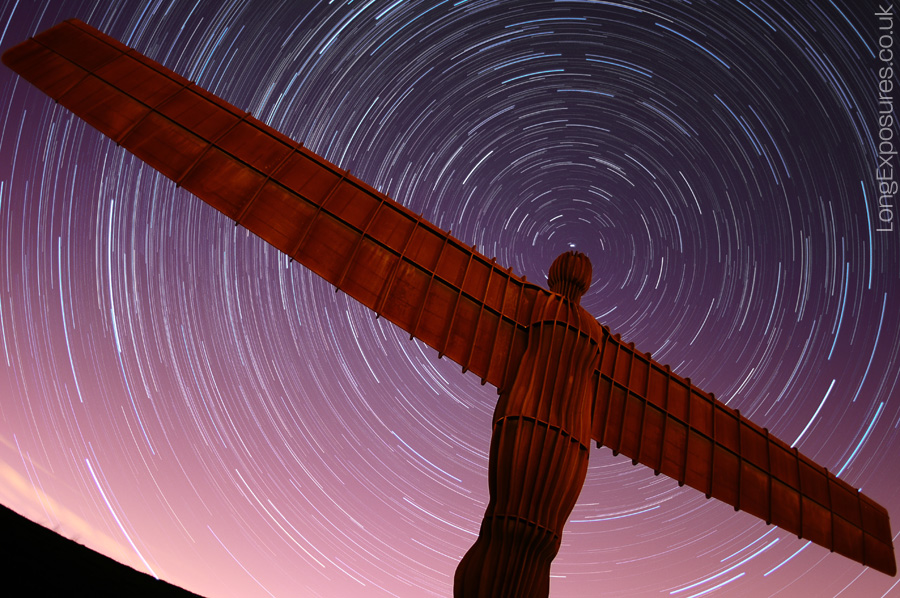
Although the objective of the thread is static stars, the issue of which direction you're facing and how long you've got to capture the stars as pinpricks is most clearly demonstrated with a star trail image.


A Halo for an Angel

Other than stacking & aesthetic processing, there's no manipulation here- nothing intended to trick. You can see for yourselves that startrails near Polaris are considerably shorter than those at the outer edges of the frame. This was for a total exposure duration of about 75mins iirc but the relationship remains true over shorter exposures.

Wide angles have the appearance of pushing the stars away so the wider your lens the longer you've got before stars start trailing; a longer lens amplifies the distance travelled by the stars relative to the width of your sensor and thus the width of the frame.

But for any given lens regardless of absolute focal length, face north towards Polaris and you can use a longer exposure than if you're facing south.
 
Oh, forgot light pollution. It's much easier to create impressive looking startrails within a light polluted environment than it is to show the majesty of static stars. The length of the trails has a big impact on the aesthetic success of the image.

If you want to create an image with a sky full of stars I'd suggest you need a location that lets you shoot 30sec at ISO800 and f/2.8. This will not be possible in any streetlit area without massive overexposure but move into a park, say, and compose carefully and you might just get away with it. Ideally though you want to be as far from light pollution as possible.
 
Back
Top