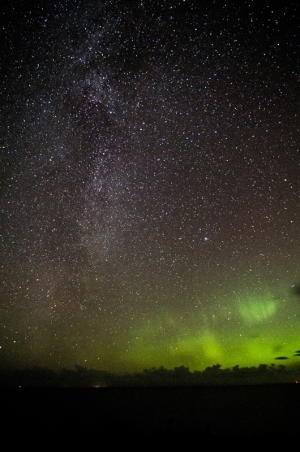
The biggest factor in shooting the Milky Way is the location, the more you can get away from light pollution the more you and see and the easier it is to capture
The next factor is when to shoot, the optimum time of the month is your new moon nights as you'd be amazed how much of an effect the moonlight has on the amount of visible stars in the sky, in addition to the time of the month, while the milk way is visible year round the optimum months are July and August as in the best and brightest sections of it are most visible at this time of the year
So once you've got yourself to a nice dark location you need to think about your camera settings, it's pretty much the same as shooting star trails so it might be helpful to you to read my guide to those linking in my signature, with the only key difference being your going to be trying to avoid star trails so you want to consider the 500 rule, as such take 500 and devide it by your focal length in 35mm format the resulting number is what you can use as a exposure length before you start to see visible star trailing..
Set up, ideally your going to have a nice fast wide angle lens, myself I use a 14mm 2.8 on my 5D3 now settings wise you really want to use as higher ISO as your comfortable using, to ensure your correctly exposing the scene without blowing out any of the sky..
Finally comes processing as pretty much all Milky Way photos require some degree of processing to really make them pop...but it would be best to know what software you have before linking to a tutorial suitable for you