Neither do I really. I am interested in the psychology of how we see, and its implications on taking and viewing photographs, as well as in other aspects of life. But I thought, your spaghetti allusion was going down a philosophical route.
I used the Muller-Lyer illusion that I posted about in the other thread as part of the warning to my statistics students on how difficult it is to collect reliable data i.e. " I saw it with my own eyes, so it must be true".
Where, in this example, once you measure the lines, rather than relying on your visual judgement, you realise what you see is clearly false.
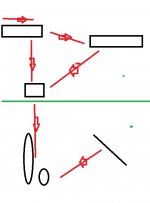
I now realise that posting my indicative diagram of what the Muller-Lyer illusion looks like was a mistake, so I have linked to the real thing below:
The Müller-Lyer illusion is an optical illusion used in psychology to study human perception. Here's an explanation of how it works.

www.verywellmind.com




 but that's good and I'm glad you got something out of the image.
:max_bytes(150000):strip_icc()/muller-lyer-illusion-5672bd393df78ccc15f7d08d.jpg)