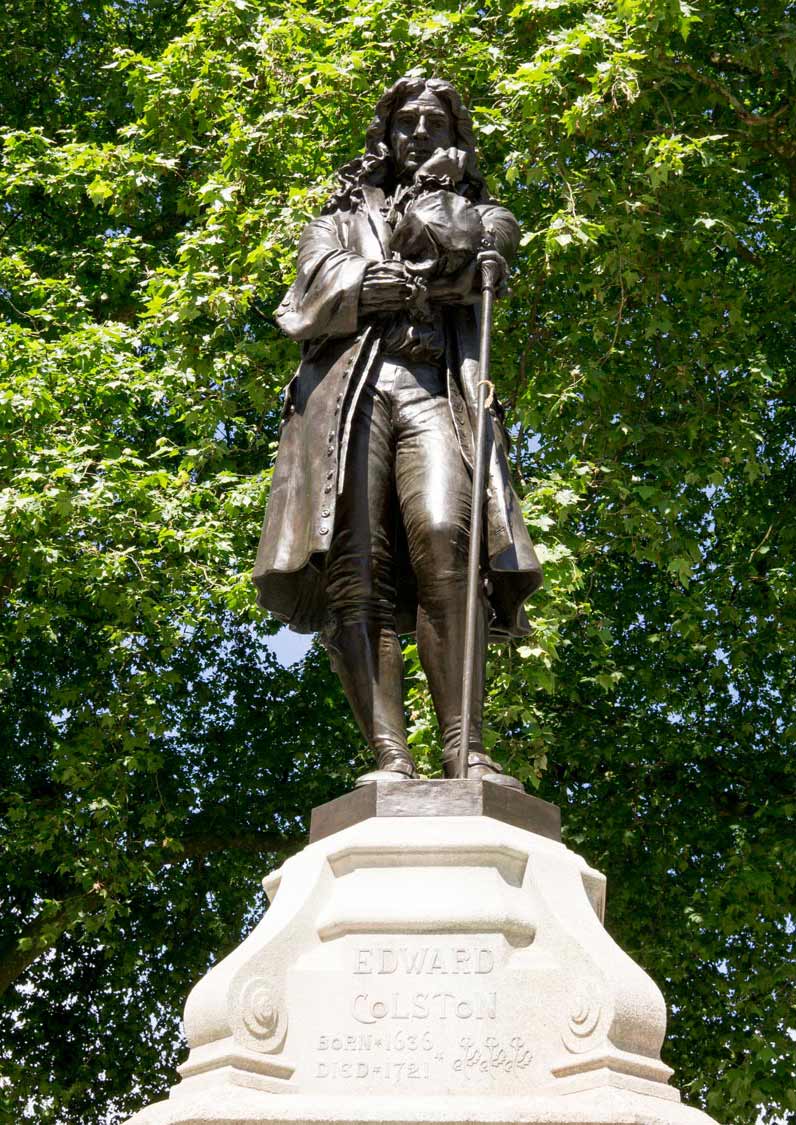
Regardless of who the statue was or why it was erected they damaged it without permission so surely that’s criminal damage?
Criminal damage is not a strict liability offence. It requires
mens rea. A lot of people commenting with certainty about this case don't seem to understand that important legal concept.
I think you are right about the next defence. Case law is powerful.
and
There are two things to this - Firstly the way it was done, it sets a precedent for people to do criminal damage on things they don't like/agree with.
Criminal trials do not set legal precedent. Case law is powerful, but is only created in the senior courts, not in jury trials. So, no case law, no legal precedent.
Decisions in senior courts that set precedent have a large amount of legal reasoning set out by the judges as to why they have reached the decision they have, what statute and previous cases they have relied on and so forth so that future barristers and judges that seek to rely on that precedent can fully understand it. A jury verdict has none of that.
I think that would have been a better outcome, but, as far as I know, juries in this country do not determine sentencing that is the jurisdiction of the judge, and there is no guarantee he would have given a unconditional discharge.
Correct. Judges always set the sentence, within the limits laid down in statute and taking into account the sentencing guidelines.
Couldn't the judge order them to return a guilty verdict?
No. A judge can direct the jury to acquit, but never to convict. See Bushel's case from 1670 where that was established. That case also confirmed that jury nullification (aka a perverse verdict) is absolutely allowed, no matter what the jurors' oath says.
But shouldn't the jury deliver the factual verdict and the sentence is up to judge (i.e. is it possible to be found guilty of something and not get a punishment at all). For example if I had killed someone deliberately but in an act of self defence I could be guilty of murder but not get punished?
If you kill someone, testify that it was in self defence and the jury accepts this, you are found not guilty. No crime has been committed, you are not guilty of murder or any other crime.
For those talking about appealing the verdict, a "not guilty" verdict cannot be appealed by the CPS, or anyone else. This used to be informally known as the double jeopardy rule, but there is now a mechanism created by the Blair government in 2003 where if significant new evidence later comes to light a case can be reopened against someone found not guilty. This basically came about due to DNA testing becoming available which brought new evidence in some old cases. However the legal threshold to overturn a not guilty verdict is (rightly) very, very high. Firstly the crime must be one of the most serious, like murder or rape. Then the DPP has to personally consent to the case being reopened. Then if it finds new evidence, the prosecution has to persuade the DPP to consent to the case being brought back to the court of appeal, and the CPS have to convince the court of appeal to quash the original acquittal and order a retrial. The court will not do this is the acquittal was due to police or CPS incompetence, for example, there must be compelling new evidence, so this has only happened a handful of times in almost 20 years. If the court of appeal orders a retrial, this is a complete new trial of the crime, not an appeal.
What the Attorney General is considering is whether to refer the case to the court of appeal so senior judges can determine if there was an error in law in the directions given to the jury by the judge, but this would not affect the outcome of the original trial at all. The danger for the AG is that the court says there was no error, and that very much would be a precedent. Given her complete lack of criminal law background, I hope she takes advice from people that know what they are talking about. At the moment I find myself in the very unusual (for me) position of agreeing with Jacob Rees-Mogg who said that said juries were the "great sublime protector of liberties".







 but will add “modern slavery” is common in more countries, I fancy India leads the pack, India