Garry Edwards
Moderator
- Messages
- 13,475
- Name
- Garry Edwards
- Edit My Images
- No
This is a very useful and fairly popular single-light technique, although a lot of the people who make use of it don’t know the term “Short Lighting”, which doesn’t matter at all, and if we google “short lighting” we can get some hilarious results
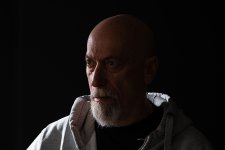
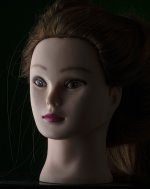
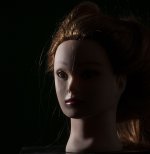
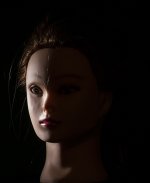
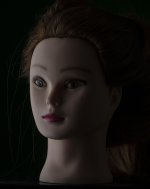
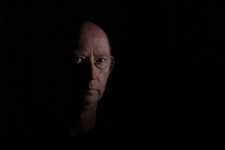
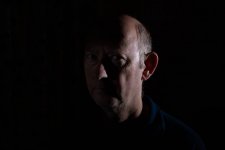
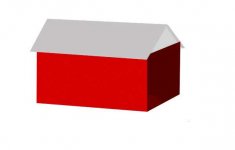
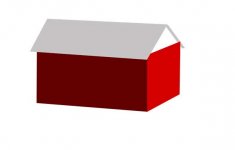
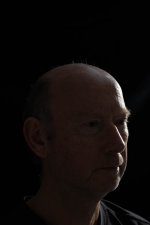
Short lighting is a technique that involves lighting the side of the subject's face that is furthest from the camera, which leaves the side closest to the camera in shadow.
Short lighting can create a dramatic and flattering look with shadows that sculpt the subject's face. It can also make faces appear longer and slimmer, which can be ideal for people with round, wide, or heavier set faces, so it’s a very useful flattering technique.
Short lighting is the opposite of broad lighting, which illuminates the part of the subject's face that's most seen by the camera. Broad lighting produces photos with fewer shadows and a lighter mood but makes faces look wider, so short lighting is (or can be) a flattering/slimming light.
But we’re not limited to lighting faces, we can light the entire body in this way and we can also light static subjects. Because of my personal circumstances, I’m struggling to photograph people at the moment, I’ve asked for volunteers to host lighting challenges involving people but nobody has stepped forward yet . . .
I thought about photographing my mannequin head, but it’s somewhere in the back of the Lencarta warehouse and may be difficult to find. So I decided to “Go to work on an egg” – for anyone who remembers old advertising campaigns that I worked on
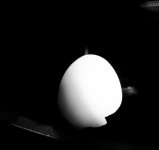
So I decided to photograph an egg, using short lighting. It’s an OK subject because everyone who isn't vegan can photograph an egg, which is also small enough to light in small spaces.
I used a black background to prevent unwanted reflected light, but any background will do.
This egg may have a bit more “texture” than most because it isn’t a supermarket egg, typically 4-6 weeks old by the time it’s on sale and often washed, it came from one of our own free-range hens and I photographed it as is, and on the day she laid it
So, photograph an egg if you want to, or a face, or anything else.
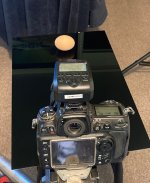
This shot shows the setup from behind the camera, the background is a black bath towel and the shiny acrylic base can be bought online from various sources and in a choice of sizes https://www.ebay.co.uk/ipp/360875050516?transactionId=1510119856023&_trksid=p4429486.m149906.l48352
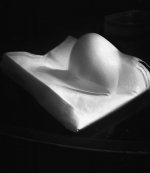
What you see in this stepback shot is the egg with ambient lighting, compare the effective shape with the short lighting side by side comparison below, but bear in mind that neither the shooting angle nor the light colour is the same.
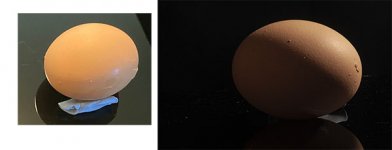
It was quite difficult to get this almost-alive egg to keep still and I messed up with this essential and specialised bit of gear

Which is showing in the shot – easily retouched out but we don’t do any PP in these challenges.
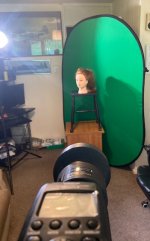
Here’s another stepback shot
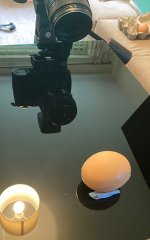
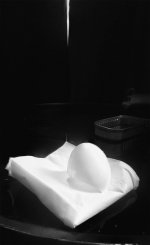
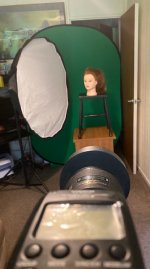
And another. This one shows the light position. It’s fitted with a standard reflector and is aimed to only just catch the subject.
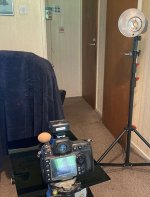
Any light of any kind will do, but of course if you don’t use flash then the low power of a continuous light will need a longer shutter speed, which will allow ambient light to “fill” Shadow areas, sometimes we want this and sometimes we don’t, flash gives us the choice.
And, finally, the actual short-lit shot, complete with the unwanted blu-tak
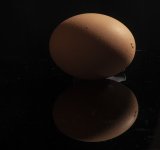
Whether it's the right or best lighting for the job isn't the point, what it demonstrates is the slimming effect.
I’ve also shot a much more complex subject, judge for yourself whether this short lighting technique suits it . . .
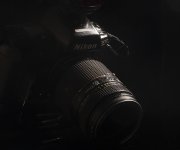
It’s my old Nikon F90X camera, which I think I bought in about 1994. I really must use it again, I just need to get a memory card for it and my memory card of choice is FP4 Plus https://analoguewonderland.co.uk/pr...nuAmzvqw16YQs-ude8MoNaXrC0HIfyeEaAkgpEALw_wcB
As with all still-life subjects, the subject should be scrupulously clean and preferably brand new, and obviously a 30 year old camera that’s been used by a pro photographer isn’t a perfect subject, but it’s what it is. All creative lighting techniques create harsh lighting that emphasises all faults, so require more retouching than when the lighting is flat and boring.
As with all of these lighting challenges, I’ve used a single light with no post-processing work.
Over to you, I KNOW that you can do much better . . .
Short lighting is a technique that involves lighting the side of the subject's face that is furthest from the camera, which leaves the side closest to the camera in shadow.
Short lighting can create a dramatic and flattering look with shadows that sculpt the subject's face. It can also make faces appear longer and slimmer, which can be ideal for people with round, wide, or heavier set faces, so it’s a very useful flattering technique.
Short lighting is the opposite of broad lighting, which illuminates the part of the subject's face that's most seen by the camera. Broad lighting produces photos with fewer shadows and a lighter mood but makes faces look wider, so short lighting is (or can be) a flattering/slimming light.
But we’re not limited to lighting faces, we can light the entire body in this way and we can also light static subjects. Because of my personal circumstances, I’m struggling to photograph people at the moment, I’ve asked for volunteers to host lighting challenges involving people but nobody has stepped forward yet . . .
I thought about photographing my mannequin head, but it’s somewhere in the back of the Lencarta warehouse and may be difficult to find. So I decided to “Go to work on an egg” – for anyone who remembers old advertising campaigns that I worked on
So I decided to photograph an egg, using short lighting. It’s an OK subject because everyone who isn't vegan can photograph an egg, which is also small enough to light in small spaces.
I used a black background to prevent unwanted reflected light, but any background will do.
This egg may have a bit more “texture” than most because it isn’t a supermarket egg, typically 4-6 weeks old by the time it’s on sale and often washed, it came from one of our own free-range hens and I photographed it as is, and on the day she laid it
So, photograph an egg if you want to, or a face, or anything else.
This shot shows the setup from behind the camera, the background is a black bath towel and the shiny acrylic base can be bought online from various sources and in a choice of sizes https://www.ebay.co.uk/ipp/360875050516?transactionId=1510119856023&_trksid=p4429486.m149906.l48352
What you see in this stepback shot is the egg with ambient lighting, compare the effective shape with the short lighting side by side comparison below, but bear in mind that neither the shooting angle nor the light colour is the same.
It was quite difficult to get this almost-alive egg to keep still and I messed up with this essential and specialised bit of gear
Which is showing in the shot – easily retouched out but we don’t do any PP in these challenges.
Here’s another stepback shot
And another. This one shows the light position. It’s fitted with a standard reflector and is aimed to only just catch the subject.
Any light of any kind will do, but of course if you don’t use flash then the low power of a continuous light will need a longer shutter speed, which will allow ambient light to “fill” Shadow areas, sometimes we want this and sometimes we don’t, flash gives us the choice.
And, finally, the actual short-lit shot, complete with the unwanted blu-tak
Whether it's the right or best lighting for the job isn't the point, what it demonstrates is the slimming effect.
I’ve also shot a much more complex subject, judge for yourself whether this short lighting technique suits it . . .
It’s my old Nikon F90X camera, which I think I bought in about 1994. I really must use it again, I just need to get a memory card for it and my memory card of choice is FP4 Plus https://analoguewonderland.co.uk/pr...nuAmzvqw16YQs-ude8MoNaXrC0HIfyeEaAkgpEALw_wcB
As with all still-life subjects, the subject should be scrupulously clean and preferably brand new, and obviously a 30 year old camera that’s been used by a pro photographer isn’t a perfect subject, but it’s what it is. All creative lighting techniques create harsh lighting that emphasises all faults, so require more retouching than when the lighting is flat and boring.
As with all of these lighting challenges, I’ve used a single light with no post-processing work.
Over to you, I KNOW that you can do much better . . .
Last edited:


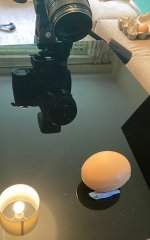

 Source lighting window with curtains.