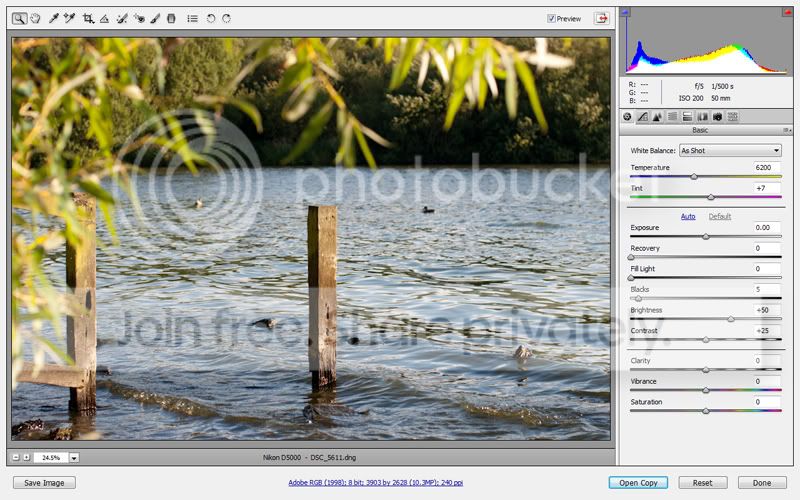
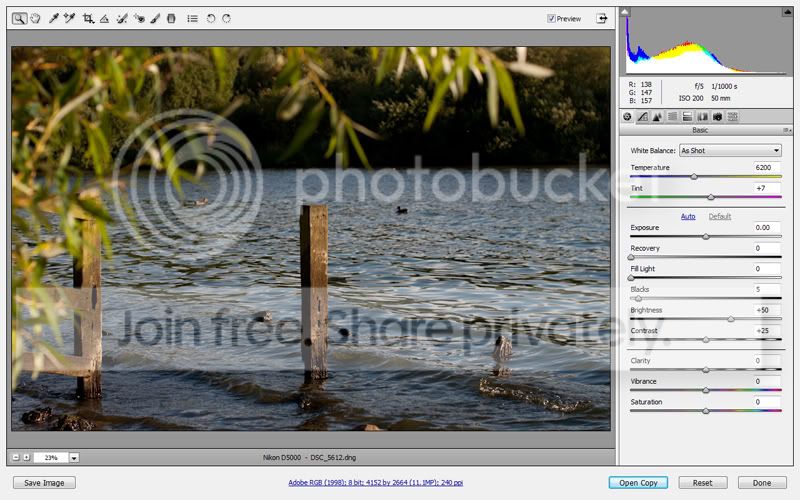
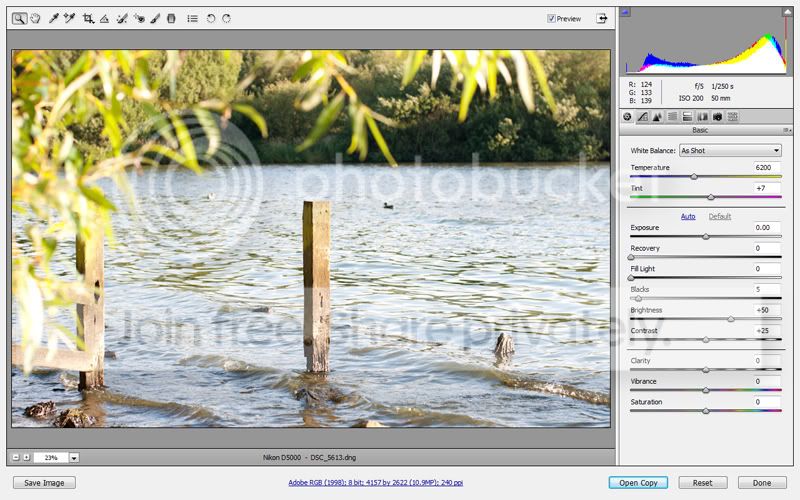
The difference in SS in these is as I expected, ie 1 stop over X2 correct SS and 1 stop under 1/2 correct SS.
However when I used the 3 stop bracketing on other images earlier today this was not the case - Why ?]
I don't know what you mean when you say "3 stop bracketing". To me that sounds like you are bracketing at -3, 0 and +3, which obviously is not the same as -1, 0, +1. You can of course bracket three exposures, but depending on the camera you should be able to bracket by fractional stops or anything up to 2, 3 or maybe even 5 stops.
Q2
My camera offer 3 shots stacked in one and the manual says better images will result. What's that all about ?
This is a complete guess, because again I don't know which camera you have, and none of mine do anything like that, but I imagine the camera is doing buiilt in HDR (high dynamic range) by taking bracketed exposures and combining them in camera. This means you can record and preserve detail over an extended dynamic range, from very dark shadows up to bright highlights.
Is calibrating your camera's correct exposure just a matter of personal taste to what you feel is a balanced exposure, or is there some technical way of shooting a specific image and adjusting exposure until histogram is correct ?
There are two ways of looking at this (maybe three). You can have an exposure that is technically correct, perhaps set according to the brightness of the light hitting the scene, but there may be artistic reasons why you would purposely want to make the image darker or lighter. You have the choice whether to expose with the technically correct exposure and then adjust later in your editing software, or to deliberately shoot with an exposure that suits your aesthetic goals in the first place. As the photographer, and the creator of the photograph, the artistic vision is yours. If you are going to make adjustments in editing it is usually quite OK to darken the image if you wish, but brightening it can cause problems with noise or posterisation (banding) of what should be smooth tonal gradients. So if you want a scene to appear bright it is better to shoot it bright than to edit it bright.
The third option, which follows on from the last bit of the paragraph above, and this applies especially if you shoot raw instead of JPEG, is to deliberately expose as brightly as you can (Expose To The Right) regardless of your artistic intent for the image. This technique will capture as much tonal detail as possible, even though the image may initially look to bright. The idea then is that you can reduce the brightness in your editing software if you need to, and in so doing you will reduce noise further and yet have recorded more shadow detail than a "normal" exposure would have managed.
So to recap...
- You can shoot a "correct" exposure and leave it at that.
- You can shoot a "correct" exposure and adjust brightness up or down to suit your artistic objectives.
- You can shoot an exposure that may not be "correct" but which accomplishes your creative vision without the need for further edits.
- You can expose to the right, thus maximising data captured and minimising noise and then adjust brightness as required.
- Brightening an exposure is theoretically a poor option where ultimate IQ is concerned, although in practice you may not see obvious problems for small adjustments at low ISO values. Nonetheless, shooting as you would like, or brighter is usually the better approach.
One things that is really important to understand, and this throws a lot of people for a while.....
When you point the camera at a subject/scene it has no idea what sort of subject and scene you have. It is reading light reflected back from the scene. Dark things will not reflect much light. Pale things will reflect lots of light. A pale thing in dim light may reflect back less light than a dark thing in lots of light. The camera does not know what you are pointing it at and it does not know how bright that thing should be. It therefore plays safe and assumes that the thing (subject or scene) that you are pointing at averages out as a neutral tone, neither too dark or too bright. If you shoot in Av mode or similar with exposure compensation at 0, or in manual mode with the meter needle at 0 then you are telling the camera that the scene does average out to a neutral, middle tone. Shoot a close up of a black dog and the camera will give you a grey dog. Shoot a close up of a white dog and the camera will give you a grey dog. That's how it works.
If the subject/scene, or whatever it is you are metering from, is brighter or darker than a neutral mid tone then you have to tell the camera. Either you can dial in some exposure compensation if shooting in some sort of auto mode or for manual shooters you can set an exposure that places the meter needle above 0 for bright scenes (e.g. a snowy mountain or sunlit white dog) and below 0 for dark ones (e.g. within a forest or a shadowy black dog).
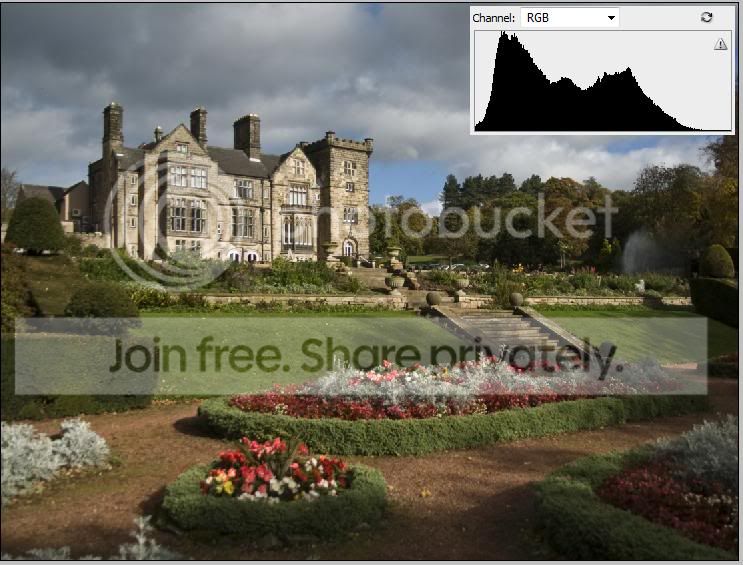
Judging how much adjustment to make really comes with experience. If you don't have the experience then use the histogram as your friend. It will tell you whether you are losing data in the shadows, or the highlights, or both, or neither. Based on the information presented you can decide whether or not you need to adjust the exposure.
What I would say is that given how camera metering works, if the exposures are coming out poorly it is rarely the camera that is at fault. They have their rules and limitations, which the photographer needs to be aware of, and they work well for "average" scenes. When things get more complicated - e.g. a white bride in a white dress standing in front of a white wall, or a dark groom in a dark suit in front of some dark trees, or the moon at night - then the photographer needs to take some control from the camera and straighten things out.
If you look on the Sekonic website (remembering it is their intent to sell you a light meter

) you will see a nice example of the different outcomes when metering for incident light (which a light meter does) vs metering for reflected light (which is what a camera does). Here is the example....
http://www.sekonic.com/classroom/classroom_2.asp
In the first three examples, shot with an exposure set for the incident light, the exposures are identical because the incident light is not changing. The fruit remains correctly exposed and the white plate reamins white, the grey plate grey and the black plate black. Manual exposure has been used to stop the exposure bouncing all over the place as the subject was changed.
In the second group of examples, with exposures set based on reading light reflected back from the scene, we have a bit of a disaster. Each exposure is different by 2 stops. The white plate is underexposed by 2 stops and now looks grey, with the fruit too dark. They grey (mid tone!) plate an its fruit look good, but the black plate is now overexposed by 2 stops and looks very washed out - rather an odd type of grey. The fruit looks terrible.
So, if you cant trust your camera's metering to know what on earth to do, and you don't have the skill/experience to allow you to make the necessary adjustments prior to taking the shot, trust your histogram.