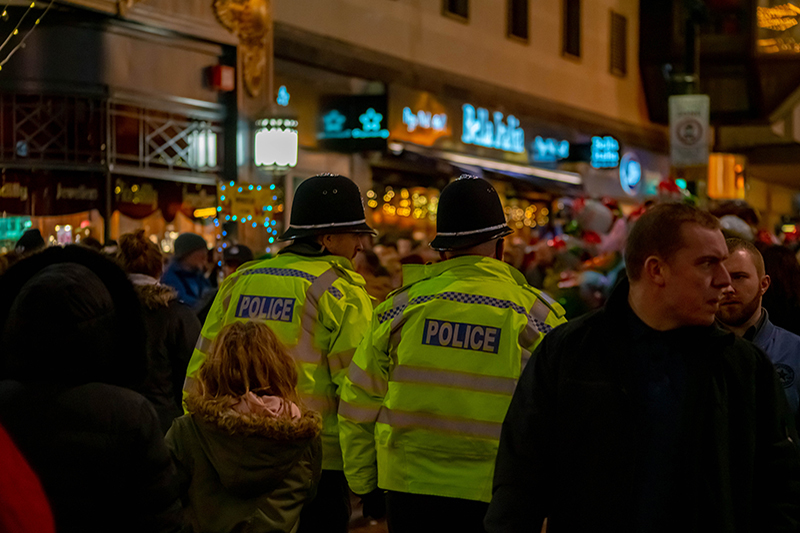
Keystone cops

Garry Edwards

Moderator
Messages
13,475
Name
Garry Edwards
Edit My Images
No
Brief history:

About 7 years ago a violent alcoholic who has what a Crown Court Judge described last week as “an appalling record” moved into a quiet residential street, and immediately started assaulting and threatening to kill various neighbours. There is one particular person, a close relative of mine, that he has singled out as a victim.

The police were called many times and occasionally attended, and he was arrested and taken to Court a couple of times, but basically they did far less than they could and should have done.

Eventually, he assaulted a police officer and at that point the police became interested. He was arrested for that and a number of other offences and part of his bail conditions stipulated that he must not enter the street, and he obeyed these conditions, since then he has lived in an hotel at public expense. Last November he was convicted of another assault, and barred from entering the street for another year.

Last week he appeared at Crown Court on a number of serious charges, but for some reason the CPS offered no evidence, so he’s innocent of all those charges.

Yesterday lunchtime he visited the address. My relative knew about this because another neighbour phoned to warn him, and he then looked at the CCTV on his phone. 999 call, during which he saw the man leaving in a car, told the police that and the police said that as he was leaving it wasn’t an emergency and they would not attend, but email the footage to them and they would deal with it, which he did immediately. Nothing heard from the police, he rang them later and they said that he would need to go to the police station and make a statement before they could do anything, he arranged to go at 6 pm. When he arrived they told him that they were changing shifts and couldn’t talk to him until at least 7 pm, but they closed the station at 8 pm so he had to go home, despite the obvious danger, because he had nowhere else to go.

Last night the man went back to the address, walking up and down outside his door, this time carrying a weapon, which appears to be a long bright metal bar, maybe a breaker bar or similar, hard to tell with grainy black and white footage.

999 call, this time the police said that they were on their way, might take a while because he had a weapon they would send a different response team, which never arrived. Stay on the line.

Then, "they’ve arrived, they’re outside, let them in."
" No, they’re not here".
"Yes they are, my computer says they are."
" No, I’m not opening the door until I can see them. Hang on, a police car has now arrived", end of call.

One officer had arrived, he knew nothing about the current incident, he had come to take a statement about the previous one. He didn’t want the statement to include the current incident but the victim insisted. The police officer then said that he and colleagues would go and arrest the man straight away, when pressed he said that he would phone the victim to confirm that he was in custody, but didn’t.

Latest message from victim to me “Phoned this morning to ask if it’s safe to leave the house (has he been arrested?) to be told that the phone operators can’t tell me due to data protection, only the police officers who are either off shift until tonight or not phoning back still. What a performance.”
 
It's starting to look like a life of crime is an entirely viable career choice.
 
The system is completely broken, I don't blame the police exactly, I bet their side of the story involves an underfunded/undermanned/overworked/demoralised force, probably the same with the CPS if it gets that far
 
What an appalling saga.


The system is completely broken, I don't blame the police exactly, I bet their side of the story involves an underfunded/undermanned/overworked/demoralised force, probably the same with the CPS if it gets that far
There's truth in what you say...to a point.... but look at the penultimate paragraph. That's just a lack of basic, essential communication. A phone call should have been made to the complainant even if it was to inform him that they were unable,for whatever reason, to detain the offender. I don't believe the excuse given by whoever took the call in the control room. ie breaching data protection regulations, would mean that a complainant is left in the dark, and, no doubt in some measure of fear for his safety, because he can't be told if the offender is in custody or not. The control room officer, probably a civilian rather than a police officer, could, and should have, made a call to the relevant custody suite to ascertain the situation and inform the caller who could then take any steps he felt were necessary to safeguard his personal safety.

A lot of what Garry has outlined was,imo, not down to a lack of resources but individual responsibility be it a particular officer or the person in the control room failing to communicate or,at least if that was,due to operational pressure on the police officer, request that someone did keep the complainant informed. By that I mean personally speak to someone who would be in a position to do that.
 
I have some sympathies for the police too, but only at the front-line end - police officers and staff have to follow their force protocols and procedures, they have no choice, and those protocols seem to put police convenience, resources, cost, safety of officers and so on at the top of the list and victim safety, communication, efficiency and care bottom of the page or not on the page at all.

And of course, lazy personnel can take full advantage of that if they want to, and some will even if most do their best,

The situation above is exactly accurate at the point that I posted it, but this is a close family member, I look after my own, I have contacts and I'm not a nice person, so I intervened. I emailed an extremely senior person last night (not in the police force), explained the situation and they then phoned both the Inspector in charge and the Sgt. about this.

The Sgt phoned the victim this morning to update him, said that he didn't know what was going on, didn't know whether the person had been arrested or not, the only person who would know was the officer who had said that he was going to arrest the violent man last night, no records of what had happened, and that officer wouldn't be on shift until tonight, by which time the Sgt would be off-shift.

The Inspector later phoned, he had phoned the officer responsible at home, the person had disappeared and the police are now looking for him and will arrest on sight, promised to provide an update as and when there was news.

Meanwhile, for his own safety, the victim has now moved into a hotel, not convenient or cheap but essential.

The biggest mystery here seems to me the phantom emergency response team, the computer said that they had arrived, they hadn't and never did. Contrast this with when this person attacked a police officer, loads of them came from everywhere, and very quickly. Why is the safety of police officers more important than the public?
 
I don't think the people in the control rooms always have sufficient local knowledge to understand when they're at the right place or not. I used to get hospital transport turn up as they thought it was me that needed it not someone else in sheltered housing that had a similar postcode and also the road name was similar. There's quite a few areas with all the same X road, X street and X cul de sac.

The CPS have had a lot of issues with evidence going missing. It does make you wonder if it's all incompetence or there is significant corruption going on.

Police forces do really need to organise hand over between shifts and document stuff properly so that someone else can check how far they've got with a particular process.

There's a lot of severe underfunding going on as well. Cuts in forces are savage and it just means hardly anyone can actually get the job done. Then when they do the CPS sit on it for ages, lose stuff. It takes ages to get to court then the little scrote often pleads a bad upbringing and gets off scot free anyway.

Whole system is broken.
 
I don't think the people in the control rooms always have sufficient local knowledge to understand when they're at the right place or not.
That certainly applies in this case, the police force covers a massive area ranging from a city to extreme rural and this incident occurred in a tiny village about 10 miles from the nearest town. But that's what software is for, the police controller said that the software showed that the first responder had arrived, they hadn't and never did.
The CPS have had a lot of issues with evidence going missing. It does make you wonder if it's all incompetence or there is significant corruption going on.
I think that the usual reason is an incredible level of incompetence, coupled with a lack of commitment to improvement
Whole system is broken.
Agreed. This thread is about the danger to one individual created by police incompetence and I don't want to make political points, but the whole system has been creaking at the seams under various governments for many years, totally underfunded, this affects the police, the courts system, the almost defunct legal aid system, the prisons and everything else. The only people who can achieve anything is the super-rich and powerful, and I note yesterday's headline that "Home Office spent £700,000 fighting Palestine Action legal battle over terror proscription, data reveals", the government is now taking it to the Appeal Court and the appeal will be heard next week - the system works only for them, it's supposed to work for us.
 
As someone who has worked in a police control room and also been a first responder I find the comments made by srichards to be viable. He probably has inside knowledge too.

The problem is far too deep to fully explain. It is a collection of bad decision making for a variety of reasons including politics and finances.

Police control rooms are largely staffed by people who have never done the job of an operational officer, are supervised by similar people and are likely to have little or no knowledge of the area they are covering and the criminals residing or operating there. Other than a few retired or incapacitated officers the ACR staff are civilians with no police experience. They work in a central control room so are likely to be from that area, not drawn in from the area they cover.

The software systems that run the show may not be linked force to force and are usually stand alone systems commissioned by each individual force with very varied results. The response car not being where they thought it was is likely to be down to a software glitch.

The policies regarding the attendance of incidents is set by the ACPO committee and if certain triggers such as "knife", "gun" or "weapon" are used by callers the flow chart has to follow the ACPO guidelines. Similarly if a named suspect has a record of violence or weapons they have to use officers who are trained and equipped best to deal with the incident.

It is all about risk management. By risk I mean the senior officer's promotion hopes. That's the bottom line.

There are also problems in the whole of the Criminal Justice System. Start with the fact that the prisons are full and work backwards. That is why criminals are being given totel rooms and not cells. That is why druggies who commit crime to pay for their habit get endless Drugs Awareness Courses not time inside. Reductions in CPS budgets mean that they have to prioritise prosecuting crimes with higher chances of success or those where funds can be recovered under the Proceeds of Crime Acts.

Changes to the police pensions and terms of employment have lead to a ratio of 80% of officers having less than five years service. Ten or fifteen years ago 80% had more than five years service. The country has wasted £billions on community policing projects thst were doomed to fail and have. Many PCSOs were set on to deal with anti-social behaviour on contracts that did not entail them working evenings and weekends. The offence of a house burglary is not rated as serious as a report of racial grafitti on a building. Officers may have to cut short their attendance of the burglary to get to the 'hate crime ' within 45 minutes.

The system is broken and sadly nobody in power has the knowledge of why it is broken let alone how to fix it.
 
The system is broken and sadly nobody in power has the knowledge of why it is broken let alone how to fix it.
That seems to be a valid assessment to me.

My own opinion is that many of our problems with crime proceed from an obsession with "fixing" instead of preventing. The one year reoffending statistic of 28% tells a very sad story. Clearly, all the "luxury hotel" prisons don't work. Perhaps we should try going back to bare cells and basic food. If we lock offenders up 24/7, at least the prison officer shortage might be reduced.
 
And there lies another problem. When I went to do a search at a prison I was there when the night shift arrived. There were about 8 or 9 of them, interestingly all carrying large rucksacks. The prison population was over 900. They can only manage with that ratio of staff to prisoners if the prison is not too hard on the inmates. The more discipline they enforce, the more staff needed and the higher tax burden to the public.

The other day I saw a report that stated that around 50% of prison officers recruited each year were Nigerian, many of whom only had short term visas.
 
Latest unbelievable update. . .
This known violent criminal, shown on CCTV last night carrying a weapon in a street that he has been ordered by a Court not to enter, has now been arrested - and then bailed, whilst the police seek permission to charge him from the CPS
 
Latest unbelievable update. . .
This known violent criminal, shown on CCTV last night carrying a weapon in a street that he has been ordered by a Court not to enter, has now been arrested - and then bailed, whilst the police seek permission to charge him from the CPS

As I said Garry; the prisons are full. Work backwards from that point. I was suffering the same frustrations as you are in arresting people only to see them get a slap on the wrist and be back out on the streets.


Nothing will change unless there are sufficiant deterrents. To do that more prisons are required, the soft prison life needs changing to a more harsh regime and those who deserve to go to jail should be sent there. That will create a deterrent leading to a reduction in crime and therefore some of the older, unsuitable prisons can be phased out as the prison population decreases. To help fund the initial cost of building more prisons there could be alterations to the CJS to reduce free access to lawyers for repeat offenders. It makes a mockery of the system when the same people are being arrested two or three times a week and are entitled to free legal aid, access to a doctor, etc.
 
I totally get that, but we're talking about a cell at the local police station, not a prison. Why can't they hold him there, knowing the danger he poses, until they can get him before a Magistrate (or, preferably a District Judge) ?

This seems to me to be a police problem, not a systems problem.
 
I totally get that, but we're talking about a cell at the local police station, not a prison. Why can't they hold him there, knowing the danger he poses, until they can get him before a Magistrate (or, preferably a District Judge) ?

This seems to me to be a police problem, not a systems problem.

I would disagree. All detained persons are dealt with under PACE. There are strict rules that have to be followed and time limits obeyed. The pr ePACE days of chucking someone in a local cell for up to 3 days and not having to tell anybody that he was there ended in the 1980's.
 
This article in Policing Insight provides some interesting information about criminal activity from 1981 to 2023...


In fact, I was startled by how wrong my own perceptions were,
 
I would disagree. All detained persons are dealt with under PACE. There are strict rules that have to be followed and time limits obeyed. The pr ePACE days of chucking someone in a local cell for up to 3 days and not having to tell anybody that he was there ended in the 1980's.
I believe that they can hold for up to 24 hours without charge, the problem seems to me that they just don't care.

I've written to my contact again, she may or may not be able and willing to help, time will tell. Meanwhile a dangerous criminal is on the loose and an innocent member of the public is in danger from him. Keystone cops.
 
I believe that they can hold for up to 24 hours without charge, the problem seems to me that they just don't care.

I've written to my contact again, she may or may not be able and willing to help, time will tell. Meanwhile a dangerous criminal is on the loose and an innocent member of the public is in danger from him. Keystone cops.

The key is 'up to'. However, if the interview is complete and there are no more investigations that he could interfere with then his brief would be pushing for his release and the Custody Sergeant is obliged to release him unless there are good reasons to justify an extension. The laws of PACE are very strict and have to be followed. I can understand your frustration, but you are forming opinions without being aware of the facts.
 
Up to, yes.
You haven't seen the 2 separate lots of video footage. I have and will be happy to send it to you
The first one shows him arriving in what appears to be his mothers' car, then walking into a building that's on a street that he has been ordered not to enter, then walking out of it, talking to an accomplice in another car, then walking back to his mothers's car and then driving off.
That's the first breach, presumably it would take the police some time to anyalyse that video and satisfy themselves that he has been identified, and as he was also clearly talking on his phone, it would take time to get confirmation that the phone was there too.

So, they then release him, and immediately re-arrest him based on his second breach, this time walking up and down with a weapon in his hand, which again would take time - if only they could be bothered.
 
Up to, yes.
You haven't seen the 2 separate lots of video footage. I have and will be happy to send it to you
The first one shows him arriving in what appears to be his mothers' car, then walking into a building that's on a street that he has been ordered not to enter, then walking out of it, talking to an accomplice in another car, then walking back to his mothers's car and then driving off.
That's the first breach, presumably it would take the police some time to anyalyse that video and satisfy themselves that he has been identified, and as he was also clearly talking on his phone, it would take time to get confirmation that the phone was there too.

So, they then release him, and immediately re-arrest him based on his second breach, this time walking up and down with a weapon in his hand, which again would take time - if only they could be bothered.

I repeat; you are forming opinions without knowing the facts. What you aren't aware of are the rules and regulations that the police have to follow.
 
Nothing will change unless there are sufficiant deterrents. To do that more prisons are required, the soft prison life needs changing to a more harsh regime and those who deserve to go to jail should be sent there. That will create a deterrent leading to a reduction in crime and therefore some of the older, unsuitable prisons can be phased out as the prison population decreases. To help fund the initial cost of building more prisons there could be alterations to the CJS to reduce free access to lawyers for repeat offenders. It makes a mockery of the system when the same people are being arrested two or three times a week and are entitled to free legal aid, access to a doctor, etc.

This would seem like the logical approach and one which I have previously shared. But when looking at a real world example, such as America, where the penal system is severe yet the crime rate is crazy and would suggest that harsher punishments don't actually deter crime, although I beleive that there are other deep rooted reasons to consider and also that punishment may be considered to take priority over rehabilitation, so reoffending rates can also be higher.

I'm sure I read a study where it suggested that the probability of being caught rather than the punishment goes further with reducing crime. If true, then that would suggest we should prioritise increasing police resources rather than building more prisons, although if currently overcrowded then we certainly could use more. If they start to empty then we can use them as immigration detention centres instead.

Another factor is Government/Local Authority interference. If you overburden law abiding companies in certain sectors with excessive taxation, legislation and regulation then the risk of being caught circumventing such taxes and rules becomes more acceptable. This is something currently being seen in the waste industry.
 
You cannot compare America with the UK. The welfare systems are vastly different and can create more aquisitive crime in the States than in the UK.

Criminals do not fear being arrested and charged if there is no meaningful deterrent. A couple of days of disruption is turned into a victory when they walk out of the Magistrate's Court with a fine that ultimately the social services will pay or a suspended or conditional sentence that will mean nothing if they re-offend. The whole court process is an expensive pantomime.

Criminals fear two things; prison and getting hurt. That is why police dogs were so effective before they were emasculated by regulations. I can give examples of career burglars who never offended again after receiving instant canine justice at the end of a track or where they got an unexpected pasting from the householder.
 
You cannot compare America with the UK. The welfare systems are vastly different and can create more aquisitive crime in the States than in the UK.

Criminals do not fear being arrested and charged if there is no meaningful deterrent. A couple of days of disruption is turned into a victory when they walk out of the Magistrate's Court with a fine that ultimately the social services will pay or a suspended or conditional sentence that will mean nothing if they re-offend. The whole court process is an expensive pantomime.

Criminals fear two things; prison and getting hurt. That is why police dogs were so effective before they were emasculated by regulations. I can give examples of career burglars who never offended again after receiving instant canine justice at the end of a track or where they got an unexpected pasting from the householder.

Yes, I did say that America has differences to the UK that should also be considered, however, even looking away from America the general impression is that harsher punishment doesn't deter crime, even though on the face of things it goes against logic. I'm not sure how much evidence there is behind this because I expect it is rather difficult to create control groups. Another thing I see in articles is that if the criminals are unaware of potentially harsher sentences, then they are of course ineffective.

On saying that, I would certainly like to believe that soft sentences are wrong and on top of this from what I often see there appears to be inconsistency with sentencing, which infuriates more than anything. Although the often retort rolled out is "we don't know what really happened / know what evidence" etc. But it doesn't take a genius to see when selective leniency has been applied by the judge.

If prisoners do fear prison, which I'm sure is the case for many, I can appreciate that the effectiveness of this is reduced if they don't fear getting caught, hence the focus on many studies being that increasing the chances of getting caught is perhaps the bigger deterrent? Although, I wonder if a combination of this and harsher sentences would be the ultimate deterrent?

I think when it comes to certain crimes where the person will probably always be a danger, then longer sentences would certainly be welcome even if it's just to keep them away from the public.


Here's an article relating to Sweden: https://www.lunduniversity.lu.se/article/research-offers-no-evidence-support-tougher-sentencing
One on the UK: https://www.transformjustice.org.uk...ter-crime-revealed-by-the-sentencing-council/
This one also compares the UK to Europe and even Russia and Turkey: https://prisonreformtrust.org.uk/longer-prison-sentences-may-win-votes-but-they-wont-stop-crime/
Ireland: https://www.maynoothuniversity.ie/r.../does-public-want-harsher-sentences-criminals


Re. dogs, I noticed in many videos that they are often muzzled now, that seems odd as surely those big nashers are what put the fear of God in those on the receiving end? I have to admit from what I've seen police dogs were incredibly effective (when unmuzzled) as for starters I can't imagine many being able to outrun one! lol
 
This would seem like the logical approach and one which I have previously shared. But when looking at a real world example, such as America, where the penal system is severe yet the crime rate is crazy and would suggest that harsher punishments don't actually deter crime, although I beleive that there are other deep rooted reasons to consider and also that punishment may be considered to take priority over rehabilitation, so reoffending rates can also be higher.
Agreed, it doesn't seem to work too well. And the USA is by no means unique in its treatment of criminals, in fact it was pretty bad here, before the Howard Reforms, https://www.parliament.uk/about/liv...laworder/policeprisons/overview/prisonreform/

But, whether or not "Justice" systems work as expected, when people are either executed or locked up for a very long time, the public are protected. Under our own system, the public doesn't seem to count. It doesn't matter to me whether this is due to:
1. Inadequate resources
2. Deliberate policy
3. Bad law
4. Or police incompetence, laziness or apathy.

What we have in this instance is a completely innocent victim who has worked hard all his life, now having to stay in an hotel indefinitely because he dare not live in his own home.

@Clive K says that I don't know what I'm talking about, be may or may not be right on a technical level, but that isn't the point.

Criminals fear two things; prison and getting hurt. That is why police dogs were so effective before they were emasculated by regulations. I can give examples of career burglars who never offended again after receiving instant canine justice at the end of a track or where they got an unexpected pasting from the householder.
I agree, very many years ago I was heavily involved in training police dogs, initially with/for the Essex force. We taught them to bite, not to make a noise and not to hope that the criminals would simply give up when they saw a dog, and if the criminal was carrying a weapon then the dogs really went to town:) The process was very simple, in training the "criminal" would be wearing very heavy protection, when the dog brought him down he would continue to struggle and would try to hit and kick the dog, which would motivate the dog to try harder:)
 
What is plainly needed is something that changes the minds of those who would be criminals, rather than deterrent or punishment.
 
Another factor is Government/Local Authority interference. If you overburden law abiding companies in certain sectors with excessive taxation, legislation and regulation then the risk of being caught circumventing such taxes and rules becomes more acceptable. This is something currently being seen in the waste industry.
Going back to the "Policing Insight" article I referenced above: is it possible that what is actually happening is that the decrease in reported crime is uncovering misbehaviour that once was hidden among a mass of material?
 
The biggest mystery here seems to me the phantom emergency response team, the computer said that they had arrived, they hadn't and never did.

I'm sure that people in the system lie. After an incident I sat up all night watching my own CCTV. The police never came and when I phoned them I was told that they'd done a drive by... well, no they hadn't as I'd have seen them and they'd have been recoded on my CCTV. A similar thing happened to a friend who lives in a cul de sac, they were told the police did a drive by when they hadn't. They'd have had to drive past, do a three point turn and drive past again and they would have been recorded on the doorbell camera. Until people start being being sacked and hopefully prosecuted for lying I can't see this changing. I'm sure in some cases it's a case of someone deciding "tell them anything just to get them off the phone."
 
Did ANY cars drive past? Not all police cars are marked...
 
Sorry, Garry, that was aimed at Alan rather than you.
 
Sorry, Garry, that was aimed at Alan rather than you.
Fair enough, but my answer is the same as Alan's. It's a cul de sac, and even if the victim was blind his CCTV cameras would have recorded any cars. The police either lied or were very confused, I don't know which.
 
The whole situation would be much clearer to everyone if I could show you the very high quality CCTV, but it shows not only the criminal and his accomplice, but also innocent people, and several parked cars with their reg plates showing, so I can't publish it. Needless to say, the police have this footage.
 
Going back to the "Policing Insight" article I referenced above: is it possible that what is actually happening is that the decrease in reported crime is uncovering misbehaviour that once was hidden among a mass of material?

Apologies, I never read it and it's an interesting article. It does seem to make a lot of sense. There's no doubt that media bias/sensationalism has a substantial impact on public perceptive and of course political rhetoric. Is reported crime down because there is less crime, or because it simply isn't being recorded (or recorded appropriately)? I've not looked at this myself.

Speaking of media/political rhetoric, one area I know where this is the case is in the waste and recycling industry. The excessive tax and regulation has encourage serious organised crime to grow in this sector. The industry is in serious trouble, but the general public are mostly completely unaware as it's usually only the construction industry that has all the focus, but they rely heavily on the waste management industry, as do a lot of general trade.
 
What is plainly needed is something that changes the minds of those who would be criminals, rather than deterrent or punishment.

I've always been an advocate of educating rather than punishing. There's always going to be a small number of evil people regardless of what you do, they are just wired like that, but I would like to think that a lot of it probably starts at home and is also a result of surroundings, which should be fixable.

Oh, apologies to Garry for me digressing away from the main point of this thread.
 
Agreed, it doesn't seem to work too well. And the USA is by no means unique in its treatment of criminals, in fact it was pretty bad here, before the Howard Reforms, https://www.parliament.uk/about/liv...laworder/policeprisons/overview/prisonreform/

But, whether or not "Justice" systems work as expected, when people are either executed or locked up for a very long time, the public are protected. Under our own system, the public doesn't seem to count. It doesn't matter to me whether this is due to:
1. Inadequate resources
2. Deliberate policy
3. Bad law
4. Or police incompetence, laziness or apathy.

What we have in this instance is a completely innocent victim who has worked hard all his life, now having to stay in an hotel indefinitely because he dare not live in his own home.

@Clive K says that I don't know what I'm talking about, be may or may not be right on a technical level, but that isn't the point.


I agree, very many years ago I was heavily involved in training police dogs, initially with/for the Essex force. We taught them to bite, not to make a noise and not to hope that the criminals would simply give up when they saw a dog, and if the criminal was carrying a weapon then the dogs really went to town:) The process was very simple, in training the "criminal" would be wearing very heavy protection, when the dog brought him down he would continue to struggle and would try to hit and kick the dog, which would motivate the dog to try harder:)

I'm aware of how police dogs are trained, my training and working of police dogs is probably later than your experience. I worked for a while in police dog training and was responsible for recruiting prospective dogs from animal sanctuaries and public donations. The method that you describe had been found to be flawed in that some dogs associate the heavy protection with what we called 'man work' and wouldn't act the same way when sent against suspects wearing normal clothing. In other instances the dogs became overly aggressive and suspicious and would look to bite when they should have been doing a passive containment. We used light sleeves under normal clothing that was representative of what the dogs met on the streets. When you faced a "clamp" type dog you just had to wince and bear it whilst hoping the leave command would be obeyed. The only dogs that were trained on full protective suits were the firearms dogs as they were allowed under the Manual of Guidance to bite anywhere, not just the right arm on training exercises.

Every dog is different and requires the training methods to be tweaked to suit. Even changing a dog's diet can make a big difference between passing an annual licencing course or failing by being too aggressive or not efficient. You never know how a dog will react operationally it is put to the test on the streets and its experience on the streets often changes its behaviour through its career and requires extra tweaking of the scheduled training to rectify any negative changes.
 
I'm sure that people in the system lie. After an incident I sat up all night watching my own CCTV. The police never came and when I phoned them I was told that they'd done a drive by... well, no they hadn't as I'd have seen them and they'd have been recoded on my CCTV. A similar thing happened to a friend who lives in a cul de sac, they were told the police did a drive by when they hadn't. They'd have had to drive past, do a three point turn and drive past again and they would have been recorded on the doorbell camera. Until people start being being sacked and hopefully prosecuted for lying I can't see this changing. I'm sure in some cases it's a case of someone deciding "tell them anything just to get them off the phone."

I've seen the other side of things. I was sent a notice of intended prosecution for a speed camera infringement in a marked police vehicle when the vehicle in the photograph was an unmarked van with the same VRM. I've been in situations where the car that I was in was showing up in a diferent town on the tracking data. But, nobody is going to lie when an incident is recorded on CCTV.

The issue with Garry's example is that he is only seeing this incident from his personal point of view and interpreting anything that does not correspond to his wishes as being corrupt or incompetant. He doesn't understand the regulations defined by PACE and the add on Acts that have ammended and added to it. He doesn't understand that criminals have rights whilst in custody or that there are many companies of solicitors making a lot of money suing the Police Authority for unlawful detention or unlawfully extending detention. He is also benefitting from hindsight that officers at the time didn't have.
 
Did ANY cars drive past? Not all police cars are marked...

Very few cars and none which could be believed to be police cars. I assume they don't drive taxis or look exactly like neighbours cars, pull into neighbours driveways and then get out and enter their houses. I don't believe for a single second that they did a drive by for me or my friend in the dead end.
 
...one area I know where this is the case is in the waste and recycling industry.
Agreed

I did a job for a medium sized waste company a couple of decades ago, migrating their reporting system onto Windows from a proprietary system. It was something of a shock just how much data was involved and how many reports were needed to meet the rules.
 
I've always been an advocate of educating rather than punishing. There's always going to be a small number of evil people regardless of what you do, they are just wired like that, but I would like to think that a lot of it probably starts at home and is also a result of surroundings, which should be fixable.

Oh, apologies to Garry for me digressing away from the main point of this thread.

You have nothing to apologise for.

The problem is that crime pays. According to the info I have, which I can't check for accuracy, the violent criminal is aged about 53, has never worked, he is a registered alcoholic who is given 18 cans of lager every day by the state, He lives entirely at public expense and always has done.

I'm aware of how police dogs are trained, my training and working of police dogs is probably later than your experience. I worked for a while in police dog training and was responsible for recruiting prospective dogs from animal sanctuaries and public donations. The method that you describe had been found to be flawed in that some dogs associate the heavy protection with what we called 'man work' and wouldn't act the same way when sent against suspects wearing normal clothing. In other instances the dogs became overly aggressive and suspicious and would look to bite when they should have been doing a passive containment. We used light sleeves under normal clothing that was representative of what the dogs met on the streets. When you faced a "clamp" type dog you just had to wince and bear it whilst hoping the leave command would be obeyed. The only dogs that were trained on full protective suits were the firearms dogs as they were allowed under the Manual of Guidance to bite anywhere, not just the right arm on training exercises.

Every dog is different and requires the training methods to be tweaked to suit. Even changing a dog's diet can make a big difference between passing an annual licencing course or failing by being too aggressive or not efficient. You never know how a dog will react operationally it is put to the test on the streets and its experience on the streets often changes its behaviour through its career and requires extra tweaking of the scheduled training to rectify any negative changes.
You're right. Back in the day, we trained on very heavy (Karenswood) manwork sleeves, but then moved on to hidden "puppy" sleeves.
We also trained with the criminal hiding his right arm, and running with a wall to his right, so that the dog would grab whatever it could if the right arm wasn't available. Yes, my experience is out of date, but although I started with Essex, I later worked with both the Met and with Lancashire, this was by no means a one-off. Back then, manwork was chase and attack, not follow and annoy . . . I also had the pleasure of meeting the first ever Met police Rottweiler, and for some reason I remember that he was called Abelard, he had an outstanding arrest record and no criminal ever wanted to meet him.

I still have the scars from the time a dog disobeyed the command to leave, about 1/2" of leather covered by very thick hessian, you'd think that a dog couldn't bite through that but I know better:)

I've seen the other side of things. I was sent a notice of intended prosecution for a speed camera infringement in a marked police vehicle when the vehicle in the photograph was an unmarked van with the same VRM. I've been in situations where the car that I was in was showing up in a diferent town on the tracking data. But, nobody is going to lie when an incident is recorded on CCTV.

The issue with Garry's example is that he is only seeing this incident from his personal point of view and interpreting anything that does not correspond to his wishes as being corrupt or incompetant. He doesn't understand the regulations defined by PACE and the add on Acts that have ammended and added to it. He doesn't understand that criminals have rights whilst in custody or that there are many companies of solicitors making a lot of money suing the Police Authority for unlawful detention or unlawfully extending detention. He is also benefitting from hindsight that officers at the time didn't have.
Yes, I'm prejudiced, but I know the whole story, and I have the CCTV footage. I presume that the police call handler didn't know about the CCTV.
You said earlier that
The key is 'up to'. However, if the interview is complete and there are no more investigations that he could interfere with then his brief would be pushing for his release and the Custody Sergeant is obliged to release him unless there are good reasons to justify an extension. The laws of PACE are very strict and have to be followed. I can understand your frustration, but you are forming opinions without being aware of the facts.
The reality, in this locality at least, is that what this person would get is the local legal aid solicitor, who wouldn't attend himself because it doesn't pay. He would send an unqualified person, who is normally an ex police officer.

I don't doubt your integrity or good faith, but is it possible that your views are heavily influenced by your past experience?
 
I've seen the other side of things. I was sent a notice of intended prosecution for a speed camera infringement in a marked police vehicle when the vehicle in the photograph was an unmarked van with the same VRM. I've been in situations where the car that I was in was showing up in a diferent town on the tracking data. But, nobody is going to lie when an incident is recorded on CCTV.

The issue with Garry's example is that he is only seeing this incident from his personal point of view and interpreting anything that does not correspond to his wishes as being corrupt or incompetant. He doesn't understand the regulations defined by PACE and the add on Acts that have ammended and added to it. He doesn't understand that criminals have rights whilst in custody or that there are many companies of solicitors making a lot of money suing the Police Authority for unlawful detention or unlawfully extending detention. He is also benefitting from hindsight that officers at the time didn't have.

Whilst I understand that the police in general are underfunded and individual officers are p****d off or depressed with their lot and the law and that in some instances the law seems to be an ass there should still be some standards such as honestly and some consequences for dishonesty or failure to do their duty.

I spent years controlling engineers, not the same thing but stay with me for a second, over those years I never once lied to a customer. I never once told a customer that an engineer was on the way when they were not and not once did I say that the engineer had been but no one answered the door. IMO people would have a little more respect if the authorities said "Sorry but we have no one to respond. We'll send someone as soon as we can". At least that could be seen as honesty and we could all get enraged and write to our MP rather than thinking that the police and/or whichever agency answers the phone are at least sometimes at worst telling porkies or at best not doing basic call handling and allocation.
 
You have nothing to apologise for.

The problem is that crime pays. According to the info I have, which I can't check for accuracy, the violent criminal is aged about 53, has never worked, he is a registered alcoholic who is given 18 cans of lager every day by the state, He lives entirely at public expense and always has done.


You're right. Back in the day, we trained on very heavy (Karenswood) manwork sleeves, but then moved on to hidden "puppy" sleeves.
We also trained with the criminal hiding his right arm, and running with a wall to his right, so that the dog would grab whatever it could if the right arm wasn't available. Yes, my experience is out of date, but although I started with Essex, I later worked with both the Met and with Lancashire, this was by no means a one-off. Back then, manwork was chase and attack, not follow and annoy . . . I also had the pleasure of meeting the first ever Met police Rottweiler, and for some reason I remember that he was called Abelard, he had an outstanding arrest record and no criminal ever wanted to meet him.

I still have the scars from the time a dog disobeyed the command to leave, about 1/2" of leather covered by very thick hessian, you'd think that a dog couldn't bite through that but I know better:)


Yes, I'm prejudiced, but I know the whole story, and I have the CCTV footage. I presume that the police call handler didn't know about the CCTV.
You said earlier that

The reality, in this locality at least, is that what this person would get is the local legal aid solicitor, who wouldn't attend himself because it doesn't pay. He would send an unqualified person, who is normally an ex police officer.

I don't doubt your integrity or good faith, but is it possible that your views are heavily influenced by your past experience?

Funnily enough, yes. Because I have been involved in many incidents like this and had to deal with them impartially irrespective of how it appears. Anyone in the police, civilian or officer who lies is on a very short career path. The criminals however can and are expected to lie without further punishment. Police are monitered by bodycams, radio transmissions, gps tracking, their vehicle status is recorded right down to thether the indicators and brake lights were on. But occasionally gremlins get the better of technology, misunderstandings occur, bad decisions are made in good faith. All of these are scrutinised by supervisors and ultimately the D&C Dept and the PCA.

But, let us look at your own experience. You are probably the only one on here who thinks that your son was entitled to discharge a shotgun through a vehicle windscreen with the intention of stopping the driver. Not even a police officer would get away with that, but you think that your lad was hard done to. That is just one example where you express a personal and highly polarized opinion on things that you do not fully understand. Having a friend who is a retired Police Inspector does not give you police experience. He could have been in charge of stationary or vehicle procurement for all we know. In any case, his knowledge and experience is not here for us to question if we needed to. You might be misunderstanding him.

Solicitors do employ partially qualified staff out of hours. I don'e see the relevance of that. But, if the custody sergeant had kept laddo in for the full 24 hours as you think that he should despite all current enquiries having been completed and viewed by CPS if necessary there would be plenty of fully qualified solicitors willing to help him claim. They would have legal access to the custody record that is completed and time stamped, any interviews and statements obtained, again timed and dated and the duties carried out by the interviewing officers, again time and date audited. There has to be a legal necessity for detention.

As for your experience with police dog training; your comments present and previous do not fill me with any conviction that you have had anything other than bit parts before the introduction of the national Manual of Guidance in the mid 1990s and the gradual introduction of civilian, but still Home Office licenced, training staff in the following decade.
 
Back
Top