Is this your style?

wooster

Suspended / Banned
Messages
1,171
Edit My Images
Yes
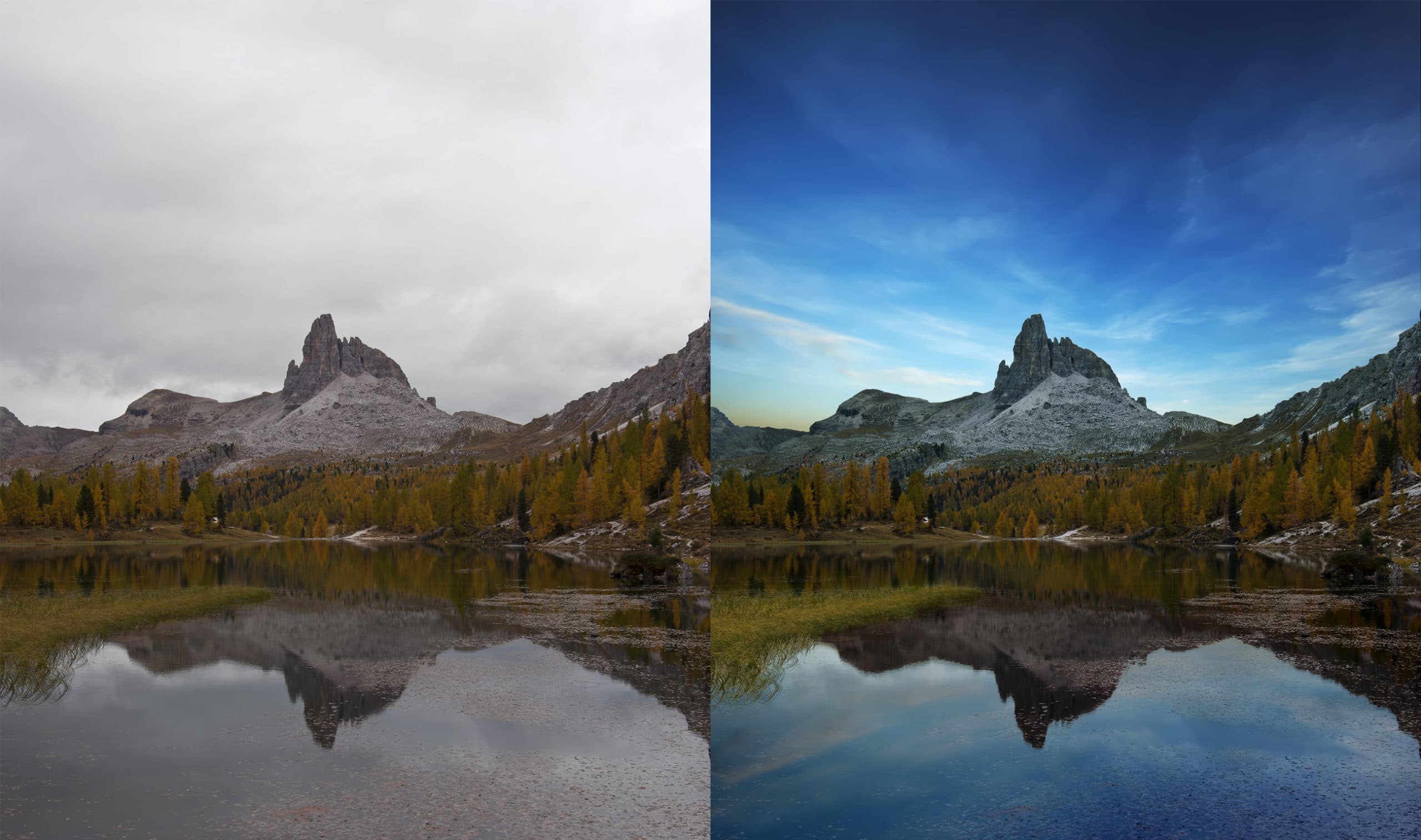
First, I admit I am feeling under the weather today and not in a great mood and I'm probably getting grumpier as I get older. Added to that, I have little respect for this magazine, whose only function seems to be to give posh kids a leg up into a career in journalism so just about anything they plug is likely to irritate me. With that said, I do often feel photography is something other than photography nowadays


Am I in a minority? ( not about the general grumpiness ) but about the way we process images now.
 
Last edited:
Personally, I'm with you. I don't agree with these fake sky editing programs at all - Luminar is it too that I catch the advert for on YouTube.

For me, the excitement is going out to catch a great sky, or trying to predict a great sky, or sitting there waiting for a great sky. I'd much rather do that than sit at the computer making fake photos.
 
Third-rate techniques make third-rate photos. How can you possibly capture the mood of the moment you press the shutter with this type of 'fix'? How can you learn to see a potential image if you're thinking 'Well I can replace the sky/clone out the elephant/ add granddad's trousers"? And a blue sky with cumulus over a shaded grey foreground, or with the sun coming from two directions? And yes, I'm already old and grumpy.
 
Totally agree just plain wrong
 
The average person would only get to a location such as their example a handful of times so the chances of conditions suiting a striking photo are exceedingly slim.
 
Seems to me that it's a society-wide problem. We want it quickly, easily and it cheapens the experience completely. You see it in every aspect of life today. If we can't get all we want one way, we'll get it another. The end justifies the means and if it makes the end worthless who cares? It's why so many people struggle to feel engaged with anything and end up alienated from life. Experiences have just become a tick to document by sticking it on our wall or instagram or wherever.
 
Luxury. In my day you had to get up at ten o'clock at night, half an hour before you went to bed, and walk 200 miles before dawn in freezing fog carrying your 20kg cast iron tripod and mahogany camera, then shoot the scene on expired Velvia through 16 garishly coloured Cokin filters to get photos like this. If we were lucky.
 
It's just another tool, along with autofocus, metering in camera and pre-cut sheet film instead of having to pour your own plates.

;)

People have been adding and removing parts of images for as long as I can remember, and before photoshop was a verb there was all manner of masking and retouching happening. Certainly these tools make it easier for a skilled practitioner (have you ever tried mixing images? much less easy than you'd think to do it well) while those who aren't skilled will still turn out images that suck a bit.
 
I have no problem with the software. The expectation of extremes I do.
Not all skies are bright blue with fluffy clouds. Grass is not usually vivid green and there are such things as shadows.
Lips aren't always plump, people get wrinkles, cellulite and grey hair.
Reality is,,,, well real.
:mad::runaway::beer:
 
I have no problem with the software. The expectation of extremes I do.
Not all skies are bright blue with fluffy clouds. Grass is not usually vivid green and there are such things as shadows.
Lips aren't always plump, people get wrinkles, cellulite and grey hair.
Reality is,,,, well real.
:mad::runaway::beer:
That reminds me of something :)
View: https://m.youtube.com/watch?v=sTJ7AzBIJoI
 
Writing style: poor


There is very little wrong with my style of writing. I just prefer economy of words.
Your response doesn't escape the fact that your opinion of AP with regard to journalism is somewhat errant.

You might also wish to consider your opening post before criticising other people's writing and grammar.
 
There is very little wrong with my style of writing. I just prefer economy of words.
Your response doesn't escape the fact that your opinion of AP with regard to journalism is somewhat errant.

You might also wish to consider your opening post before criticising other people's writing and grammar.

Well, I didn't criticise your grammar at all.

I responded the way I did for two reasons. First you were confrontational yet gave no justification for your confrontation and it irritated me a little and I responded in kind. I probably shouldn't have but I did. The second reason, I guess, was the attempt at novelty in the structure of your response. To you, it seemed to make your response more interesting but to me it was for some reason, tedious. It's just a point of view. Some people actually find Stephen Fry's writing style bearable so there's no accounting for taste. I have no more right to define what is, or is not, good style than you, so feel free to consider my opinion worthless. I won't disagree with you.

If you had simply said that you disagreed with my opinion I'd not even have mentioned it. I shouldn't have done really and I only did as a reaction as mentioned above. Anyway, we're all different so we should perhaps let it be and agree to differ. I It's possible that I am even grumpier today than I originally thought. No hard feelings I hope.

As far as my opinion of AP is concerned, I also understand your view is as valid as mine, and I'm sure a lot of people enjoy the magazine. It's just an opinion after all and I am reasonable enough to understand that. My perception is that AP has declined markedly over the years, and only mentioned it by way of explaining that the fact that their endorsement of the product might be influencing my opinion of the software. Perhaps I shouldn't have mentioned it as it has diverted attention from my original question.

EDIT
]BTW I realise I still haven't given any justification for my comments re AP and I could do if you really want me to, but it would probably be unbearably tedious for everyone involved so I will just shut up about it if you don't mind ;)
 
Last edited:
It seems to me that the trouble with excessive image manipulation is that it creates a distortion and ultimately a vortex of frustration. You take a picture of a view. At home in front of your computer, you click a button and skies pop. You add a filter and everything looks hyper-real and lurid. Then the next guy comes along and takes his picture and keeps it as it was on the day.. You both post your pics online and everyone oohs and ahhhhh at the popped version so from then on everyone wants to make theirs pop and if you don't your pics become second rate, uninteresting and ignored.

It's nothing like AF on cameras.or pre-cut film; these that change nothing about the final image. These make it easier to get a realistic final image. Also, while I get this sort of thing happened in the darkroom, in my opinion the relative ease with which radical changes can be made and the fact that software is being peddled with this as the main selling point means you've left photography behind and moved into the realms of something else. Everyone ends up producing imagined scenes that aren't there and no-one is happy because the whole point of landscape photography ( to photograph nature ) has just been obliterated. It has as much value as the fairies that fascinated Conan-Doyle.
 
Last edited:
I'm looking at it a bit differently. It's the natural evolution of processing tools and they will only get better and more capable. There is definitely a market for hyper-real landscape images and personally I'm not sure the techniques or tools to achieve the end image matter. Is this everyone's cup of tea? Surely not. And that's ok.
 
I do agree that it’s happening naturally but my contention is that it’s a self-destructive path leading nowhere. Photography ends and something else, I’ve suddenly decided to call “e-crunching”, takes place.

Will people like it? As you say, I’m sure some will. Should I try to resist it in the hope it will go away? Certainly not: that’s futile and wrong. I just don’t see it as landscape photography in any meaningful sense and it leaves me wondering where landscape photographers will end up.

I have my tastes and, naturally, they don’t mean anything to anyone else, but I’d like to be able to look at a picture of a natural wonder and know that what I’m looking at exists. Only that way can I feel awed by it instead of slightly titillated by some clever software trick.

If you take that away from landscape photography and you’ve neutered the medium. To me it’s slightly similar to the difference between porn and a meaningful sexual encounter. One enhances, the other destroys in a spiral of dissatisfaction.

Thats just my position. I’m not trying to convert anyone to it
 
Last edited:
I have my tastes and, naturally, they don’t mean anything to anyone else, but I’d like to be able to look at a picture of a natural wonder and know that what I’m looking at exists. Only that way can I feel awed by it instead of slightly titillated by some clever software trick.

If you take that away from landscape photography and you’ve neutered the medium.

I have no issue with you having personal likes and dislikes, but I think anything that "constrains " how people can make landscape photographs would be neutering the medium.
 
I don’t personally derive more or less enjoyment from an image knowing how it was created. Wet plate collodion? Marvellous! Pin hole using a biscuit tin? Rock on! AI enhanced sky? Jolly good! Amped up HDR? Errr, no I’ll draw the line at that.

Joking aside, so what? Using technology to make up for your own short comings in technique (or enhance it) is fine by me. This software isn’t something I’d consider using but if other people do, then that poses no threat to my own photography. It’s changing the truth of the image for sure, but most post processing does to a greater or lesser degree. And if an image is being presented for its aesthetics only, ie it’s not a news or documentary image, then I don’t have a problem. Other opinions are available!
 
Last edited:
I have no issue with you having personal likes and dislikes, but I think anything that "constrains " how people can make landscape photographs would be neutering the medium.

Thank you. Pretty much as I said a few times in my posts
 
I feel I was perhaps a bit more irritated by the AP promotion yesterday than I normally would have been due to a mixture of an ailment which is p***ing me off right now and the treatment which makes me woozy. Also the comment about AP was a bit of a red herring.

Apologies to @DemiLion for a slightly petulant response.

Although my views are as described and to my mind, there's a clear difference between, on the one hand, making a shot easier ( or even possible) using technology, and on the other using technology to produce an image of something that doesn't exist. Of course you may disagree and if so, I hope you enjoy your image production. Live and let live.
 
Thank you. Pretty much as I said a few times in my posts

OK , I have obviously misunderstood the post I responded to and the points you were making in your other posts.

I did think you were suggesting in your posts that excessive processing, software tricks, and landscapes photographs that weren't "natural" were damaging the practise of landscape photography and neutering the medium.
 
OK , I have obviously misunderstood the post I responded to and the points you were making in your other posts.

I did think you were suggesting in your posts that excessive processing, software tricks, and landscapes photographs that weren't "natural" were damaging the practise of landscape photography and neutering the medium.

I hope that isn't the impression I've given. If so then I need to clarify that it wasn't my intention.

While I most certainly do think it's damaging the medium and I don't like it. That's my opinion. However, I'm not religious about it and certainly not advocating or telling people to stop. I was putting forward an idea for discussion. Even the title of my thread " Is this your style?" was in the form of a question. It's the pleasure of forums; people disagree and I was simply musing aloud and putting my tuppence worth into the debate. I feel that it is a mistake and isn't photography. So what? It's just me talking while being a bit buzzed on painkillers and anyone who takes that too seriously is in error, but I'd enjoy a discussion and I was - and still am - interested in hearing what others thought

Hence my comments quoted below.

"Will people like it? As you say, I’m sure some will. Should I try to resist it in the hope it will go away? Certainly not: that’s futile and wrong. I just don’t see it as landscape photography in any meaningful sense and it leaves me wondering where landscape photographers will end up."

and again

"Also, while I get this sort of thing happened in the darkroom, in my opinion the relative ease with which radical changes can be made and the fact that software is being peddled with this as the main selling point means you've left photography behind and moved into the realms of something else." I had emphasised the "in my opinion" bit in my original post to ensure people understood this but just to be clear I'm not preaching.

I'd never tell someone they shouldn't enjoy making images however they want but I'd also be happy to debate the nature of photography with them and I enjoy hearing what others have to say. We used to have theee discussions in my camera club and they were lively but we remained friends, engaged in good-natured banter at competitions and folk carried on producing what they were happy to produce.

Anyway, more power to everyone pursuing their hobby in the way they enjoy. Also more power to having different ideas about it.
 
Why not have Fake Images in addition to Fake News and Fake Tans? They are all equivalent in my book, ie when technology has been used to create something that nature hasn't.

Photography to me is the freezing in a moment of something natural. Post Processing or Darkroom Manipulation corrupt the original image to an extent on a continuum, and where people draw their line on that continuum is personal choice.
For me, darkroom manipulation using masking, dodging, burning is holding faith with the original; toning is similar to the manipulation in question, valid artistically but pushing the boundary of retaining integrity of the original; PP in digital is ok when you are manipulating the WB, exposure values etc, but when you remove things from the scene, it is on the edge; when you change the colours, or large areas of the image are replaced, then it loses integrity as a photograph and becomes visual e-art
 
I hope that isn't the impression I've given. If so then I need to clarify that it wasn't my intention.

I think, it’s the turning from your personal likes and dislikes to more generic statements about the meaning of photography where your opinions are casting a much wider net that prompted my response.

e.g. "No longer landscape photography in any meaningful sense" "left photography behind" "neutering the medium"

Far from neutering the medium, I think that the power of digital cameras and modern software has liberated landscape photography by giving photographers the tools to produce more meaningful landscape images that better capture the way they feel about a landscape than was ever possible in the film days.

Far from leaving photography behind, I think the combination of modern cameras and modern software opens up massive opportunities to take photography further than photographers of old could have dreamed of.

Ansel Adams, who was involved with Kodak developing the earliest forms of digital imaging, was excited about how digital imaging would open up new opportunities, and expressed his regrets about not going to be around to take advantage of them.

Software making things easy, can have at least two effects, one effect is to make people lazy and accept whatever shock and awe effect the software gives them, and the second, for photographers willing to really learn the software, is to allow them to make photographs that would be either extremely difficult, or impossible without that particular piece of software.

I don't enjoy highly saturated, super sharp landscapes either, but maybe its' a phase that some people need to go through, the good photographers will eventually find their own voice, by either changing their style or moving onto subject matter that suits a super saturated style. Several well respected landscape photographers have commented on how they now look back at their 500px or HDR days with horror.

Overall, I think think the more people explore what they can do with photography, and the more that people push their camera and software capabilities to the limit, the more interesting photography is likely to become, even if I personally might like all of it.

 
Surly image manipulation is merely the photographic equivalent of fiction in the literary world and like fiction it can be as close to or as far from reality as the author deems it.
I would argue that all (nearly all?) photography is a creation /record of the photographers idea of reality. e.g. your photographs of a holiday resort might be all sunsets, beaches and happy children, or all of boarded up shops, rubbish and the homeless begging for money.
 
I think, it’s the turning from your personal likes and dislikes to more generic statements about the meaning of photography where your opinions are casting a much wider net that prompted my response.

e.g. "No longer landscape photography in any meaningful sense" "left photography behind" "neutering the medium"

Far from neutering the medium, I think that the power of digital cameras and modern software has liberated landscape photography by giving photographers the tools to produce more meaningful landscape images that better capture the way they feel about a landscape than was ever possible in the film days.

Far from leaving photography behind, I think the combination of modern cameras and modern software opens up massive opportunities to take photography further than photographers of old could have dreamed of.

Ansel Adams, who was involved with Kodak developing the earliest forms of digital imaging, was excited about how digital imaging would open up new opportunities, and expressed his regrets about not going to be around to take advantage of them.

Software making things easy, can have at least two effects, one effect is to make people lazy and accept whatever shock and awe effect the software gives them, and the second, for photographers willing to really learn the software, is to allow them to make photographs that would be either extremely difficult, or impossible without that particular piece of software.

I don't enjoy highly saturated, super sharp landscapes either, but maybe its' a phase that some people need to go through, the good photographers will eventually find their own voice, by either changing their style or moving onto subject matter that suits a super saturated style. Several well respected landscape photographers have commented on how they now look back at their 500px or HDR days with horror.

Overall, I think think the more people explore what they can do with photography, and the more that people push their camera and software capabilities to the limit, the more interesting photography is likely to become, even if I personally might like all of it.


I'd just point out is that I never used the expression "neutering the medium", and was only quoting it in response to a post you made. I might have said things in a similar vein,

You make good points and I take them on board. In particular your point about "giving photographers the tools to produce more meaningful landscape images that better capture the way they feel about a landscape " is pretty persuasive and I completely appreciate that. I also agree that it's a phase which most will abandon fairly quickly.

For me, though, and just for me, landscape is about nature and it's beauty, seen from an interesting viewpoint or angle or emphasising some aspect of it not usually noticed, or by choice of perspective or viewpoint, juxtaposing different elements in the scene with dramatic ( or other ) effect, rather than altering the scene and digitising it out of anything at all natural. The type of software manipulation I pointed to in my initial post is, for me, tedious and banal.

Currently, the extensive and radical use of software also means that when I see a great sunset I assume (or at least wonder if) it was photoshopped to within an inch of its life and this detracts from my enjoyment.

Interestingly I was going to use the fiction/non-fiction analogy mentioned by @redsnappa above to make the opposing point of view. I will try now in response. I like fiction but I hate these things you read or see which are "based on" actual events; you never know what part is true and what part isn't. It's what's happened to landscapes now. Some people like that in literature or film too though so each to their own.
 
Last edited:
Except that in an image straight out of the camera the colours, saturation, dynamic range have been pre-set by the components, (ie sensor, image processor) used in the manufacturer of the chosen camera and not by the shutter button presser so it's not really solely the photographer reality..
except.... with my canon and fuji cameras I can modify a lot with jpg presets in camera....
 
I'd just point out is that I never used the expression "neutering the medium", and was only quoting it in response to a post you made. I might have said things in a similar vein,

Your actual words in post 21 were "If you take that away from landscape photography and you’ve neutered the medium."

For me, I don't think there is a universal reality, as we all see and react to things differently, especially something like colour, but I broadly agree with everything in your list of desirable landscape qualities other than the "rather than" which implies that people who then go on to alter and digitise the scene aren't also doing all the things in your list and then adding to it with software manipulation to better represent how they saw it.

But, I have no expectations of reality from a photograph, and don't think about whether its been manipulated/photoshopped or not, simply whether I am emotionally drawn to it. For some photographs of course, there is an obligation for the photographer to not deliberately mislead, but that isn't the same as communicating the truth. Reality and truth are tenuous concepts as every individual has their own reality and truth.

The history of "actual events" is a good example of this, for although we have a broad brush idea of how historical events took place, we can't be sure that any history fully records what "actually" happened. Lucy Worsley's series on American and British historical "fibs" was very interesting on this topic.
 
Except that in an image straight out of the camera the colours, saturation, dynamic range have been pre-set by the components, (ie sensor, image processor) used in the manufacturer of the chosen camera and not by the shutter button presser so it's not really solely the photographer reality..

Yes, indeed that is important additional reason why you shouldn't expect reality from a photograph, as you have to add the camera manufacturers representation of reality into the mix. And you could add that even if you shoot raw, and do minimal processing, the less processing you do, the more you are accepting Adobe's etc representation of reality.
 
I did indeed. My mistake.
No problem, I've probably done the same thing in the past, forums aren't really the best place to have any meaningful discussion as its difficult to keep track of how a discussion is flowing. And you are under the weather.
 
No problem, I've probably done the same thing in the past, forums aren't really the best place to have any meaningful discussion as its difficult to keep track of how a discussion is flowing. And you are under the weather.

LOL Thank you. I must have been more buzzed than I thought :D
 
It's an interesting topic and one I thought about a lot. I own Luminiar as well as Lightroom and Photoshop and have played around with replacing skies and adding/removing objects. I have no problem with doing it and when I post anything like that I am 100% transparent about how the image has been created. What does annoy me is when photographers post heavily manipulated images with added objects like moons, new skies, milky ways and try to pass them off as "the shot" they captured. Some even go as far as posting their settings for the photo in an attempt to legitimise it.

I gave an example of someone posting a starry night photo from One New Change of St Pauls against a backdrop of thousands of stars and a hint of the Milky Way core coming up behind it. This guy posted his settings and in the comments gave advice on how other people could capture it from that location. Not once did he mention that actually the sky came from another photo (and worse a milky way shot in the Southern Hemisphere going left to right in the sky which isn't possible above the equator....). I am sure he felt good about the response but for those that actually go to try it themselves using his "advice" will be left disappointed.

That is usually where I draw the line.
 
Style is a problem sometimes. It has a lot to do with fashion, and fashion is transient, and however hard we try, we are all a little susceptible to its influences from time to time. In the Social Media storm we are living through, popularity is King. Generic images proliferate and to stand out from the crowd, sometimes it's easy to try something new that catches more attention. Technology of course, makes this easy. Easy means disposable. Images do not command the attention they once did. Most smartphone viewers probably look at an image for less than a second before moving on to the next 'brillient' one. And add to that, what exactly are they seeing anyway? It's probably not what the photographer originally intended them to see anyway due to individual technological viewing variances. As photographers, we are in a bit of a pickle. You might enjoy reading a humorous article about exactly that here.
 
Back
Top