Is this your style?

It seems to me that opinions vary as to whether photographers want to produced heavily processed work or not. Another issue seems to be whether we are being misled by images. In clubs we have definitions in competitions to deal with this so no one is misled. Typically, nature allows only cropping, dodging and burning, HDR and focus stacking. Cloning and montages are not allowed. Other competitions allow "Believable Reality" and another "Altered Reality". All entries must be based on photographs and the sole work of the photographer. With "Altered Reality" it can be similar to computer art but based on photography only.

Dave
 
I agree that in competitions then fairly strict criteria should apply as you indicate, Dave. In pursuit of our own pleasure it doesn't really matter so much, though my reservations remain. I do believe if anything goes then what's the point? It just leads to frustration and the process eventually will eat itself. I will reiterate that's just my opinion and other will disagree and good luck to you if you do.


That aside, Im wondering when it stops being a photograph and becomes an example of my "e-crunching" definition? You might feel it is always a photograph but surely that's only because a camera was involved somewhere along the line? For example, when something is 90% a computer creation can it really be called a photograph?
 
Last edited:
That aside, Im wondering when it stops being a photograph and becomes an example of my "e-crunching" definition?

What about (en)visionography? (edit) I mean as a "label" for e-crunching.


I bought her book when it first came out, and there is a lot of interesting material on her website.
 
Last edited:
This looks interesting and seems to be what we're talking about. I will give it a read properly this evening.

The more I'm considering this the more I'm intrigued. I'm wondering if there's a similar debate in the worlds of music or painting though my instincts are that there is an inherent difference between the nature of these three pursuits to make any analogy flawed.
 
This looks interesting and seems to be what we're talking about. I will give it a read properly this evening.

The more I'm considering this the more I'm intrigued. I'm wondering if there's a similar debate in the worlds of music or painting though my instincts are that there is an inherent difference between the nature of these three pursuits to make any analogy flawed.

I think the analogy with music is fair.
Studio and enhanced music = Digital photography.
Live music = Film photography.
Seems fair to me.
I came back to photography (digital) after a long break, when I was originally all film.
Totally different hobby.
Very frustrating when you find an idyllic scene with great light and vibrant colours and capture it perfectly in camera, knowing the software guys could create it like a production line.
 
This looks interesting and seems to be what we're talking about. I will give it a read properly this evening.

The more I'm considering this the more I'm intrigued. I'm wondering if there's a similar debate in the worlds of music or painting though my instincts are that there is an inherent difference between the nature of these three pursuits to make any analogy flawed.

I think one of the key things about the work of Juliaana is the high level of skill required.

I think there are similarities between music, painting and photography, but I haven't come across the same type of argument that we are discussing here in the art based youtube channels I follow. Generally, there is less interest in labels and more interest in creativity.
 
I think one of the key things about the work of Juliaana is the high level of skill required.

I think there are similarities between music, painting and photography, but I haven't come across the same type of argument that we are discussing here in the art based youtube channels I follow. Generally, there is less interest in labels and more interest in creativity.

I mentioned music because I was sort of considering why I viewed these differently, and wondering why I felt no limitations in how I ( or anyone else) would produce music which is my "main" activity.

I guess I'm looking at landscape photography as a different category. Perhaps because I'm looking at landscape photography as a craft reproducing something external whereas I would see music as pure art, exploring the soul's relationship with the world. I'm not sure why that is and I'm not saying it is the right way to look at these but I suppose to a large extent it's how I do see them.

Hmmm.
 
I guess I'm looking at landscape photography as a different category. Perhaps because I'm looking at landscape photography as a craft reproducing something external whereas I would see music as pure art, exploring the soul's relationship with the world. I'm not sure why that is and I'm not saying it is the right way to look at these but I suppose to a large extent it's how I do see them.

I agree, but as might be obvious from my posts, it's possibly because you have artificially placed constraints on photography.

Photography is many things to many people and there is no reason to restrict photography to the external. Much much more so than the film days, modern cameras and software give you the tools to fully explore your souls' relationship with the world, but its hard work.

In the olden days, many people were satisfied with being able to fairly consistently produce sharp, well exposed and well processed prints of attractive subjects. The reason that I took to Ansel Adams, and the reason he changed my photography for ever, was that his mastery of, and obsession with, technique was driven by his need to produce images that captured how he "felt" about a subject. Although some dismiss him as only a master technician, everything he did was driven by his creative passion for the landscape and his need to capture how he felt about it.

For me, a much bigger problem than shock and awe software for photography is the belief that its easy, and I suspect its no accident that some of our best photographers (old and new), have been professional, or very serious amateur, musicians and have commented on how they brought the discipline of learning music into the discipline of learning their photography.

To go back to Ansel Adams. He had been a concert pianist before he turned full time photographer and was described by one music critic as a genius on the piano. Hs struggled to choose between music and photography, but also felt he couldn't split his creative energy between them both, and photography won.

As aside, he was also seriously criticised by many for having a very broad taste in photography and showing photographers in his gallery that didn't deserve to be called photographers because their photographs didn't fit into the large format technically perfect genre. Unfortunately I don't know who these photographers were, but more than one of his assistants have mentioned this when being interviewed.

 
In many ways landscape photography is like playing covers. Many skilled musicians make excellent copies, while a few make the piece their own. Santana and Black Magic Woman, Hendrix and All Along The Watchtower to name 2.

The ability to manipulate pictures is a lot like the rise of samples 25 or 30 years ago, where for some sequenced music was really offensive, and individuals could create a tune without ever having learnt an instrument. It's all familiar now, and no-one cares. Is there skill in putting a good time together in a sequencer? Is there skill in creating a good image with editing tools? Is one more valid? Are both an offence to nature?
 
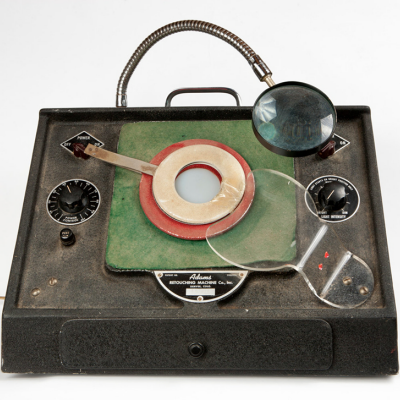
We must not pretend this is something new. My club is one of the oldest in the UK (1865) and looking at our history we discovered that one of our members gave a lecture on how to replace a sky in 1928. As it happens, landscapes have increased in popularity recently so we introduce a "Scapes" section to our Club Annual Exhibition this year and while you may use HDR, focus stacking and pano, no cloning moving or importing other images are allowed (i.e skies or trees cannot be added). There is plenty of opportunity to do these things in other sections. It was felt that Landscape requires special protection like nature. Of course this is just the opinion of our membership and other clubs may take a different view.

Dave
 
We must not pretend this is something new. My club is one of the oldest in the UK (1865) and looking at our history we discovered that one of our members gave a lecture on how to replace a sky in 1928. As it happens, landscapes have increased in popularity recently so we introduce a "Scapes" section to our Club Annual Exhibition this year and while you may use HDR, focus stacking and pano, no cloning moving or importing other images are allowed (i.e skies or trees cannot be added). There is plenty of opportunity to do these things in other sections. It was felt that Landscape requires special protection like nature. Of course this is just the opinion of our membership and other clubs may take a different view.

Dave
0adamsretouch-001.jpg

 
Back
Top