As a long term 20+ years wildlife shooter with long lenses , and having tried one of these out . My view is it’s purely pot luck with them . To be successful with b.i.f you HAVE to ensure a focus lock is obtained before depressing the shutter .
You will get the same results as with a dot sight just by holding the camera at arms length in the direction of the bird/s and pressing the shutter . Some of the shots will be in focus inevitably .. . .
There is no way round it whatever brand / type of camera you use the longer the lens the harder it gets
I disagree that it's pot luck, but there is definitely a learning curve to getting the most out of the dot sights. . Autofocus on modern cameras is fantastic, but it can't work miracles.
Success rate with the dot sight all comes down to your chosen background and your exposure settings. I really try to make sure I have a dark or plain coloured background, with the subject in the light. I don't really press the shutter until I know that the scene itself supports the autofocus, and that I have the best chance of getting a hit.
With the dot sight always start with the background first, then look for a subject. I used to be very reactionary with wildlife shots, walking around and aiming all over the place wherever the action was happening but my ratio of good shots to bad was very low. I'm not talking about shots in/out of focus, I mean aesthetically pleasing shots.
So with the dot sight I try to work with cross lighting wherever possible, find a patch of shade to act as my background, and wait for the subject to enter the bright light before hitting the shutter. Take the camera off any auto ISO modes and shoot completely manual, so that you're underexposing that shaded area and you're only exposing for the bright light. The autofocus has no choice but to lock onto the most prominent element in the scene, because it's the only thing properly exposed - so by making sure that the only thing of note in your scene is the subject you can't really fail, even if the background is a little messy.
It was a bit of a revelation for me because I've learned that with any reasonably modern camera, if you're working hard to confirm that the camera has achieved focused on the subject then the chances are that anyone viewing your photograph will be doing the same. If something is distracting the autofocus enough that it's missing your subject, it's probably not a strong enough element in the picture.
^ Of course there are exceptions to this, some subjects are very small in the frame and even the best cameras make errors in judgement, but it's a good rule of thumb that I try to follow.
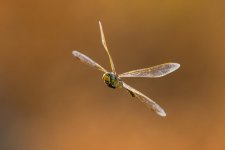
When I first started using the above method I practiced on insects in flight. They are tiny in the frame, and using a long lens with shallow focus you have no room for error. It's a great way to hone in on what works and what doesn't with the dot sight.