

You are using an out of date browser. It may not display this or other websites correctly.
You should upgrade or use an alternative browser.
You should upgrade or use an alternative browser.
How do you shoot birds in flight?
- Thread starter Crotal Bell
- Start date

- Messages
- 43,206
- Name
- Alan
- Edit My Images
- No
Getting better. @woof woof I think the medium burst setting helped tonight.
I need to get a bit closer though, but that should come with practice and better locations.
That looks pretty good and I think you could probably do a crop from that to get the bird bigger in the frame.
What did I say yesterday????
Good luck with it Keith. You seem to be able to get to grips with things pretty quickly so I'll expect some excellent BIF pictures from you tomorrow, if not later today
haha!
I'm glad you're getting there Keith, well done

Phil-D
Suspended / Banned
- Messages
- 7,553
- Edit My Images
- Yes
Good advice and great shots on your Flickr link. Where do you go on Flamborough? I have been to Bempton Cliffs a few times but have yet to find the right place at Flamborough.
Most of my shots come from Breil Newk or behind the foghorn station on the headland.
Biggest problem, you need to go when its windy, it keeps the birds up high and close to the clifftops. Its not dangerous but you need to be sure footed, anyone that goes needs to be very careful

OP

Crotal Bell
Suspended / Banned
- Messages
- 3,470
- Name
- Keith
- Edit My Images
- Yes
Thanks Derek, yes it's small steps in the right direction, but as I improve I can see that the camera will be capable of some nice shots in the future.Very well done, Keith. Great progress in such a short space of time indicates how things will turn out with lots more practice!

Tysonator
Suspended / Banned
- Messages
- 2,299
- Name
- T
- Edit My Images
- Yes
I use expandable AF point if I have time and opportunity to to choose and thumb wheel the AF spot around. If the birds are going to unpredictable in flight then I use the Zone AF, so Mid, top, bottom, left, right of screen. This guarantee I get the shot, but not eye of head focus !
OP
Crotal Bell
Suspended / Banned
- Messages
- 3,470
- Name
- Keith
- Edit My Images
- Yes
Yes I've been playing around with the focus options, I found the full 49 point focus was good for birds in the air.I use expandable AF point if I have time and opportunity to to choose and thumb wheel the AF spot around. If the birds are going to unpredictable in flight then I use the Zone AF, so Mid, top, bottom, left, right of screen. This guarantee I get the shot, but not eye of head focus !
Tysonator
Suspended / Banned
- Messages
- 2,299
- Name
- T
- Edit My Images
- Yes
Problem i have is deciding which mode to use if you are on a general walk about as you have have Robin on a bush near you, and then you may have a bird/s landing in water !Yes I've been playing around with the focus options, I found the full 49 point focus was good for birds in the air.
At least my Canon 7Dii has quick selector for changing modes, though sometimes even that is too slow !

- Messages
- 49,339
- Name
- Nod (UK)
- Edit My Images
- Yes
Make sure the camera is NOT set to do colour popping... We were lucky enough to have 2 Buzzards up with both being mobbed by Crows. I even managed to get a few grab shots before realising that something wasn't quite right...
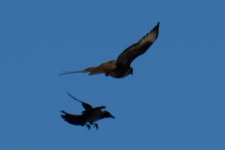
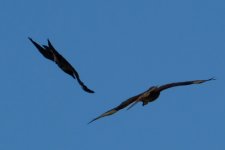
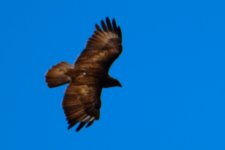
Fairly hefty crops but otherwise SOOC, posted to show what can happen when the ground/button interface is sub-par!!!
Lesson to take from these shots is that stopping down a little will help with sharpness - ISO-200 is the base ISO for this body and it'll cope well with up to 1600 and beyond.
Shoot a test shot (IF you have time) and add exposure compensation as needed (+1-2 stops would have given me far better detail). The tests will show up any major settings cock-ups too...
Be prepared! I wasn't really expecting to see the action so hadn't pre-checked settings etc. before grabbing the camera from the bag and grabbing the shots - PPPPPP! (Proper Planning Prevents P155 Poor Performance!)
Fairly hefty crops but otherwise SOOC, posted to show what can happen when the ground/button interface is sub-par!!!
Lesson to take from these shots is that stopping down a little will help with sharpness - ISO-200 is the base ISO for this body and it'll cope well with up to 1600 and beyond.
Shoot a test shot (IF you have time) and add exposure compensation as needed (+1-2 stops would have given me far better detail). The tests will show up any major settings cock-ups too...
Be prepared! I wasn't really expecting to see the action so hadn't pre-checked settings etc. before grabbing the camera from the bag and grabbing the shots - PPPPPP! (Proper Planning Prevents P155 Poor Performance!)
- Messages
- 43,206
- Name
- Alan
- Edit My Images
- No
Problem i have is deciding which mode to use if you are on a general walk about as you have have Robin on a bush near you, and then you may have a bird/s landing in water !
At least my Canon 7Dii has quick selector for changing modes, though sometimes even that is too slow !
Panasonic cameras have custom modes. I normally use Aperture or Manual but also have three custom modes set and I fully expect the OP's G80 to have them too.
OP
Crotal Bell
Suspended / Banned
- Messages
- 3,470
- Name
- Keith
- Edit My Images
- Yes
I can relate to that, last night I was switching to static birds and kept forgetting to change the focus mode.Problem i have is deciding which mode to use if you are on a general walk about as you have have Robin on a bush near you, and then you may have a bird/s landing in water !
At least my Canon 7Dii has quick selector for changing modes, though sometimes even that is too slow !
- Messages
- 43,206
- Name
- Alan
- Edit My Images
- No
I can relate to that, last night I was switching to static birds and kept forgetting to change the focus mode.
The quickest way to change setting when out and about could be with a custom mode. It's quite easy to do, you just set everything and then save it.
OP
Crotal Bell
Suspended / Banned
- Messages
- 3,470
- Name
- Keith
- Edit My Images
- Yes
I must admit I haven't even played with the colour popping setting yet. This does align with some other advice I have received, keep the ISO low and lift the exposure compensation.Make sure the camera is NOT set to do colour popping... We were lucky enough to have 2 Buzzards up with both being mobbed by Crows. I even managed to get a few grab shots before realising that something wasn't quite right...
View attachment 357443View attachment 357444View attachment 357445
Fairly hefty crops but otherwise SOOC, posted to show what can happen when the ground/button interface is sub-par!!!
Lesson to take from these shots is that stopping down a little will help with sharpness - ISO-200 is the base ISO for this body and it'll cope well with up to 1600 and beyond.
Shoot a test shot (IF you have time) and add exposure compensation as needed (+1-2 stops would have given me far better detail). The tests will show up any major settings cock-ups too...
Be prepared! I wasn't really expecting to see the action so hadn't pre-checked settings etc. before grabbing the camera from the bag and grabbing the shots - PPPPPP! (Proper Planning Prevents P155 Poor Performance!)
Thanks for the help and the images.
OP
Crotal Bell
Suspended / Banned
- Messages
- 3,470
- Name
- Keith
- Edit My Images
- Yes
I am leaving all that for another day at the moment, I realise that the camera will help me when I learn to give it the right instructions, but for now I am just keeping things simple and doing somethings the long way around. Funny enough I closed the screen while the camera was on the other day by accident and it changed the interface. I did a quick factory reset to get things back to how they looked previously.The quickest way to change setting when out and about could be with a custom mode. It's quite easy to do, you just set everything and then save it.

Sangoma
Suspended / Banned
- Messages
- 2,951
- Name
- Steve, Coventry, England
- Edit My Images
- Yes
Yes I've been playing around with the focus options, I found the full 49 point focus was good for birds in the air.
Have you tried the post focus and/or the 4K photo grab? Not much help when the bird is just a dot in the frame, but if is is a reasonable size, can give good results.
I tried it to see how it works, but these things really need some cheat cards to set them up quickly

All the clever camera tricks help, but the very best bird and wildlife photos I have seen were in NG and taken with 35mm film cameras

delb0y
Suspended / Banned
- Messages
- 562
- Name
- Derek
- Edit My Images
- Yes
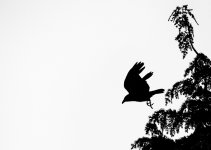
These birds in flight are like an annoying itch, I can't stop scratching. I don't even know why I keep doing this because I've never looked at BiF photos, and it's not something I aspire to, but I'm damned if I want to be able to do it! There isn't much in flight activity in my back garden and I have to wait five or ten minutes before I see a bird, and then I generally miss it. I think I shall take the G80 down the docks soon, where there are a gazillion seagulls flying around non-stop. Nevertheless, here are a couple that I've "artified" to hide as many deficiencies as I can.
Derek
Dere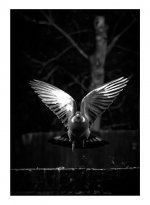
Derek
Dere
delb0y
Suspended / Banned
- Messages
- 562
- Name
- Derek
- Edit My Images
- Yes
I've still been practicing but there hasn't been much action in the back garden recently, so today I had a wander down to the canal today where I knew I'd find plenty of birds to practice on. I've been trying the "tracking" mode on the G80 but I'm not sure... been struggling with it. So today I tried the custom centre focus area option, AFC, and medium speed shooting. I've found that if I wait for the camera to lock onto the bird, and for the focus to set, then it's too late. Instead I have to sort of line things up and hope... Had a number of decent shots - which shows some improvement - but still an awful lot out-of-focus. More practice needed! Both these were taken with the 100-300:


Also came across some Goldfinches, albeit not in flight.


Also came across some Goldfinches, albeit not in flight.

the black fox
Suspended / Banned
- Messages
- 17,082
- Name
- Jeff
- Edit My Images
- No
To be honest they have been blown out by the metering and low I.s.o setting .. I would suggest using 800 iso and +1 full stop of exp comp . By using exp comp you will lose shutter speed hence the higher I.s.o … it’s a formula that has worked for me with canon/Nikon/ OlympusMake sure the camera is NOT set to do colour popping... We were lucky enough to have 2 Buzzards up with both being mobbed by Crows. I even managed to get a few grab shots before realising that something wasn't quite right...
View attachment 357443View attachment 357444View attachment 357445
Fairly hefty crops but otherwise SOOC, posted to show what can happen when the ground/button interface is sub-par!!!
Lesson to take from these shots is that stopping down a little will help with sharpness - ISO-200 is the base ISO for this body and it'll cope well with up to 1600 and beyond.
Shoot a test shot (IF you have time) and add exposure compensation as needed (+1-2 stops would have given me far better detail). The tests will show up any major settings cock-ups too...
Be prepared! I wasn't really expecting to see the action so hadn't pre-checked settings etc. before grabbing the camera from the bag and grabbing the shots - PPPPPP! (Proper Planning Prevents P155 Poor Performance!)

- Messages
- 18,695
- Name
- LongLensPhotography
- Edit My Images
- No
Staff edit.
This is a nature thread and that was inappropriate
This is a nature thread and that was inappropriate
Last edited by a moderator:
Photo-Phil
Suspended / Banned
- Messages
- 13
- Edit My Images
- Yes
My views on this...
1) Find the right location, know the subject, and try and pre-empt what the bird will do. Watch how birds move just before they take off. That little flinch of their muscles might give the game away. Point the camera at the right spot, focus it at the right spot and don't move it. Eventually the bird will hit that same spot you're focusing on. Perhaps 99% of the time it won't work but its worth it for that 1% success rate.
2) Very fast shutter speed. 1/2000th second. You can assist yourself here by underexposing by a stop or so and then doing some work in post. This has helped me a lot with all bird photography.
3) Try not to shoot into the sky. This will probably expose for the sky and not the bird by a lot. You might be able to find a hill where you can look down on the bird. This will help you get the right exposure. I have an old hill fort near me where I can look down on Kestrels - they keep perfectly still in flight and you can look down on them. Still not easy though.
4) I've found that a small bird in flight (i.e. robin) needs a minimum of 1/4000th second, but that's without a flash. I never use a flash. Even at that speed you get wing-tip movement. But that isn't necessarily a bad thing. You're the judge.
5) Remember, when you see good shots on social media you are looking at the 1 in 10,000+ success rate. Also, a lot of good shots are of tame birds in controlled environments. Wild birds are so difficult. Don't give up!
1) Find the right location, know the subject, and try and pre-empt what the bird will do. Watch how birds move just before they take off. That little flinch of their muscles might give the game away. Point the camera at the right spot, focus it at the right spot and don't move it. Eventually the bird will hit that same spot you're focusing on. Perhaps 99% of the time it won't work but its worth it for that 1% success rate.
2) Very fast shutter speed. 1/2000th second. You can assist yourself here by underexposing by a stop or so and then doing some work in post. This has helped me a lot with all bird photography.
3) Try not to shoot into the sky. This will probably expose for the sky and not the bird by a lot. You might be able to find a hill where you can look down on the bird. This will help you get the right exposure. I have an old hill fort near me where I can look down on Kestrels - they keep perfectly still in flight and you can look down on them. Still not easy though.
4) I've found that a small bird in flight (i.e. robin) needs a minimum of 1/4000th second, but that's without a flash. I never use a flash. Even at that speed you get wing-tip movement. But that isn't necessarily a bad thing. You're the judge.
5) Remember, when you see good shots on social media you are looking at the 1 in 10,000+ success rate. Also, a lot of good shots are of tame birds in controlled environments. Wild birds are so difficult. Don't give up!
Last edited:
Tysonator
Suspended / Banned
- Messages
- 2,299
- Name
- T
- Edit My Images
- Yes
My views on this...
1) Find the right location, know the subject, and try and pre-empt what the bird will do. Watch how birds move just before they take off. That little flinch of their muscles might give the game away. Point the camera at the right spot, focus it at the right spot and don't move it. Eventually the bird will hit that same spot you're focusing on. Perhaps 99% of the time it won't work but its worth it for that 1% success rate.
2) Very fast shutter speed. 1/2000th second. You can assist yourself here by underexposing by a stop or so and then doing some work in post. This has helped me a lot with all bird photography.
3) Try not to shoot into the sky. This will probably expose for the sky and not the bird by a lot. You might be able to find a hill where you can look down on the bird. This will help you get the right exposure. I have an old hill fort near me where I can look down on Kestrels - they keep perfectly still in flight and you can look down on them. Still not easy though.
4) I've found that a small bird in flight (i.e. robin) needs a minimum of 1/4000th second, but that's without a flash. I never use a flash. Even at that speed you get wing-tip movement. But that isn't necessarily a bad thing. You're the judge.
5) Remember, when you see good shots on social media you are looking at the 1 in 10,000+ success rate. Also, a lot of good shots are of tame birds in controlled environments. Wild birds are so difficult. Don't give up!
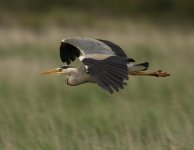
Some pretty advice.
I know I do not shoot at a fast enough shutter as I try to protect ISO when in darker environments.
This strategy I will rethink now !

delb0y
Suspended / Banned
- Messages
- 562
- Name
- Derek
- Edit My Images
- Yes
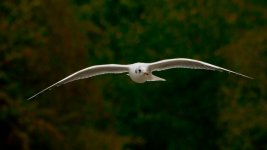
Today was the second "Flying Ants Day" of this summer. That meant there was about a zillion seagulls circling overhead. An excellent opportunity to practice tracking birds and trying to catch a few in focus action shots. I remain puzzled by the G80s penchant for locking onto a bird (when focus is set to tracking) then it simply disappearing from the screen for a moment before reappearing. If one clicks the button at the point of disappearance then the bird is still there and in focus in the resulting image - but it's a bit disconcerting. Maybe the camera is showing its age a bit?
Nothing warranting keeping by the way. Just seagulls. And more seagulls. And a couple of flying ants down the back of my tee-shirt.
Nothing warranting keeping by the way. Just seagulls. And more seagulls. And a couple of flying ants down the back of my tee-shirt.
the black fox
Suspended / Banned
- Messages
- 17,082
- Name
- Jeff
- Edit My Images
- No
Pretty certain if you click on one of my pics and go to Flickr then put in a search for G80 and PL 100-400 you will find lots of b.i.f shots , it was my back up rig before I changed to Olympus
the black fox
Suspended / Banned
- Messages
- 17,082
- Name
- Jeff
- Edit My Images
- No
yep loads there from 2018 heres a starter G80 + PL 100-400 handheld AND food for thought sometimes you tend to forget just how good a camera you no longer own was ??? hmm e.bay here I come
 jump by jeff cohen, on Flickr
 dun flocking by jeff cohen, on Flickr
 breakfast is served by jeff cohen, on Flickr
jump by jeff cohen, on Flickrdun flocking by jeff cohen, on Flickrbreakfast is served by jeff cohen, on Flickr
Last edited:
delb0y
Suspended / Banned
- Messages
- 562
- Name
- Derek
- Edit My Images
- Yes
Yes, it's easy to get sucked into the whole GAS world. I think most enthusiast cameras from the last half a dozen years are probably good enough for 90% of the people 90% of the time. I accept BIF (or indeed anything fast) can be made a lot easier by the latest super-dooper cameras, and for a professional I get why they need the latest and best, but the rest of us..? I still hanker after a G9 and one day may well get one, but for now the G80 suffices for these type of shots, and in a strange way it's kind of nice to have to work a little bit for them.
AndrewFlannigan
Suspended / Banned
- Messages
- 11,977
- Edit My Images
- No
And then you post this stuff...ROFPMSL. I would be totally ashamed to post photos as bad as that .. just stick to being a barrack room lawyer
yep loads there from 2018 heres a starter G80 + PL 100-400 handheld AND food for thought sometimes you tend to forget just how good a camera you no longer own was ??? hmm e.bay here I come
jump by jeff cohen, on Flickr
dun flocking by jeff cohen, on Flickr
breakfast is served by jeff cohen, on Flickr


- Messages
- 114,434
- Name
- The real Chris
- Edit My Images
- No
That quoted post was from 4 months ago,And then you post this stuff...
pack it in before you both get your knuckles rapped!
AndrewFlannigan
Suspended / Banned
- Messages
- 11,977
- Edit My Images
- No
You're quite right - it was naughty of me.
On the other hand, revenge is...
On the other hand, revenge is...
- Messages
- 114,434
- Name
- The real Chris
- Edit My Images
- No
Easy on my part.On the other hand, revenge is...
Just a day off from this thread ... for now.
Last edited:

jakeblu
Suspended / Banned
- Messages
- 10,874
- Name
- Steve
- Edit My Images
- Yes
Really, you're comparing those images from Jeff, against the ones you posted earlier!? Sorry, but Jeff's are head and shoulders above those.You're quite right - it was naughty of me.
On the other hand, revenge is...

gilbouk
Suspended / Banned
- Messages
- 3,527
- Name
- Gil
- Edit My Images
- Yes
Some of my favourite BIF shots. I would say that a tripod is not required as you should be shooting in excess of 1/1000. Good light and an exposure compensation of +2 or there about as the underside of the bird is always darker than the surrounding sky - so you want to be exposing for the bird. Then it's pretty much target practise!! DSLR's are normally easier to use as there is no EVF lag.
 GSC_0924 by Gilbo B, on Flickr
 HSC_8909-Edit by Gilbo B, on Flickr
 HSC_9222 by Gilbo B, on Flickr
 JSC_5988 by Gilbo B, on Flickr
 ZSC_2145 by Gilbo B, on Flickr
 AF8A5311 1 by Gilbo B, on Flickr
GSC_0924 by Gilbo B, on FlickrHSC_8909-Edit by Gilbo B, on FlickrHSC_9222 by Gilbo B, on FlickrJSC_5988 by Gilbo B, on FlickrZSC_2145 by Gilbo B, on FlickrAF8A5311 1 by Gilbo B, on Flickr
Last edited:

I'm not sure if it's already been mentioned, but a red-dot sight helps immensely. I use the Olympus EE-1 but there are a few out there. You attach it to the hotshoe of your camera and it allows you to keep your peripheral vision while you track the bird and it doesn't matter if you're using a 50mm lens or a 600mm lens, if you keep the reticule on the bird as it flies then the bird will be in the centre of your frame every time.
For fast moving subjects like swallows, and even insects, you're better able to follow their erratic flight patterns.


It's especially great for panning at a slow shutter speed. With motocross for example, you can anticipate speed much easier and follow the riders up over jumps and back down again even when you're very close to the action.

When the action slows down (the bird lands on a branch for example), you simply look back through the viewfinder, compose your shot, and operate the camera as normal. The dot sight just helps you track movement at times when you're not doing anything other than keeping the subject in the frame. When that has passed, you just go back to the viewfinder.

For fast moving subjects like swallows, and even insects, you're better able to follow their erratic flight patterns.
It's especially great for panning at a slow shutter speed. With motocross for example, you can anticipate speed much easier and follow the riders up over jumps and back down again even when you're very close to the action.
When the action slows down (the bird lands on a branch for example), you simply look back through the viewfinder, compose your shot, and operate the camera as normal. The dot sight just helps you track movement at times when you're not doing anything other than keeping the subject in the frame. When that has passed, you just go back to the viewfinder.
Last edited:

sk66
Suspended / Banned
- Messages
- 9,557
- Name
- Steven
- Edit My Images
- Yes
I've been using red dot sights for decades; but I much prefer to use the viewfinder when I can. But when the action is too fast or too close (too much lens) and I'm having trouble just getting the subject in the viewfinder, then it helps a lot (some images vs none).I'm not sure if it's already been mentioned, but a red-dot sight helps immensely.
A big problem with most of them is that they are very sensitive... if you touch/bump them at all they lose their alignment.

Brentor
Suspended / Banned
- Messages
- 1,596
- Name
- Steve
- Edit My Images
- No
We have a winner…. I was trying to log in via my IP…
Thanks everyone for your valuable input
Any recommendations for red dot sights that are compatible with Canon DSLRs.I've been using red dot sights for decades; but I much prefer to use the viewfinder when I can. But when the action is too fast or too close (too much lens) and I'm having trouble just getting the subject in the viewfinder, then it helps a lot (some images vs none).
A big problem with most of them is that they are very sensitive... if you touch/bump them at all they lose their alignment.