Head Shoulder Portait (new to flash)

tonyq

Suspended / Banned
Messages
236
Edit My Images
Yes
Hi all,
I have been asked to take a head shoulder portrait shot. The subject will be indoors, there will be some daylight from windows. The equipment I have is Canon 600D,Canon 430ex flash, 18-55 lens kit ,and 50-1.8 lens, with a simple diffusser. Being newish to the flash and camera come to that. I would much appreciate your help/suggestions as to settings ect.
 
If you're new to flash and it has to be right, use the window light and a reflector.
 
Hi phil V,
I am not sure if there will be enough day light or not as I don't have a reflector. I was thinking of using the 50-1.8 lens set to may be 2.0/2.2. Then using the flash bouncing of the ceiling. What I am after is a guide as to whether I should use the flash set to ettl, camera in Av or camera in M mode, and was hoping for suggestions as to what settings may be a good starting point, ISO,speed, av and white balance.
 
A white t shirt, towel, tea towel? The back of spare wallpaper, white card or paper? A reflector doesn't have to have a fancy label.
If you're mixing flash and daylight, it's best to use your daylight as the main light, and your flash as fill.
So your ISO should be set to allow a reasonable shutter speed at your chosen aperture. Your flash on ettl should be at -FEC, you'll need to adjust to taste. But I'd diffuse it or bounce it from the side rather than off the ceiling.

If flash is your primary light, it's not really got much chance of looking great unless you get it off camera. Bounced off the ceiling or a wall or a large reflector will never be as good as using a proper modifier off camera.
 
Phil,
you say,
"Your flash on ettl should be at -FEC"
Do I read that as Minus FEC
 
Phil,
you say,
"Your flash on ettl should be at -FEC"
Do I read that as Minus FEC

Sorry, Yes, for fill flash you need to make sure the flash doesn't get to dominate. But the power required will vary with the scene, so you need to be on your toes.

I really do recommend daylight and a reflector. You'll learn so much more about how light works than you will by just blasting it with flash to make sure you've enough light.

It's what I keep saying about the quality of light being the important thing. When you start learning photography, you obsess about the quantity of light and if you're not careful you end up forgetting the important bit, you started photography to create great images, the quality of the light gives you great images, the quantity just allows you to record 'something'.
 
Phil V said:
Sorry, Yes, for fill flash you need to make sure the flash doesn't get to dominate. But the power required will vary with the scene, so you need to be on your toes.

I really do recommend daylight and a reflector. You'll learn so much more about how light works than you will by just blasting it with flash to make sure you've enough light.

It's what I keep saying about the quality of light being the important thing. When you start learning photography, you obsess about the quantity of light and if you're not careful you end up forgetting the important bit, you started photography to create great images, the quality of the light gives you great images, the quantity just allows you to record 'something'.

This advice in my opinion is spot on. I'm nowhere near as experienced as Phil, but a reflector is a very sound investment - bang for buck wise hard to beat in terms of improving your shots. Can be used with natural and artificial light - ie effecting QUALITY of light. Cheap as chips too!

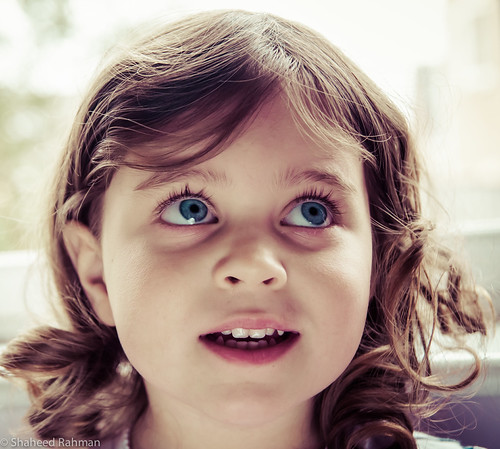
A quick shot with window light and reflector at ISO 1000


Eye See! by Sir SR, on Flickr

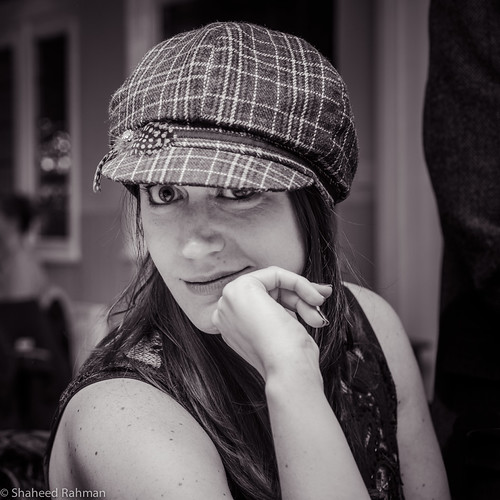
One with flash on camera bounced off ceiling


Tamron Test 5 by Sir SR, on Flickr

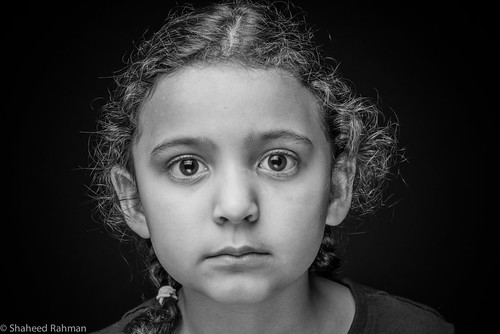
One with flash off camera in a soft box and a reflector


"What did I do wrong?" (Bedtime Shoot 6) by Sir SR, on Flickr

All different but like Phil said, trying to alter the quality of the light. The easiest result to achieve out of the above was window light with the reflector (although I should have moved the reflector to get a nicer catchlight!)

Hope that helps

Shaheed
 
Last edited:
I am learning bit by bit.
Phil wrote:
"A white t shirt, towel, tea towel? The back of spare wallpaper, white card or paper? A reflector doesn't have to have a fancy label".
So would it help my cause if I placed a table in front of the person,then covered the table with white cloth/paper?
 
tonyq said:
I am learning bit by bit.
Phil wrote:
"A white t shirt, towel, tea towel? The back of spare wallpaper, white card or paper? A reflector doesn't have to have a fancy label".
So would it help my cause if I placed a table in front of the person,then covered the table with white cloth/paper?

The important thing about a reflector is that it's controlled. An actual reflector is only marginally easier to manage than a white t shirt. In fact if you get an assistant to wear a white t shirt it's very good and voice activated.

Like a light source, size, distance and direction will affect the results greatly. Have a play around, you can learn so much of this without even switching a camera on.

If you are thinking of buying one, a lastolite tri- flector is easy to manage.
 
Phil
thank you for the personal message.I will have a look at the lastolite tri- flector. Do they make reflectors that can double as a white/grey card? (not to large) and where is a good place to buy from?. I am hoping to take the photos tomorrow, so it will be to late to buy one for this time.

bryan,
the photos are of 3 individual incoming captains of my golf club.
 
With your subjects and time constraints;

Get them in open shade with a plain wall of the golfclub or some evergreen hedge as a background (Obviously thrown OoF). They won't be brilliantly lit, but they'll be pleasant. Once they're 'in the can' try inside with window light with them about 45 degrees to the window, experiment with a makeshift reflector or very subtle fill flash (dial it down till it's invisible then up a notch).
 
Never thought of trying outside, the greensmans building is a creamy type of colour. There again it might be to cold for them and come to that myself, if only it was summer!
 
tonyq said:
Never thought of trying outside, the greensmans building is a creamy type of colour. There again it might be to cold for them and come to that myself, if only it was summer!

We photograph brides outside at this time of year and they're wearing strapless lacy frocks. Your blokes will have thermals and Pringle jumpers.
 
update,
went to take the photos outside as I had found a suitable background, but due to the brightness of snow on the ground, the subject could not keep there eyes open. So off in doors, found suitable place set camera at Av mode 2.2 Iso 400 (may be I should have used Iso800), in raw, took the photo using ambient light. Checked the shot in camera which looked O.K. so shot the others. Viewing them on the computer, not as good as I thought, will have to see what can be done in DPP/Photoshop,But good experience all the same.
Can anyone suggest good tutorials/videos for using DPP?
 
What kind of shutter speeds were you getting? Will you post up your results as if will give is more of an idea as to what to suggest in terms of improvement, if indeed any is needed!

Ta

S
 
What kind of shutter speeds were you getting? Will you post up your results as if will give is more of an idea as to what to suggest in terms of improvement, if indeed any is needed!

Ta

S

This^
 
Hi, If I convert from raw to jpeg as shot, will that be o.k. Is there a size limit?
 
Picture one MG 0219 (Male)
I must have forgot to change the ISO after being outside as the ISO for this photo is 200.
I shot the Raw file in "Standard- Picture Style", in future I think I will shoot in neutral picture style,(I know I can change it in DPP) would I be better doing that?
As you mentioned in earlier posts a reflector should have used at the R/H side (looking at the picture) Do you agree? as daylight was not only coming from behind me but quite a bit from my left.


Picture two MG 0220 (Female)
This was shot at ISO 400,and to my eye looks better, bar for the shadow at r/h side, the reflector problem again!.
This was also shot with "standard- picture style"

Both Pictures have been cropped at 800px x 800px and contain the exif.
Hope this is o.k. please let me know if you need a bigger picture and if so what size.

http://i3.photobucket.com/albums/y79/anthonyq/_MG_0219cropped800pxx800px_zpsc45ea291.jpg

http://i3.photobucket.com/albums/y79/anthonyq/_MG_0220cropped800pxx800px_zpse5dfa8f7.jpg
 
Last edited:
I can't see the exif from here (at work) but they both suffer from too low a shutter speed.

Once you're inside, it looks bright to the eye, but 800 is a low ISO for indoors in the UK. 1600 and above is the norm,
The lighting is actually not bad for a std portrait, rather than more reflector, less wrap around would lift them a little. Turning them to their right slightly would improve the modelling, adding a touch more to the lh side of their faces.
I think you're comparing them with straight on flash which is so flat it's unpleasant.

As a learning exercise, the light is OK, if you'd been watching your shutter speeds you'd have got a result.
 
update,
went to take the photos outside as I had found a suitable background, but due to the brightness of snow on the ground, the subject could not keep there eyes open.

Are you sure there wasn't somewhere suitable outdoors where the light off the sun wouldn't have attacked them so harshly?

BTW, its a good decision, many people would have panicked and stuck with squinting subjects:thumbs:
 
Phil,
thank you for the suggestions, the first photo was taken at 200 ISO, I meant to set it at 400 but forgot to change it when coming indoors silly me, which would still have been to way to low then.

With regards to shutter speed, I was in Av mode set at 2.2 so the speed was set. Would not raising the ISO to 1600, slow the speed down, should I have gone manual?.

You say "less wrap around would lift them a little" could you explain what this means.
 
Phil,
thank you for the suggestions, the first photo was taken at 200 ISO, I meant to set it at 400 but forgot to change it when coming indoors silly me, which would still have been to way to low then.

With regards to shutter speed, I was in Av mode set at 2.2 so the speed was set. Would not raising the ISO to 1600, slow the speed down, should I have gone manual?.

You say "less wrap around would lift them a little" could you explain what this means.

No raising the ISO would have raised the shutter speed.
so if they were 1/15 and 1/30 1600 ISO would have given you 1/125 which would be about right. You could possibly get away with 1/60 if your technique is good, it's something else you can practice just so that you know your limitations.

The light is coming at them from the front and their right, as you put it 'quite a bit from the left', which means that was your 'key light' with the light behind you acting as fill. There isn't loads of difference in the intensity but you can see the nearest cheek to the light is .

If you turn them slightly and move them closer to the side window, the intensity difference would increase, putting the l/h side of their face into slight shadow (only slight as the fill light is quite bright) it's the shadow that creates shape.

This is why we we hate on camera flash, the shadow is hard and slightly behind and low on the subject, so you don't really see it (apart from below the nose and chin).

Larger softer shadows create shape that is pleasing, look at an old master painting, the classic 45 degrees lighting the nearest cheek and creating a triangle of light on the far cheekbone. Look at the art nudes in the N&G section to see how gently playing light on a body illustrates definition. It's not the light that's important, it's the shadow the light creates.

The second and 3rd of Shaheed's portraits above have fairly flat lighting.

These are guesses (I could be completely wrong):
The 2nd primarily bounced off a white table cloth and the 3rd is lit from a large window behind Shaheed slightly to his left (there's a hint of shadow on the subjects left cheek).

The 1st is more interesting because the subject is backlit, you can see the light wrap around from the window.The catchlight suggests an umbrella to fill from the front, but this is slightly less than the backlight on the cheeks.

Key light - main light on a subject - can even be the sun or sky)

Fill light - a light of lesser intensity used to fill the shadows, this can be a reflector a flash or even the sun (using a flash as keylight), this reduces the intensity of the shadows. Sometimes we aim for a flat shadowless light, but mostly it's the shadows that create interest.

 
"if your technique is good", I find it quite difficult to take pictures holding the camera in the portrait position, I never seem to be able get the subject central,I must hold the camera on a tilt as I don't always see the full outline of the viewfinder plus I have to use my left eye, which does not help.
 
tonyq said:
"if your technique is good", I find it quite difficult to take pictures holding the camera in the portrait position, I never seem to be able get the subject central,I must hold the camera on a tilt as I don't always see the full outline of the viewfinder plus I have to use my left eye, which does not help.

Then you need to spend some time practicing and experimenting to see what your safe shutter speeds are.

You could also try a monopod for portrait orientation, or even shoot landscape and crop, for this size shot you'll have plenty of resolution.
 
I have to say that I enjoy reading threads with phils postings. Great knowledge, nice delivery of advice and no BS!!!

Sorry for the hijack!
 
one last thing, do you know of any charts to find what shutter speeds derive from setting the Av and ISO.
 
one last thing, do you know of any charts to find what shutter speeds derive from setting the Av and ISO.

There wouldn't be any, look up the exposure triangle.
 
Shutter speeds look fine at 1/125 and 1/320 but nothing appears in focus,I seem to recall reading somewhere that some people were having problems with that 50mm lens near to wide open.Try stopping down your 50 or try a few with your kit lens and see if it makes any difference
 
One other thing on a different note (as Phil has covered the technicals very well)

When starting to shoot people professionally or even semi professionally you need to get comfortable with letting people know things that may seem a touch embarrassing at first, like that the lady has some lipstick on her teeth it seems.

It's had to notice these things when you're already stressing over camera settings and light but once these become second nature, look out for the small things :)
 
michael kilner,
I thought I was getting round that problem by setting at 2.2 rather than wide open at 1.8
As I mentioned earlier I do find holding in portait difficult, but do try to hold it correctly and with "IS" thought the shots should not be out of focus.
 
I have just been to check and I don't think the Canon EF 50mm f/1.8 II lens does have "IS"
 
Shutter speeds look fine at 1/125 and 1/320 but nothing appears in focus,I seem to recall reading somewhere that some people were having problems with that 50mm lens near to wide open.Try stopping down your 50 or try a few with your kit lens and see if it makes any difference
I don't know if I'm blaming the works monitor - it's not camera movement.I've just put some sharpening on them and they come up 'something like' so I'd have a go again with a slightly smaller aperture and higher ISO.
 
Pretty close actually Phil. Window light behind and silver reflector below (next time I'd try to angle the reflector to get a nicer catchlight!)

I have to say your posts are very informative and a thoroughly good read!

S
 
Sir SR said:
Pretty close actually Phil. Window light behind and silver reflector below (next time I'd try to angle the reflector to get a nicer catchlight!)

I have to say your posts are very informative and a thoroughly good read!

S

Thanks
If I was into forensics I'd have said reflector because flash is a different MO.

Reverse engineering is a great way of learning how things work.
It's odd there's a thread in studio & lighting and I've never looked in it. I might give it a go.

I'd recommend studying it to everyone.
 
Found this on the web, thought It may be contributing to the problem but not sure!.

http://www.zenadsl5251.zen.co.uk/photos/50mm.html

Hopefully I intend to take some pictures at home and try to reproduce the light in the house as near as I can to that at the club,that means waiting for a bright day. Then using different settings and see what I can produce. Then maybe take there photos again.
 
Back
Top