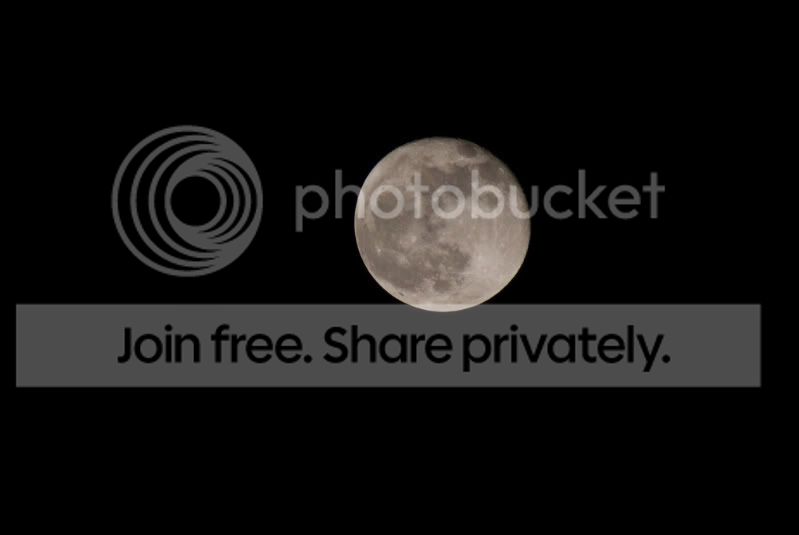
Full Moon

nikonuser

Suspended / Banned
Messages
2,537
Name
Dave
Edit My Images
Yes
A full moon will shortly be appearing and I would like to try my hand at getting some good photos.
My maximum reach is 420mm so would welcome some general info on shutter speed, aperture settings, WB etc....I have a tripod and shutter remote
Appreciate any help.
Thanks
Dave
 
Hi,
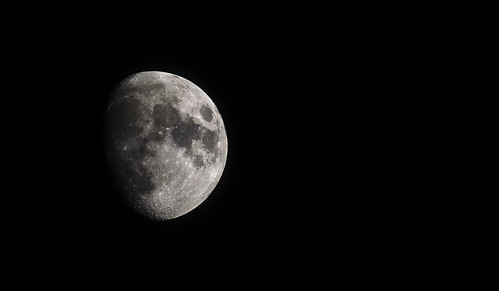
I have taken afew shots of the moon, you will need a fast shutter speed,
4549908591_c67f488f05.jpg

Exposure: 0.006 sec (1/160)
Aperture: f/6.3
Focal Length: 500 mm

hope this helps?? looking forward to seeing the photo :)
 
Actually the full moon is not the best time to take photos, as it will appear relatively featureless. Taken at any other phase, the shadows cast along the terminator (the bit where the lit and unlit sides meet) will throw up lots more details of craters and other irregularities in the surface.

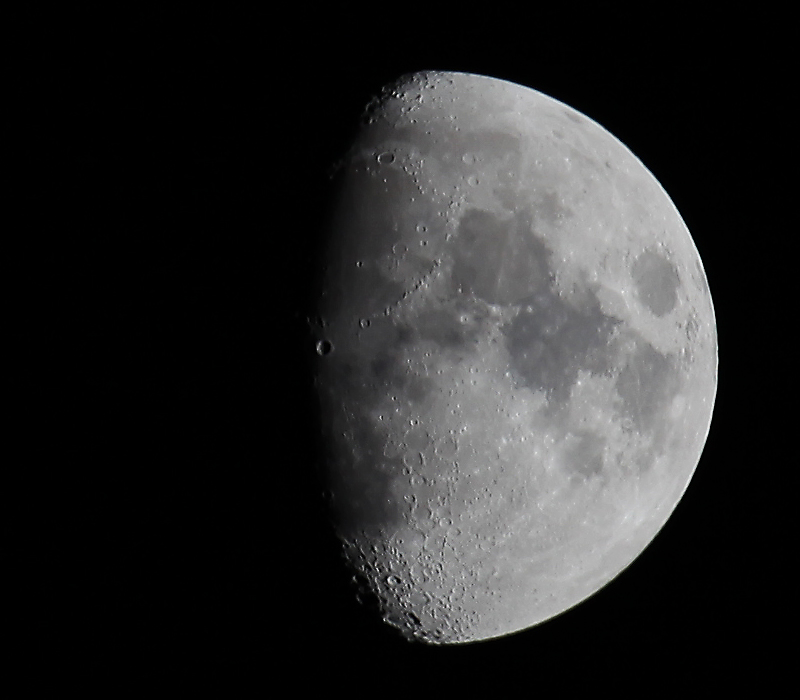
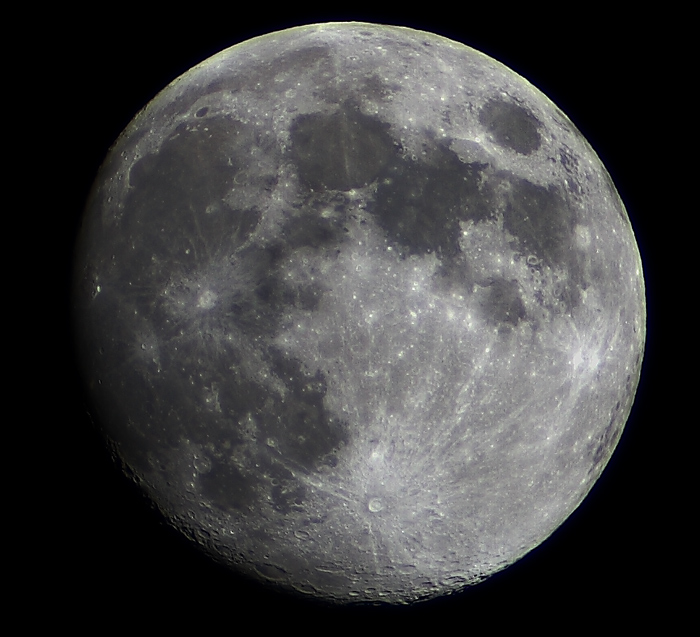
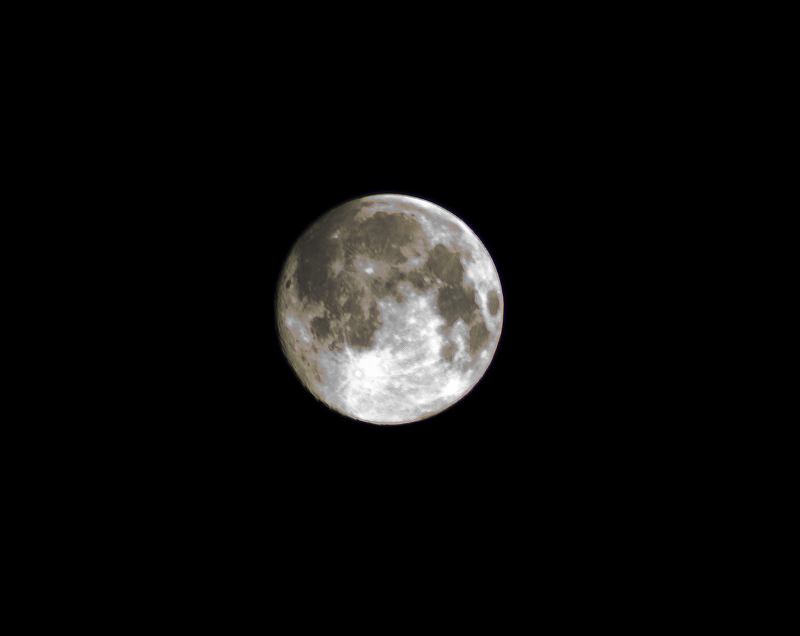
This was taken a couple of nights ago. Exif data should be intact, and was taken using a 100-400 zoom at 400mm. Image is a 100% crop, as the rest of the frame was just blank.

400moon.jpg


You will need to put your camera in to manual mode because in most automatic modes the camera will be fooled by the vast expanse of darkness in the frame, and the moon will end up being overexposed. The exception is if you use spot metering to meter the moon itself.
 
Actually the full moon is not the best time to take photos, as it will appear relatively featureless. Taken at any other phase, the shadows cast along the terminator (the bit where the lit and unlit sides meet) will throw up lots more details of craters and other irregularities in the surface.

This was taken a couple of nights ago. Exif data should be intact, and was taken using a 100-400 zoom at 400mm. Image is a 100% crop, as the rest of the frame was just blank.

400moon.jpg


You will need to put your camera in to manual mode because in most automatic modes the camera will be fooled by the vast expanse of darkness in the frame, and the moon will end up being overexposed. The exception is if you use spot metering to meter the moon itself.

Wow thats amazing moon shot... I have to get myself a 500mm lens as love photos of the moon
 
The only thing with a full moon is that it is difficult to shoot. in so much as there is no terminator, you need that to add some contrast and definition really but good luck though!
 
Thanks Guys, appreciate all your help will have a go tomorrow and Derek, if it turns out like your image I will be one happy Man (but I very much doubt it) however I will have a play trial and error.
I see the picture was taken at 23:51 is it better when the sky is black rather than a pale blue?? and did you use shutter delay or a remote to prevent camera shake.
Thanks
Dave
 
Pure black sky looks a lot better I think.
 
Black or blue sky is all down to preference. If you have clear skies, why not try both? I have seen some really nice looking shots of the moon against pale and dark blue skies, and of course there are plenty taken against a black sky.

As for my own shot, I had the shutter on the 2 sec timer to help minimise camera shake.
 
Digital photos cost nothing (apart from time), so take quite a few at varying background light levels then play in PP to see which gives you the results YOU like best.

I tend to guestimate the first exposure using the sunny f/16 rule of thumb - after all, the moon is lit by sunlight! To keep the shutter speed reasonably fast, I tend to shoot at f/8 and go faster with the shutter. That should bring you into hand holding territory (far easier than trying to track the moon from a tripod IMO). To get the 1/2 decent shutter speeds, I tend to use ISO400.

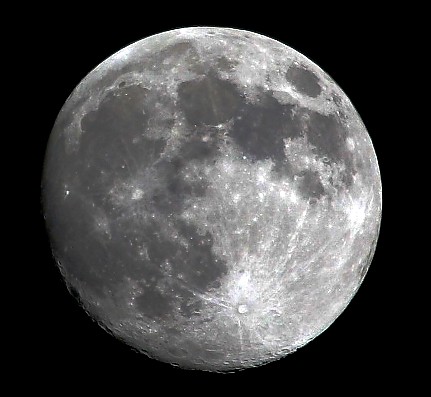
The pic below was shot on a D700 at 500mm, ISO400, 1/500th s, f/16. Not the best moon shot but the only one I have on Flickr.

3983931946_85d4158b18_o.jpg
 
I am guessing that a variant on the old f/16 rule applies. As the sky is obviously clear and the moon is lit by the same sun as we are (doh!) set shutter speed to the ISO and run the aperture at f/16 - or any equivalent exposure (so ISO100, 1/400s f/8)?

This assumes that the moon has 18% reflectivity (albedo) - actually 12% according to wikipaedia - so apply 2/3rd stop compensation f/6.3?
 
The moon is really a very tricky target, do not rely on the meter the moon is a relatively small target in a large expanse, the night sky being black the meter will indicate massive under exposure. It's possibly on spot, but even then I tend to set to underexpose. If you don't want to crop, you need to get to something in the order of 1000mm. However as has been said, the full moon is not the most interesting of views, due to the lack of contrast on the surface, but what you should be able to get are the bright ray systems from the larger impact craters, like Tycho in the south (Nod's shot show's these nicely).

Something else to bear in mind, and at short focal lengths, below 1200mm, it's actually hard to see, but atmospheric bubbling will ruin the shot. I was imaging the moon at 1200mm last night, and it varied from the moon looking like it was under a fast running stream at it's worst to jelly being shaken hard on a plate. To overcome this, once you have the exposure about right, take a sequence of shots, and pick the best one.

To answer your specific question, lowest ISO you have, aperture doesn't really matter, so use what works best for your lens (DOF is irrelevant at the ranges in question), and a shutter speed of probably about 1/160s as a start point (assuming about f/8).

 
There is absolutely no reason whatever to use any aperture other than optimum for your lens, usually around F8. At 250,000 miles away the depth of field will be sufficient :D. Set to base iso, usually 100 or 200 depending on your camera. A manual shutter speed of about 1/125 with bracketing +-1/3 should get you in the right ballpark. A tripod is best. Turn off any image stabilisation and use mirror lockup and/or remote cable release.
Mike.
 
Typical, Sods Law its cloudy tonight so will have to put off my challenge until another night.
Dave
 
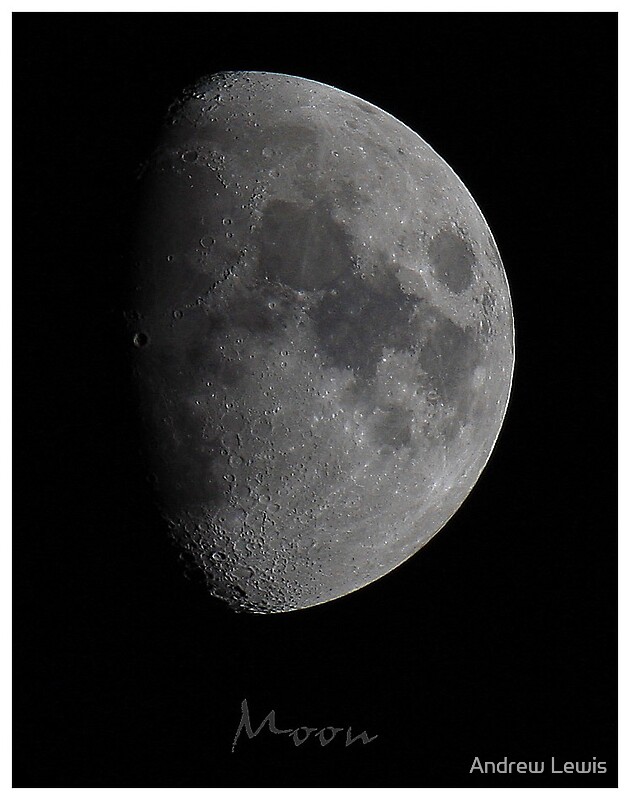
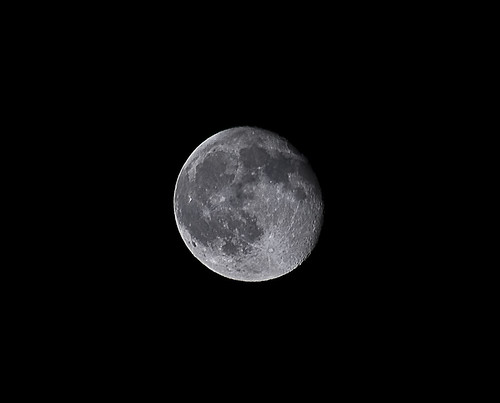
This was my attempt at the moon on sunday night, used a canon 100-400mm IS.....:D
work.5233475.1.flat,800x800,070,f.jpg


Andy
 
Dave, full moon is actually on Thursday, we are still in the run up to. However, it's gonna be pretty close as makes no difference tonight and Friday. Good luck.
 
As someone has already said a full moon isn't great to photograph because of the lack of shadows.

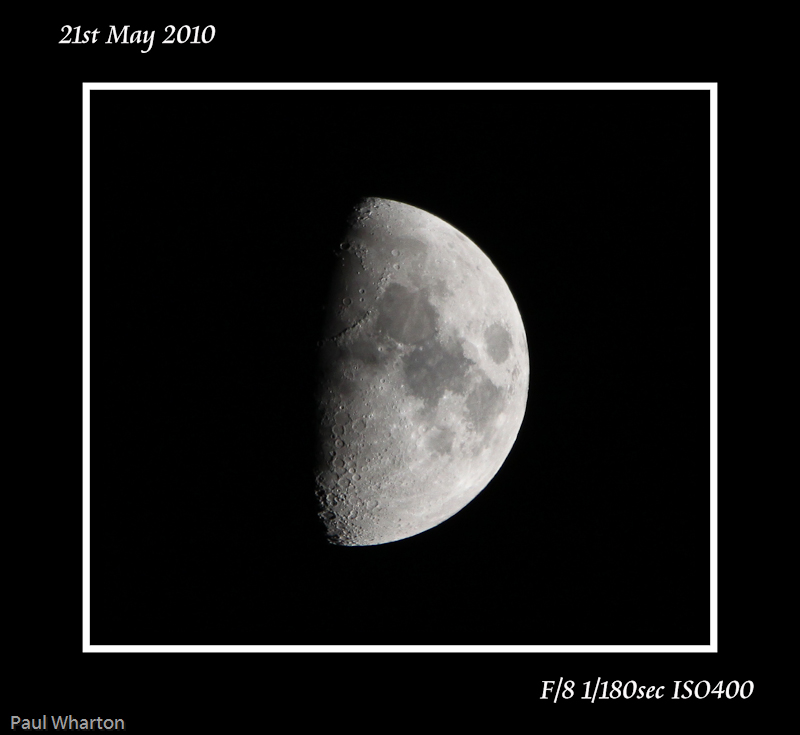
Here's one I took hand-held the other night.


Paul
 
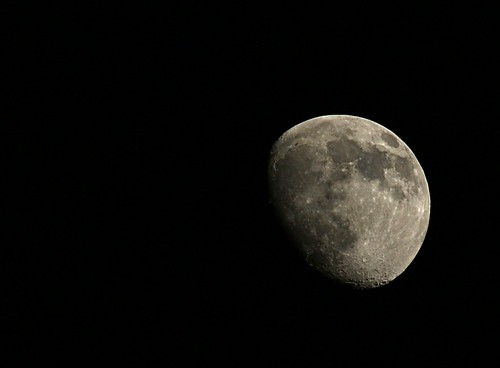
New moon can be difficult, but possible ....... here's mine

3508633076_3ba549837c_o.jpg
 
sorry for the dumb question, but do you just focus to infinity as well?
 
Personally, I shoot handheld (using VR/OS lenses) and focus on the edge of the moon (highest contrast to give the AF a chance then recompose. At that range, the slight parallax error is too small to measure! Having said that, the D700 will AF even if the AF point is over the middle of the moon, even when the Sigma 150-500 is on. (The D70 struggles a little but usually gets the focus after 1/2 a second or so)
 
4285209477_2c25c61791.jpg


Handheld, 450mm efl (300mm lens), f5.6, 1/500. Should have gone for f8 but I was young and stupid at the time.
 
sorry for the dumb question, but do you just focus to infinity as well?

No. Most lenses will actually focus past infinity so if you wind your focus to the stop at the infinity end of the scale, chances are that your picture will not be in focus.

You can try, as Nod does, to put your AF point on the edge of the moon and see if the camera will focus. If your camera has live view, you can use that, zoomed in, to try manual focus.
 
I tried a few moonshots last night, as it was a nice yellow colour, but for some reason, I just couldn't get any definition at all, so gave up.:thumbsdown:

I'm blaming atmospheric pollution or Iceland or something. Definitely not me.

Here is a previous effort with my Minolta 100-300APO.

4306834531_2a159d518b.jpg
 
i set my camera on manual,f-stop 8,iso 200,shutter speed 1/100th and got this
068.jpg

i used a 75-300 at 300mm,funny to see how fast the moon moves out of your view finder when you use a tripod.
its not been cropped so you could go closer.
 
The moon is really a very tricky target, do not rely on the meter the moon is a relatively small target in a large expanse, the night sky being black the meter will indicate massive under exposure. It's possibly on spot, but even then I tend to set to underexpose. If you don't want to crop, you need to get to something in the order of 1000mm. However as has been said, the full moon is not the most interesting of views, due to the lack of contrast on the surface, but what you should be able to get are the bright ray systems from the larger impact craters, like Tycho in the south (Nod's shot show's these nicely).

Something else to bear in mind, and at short focal lengths, below 1200mm, it's actually hard to see, but atmospheric bubbling will ruin the shot. I was imaging the moon at 1200mm last night, and it varied from the moon looking like it was under a fast running stream at it's worst to jelly being shaken hard on a plate. To overcome this, once you have the exposure about right, take a sequence of shots, and pick the best one.

To answer your specific question, lowest ISO you have, aperture doesn't really matter, so use what works best for your lens (DOF is irrelevant at the ranges in question), and a shutter speed of probably about 1/160s as a start point (assuming about f/8).


John this is an opportunity to show off your winner mate ;)
 
John this is an opportunity to show off your winner mate ;)

Ah, but it's not a full moon Andy :D... the discussion is about the full moon ;) I've not managed a decent full moon image, and in fact haven't seen it for the past few months...
 
Back
Top