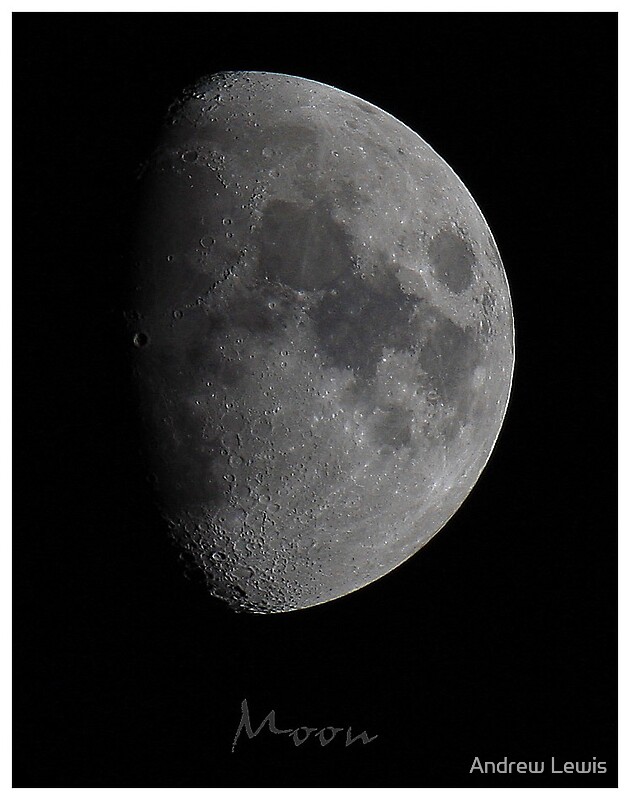
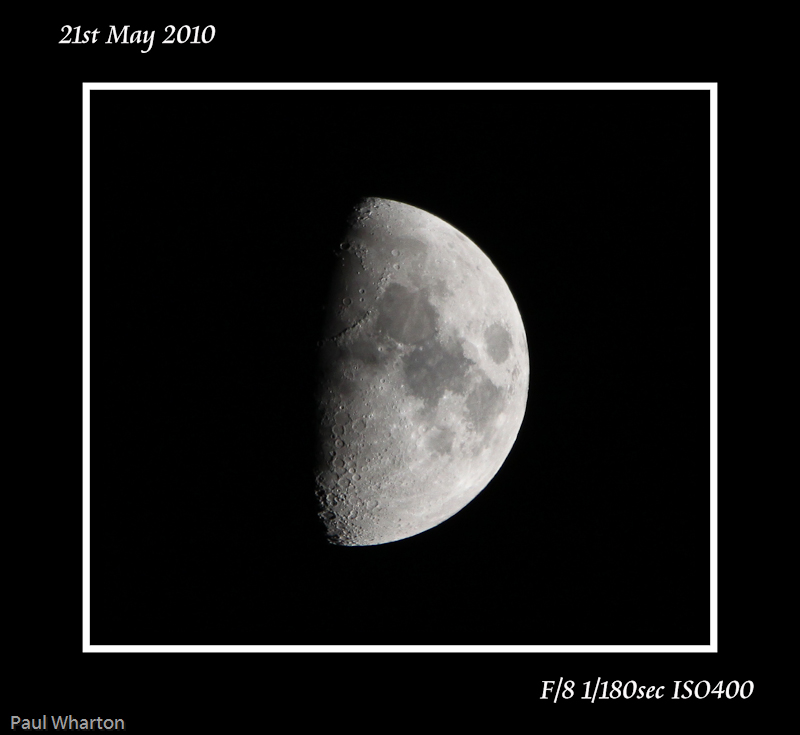
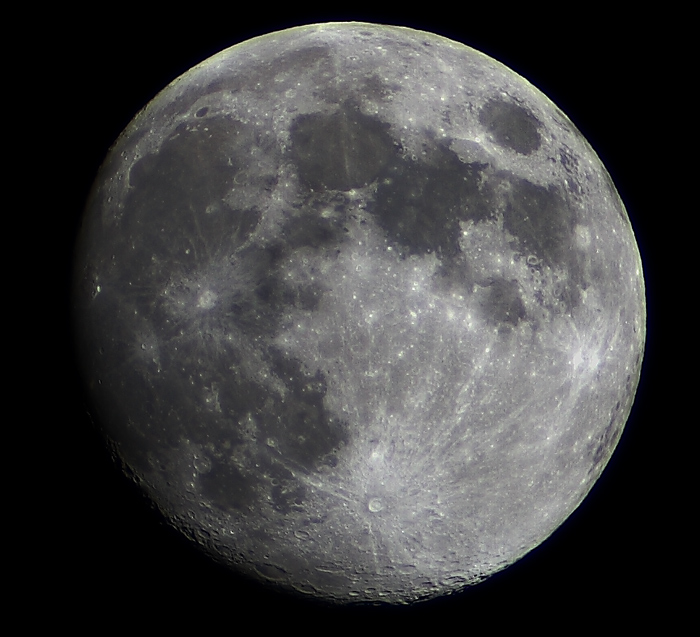
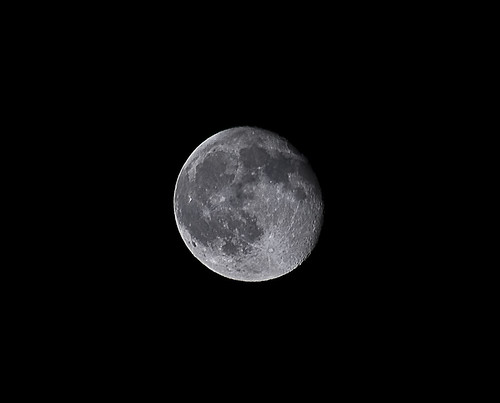
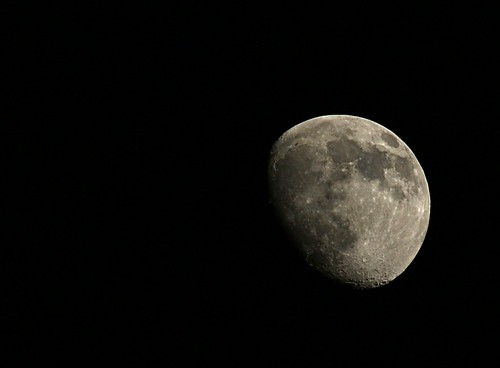
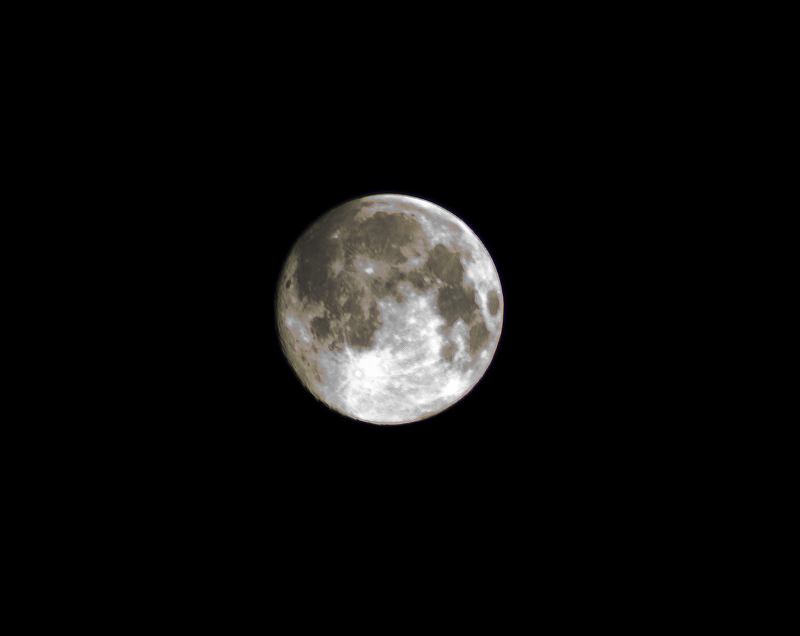
The moon is really a very tricky target, do not rely on the meter the moon is a relatively small target in a large expanse, the night sky being black the meter will indicate massive under exposure. It's possibly on spot, but even then I tend to set to underexpose. If you don't want to crop, you need to get to something in the order of 1000mm. However as has been said, the full moon is not the most interesting of views, due to the lack of contrast on the surface, but what you should be able to get are the bright ray systems from the larger impact craters, like Tycho in the south (Nod's shot show's these nicely).
Something else to bear in mind, and at short focal lengths, below 1200mm, it's actually hard to see, but atmospheric bubbling will ruin the shot. I was imaging the moon at 1200mm last night, and it varied from the moon looking like it was under a fast running stream at it's worst to jelly being shaken hard on a plate. To overcome this, once you have the exposure about right, take a sequence of shots, and pick the best one.
To answer your specific question, lowest ISO you have, aperture doesn't really matter, so use what works best for your lens (DOF is irrelevant at the ranges in question), and a shutter speed of probably about 1/160s as a start point (assuming about f/8).


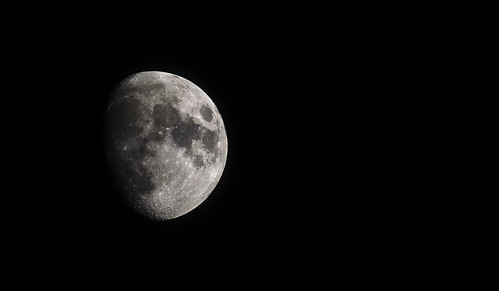


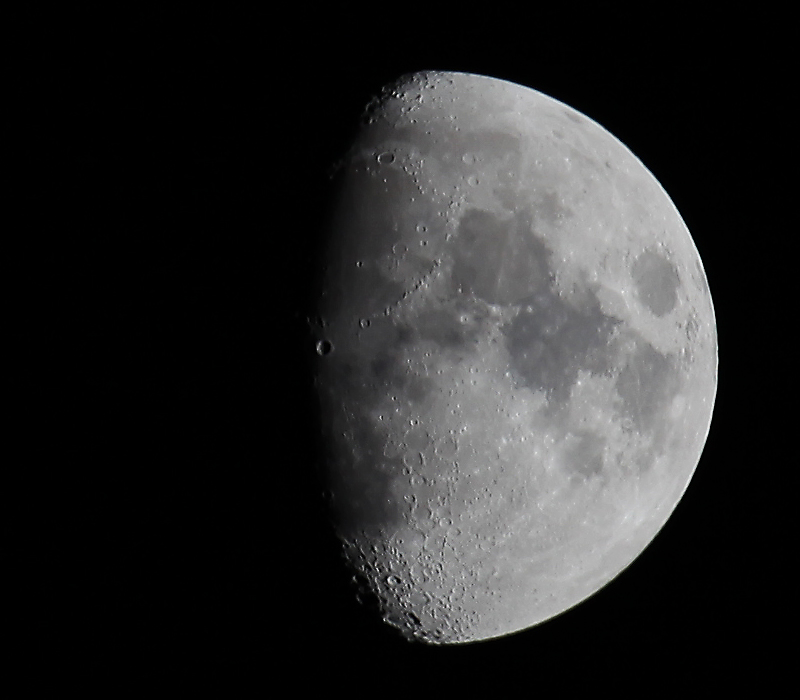


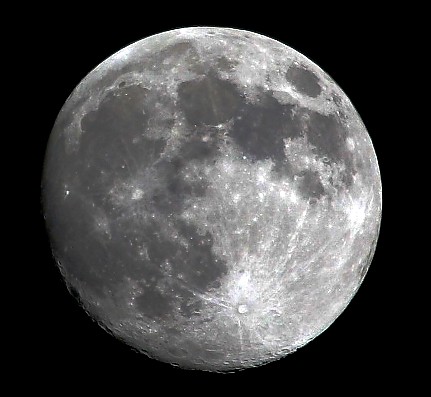

 . Set to base iso, usually 100 or 200 depending on your camera. A manual shutter speed of about 1/125 with bracketing +-1/3 should get you in the right ballpark. A tripod is best. Turn off any image stabilisation and use mirror lockup and/or remote cable release.