- Messages
- 13,716
- Name
- Dale.
- Edit My Images
- Yes
A question, rather than making a judgement.
I've been mulling over lenses, I would like (not necessarily need) a fast prime as I've been struggling at times in wildlife situations with light this year, this is Scotland after all.
Lenses being considered are, to be used with and without my Canon 2xIII teleconverter and also, I'm not too fussed on what evolution, so could be Mk1, Mk2, Mk3, where applicable.
Cost is a factor, so will more than likely be used.
300 f2.8 L,
400 f2.8L,
400 DO ( this would have to be the mark 2)
500 f4L
600 f4L, although this lens isn't a realistic option as even used, it's too expensive.
About converters, I understand they are a compromise but they do seem best suited to the Canon big whites, rather than lenses like Sigma's zoom offerings, for example. I'm not knocking the Sigmas, I have one and love it.
My mentioned Sigma, the 150-600C, I love it, it's a super sharp copy, but f6.3 has seen me only being able to get perched birds in most cases, as I just can't get the shutter speeds in most wildlife situations, even when pushing the ISO, to get anything moving. The Sigma isn't extracting the most from the 5Div sensor either but still gives very good results.
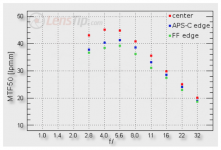
What I'm not getting though is that even the 'faster' primes need to be stopped down to f8 to get the best sharpness. I understand that bigger apertures allow more light in and that's one of the main reasons so it seems for using one in a wildlife situation. The lovely mushy backgrounds too of course. 2 things there though, the bird or subject usually has to be side on, parallel to the sensor at such wide apertures. Also, even at f8, a background can be mushy enough if far enough away, even by 10-15 feet at f8.
My question is, if a lens has to be closed down to f8 to be at its sharpest, is there really a need for f2.8? I have a 300f4L IS USM, a lovely lens and I've been trialling it today, with and without the TC. It's been a bright day admittedly here today but even with the TC, I was getting great results image quality wise (albeit experimental) at my hide. With the TC, the 300 is f8.
I can stop the 300 I have down to f8, f10 or whatever, so would the extra expense of the 300f2.8 (or any other big white) be worth it, considering it would always be on the back of mind that even that lens needs to be at f8 (ish) to be at its sharpest? is the sharpness that noticeable?
Or am I missing something or completely misundertsanding the whole thing?
I don't want to make an expensive mistake here, so please help me out. I'm not at the buying stage yet and I may just forget the whole idea but I am interested in experiences.
ta muchly.
I've been mulling over lenses, I would like (not necessarily need) a fast prime as I've been struggling at times in wildlife situations with light this year, this is Scotland after all.
Lenses being considered are, to be used with and without my Canon 2xIII teleconverter and also, I'm not too fussed on what evolution, so could be Mk1, Mk2, Mk3, where applicable.
Cost is a factor, so will more than likely be used.
300 f2.8 L,
400 f2.8L,
400 DO ( this would have to be the mark 2)
500 f4L
600 f4L, although this lens isn't a realistic option as even used, it's too expensive.
About converters, I understand they are a compromise but they do seem best suited to the Canon big whites, rather than lenses like Sigma's zoom offerings, for example. I'm not knocking the Sigmas, I have one and love it.
My mentioned Sigma, the 150-600C, I love it, it's a super sharp copy, but f6.3 has seen me only being able to get perched birds in most cases, as I just can't get the shutter speeds in most wildlife situations, even when pushing the ISO, to get anything moving. The Sigma isn't extracting the most from the 5Div sensor either but still gives very good results.
What I'm not getting though is that even the 'faster' primes need to be stopped down to f8 to get the best sharpness. I understand that bigger apertures allow more light in and that's one of the main reasons so it seems for using one in a wildlife situation. The lovely mushy backgrounds too of course. 2 things there though, the bird or subject usually has to be side on, parallel to the sensor at such wide apertures. Also, even at f8, a background can be mushy enough if far enough away, even by 10-15 feet at f8.
My question is, if a lens has to be closed down to f8 to be at its sharpest, is there really a need for f2.8? I have a 300f4L IS USM, a lovely lens and I've been trialling it today, with and without the TC. It's been a bright day admittedly here today but even with the TC, I was getting great results image quality wise (albeit experimental) at my hide. With the TC, the 300 is f8.
I can stop the 300 I have down to f8, f10 or whatever, so would the extra expense of the 300f2.8 (or any other big white) be worth it, considering it would always be on the back of mind that even that lens needs to be at f8 (ish) to be at its sharpest? is the sharpness that noticeable?
Or am I missing something or completely misundertsanding the whole thing?
I don't want to make an expensive mistake here, so please help me out. I'm not at the buying stage yet and I may just forget the whole idea but I am interested in experiences.
ta muchly.