

Thought I'd do a few quick tests to see what this is all about. The article at Luminous Landscape makes for a very good read if you're interested at all.
Basically, from what I can understand, more of the luminance data for each pixel is recorded on the right (light) side of the histogram than the left (dark) side. So as long as the scene is well within the ~5 F-stops of dynamic range that our sensors are apparently capable of, there is room to play (assuming you don't want to blow highlights). The benefits of exposing to the right are a/ better tonal "mapping" compared with darker tones and b/ better S/N ratios. The article explains all this much better than I can.
OK, so I figured that to best show the differences, I would need a naturally dark scene so that the effects of ETTR would be more obvious. In an attempt to avoid reflections and glare, I closed the curtains and protected the setup with dark, non-reflecting objects. This contained the range of the scene to within ~1.5 stops, which gave me plenty of room to play.
BTW, when I say "stops" I am referring to the sections of the histogram on my D50, of which there are four.
It took a big of messing about finding out what the correct exposure was, and then even longer to work out how much I could ETTR without blowing any highlights. I also had to keep the ETTR exposure within the capabilities of RAW SHOOTER to adjust back to the correct exposure with the exposure compensation slider.
All images shown are 100% crops. Nikon D50, sigma 17-70 @ 70mm
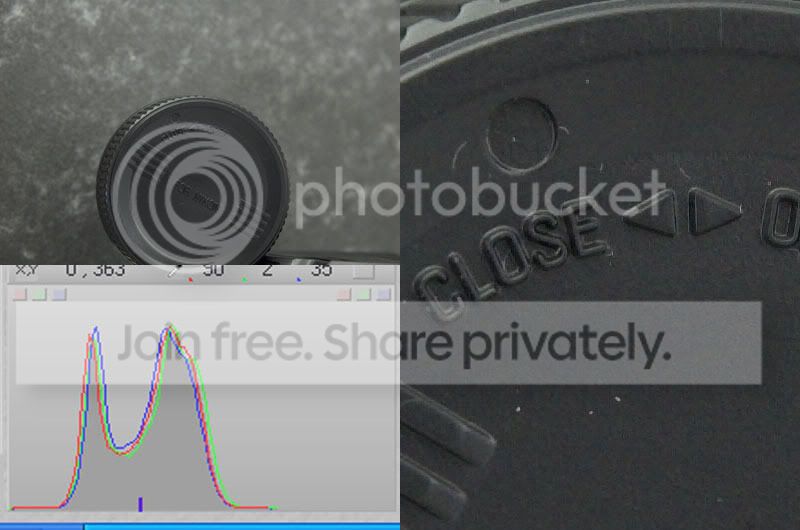
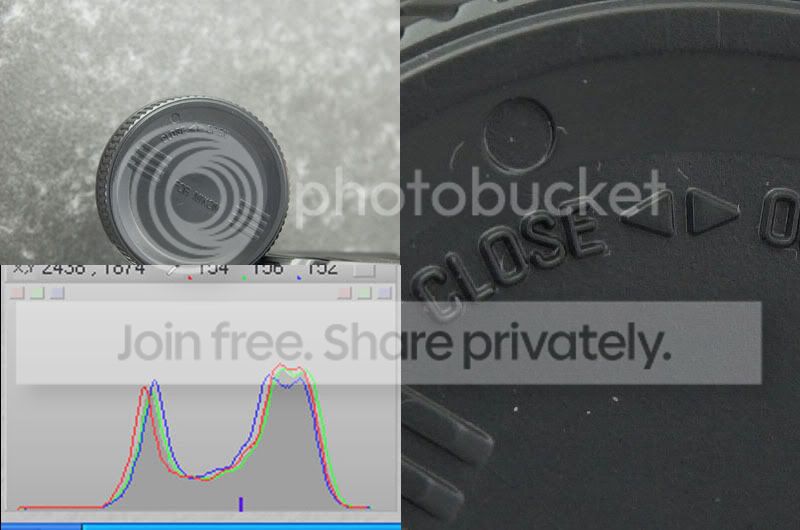
First test was at ISO1600. I worked out the correct exposure to be F8, 6 seconds:

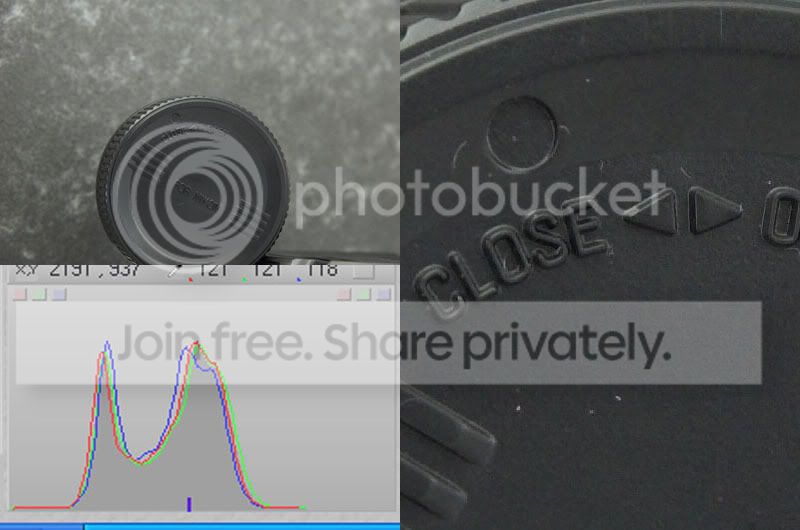
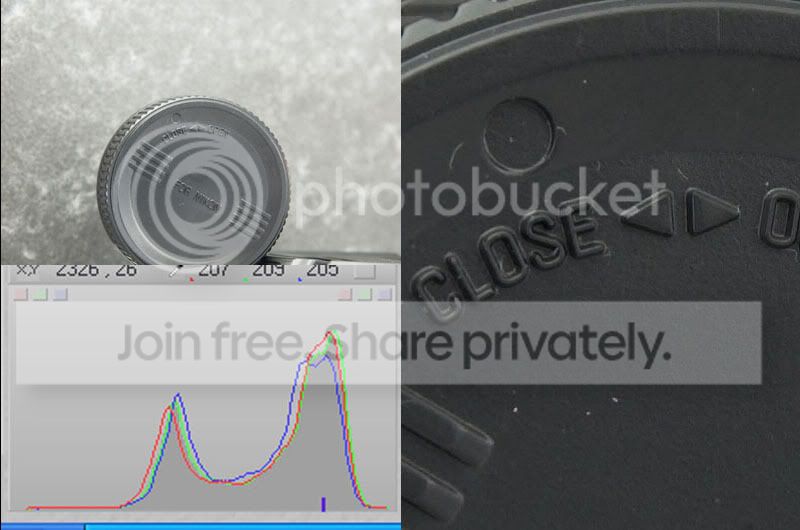
compare this to F4.5, 6 seconds (adjusted using RAW SHOOTER to the correct exposure):

Straight away I think you'll notice that there is much less noise in the second image. I also think that the end of the top stripe is better defined in the second image, and generally the image seems slightly sharper.
Second experiment, adjusted the shutter speed rather than aperture. Still at ISO1600.
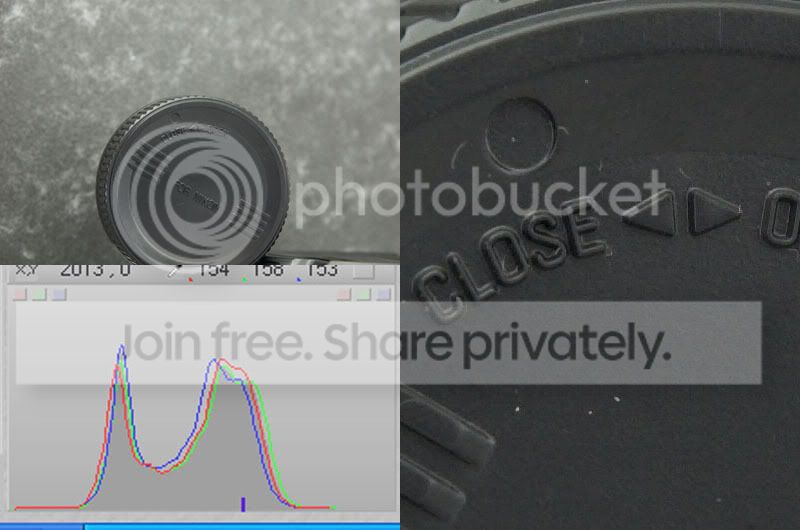
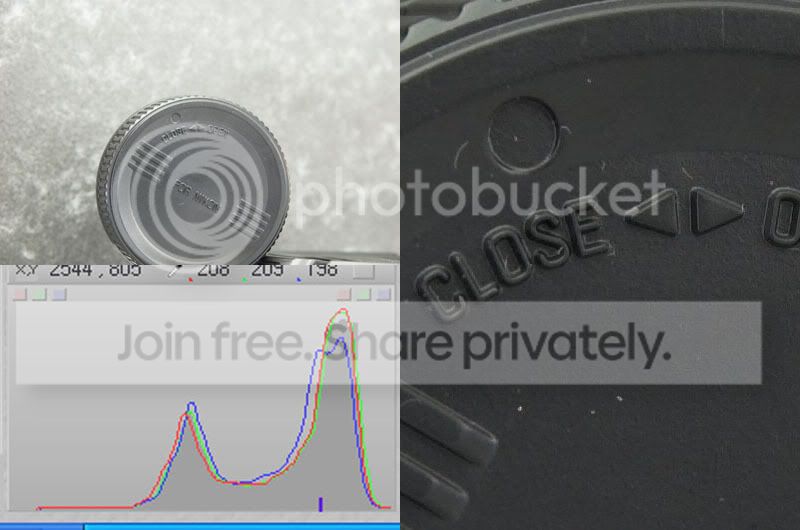
Correct exposure worked out to be F8, 10 seconds (so slighter brighter than the first):

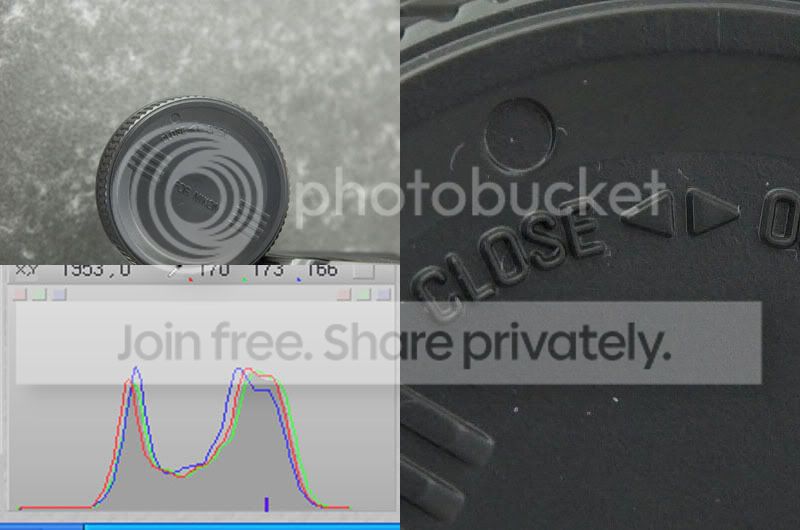
compare this to F8, 39 seconds :
:

Hmmm perhaps the first set weren't exposed quite correctly after all
Again, the noise aspect of the image is noticeable straight away - much better in the ETTR image.
So I wanted to compare these results with ISO200, which I try to shoot with all the time - light permitting. Hmmm 1600 / 200 = 8, so that means exposures 8x as long, for the same exposure! Oh well, here goes...
ISO200, F5.6, 30seconds:

compared to F5.6, 3:10mins!

These are a little dark, but the light was dropping by this point, and a ~5minute exposure didn't appeal! Besides which, I think these results show that at ISO200, ETTR has very little, if any, effect on the noise of the image. Certainly in the RAW file, I can't spot any difference, and of course JPEGs lose a bit of detail anyway.
So what are my conclusions and what have I learned?
Well, If you ever need to shoot a sub-5-F-stop image at high ISO, I think that by ETTR, you will be rewarded with less noisy results. I can't say for sure because I didn't try them, but I reckon its reasonable to assume the between ISO 200 and 1600, the difference in noise between the "correct" exposure and the ETTR exposure will increase linearly. A smaller-dynamic-range scene can benefit more from this technique than a higher-dynamic-range image.
It took quite a bit of effort to remove all the reflections and highlights from the scene, and it only took a tiny reflection to blow any highlights, and render the technique all but useless. This of course assumes you don't want to blow the highlights - I'm sure there are many cases where some highlights wouldn't matter, and just as many where they would be an integral aspect to an image.
For scenes where it is usable and useful, I certainly think the technique is worth employing. It only takes a quick look at the in-camera histogram to check the exposure, and then a quick tweak in the raw converter to get to the correct exposure.
This has been my first "proper" experiment (test-shots of pets don't count!), and I enjoyed seeing the results. Please remember that I am very much an enthusiastic amateur!
Besides the lessons I've learned about ETTR, I've also learned that ISO and shutter speed are directly related - i.e. double one: half the other. I'm sure the same applies to F-stops, but I've never understood what's an F-stop and whats a 1/2 F-stop ). I've also learned that, in semi-auto, my D50 seems to expose for the shadows, or at least darker than what I would think is correct. And finally, writing up the results can take as long as the experiment itself if you're not careful
Thanks for reading
Basically, from what I can understand, more of the luminance data for each pixel is recorded on the right (light) side of the histogram than the left (dark) side. So as long as the scene is well within the ~5 F-stops of dynamic range that our sensors are apparently capable of, there is room to play (assuming you don't want to blow highlights). The benefits of exposing to the right are a/ better tonal "mapping" compared with darker tones and b/ better S/N ratios. The article explains all this much better than I can.
OK, so I figured that to best show the differences, I would need a naturally dark scene so that the effects of ETTR would be more obvious. In an attempt to avoid reflections and glare, I closed the curtains and protected the setup with dark, non-reflecting objects. This contained the range of the scene to within ~1.5 stops, which gave me plenty of room to play.
BTW, when I say "stops" I am referring to the sections of the histogram on my D50, of which there are four.
It took a big of messing about finding out what the correct exposure was, and then even longer to work out how much I could ETTR without blowing any highlights. I also had to keep the ETTR exposure within the capabilities of RAW SHOOTER to adjust back to the correct exposure with the exposure compensation slider.
All images shown are 100% crops. Nikon D50, sigma 17-70 @ 70mm
First test was at ISO1600. I worked out the correct exposure to be F8, 6 seconds:
compare this to F4.5, 6 seconds (adjusted using RAW SHOOTER to the correct exposure):
Straight away I think you'll notice that there is much less noise in the second image. I also think that the end of the top stripe is better defined in the second image, and generally the image seems slightly sharper.
Second experiment, adjusted the shutter speed rather than aperture. Still at ISO1600.
Correct exposure worked out to be F8, 10 seconds (so slighter brighter than the first):
compare this to F8, 39 seconds
:
Hmmm perhaps the first set weren't exposed quite correctly after all
Again, the noise aspect of the image is noticeable straight away - much better in the ETTR image.
So I wanted to compare these results with ISO200, which I try to shoot with all the time - light permitting. Hmmm 1600 / 200 = 8, so that means exposures 8x as long, for the same exposure! Oh well, here goes...
ISO200, F5.6, 30seconds:
compared to F5.6, 3:10mins!
These are a little dark, but the light was dropping by this point, and a ~5minute exposure didn't appeal! Besides which, I think these results show that at ISO200, ETTR has very little, if any, effect on the noise of the image. Certainly in the RAW file, I can't spot any difference, and of course JPEGs lose a bit of detail anyway.
So what are my conclusions and what have I learned?
Well, If you ever need to shoot a sub-5-F-stop image at high ISO, I think that by ETTR, you will be rewarded with less noisy results. I can't say for sure because I didn't try them, but I reckon its reasonable to assume the between ISO 200 and 1600, the difference in noise between the "correct" exposure and the ETTR exposure will increase linearly. A smaller-dynamic-range scene can benefit more from this technique than a higher-dynamic-range image.
It took quite a bit of effort to remove all the reflections and highlights from the scene, and it only took a tiny reflection to blow any highlights, and render the technique all but useless. This of course assumes you don't want to blow the highlights - I'm sure there are many cases where some highlights wouldn't matter, and just as many where they would be an integral aspect to an image.
For scenes where it is usable and useful, I certainly think the technique is worth employing. It only takes a quick look at the in-camera histogram to check the exposure, and then a quick tweak in the raw converter to get to the correct exposure.
This has been my first "proper" experiment (test-shots of pets don't count!), and I enjoyed seeing the results. Please remember that I am very much an enthusiastic amateur!
Besides the lessons I've learned about ETTR, I've also learned that ISO and shutter speed are directly related - i.e. double one: half the other. I'm sure the same applies to F-stops, but I've never understood what's an F-stop and whats a 1/2 F-stop
). I've also learned that, in semi-auto, my D50 seems to expose for the shadows, or at least darker than what I would think is correct. And finally, writing up the results can take as long as the experiment itself if you're not careful Thanks for reading



 If the dynamic range of what you want to capture (white bride/ black groom) doesnt allow then you do the best you can.