Do DSLR's still have a place

A DSLR does everything I need and want to do. In my case a D500, and the AF, fps, pixels, are all I need and want. I always liked the cropped sensor/DX format, as it offered a smaller/lighter camera compared to the full frame DSLRs of the time, and potentially smaller lenses designed for the DX cameras. For me it was the best combination for size/weight and performance. The D500 in particular had the AF and fps comparable to top DSLRs of the time, but had the benefit of reduced size and weight. I also still like the optical viewfinder.

With mirrorless the cameras can be smaller/lighter than the D500, and the AF and fps could be better, but I don't need any of that. I also don't need to buy new lenses for a new system either. ;)

I don't think sensor technology has advanced too far in recent years, and 20Mp is enough for me. I can try to sell images when I can be bothered putting them on the site I attempt to sell them on from the D500. I have had an image in a couple of mags, and they weren't worried about what camera was used. :)
 
For me it was the best combination for size/weight and performance.
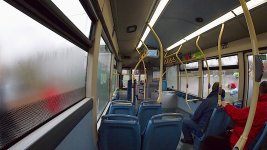
When formats such as APS and Micro Four Thirds were new, one complaint was that you couldn't get really wide angles for them but inevitably, the manufacturers rectified the situation with a wide range of compact rectilinear and fisheye lenses.

That's one reason why I have several M43 cameras and a single 35mm format camera.

Fisheye empty single deck bus E-PM1 1310049.JPG
 
A DSLR does everything I need and want to do. In my case a D500, and the AF, fps, pixels, are all I need and want. I always liked the cropped sensor/DX format, as it offered a smaller/lighter camera compared to the full frame DSLRs of the time, and potentially smaller lenses designed for the DX cameras. For me it was the best combination for size/weight and performance. The D500 in particular had the AF and fps comparable to top DSLRs of the time, but had the benefit of reduced size and weight. I also still like the optical viewfinder.

With mirrorless the cameras can be smaller/lighter than the D500, and the AF and fps could be better, but I don't need any of that. I also don't need to buy new lenses for a new system either. ;)

I don't think sensor technology has advanced too far in recent years, and 20Mp is enough for me. I can try to sell images when I can be bothered putting them on the site I attempt to sell them on from the D500. I have had an image in a couple of mags, and they weren't worried about what camera was used. :)
Out of interest what do you do with it?
 
Mirrorless has made lots of photographers lazy and I'll include myself in that. Judging by some of the comments I've read here I can see that too plus it seems some seem to think you can only take well exposed images using mirrorless. I've come from fully manual film days, I learnt about exposure and composition and I apply all I learnt to my mirrorless and DSLR shooting and for me it works. So I think that DSLR's haver their place, they are still tools and the great ones are getting cheaper and there's still lot and lots of fantastic lenses for them too.
Why does photography have to be a (insert opposite of lazy) if ones goal is to get an acceptable image. You use the best tool for the job.

I'm not about to ditch my electric drill for a brace and bit because that's made me lazy either.

Fully understand if it's the process someone enjoys, but that's what manual mode is for.
 
Now, I suspect that this will start another hare running but surely, almost all digitial cameras are mirrorless?

Most digital cameras show the view through the lens, before you record the image, so could be described, albeit in a lazy manner, as view cameras or pseudo single lens reflexes. Having no mirror, in most cases, They're mirrorless. :thinking:

This might justifiably be described as a mirrorless camera, in the sense that it would look like a reflex camera to someone who had used a reflex but had never seen a digital camera...

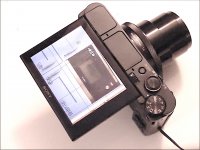
Sony HX90 flip screen in use TZ70 P1030854.JPG
 
I think DSLR's place is becoming less so, but it's arguably an affordable route to start photography. You can now get a pretty high spec DSLR now for much cheapness, especially used.
 
Now, I suspect that this will start another hare running but surely, almost all digital cameras are mirrorless?
Indeed. In the same way that "megapixels" has become the standard metric for the resolution of a camera sensor that doesn't, in fact, feature any "pixels", so "mirrorless" has come to mean "an interchangeable lens digital camera that isn't a DSLR". The item is defined in terms of what it lacks, which seems daft. But then, a portable radio used to be called a "wireless", so maybe we've been here before.
 
Indeed. In the same way that "megapixels" has become the standard metric for the resolution of a camera sensor that doesn't, in fact, feature any "pixels", so "mirrorless" has come to mean "an interchangeable lens digital camera that isn't a DSLR". The item is defined in terms of what it lacks, which seems daft. But then, a portable radio used to be called a "wireless", so maybe we've been here before.

I suspect AF was referring to phone cameras, which are mirrorless, hence his comment about 'almost all'.
 
Do the viewfinderless touchscreen cameras have buttons to control wb, iso, metering etc or are all the controls through menus?
 
Do the viewfinderless touchscreen cameras have buttons to control wb, iso, metering etc or are all the controls through menus?
Much the same as DSLR’s, higher spec models have more physical controls, and ‘entry level’ cameras rely on menus.
But largely they’re fairly customisable in the same way DSLR’s are.
Though I would never buy a viewfinder less camera. 40+ years of photography has programmed me into using a camera with a viewfinder. I rarely shoot using the rear screen.
 
Much the same as DSLR’s, higher spec models have more physical controls, and ‘entry level’ cameras rely on menus.
But largely they’re fairly customisable in the same way DSLR’s are.
Though I would never buy a viewfinder less camera. 40+ years of photography has programmed me into using a camera with a viewfinder. I rarely shoot using the rear screen.

What controls can you get for 2K Phil?
 
Much the same as DSLR’s, higher spec models have more physical controls, and ‘entry level’ cameras rely on menus.
But largely they’re fairly customisable in the same way DSLR’s are.
Though I would never buy a viewfinder less camera. 40+ years of photography has programmed me into using a camera with a viewfinder. I rarely shoot using the rear screen.

Years ago I bought an evf-less Panasonic GF1 and it was expensive. In some ways that camera and the very similar evf equipped G1 rivalled or even beat my Canon 5D but in good light I just couldn't see the detail I wanted to see with the GF1 so it went and was replaced with the G1. I can't see myself buying another camera without a vf.
 
Years ago I bought an evf-less Panasonic GF1 and it was expensive. In some ways that camera and the very similar evf equipped G1 rivalled or even beat my Canon 5D but in good light I just couldn't see the detail I wanted to see with the GF1 so it went and was replaced with the G1. I can't see myself buying another camera without a vf.
For years I had compact cameras, without EVFs, alongside my DSLR's to have a quality camera with me all the time, but after getting a Sony compact(RX100M3) with an EVF, never again would I get any camera without an EVF. I find myself using the EVF on the Sony's all the time, and was the main reason I waited and got that version of the camera I did, because it had an EVF, as that was the main feature upgrade from the cameras I had before.

In many ways, the RX100M7 I have now out performs the Nikon D500 I have, better AF, significantly more fps, the same 20Mp, but unsurprisingly does not have the better image quality. But in some situations, it is good enough. So I am not anti EVF, but prefer the optical viewfinder of the DSLR.
 
What controls can you get for 2K Phil?
I’m not sure that’s the angle I’d be looking from, but if your £2k is for a mirrorless camera, and you don’t mind s/h the world is your oyster.
If you want new and need a lens too, you’re probably fine if you don’t need FF.

if you don’t care about the format, you can likely get a decent camera and a couple of m43 lenses.

Edit: I’m not an expert on the market, I can speak ok re canon, and a s/h r7 or r6 would do anything you’d need, the R6 is now around a grand and the r7 a bit cheaper s/h.
But if you want something smaller, I don’t know the details.
 
Last edited:
That makes no sense at all, if two cameras in the same scene select the focus point of an eye, aperture & Fl being equal, both images will have the same qualities and the same things "to hide" ie depth of field limitations and OOF areas.

Enjoy your photography!
I think there’s the misunderstanding of the detail here in @woof woof post.

With mirrorless, the focus point can be anywhere in the frame, and with newer tech like eye focus it’s easier to put a subject right on the edge of a frame, where with a DSLR, that might have been safer to crop later, or you compromise and leave your subject where the camera designer put a focus point, therefore it definitely does create a difference in the image making process.

But, it does not mean that the ability to focus on a subject at the edge of the frame cannot be done, as an earlier post implied.
As you can see above, it absolutely does.

With a DSLR, and with children or sports etc, the chance of the subject moving is high. You really don’t have the same option of having your subject ‘anywhere’ in the frame when shooting with a DSLR, there’s always compromise.

Obviously if you’re shooting landscapes or other subjects where all the challenges are outside the camera (weather, trekking, time of day etc) it makes no difference at all, because even the live exposure isn’t critical as chimping and experience is fairly straightforward when you have the time.

Hope that helps your understanding of the difference in tech.
 
I think there’s the misunderstanding of the detail here in @woof woof post.

With mirrorless, the focus point can be anywhere in the frame, and with newer tech like eye focus it’s easier to put a subject right on the edge of a frame, where with a DSLR, that might have been safer to crop later, or you compromise and leave your subject where the camera designer put a focus point, therefore it definitely does create a difference in the image making process.


As you can see above, it absolutely does.

With a DSLR, and with children or sports etc, the chance of the subject moving is high. You really don’t have the same option of having your subject ‘anywhere’ in the frame when shooting with a DSLR, there’s always compromise.

Obviously if you’re shooting landscapes or other subjects where all the challenges are outside the camera (weather, trekking, time of day etc) it makes no difference at all, because even the live exposure isn’t critical as chimping and experience is fairly straightforward when you have the time.

Hope that helps your understanding of the difference in tech.
This was the main reason I blew a big hole in my pension pot to go mirroeless...hated the central grouping of the focus points in my DSLR's. I photograph mainly gigs and festivals so invariably "Wide Open" so don't have the luxury of depth of field to compensate... had to use the nearest focus point then crop to get the framing I wanted.
 
Last edited:
Why does photography have to be a (insert opposite of lazy) if ones goal is to get an acceptable image. You use the best tool for the job.

I'm not about to ditch my electric drill for a brace and bit because that's made me lazy either.

Fully understand if it's the process someone enjoys, but that's what manual mode is for.
You use the best tool that gives you pleasure. People shooting film know it’s what it is and still enjoy it. I think you are taking the “lazy” word too far and just because you understand what manual is and how it works, LOTS of photographers don’t and never will. Forums and groups are full of questions like “what’s the best lens for” and that’s a lazy person.
 
Forums and groups are full of questions like “what’s the best lens for” and that’s a lazy person.
I don't consider asking questions on a forum as lazy - it's what forums are for.
 
You use the best tool that gives you pleasure. People shooting film know it’s what it is and still enjoy it. I think you are taking the “lazy” word too far and just because you understand what manual is and how it works, LOTS of photographers don’t and never will. Forums and groups are full of questions like “what’s the best lens for” and that’s a lazy person.
I don't, I use the best tool for the job as I said, I don't get all that much pleasure from using the camera I'd use my phone if it could get the shot.
Asking for advice and seeking out information isn't lazy either.
 
Last edited:
Re. viewfinders and rear screens For me, finding the right composition doesn't feel as natural using a screen as opposed to the viewfinder, which I'm quite sure is mainly down to conditioning of using only a viewfinder over the years. I also find using a viewfinder brings the camera in closer and helps with stability as you naturally lock your elbows in.

Another issue I've often had with using a rear screen is when the environment is bright. Perhaps the latest gear overcomes this with super high nit screens? But for me, the viewfinder keeps things more consistent.
 
Re: viewfinders and rear screens, For me, finding the right composition doesn't feel as natural using a screen as opposed to the viewfinder, which I'm sure is mainly down to conditioning of using only a viewfinder over the years. I also find using a viewfinder brings the camera in closer and helps with stability as you naturally lock your elbows in.

Another issue I've often had with using a rear screen is when the environment is bright. Perhaps the latest gear overcomes this with super high nit screens? But for me, the viewfinder keeps things more consistent.
I like rear screens when using a tripod.

It reminds me of looking into the back of a view camera or onto the large screen of a medium format camera, which was always how I completed a composition after using the magnifier to focus (and then refocus after finalising the composition).

So I find myself in an odd position that for handheld cameras, I am conditioned into using a viewfinder, but for careful composition, conditioned into looking at a screen.

The deciding factor, however, is that even when the reviews claim that "even in the brightest sunlight the rear screen worked flawlessly", this hasn't been my experience.

However, I'm not as averse to the idea of "only" having a rear screen (on a secondary camera) as I once was, e.g. a Ricoh GRIV, which for me, has sufficient benefits to overcome the lack of a viewfinder: not that I have one.
 
I use rear screen for angle and perspective and for saving me from having to lay or crouch when I either can't or don't want to. If I'm taking a picture from eye level I'd usually use the evf.
 
Re. viewfinders and rear screens For me, finding the right composition doesn't feel as natural using a screen as opposed to the viewfinder, which I'm quite sure i
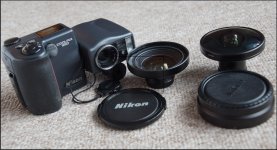
The first digital I bought was a Nikon Coolpix 990. I've still got it and it still works!

Its "twist head" design was a serious attempt to make large screens work for a majority of photography. I also have a Coolpix S10, which miniaturised the "twist head" concept. The "flip screens" on various later cameras are a good development, allthough the side opening ones don't work so well for me.

Here's my Coolpix 990 with a couple of extra lenses...

Camera Nikon Coolpix 990 with lenses DSC01857.JPG
 
So I find myself in an odd position that for handheld cameras, I am conditioned into using a viewfinder, but for careful composition, conditioned into looking at a screen.

I will use the rear screen when the camera is on a tripod to get an overview of composition, but to see detail, just like flipping out the magnifier on a roll film camera, I'll use the viewfinder to check fine detail. Hand-held, viewfinder only for me.
 
Last edited:
On the D500 I use the rear screen in live view when the camera is on a tripod, usually taking pics of a static scene at night, sunrise or sunset. The 153 phase detection focus points cover a large area of the screen compared to FF DSLRs, but whilst in live view mode, the whole of the screen can be focused on using the touch screen or moving a box around the screen. It does use slower, but accurate if you can get focus, contrast AF, and again, with static scenes, works fine.

I'm aware that most mirrorless cameras can work with the phase AF with either EVF screen, but I don't need to have the best AF for my situations when I want to use the rear screen.:)
 
I will use the rear screen when the vamera is on a tripod to get an overview of composition, but to see detail, just like flipping out the magnifier on a roll film camera, I'll use the viewfinder to check fine detail. Hand-held, viewfinder only for me.
On a tripod, I most often use a Hoodman magnifier to check focus and see detail, so more akin to using a 5x4 than the magnifier on medium format.

I like the flexibility to mix and match, depending on circumstances and how lazy I'm feeling.
 
I like rear screens when using a tripod.

It reminds me of looking into the back of a view camera or onto the large screen of a medium format camera, which was always how I completed a composition after using the magnifier to focus (and then refocus after finalising the composition).

So I find myself in an odd position that for handheld cameras, I am conditioned into using a viewfinder, but for careful composition, conditioned into looking at a screen.

The deciding factor, however, is that even when the reviews claim that "even in the brightest sunlight the rear screen worked flawlessly", this hasn't been my experience.

However, I'm not as averse to the idea of "only" having a rear screen (on a secondary camera) as I once was, e.g. a Ricoh GRIV, which for me, has sufficient benefits to overcome the lack of a viewfinder: not that I have one.

They certainly are convenient when using a tripod. I also forgot that they are rather handy when doing baby or dog photos from a very low vantage point, the articulating type that is.
 
They certainly are convenient when using a tripod. I also forgot that they are rather handy when doing baby or dog photos from a very low vantage point, the articulating type that is.
I prefer the 4-way tilt screens that Fuji and Nikon (only z8 and z9) offer to the fully articulated options. The latter doesn't "easily" tilt in the direction I most commonly want, and often gets in the way. It's still better than only tilting horizontally, which is useless for vertical pictures.

Especially for casual photography, being able to pull the screen out for low viewpoints is really useful.
 
Much the same as DSLR’s, higher spec models have more physical controls, and ‘entry level’ cameras rely on menus.
But largely they’re fairly customisable in the same way DSLR’s are.
Though I would never buy a viewfinder less camera. 40+ years of photography has programmed me into using a camera with a viewfinder. I rarely shoot using the rear screen.
Just thought you might be interested in this titbit of information. I was at a photoshoot and another photographer had a mirrorless M4/3 but the EVF was not working. He said he got it cheap and I asked why would you buy it if the EVF wasn’t working. He shoots lots of bands/gigs in pubs and using the screen on the back has saved his eyes from being bashed in by nearby people bumping into him. The other reason he gave is that his peripheral vision is not impaired this way and he gets to capture more candid moments.
 
Just thought you might be interested in this titbit of information. I was at a photoshoot and another photographer had a mirrorless M4/3 but the EVF was not working. He said he got it cheap and I asked why would you buy it if the EVF wasn’t working. He shoots lots of bands/gigs in pubs and using the screen on the back has saved his eyes from being bashed in by nearby people bumping into him. The other reason he gave is that his peripheral vision is not impaired this way and he gets to capture more candid moments.
I don’t knock people using the rear screen, there’s no right or wrong,
But I got my first SLR in 1982, when I went to medium format I bought an eye level finder straight away.

I have a couple of niche uses of the rear screen, but honestly I’m as likely to vaguely aim the camera without looking at all as I am to use the rear screen.
 
As I get older my close up vison has changed and more and more I find I have to rely on reading classes which in the 'field' this would be awkward having to chop and change from looking at something 10 feet and beyond away then having to change back to look at a small screen possibly a foot away. I get a good compromise with a variable eyepiece on my Nikons.

Eyesight deterioration will affect most of us at sometime. Even with quite strong reading glasses trying to read the safety warnings on the side of some cleaning products is well nigh impossible, because the printing is often less than 1mm tall.
 
The organisation I work for finally decided to do some advertising, and hired a professional photographer come in to take some pictures of staff. I was interested on what he was doing, as taking pics of people isn't generally my thing, so watched him for 5-10mins. I was very surprised that he was using the rear screen rather than the EVF (on his Nikon mirrorless camera), and I was wary of how professional he actually was. :thinking: After I saw the images that were put out in various media they were all excellent, so my apprehension of the professionalism of the chap was misplaced, just by the way he used his camera. :oops: :$ Lesson learned. ;)
 
As I get older my close up vison has changed and more and more I find I have to rely on reading classes which in the 'field' this would be awkward having to chop and change from looking at something 10 feet and beyond away then having to change back to look at a small screen possibly a foot away. I get a good compromise with a variable eyepiece on my Nikons.

Eyesight deterioration will affect most of us at sometime. Even with quite strong reading glasses trying to read the safety warnings on the side of some cleaning products is well nigh impossible, because the printing is often less than 1mm tall.

My eyes are distinctly less good than a year ago, and suddenly for the first time I'm starting to need reading glasses. Fortunately nearly all modern cameras seem to have dioptre correction built-in, and even though I struggle with conventional close vision, I can still see through the viewfinder well.
 
I don’t knock people using the rear screen, there’s no right or wrong,
But I got my first SLR in 1982, when I went to medium format I bought an eye level finder straight away.

I have a couple of niche uses of the rear screen, but honestly I’m as likely to vaguely aim the camera without looking at all as I am to use the rear screen.

I very much prefer to use the EVF/OVF - but if I am doing landscape, on a tripod, once I am ready & composed etc I'll often step back a bit & look at the composition on the LCD (much like how you'd step back to look at a print) I'm not sure if it's because of that looking at a hanging print thing, or whether it's because as a glasses wearer my eye can't always get close enough to the EVF & the LCD just allows me to do a final check (esp of the edges)
 
My eyes are distinctly less good than a year ago, and suddenly for the first time I'm starting to need reading glasses. Fortunately nearly all modern cameras seem to have dioptre correction built-in, and even though I struggle with conventional close vision, I can still see through the viewfinder well.

I found that II simply cannot use a DSLR optical viewfinder for critical manual focusing. I suspect that varifocal spectacle lenses are part of the issue. So I'm tied to using the rear screen if using one without AF.

(I have always found EVFs quite usable while wearing spectacles - and the ability to magnify in the VF for focus checks is oe of the major benefits).

Like @Phil V I tend to use the viewfinder for just about everything - and one of the aspects of the X-H2 that I like is that the raer screen folds inwards against the body - which I find both a practical and pyschological benefit.
 
I found that II simply cannot use a DSLR optical viewfinder for critical manual focusing. I suspect that varifocal spectacle lenses are part of the issue. So I'm tied to using the rear screen if using one without AF.

Some OVFs are better for focusing than others, and one of the best I ever found on an AF camera was actually in a Minolta 7000, which although it had no focus aids like prism or split centre, gave such a sharp and bright image that it was easy to see. But OVFs, especially on crop DSLRs, tend to be small and dark especially when using a zoom, and that makes focus very hard to see clearly.
 
...so my apprehension of the professionalism of the chap was misplaced, just by the way he used his camera.
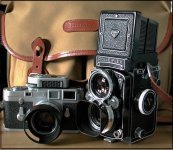
For decades, many photographers used twin lens reflexes.

The main viewfinder was, of course, the 6x6cm focussing screen showing the view through the upper lens, so people who had some awareness of photography, were used to seeing cameras held at chest height with the photographer looking into the box like structure at the top. Then came the 35mm boom of the late sixties and people began to see more people holding the camera up to their eye.

It's a natural human reaction to regard what you see frequently as normal and any departure from that as "not quite right".

What the casual observer thinks of people who use two very different types of cameras is anybody's guess!

Leica and Rollei from right.jpg
 
Rear screens are great for fine focus adjustment on optical view finders.

On actual photography, I tend to use them on over the head shots (landscape) and for better focus on IR (optical viewfinders will often be off in places if using a zoom lens). Mirrorless works better for IR (although there are many more good DSLR lenses for IR).
 
Back
Top