

Mozziephotography
Suspended / Banned
- Messages
- 1,850
- Name
- Stephen
- Edit My Images
- Yes
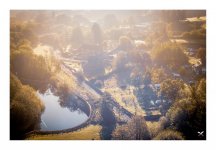
A photograph from this morning's race. Not a runner in sight. Nikon D7500 85mm f1.8



Whilst I agree 100% with your assertion that a beginner camera should be simple. I completely disagree about what ‘simple’ means.Starting off with a Canon 550 is a reasonable starting piece off kit. My first DSLR was a canon 450D and it lacked a lot of features on more premium cameras, however it meant I had to develop some basic technique's, and skills to compensate for the 450D short falls.
When I purchased my 7D a few years later it was like having a smartphone over a basic Nokia !
So I believe a more basic camera for a beginner means they will have to learn the camera inside out, and work out how to more beyond its limitations.
Fair enough,..people learn differently, and at different speeds / levels. For me I did learn a lot from having a entry level camera. The biggest decision for me was did I enjoy what I was doing, and if I did not shelling out on more expensive gear would have been waste of money.Whilst I agree 100% with your assertion that a beginner camera should be simple. I completely disagree about what ‘simple’ means.
For me, a simple camera should have separate controls for aperture shutter speed and iso that don’t involve diving into menus.
I never touch the ‘complicated’ controls for fine tuning AF behaviour or WB or 99% of the functions of the micro computer my newer camera has become.
But as a ‘photographer’ I need to easily control focus points, aperture and shutter speed in M), and exposure compensation (in AV most of the time). And a 550d makes that harder than a 7d.
Learning how to ‘workaround’ the limitations of a worse camera might be character building for some personality types, for me it’s just frustrating. I want the camera to get out of the way and just let me make pictures, having to use menus, or remember what function a multi-function button does as I change modes is stuff I don’t want to have to think about.
I agree.As photography is so subjective there really is never a right, or wring path / choice for a person as there are so many factors to consider.

I think I agree about "simple"Whilst I agree 100% with your assertion that a beginner camera should be simple. I completely disagree about what ‘simple’ means.
For me, a simple camera should have separate controls for aperture shutter speed and iso that don’t involve diving into menus.
I never touch the ‘complicated’ controls for fine tuning AF behaviour or WB or 99% of the functions of the micro computer my newer camera has become.
But as a ‘photographer’ I need to easily control focus points, aperture and shutter speed in M), and exposure compensation (in AV most of the time). And a 550d makes that harder than a 7d.
Learning how to ‘workaround’ the limitations of a worse camera might be character building for some personality types, for me it’s just frustrating. I want the camera to get out of the way and just let me make pictures, having to use menus, or remember what function a multi-function button does as I change modes is stuff I don’t want to have to think about.

By the time there was such a thing as an ‘entry level camera’ I had already learnt to use a camera, but the idea of a dslr I could afford made it an obvious choice, however the lack of controls was an instant frustration.Fair enough,..people learn differently, and at different speeds / levels. For me I did learn a lot from having a entry level camera. The biggest decision for me was did I enjoy what I was doing, and if I did not shelling out on more expensive gear would have been waste of money.
Plus I also knew what type of future camera I would like to use, and another important factor to consider is the post processing of said entry level images in PS, LR or what ever software one may use.
Again would I buy in to a years subscription to something I might give up in a few months time. That is when free, or trial image software will win.
As photography is so subjective there really is never a right, or wring path / choice for a person as there are so many factors to consider.
Those controls are often missing from entry level DSLRs. You’ve kinda made my point.Two dials for manual, near and far focus (for bird on a twig with a stick in front of or behind it) five custom modes to change setting for different favourite modes, single button press to access the focus settings, and one I have just assigned, a single lever movement to switch between JPG and JPG&RAW.

I feel your sting!

Last week (or the week before that!) I had 2 lots of the nasty, stingy drops - diabetic retinopathy and ocular hypertension. A necessary evil but at least both tests came back "normal".