
Digital Medium Format Thread

Talking of Lenses

GF63 f2.8
New focus motor

Common fault, usually caused by turning camera on with lens being unable to extend, a lot of people have done wthis accidently within their bags!! Its a shame that such a brilliant little lens is blighted with this flaw.

I make sure that if it goes in a bag, my GFX has one of my other lenses on!
 
I was amazed yesterday when my 2nd GFX arrived only a little over 24 hours after ordering. Good job the Fuji eShop. (y) It's all set up now for next Tuesday's Dartmoor Photowalk. I took my original one with me this Tuesday into a very wet Lydford Gorge trying (unsucessfully) to avoid the torrential rain that was forecast :rolleyes: . Here are a couple of the shots both with the 32-64.
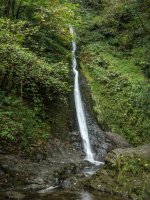

The Whitelady Waterfall (it had just started to rain and I had to move out from cover to get this).

018 Lydford Gorge (Whitelady Falls (GFX)) 018-2217 PS Adj.JPG

The Devil's Cauldron. It had now been raining heavy for about an hour, the Cauldron was now a black hole with a raging torrent of water, I metered for the water ensuring not to blow the highlights and hoped that the DR of the GFX would save the shadows, I was pleased with the result.

032 Lydford Gorge (Devil's Cauldron (GFX)) 032-2220 PS Adj.JPG

For those interested the full story and photos are in my Blog https://www.ephotozine.com///user/topsyrm-149719/blog/.
 
Last edited:
In the evening of 11 Sep 2022 I did a price study for to tempt my friend with. Sadly his wife overrode him.

FUJIFILM GFX 50S II + 35-70mm Lens Kit

- US$3,527.64 = HK$27,690: HK grey market price + ₱3,600 shipping no VAT, GST or sales tax
- US$3,811.78 = ₱216,585.40: FujiFilm PH 12% VAT inc via Lazada PH
- US$4,499: BH Photo + sales tax

Bought separately the GFX 35-70mm Lens is US$1,000.

To frame the value here are the BH Photo prices of these RF bodies

- $3,899: EOS R5
- $2,499: EOS R6

Sadly the Lazada PH promo price ended yesterday. :ROFLMAO::ROFLMAO::ROFLMAO:
 
Last edited:
In future I would not be surprised that FujiFILM GFX medium format bodies will hit these price points occupied by full frame bodies

$4k

- 2016 Canon EOS-1D X Mark II
- 2021 Fujifilm GFX 50S II ($3.5k summer promo price)

$3.9k

- 2020 Canon EOS R5

$3.7k

- 2019 Panasonic Lumix DC-S1R

$3.5k

- 2019 Panasonic Lumix DC-S1H
- 2020 Sony a7S III

$3k

- 2020 Nikon Z7 II
- 2021 Sony a7R IVA

$2.5k

- 2019 Panasonic Lumix DC-S1
- 2020 Canon EOS R6
- 2021 Sony a7 IV
- 2022 Fujifilm X-H2S (Highest-end X-mount body & may serve as the bottom price for GFX bodies)

$1.5k

- 2015 Canon EOS 5DS R (Cheapest 50+ megapixel body was $3.9k in 2015)

Going after Phase One, Hassleblad & Leica medium format customers are secondary concern as the core medium format market is roughly 6000 units per year – worldwide, for all pre-2013 brands. It's that small because typical medium format bodies goes for more than $10k & lenses more than $3.3k

To frame the FujiFILM G system we need to look at the other players...

Leica S medium format system started in 2008.

- $20k for the single 2020 Leica S3 body
- $5k-12.5k price range for 16 lenses with the last lens, Leica Summicron-S 100 mm f/2 ASPH being released in 2014

FujiFILM G system started in 2017 & has these price points

- $3.5-10k for 3 body SKUs with the last body, Fujifilm GFX 50S II being released 53 weeks ago
- $1k-3.3k price range for 15 lenses with the last two lenses, being released later this year

FujiFILM G medium format systems value proposition is as follows

- medium format hardware
- in a dSLR form factor
- at a dSLR physical dimension & weight
- R3 & R5 price points
- RF L lens price range

This is more damaging to current Canon, Sony & Nikon customers than those of Leica, Hassleblad or any other medium format brand.

An indicator of this would be FujiFILMs marketing tagline is More than Full Frame. If you're a medium format user prior to 2017 the tagline is something to shrug over. But if you're a long time full frame or smaller user then its a big deal.

APS-C & smaller image sensors are losing ground to smartphones so brands are moving to full frame.

Pentax failed in their executions probably due to resource reasons as they did not go further beyond the 2014 Pentax 645Z & 2015 HD Pentax-D FA645 35mm F3.5 AL [IF]. Ive read an article that they had problems fulfilling demand for the $8.5k body that now retails at $5k. I remember feeling surprised by it being the cheapest medium format body at the time.

New lowest price is $3.5k 2021 FujiFILM GFX 50S II body-only during the summer promo price.

The $10k 2019 Fujifilm GFX 100 is the oldest SKU with its successor, the 2021 Fujifilm GFX 100S costing $6k. It has the same 100+ megapixel 0.79x crop image sensor.

Many are complaining about Canon defending its RF system from 3rd party reverse engineering 4 years into their transition.

If I was making that transition to MILC then FujiFILM looks very interesting from a value proposition.

Its weakness for my use case would be its lack of autofocus designed for birds, wildlife or sports.

In 2015 the cheapest way to get native 50+ megapixel was the $3.9k EOS 5Ds R. That was a big deal to many professionals whose clients contractually require 50+ megapixel files.
 
@dolina

Digital MF is not for everyone, there are lots of disadvantages (compared to FF) the main ones being AF speed and range of lenses (and availability of 3rd party AF lenses), but if your photography fits into its capabilities then it can make a compelling case.

At the moment Fujifilm are definitely the most aggressive Digital MF player, not only have they released lots of products, but their almost continual cyclce of promotions has made them very attractive purchasing propositions. This has had a knock on effect on 2nd hand prices (making used original GFX50S bodies often less than a second user D850) - again this encourages more people into Digital MF who might have stayed with FF.

Native Digital MF Glass though is still expensive and although comparible in some cases to the premium glass being offered in FF by the likes of Canon/Sony/Nikon, the range of native glass falls a long way short of that being offered by the FF options. Fuji have also muddied the water slightly by not offering a clear 'trilogy' of lenses. There is also a lack of 'wide aperture' fast glass if that is important, with currently only a single F1.7 offering (F1.4 equivalent)

It all depends what is important to you, if you are a landscape photography who can live with the ranges of native glass then Digital MF can really make a case for itself, or of you are a studio photographer who wants high resolution. But in general for anything that is moving either quickly or unpredictably you might be bettered served by FF.

In Digital MF Fujifilm seem to moving in a clear direction, in APSC less so.

Six years ago the X-T2 was launched (£1399), now we have the flagship X-H2S at a relatively eye watering £2,500, we also shortly afterwards saw the launch of the GFX50S (£6,200) and now have available the GFX50SII at £3,500. There are a lot of FF offerings that overlap these price points so the consumer has a vast number of options available. But Fuji really do seem to be trying to take APSC to new price points not only in bodies but in lenses as well (Original XF56mm F1.2 was £629, new version is £999). If you are already in the Fuji X ecosystem then you might be able to stomach these, but for newcomers there are some much more cost effective FF systems out there.

I think though just to assess equipment on value is not the right approach, the whole system, its capabilities and most importantly its output need to be the driving goals. Most of us will spend about the same pot of money on this equipment but we can all choose to spend it in different ways.
 
Last edited:
20-35 pre-ordered. I've been waiting for this lens for what seems like an age.
Looking forward to seeing results from your trips before I start thinking of shifting my 23mm for the 20-35mm which would be very nice but my 45-100 is my main lens.
 
@Mr Perceptive

As I see it FujiFILM's primary target market for GFX are years or even decades long users of Canon/Sony/Nikon/FujiFILM FF & APS-C systems that currently do not do sports, birds or wildlife.

We were marketed for decades that larger than APS-C bodies are better. So when you're at FF what is bigger than that?

Hence the marketing of "More than Full Frame".

It isn't a camera for 1st time buyers. For that the FujiFILM X-mount is there for.

I agree at an average pace of 3 lens SKU annually the 15 lens lineup is kinda short especially when Canon RF lens is being populated at 6 lens SKUs annually since 2018 and Canon CEO has committed to 8 lens SKUs annually for the next 4 years.

But given that the f/4 (f/3.16(?))zooms have covered

- 20-35mm
- 32-64mm
- 45-100mm

And because of weight the 100-200mm is f/5.6 (f/4.424(?))

All of which do not exceed US$3.3k per lens. Price range of a RF L lens

It is somewhat covering these FF ranges

- 16-35mm
- 24-70mm
- 70-200mm

In future FujiFILM will continue to increase their lens lineup from 15 to say 30-40 before the 2030s.

In my mind the 1st 15 lenses are the ones that is most in demand and has the fastest inventory turnover.
 
Last edited:
Biggest weakness of gfx is lack of either leaf shutters or global shutter. X-sync speed is very limiting, more so than any 50-60mp FX bodies. That's where hasselblad rules supreme sadly well out of my price range.
At the end of the day FX to gfx is smaller step up in sensor size than apsc to fx, and 4:3 ratio sort of gets wasted a little for many images as I would use 2:3 to 5:7 on most occasions
 
Last edited:
Biggest weakness of gfx is lack of either leaf shutters or global shutter. X-sync speed is very limiting, more so than any 50-60mp FX bodies. That's where hasselblad rules supreme sadly well out of my price range.
At the end of the day FX to gfx is smaller step up in sensor size than apsc to fx, and 4:3 ratio sort of gets wasted a little for many images as I would use 2:3 to 5:7 on most occasions
Thank you for pointing that out.

Considering the primary target market of Fuji's MF isn't current Phase One, Hassleblad or even Leica users does not surprise me that that leaf & global shutters are absent.

Price points are a indicator of this.
 
I have GFX for studio and landscape. In my experience in the studio there is no issue whatsoever with synch speed. I switched from Hasselblad and have had no issues.

What situations are you thinking of that it could be a problem?
 
Gfx 100s 11648px 44mm long edge
A7riv 9504px 36mm

Gfx has 22.5% more of each, and obviously considerably more in vertical direction. It appears to be pretty much the same sensor in a larger size.

A7RIV has considerably faster frame rate, x-sync and af tracking. A1 goes well beyond on these specs.

Considering price range these are the specs to weigh up against each other and I would guess in an ideal world you would have one or two of each. I wonder if Sony plays well with gfx lenses and vice versa
 
Biggest weakness of gfx is lack of either leaf shutters or global shutter. X-sync speed is very limiting, more so than any 50-60mp FX bodies. That's where hasselblad rules supreme sadly well out of my price range.
At the end of the day FX to gfx is smaller step up in sensor size than apsc to fx, and 4:3 ratio sort of gets wasted a little for many images as I would use 2:3 to 5:7 on most occasions

For landscapes I find the 4:3 aspect ratio very pleasing. I tend to crop my D850 files 4:3 or 5:4. So with this system there is less wastage here.

I suspect it is better to view the Fuji and Pentax systems as "super 4/3rds" or "35mm plus".

Other than the bodies the lenses sit in the high end 35mm digital price band, and the bodies aren't too far off. Through in zooms, weather sealing and the target market are high end pro/hobbyist landscapers etc and for them it's proving a viable system and for Fuji a successful one.

The need for leaf and global shutters is a narrower one than the need for weather sealed zooms. Fuji know's who is buying these things and what they are being used for - and what the prior user had. The bigger question is what took them so long with the 20-35 - they should have had that out ASAP. Most people buying this are coming from digital 35mm systems - leaf shutters etc were never part of these systems.
 
What situations are you thinking of that it could be a problem?
Clearly outdoors in daylight, and same for interiors. I hate what hss does to flash output levels
 
Gfx 100s 11648px 44mm long edge
A7riv 9504px 36mm

Gfx has 22.5% more of each, and obviously considerably more in vertical direction. It appears to be pretty much the same sensor in a larger size.

A7RIV has considerably faster frame rate, x-sync and af tracking. A1 goes well beyond on these specs.

Considering price range these are the specs to weigh up against each other and I would guess in an ideal world you would have one or two of each. I wonder if Sony plays well with gfx lenses and vice versa

Flange distance stops you mounting E-mount on GFX - and what benefits do you perceive if you could mount GF glass onto E-mount??
 
Gfx 100s 11648px 44mm long edge
A7riv 9504px 36mm

Gfx has 22.5% more of each, and obviously considerably more in vertical direction. It appears to be pretty much the same sensor in a larger size.

Considerably more in vertical direction. Crop a A7Riv to 4:3 and you get 8447. x 6336 vs 11648 x 8,736 for the GFX100s. ie. you can shoot the GFX100's in portrait orientation and extract a larger 4:3 file in landscape orentiation than shooting the A7Riv landscape.

So it's a very significant upgrade.
 
For landscapes I find the 4:3 aspect ratio very pleasing. I tend to crop my D850 files 4:3 or 5:4. So with this system there is less wastage here.
I think you will either really like this or hate this, or perhaps a bit of both. You won't be too short on pixels either way.


The need for leaf and global shutters is a narrower one than the need for weather sealed zooms
Global shutter will just happen when Sony upgrades their sensor tech. It's probably a few years out. It will change a lot of things in a big way


The bigger question is what took them so long with the 20-35 - they should have had that out ASAP.
Yes. But isn't it the first on of the kind? Hasselblad doesn't have anything like it. Most in fact are just a few primes. Maybe it was difficult to design or required some novel glass material
 
Clearly outdoors in daylight, and same for interiors. I hate what hss does to flash output levels
I don’t often face these situations that need flash faster than 1/125. As it happens, I’m on holidays and have the 50R with me with an ND8 which had been fine for a few portraits that needed some fill flash and a wider aperture than 1/125 allows.
 
Flange distance stops you mounting E-mount on GFX - and what benefits do you perceive if you could mount GF glass onto E-mount??
If you have a set I think you would not mind being able to use it on Sony body. Besides I suspect it might open doors to tilt and s*** adapters
 
I think you will either really like this or hate this, or perhaps a bit of both. You won't be too short on pixels either way.


Global shutter will just happen when Sony upgrades their sensor tech. It's probably a few years out. It will change a lot of things in a big way


Yes. But isn't it the first on of the kind? Hasselblad doesn't have anything like it. Most in fact are just a few primes. Maybe it was difficult to design or required some novel glass material

It's immaterial as it's out of my buying power for now. But I will be looking at it closely, try a few. I tend to buy stuff near the end of its model cycle, all the bugs are being ironed out and the prices are a bit keener. GFX100s in 2 years could easily be a £3000 camera, not a £5500 one. The lens's do the job I think I would need them for, no SLRs alas appear to be developed now so why not?

Pentax 28-45 came years before, ok this is a lot wider, and yes first of its kind. But for landscapes, which remain the most popular genre of photography by hobbyists they needed this lens. I'll be curious to see how it performs, that will be a big thing if it's good and a wallet saving thing if it's not.
 
Last edited:
I don’t often face these situations that need flash faster than 1/125. As it happens, I’m on holidays and have the 50R with me with an ND8 which had been fine for a few portraits that needed some fill flash and a wider aperture than 1/125 allows.
I needed well over 1/1000s last couple of times outdoors. At f/2.8 things are really bright with any daytime sun around. If I have to use an ND I would much prefer it were no more than 3-4 stops, or ideally just a CPL rather than 10 stoppers.

Interior job usually is contained within 1/160s at ISO 160 f/9-11 but with unfortunate conditions that negate dealing with sun specular highlights (which by the way are an order of magnitude brighter than the windows) on the floor and furniture You face either dragging out full AD600s (big inconvenience considering available space in most cases) and really closing down the aperture, or dealing with it by waiting it out, or using very unconventional methods neither of which is ideal.
 
Pentax 28-45 came years before, ok this is a lot wider, and yes first of its kind. But for landscapes, which remain the most popular genre of photography by hobbyists they needed this lens. I'll be curious to see how it performs, that will be a big thing if it's good and a wallet saving thing if it's not.
The expectation here is that it performs almost in line with 23mm prime, and sample variation in the corners can't be as bad as your average canon EF wideangle zoom.
This is where you can make or break your reputation and that is the difficult part with such a high end system. That probably delayed things till now.
 
The expectation here is that it performs almost in line with 23mm prime, and sample variation in the corners can't be as bad as your average canon EF wideangle zoom.
This is where you can make or break your reputation and that is the difficult part with such a high end system. That probably delayed things till now.

I would hope so, and at all FLs - you know yourself with Canikon zooms there are no go zones with the zoom range. I was extremely encouraged by the samples from the 100-200 and the other key zoom is the 45-100.

The 32-64 I wasn't but it was their first zoom lens and I imagine by now their engineers are more upto speed with designing lenses for these things.
 
Last edited:
For those who don't know what Global shutters are and how they work compared to your rolling shutter - here's a breakdown.

Thanks to this forum I was made aware of what a leaf shutter and global shutter are.

These are missing in all but the most high end or recent Canon/Nikon/Sony FF bodies.

So those upgrading to Fuji MF will not miss it much less look for it.
 
Thanks to this forum I was made aware of what a leaf shutter and global shutter are.

These are missing in all but the most high end or recent Canon/Nikon/Sony FF bodies.

So those upgrading to Fuji MF will not miss it much less look for it.

Corrected this for you. There are no consumer cameras with global shutters - it will come but realistically it probably a few years away.
 
I needed well over 1/1000s last couple of times outdoors. At f/2.8 things are really bright with any daytime sun around. If I have to use an ND I would much prefer it were no more than 3-4 stops, or ideally just a CPL rather than 10 stoppers.

Interior job usually is contained within 1/160s at ISO 160 f/9-11 but with unfortunate conditions that negate dealing with sun specular highlights (which by the way are an order of magnitude brighter than the windows) on the floor and furniture You face either dragging out full AD600s (big inconvenience considering available space in most cases) and really closing down the aperture, or dealing with it by waiting it out, or using very unconventional methods neither of which is ideal.
right, well I took a cpl with me too haha. reflectors are also an option.

what are you shooting that needs 1/1000th, f2.8 and flash outdoors' If it something fast moving then most light the AF systems of MF cameras won't be up to it either.
 
Corrected this for you. There are no consumer cameras with global shutters - it will come but realistically it probably a few years away.
In theory, when global shutters become available on MILC MF, FF & APS-C would this negate the need for a leaf shutter?
 
what are you shooting that needs 1/1000th, f2.8 and flash outdoors' If it something fast moving then most light the AF systems of MF cameras won't be up to it either.
Basic on location portrait / product / fashion photography. Light is pretty bright and usually not really suitable in itself for portrait during the day

In theory, when global shutters become available on MILC MF, FF & APS-C would this negate the need for a leaf shutter?
Correct. But it goes well beyond that.
 
Basic on location portrait / product / fashion photography. Light is pretty bright and usually not really suitable in itself for portrait during the day


Correct. But it goes well beyond that.
I am starting to see Fuji's long term MF plans.

Design a MF system built around a future global shutter to beat Phase One, Hassleblad and Leica in the aspect of cost.

1st 10 years will be Canon/Sony/Nikon FF users moving to Fuji MF.

Next 10 years will be Phase One, Hassleblad & Leica users looking for a cost effective upgrade.

MF without global shutter may drop to $2.5k price point before year 2030.
 
MF without global shutter may drop to $2.5k price point before year 2030.

Unlikely - Fuji slashed the price of the second generation GFX series cameras, and by slashed took approx 40% off the previousl generation RRP - I don't expect that there is much more to come in price reductions for future products especially as next generations are likely to have newer sensors, the existing ones are getting relatively in digital technology long in the tooth. Also the fact that buying a 'proper' camera is becoming more and more niche, so expect to see newer products from all manufacturers have higher ticket prices, just teh laws of supply and demand.

They also have no need to drop the price, the gains in doing so are minimal, as the glass will still be expensive. But you almost certainly will see an orginal GFX50S (used) at under US$1,000 before 2030!!
 
Back
Top
