I use close-up lenses a lot, in increasing power these are a Canon 500D, Raynox 150, Raynox 250 and a Raynox MSN-202.
These are achromatic add-on close-up lenses (achromats) rather than the close-up filters in a close-up filter set.
Both achromats and close-up filters work by putting one or more of them on the front of a lens. They are most useful with longer focal length zoom lenses.
With a “proper” macro lens, the lens has a fixed focal length and you alter the magnification by moving nearer or further away from the subject. With an achromat(s) on a zoom lens (and it may be the same with a close-up filter(s) - I don't know because I've never used a close-up filter) you work at a fixed distance from the subject and change the magnification by changing the amount of zoom.
You can stack close-up filters in order to get additional magnification. There are some combinations of achromats that you can stack, although people generally don't.
Each lens in a close-up filter set is made of a single piece of glass. This makes them prone to chromatic aberration and possibly other imperfections. Stacking two or more close-up filters makes this worse. An achromat is made of two or more pieces of different sorts of glass, put together so as to reduce the amount of chromatic aberration (and possibly other imperfections). I sometimes use a stacked Raynox 150 and 250, without noticeable issues of chromatic aberration or other image quality issues.
The power of close-up lenses is measured in diopters. The larger the number of diopters, the more powerful the lens. Close-up filter sets typically have four filters, of power +1, +2, +4 and +10 diopters. The achromats I use have powers of +2, +4.8, +8 and +25 diopters.
Close-up filter sets can be very inexpensive, perhaps £20 or so. Achromats are much more expensive. The Raynox 150 and 250 cost about £45 each, the cost of the Canon 500D varies depending on what size you get. The 58mm version I use costs about £75. The Raynox MSN-202 costs about £55.
Many people use just one achromat. How powerful that one needs to be depends on what sort of subject you like to photograph, and whether you prefer to photograph a subject in its environment, to fill the frame with the subject, or capture part of a subject, like its head, or eyes. And of course it depends on the size of the subject.
People are sometimes surprised at the image quality you can achieve with achromats. I use them on general purpose zoom lenses, which are in general of lower quality than prime lenses. I use them with small sensor cameras, which compared to dSLRs capture small amounts of detail and suffer from a lot of noise. The sensors on my bridge cameras are about one twelth of the size of the sensor on an APS-C camera. Nonetheless, even with this unpromising arrangement I find I can get sufficient image quality for my purposes (viewing at 1100 pixels high and printing A4 or occasionally 16x12).
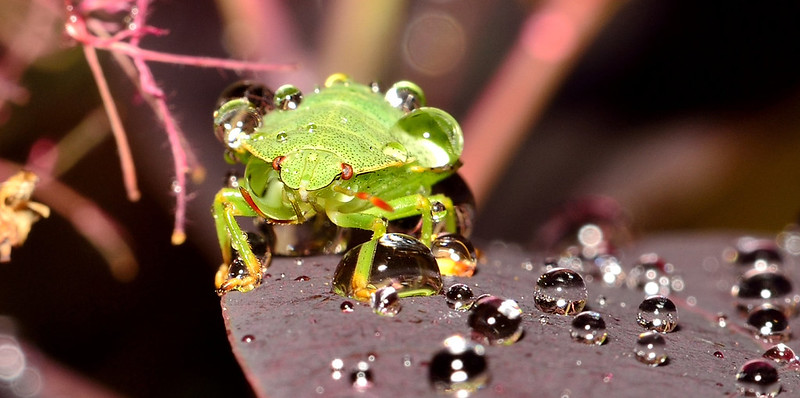
Here are four examples, captured with achromats on, respectively, a (2007) Canon S3is bridge camera, a (2009) Canon SX10is bridge camera, a more recent Panasonic G3 micro-four thirds camera (with a sensor about three quarters of the size of an APS-C sensor) and a Panasonic FZ200 bridge camera. All were captured with the smallest available aperture (f/8 for the bridge cameras and f/22 for the G3) so as to maximise dof. The price of using such small apertures is very significant loss of detail, but for my purposes, taste and standards, I am content with the detail in these.
EDIT: Incidentally, the first three were captured as JPEGs, which of course provide less information to work with than RAW images.
(To see larger versions click on an image and right click on the image that comes up. The "Original" size is 1100 pixels high.)

0505 5a IMG_5489-Edit-4 PS1 PSS3.75 by
gardenersassistant, on Flickr
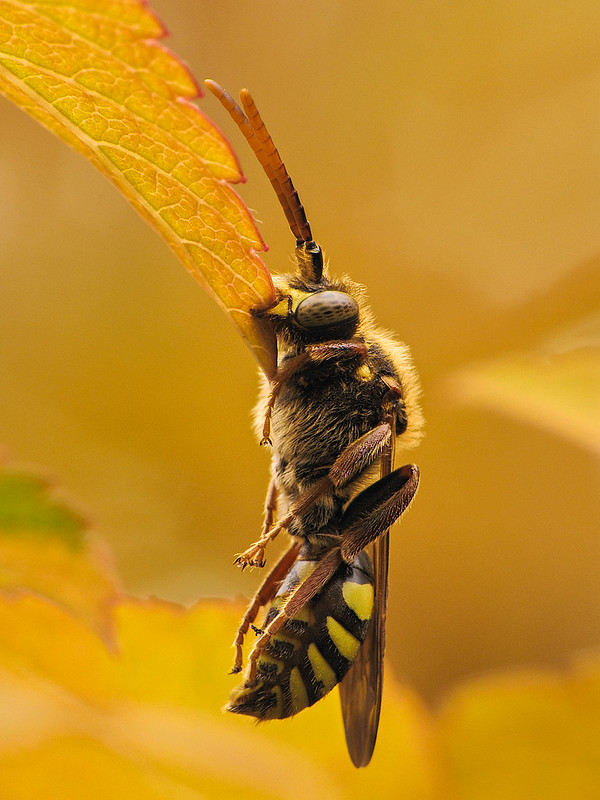
0505 2 IMG_4374-Edit-2 PS1 PSS3 by
gardenersassistant, on Flickr

0505 1 P1460054-Edit-2-Edit PS1 PSS3 by
gardenersassistant, on Flickr
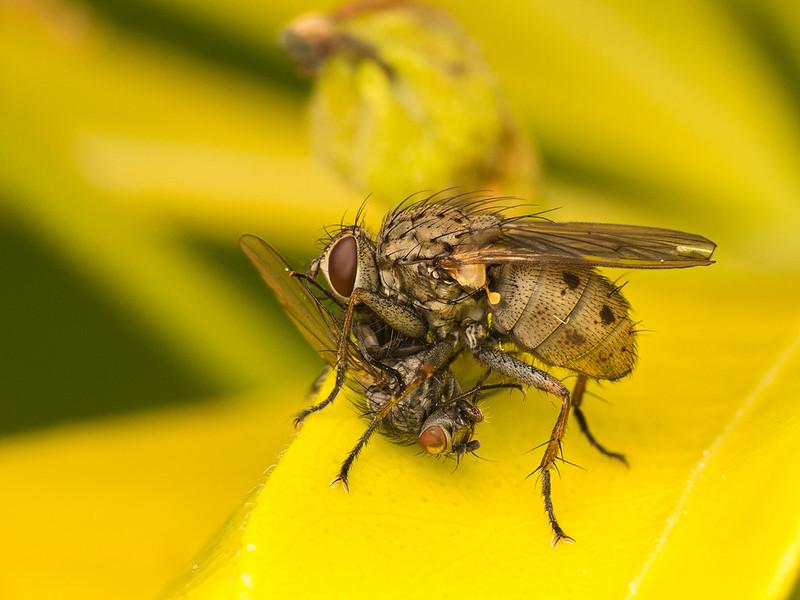
0505 5 P1040035-Edit-2 PS1 PSS3 by
gardenersassistant, on Flickr