Close up filter kit

fujifumbler

Suspended / Banned
Messages
49
Edit My Images
No
I was looking at purchasing a close up filter kit for an old lens I have that has been modified for macro photography but I am unsure if :
A) They are any good for a hobby photographer like me who cant afford a proper macro lens
B) Would work with a lens (my modified for macro lens) that has to be within a few cm's of the object to focus anyway.

Do these filters magnify what you see through the lens or do they just allow you to get closer to the object than the min focus distance would normally allow for the lens you are using??

Hope the above makes sense lol
 
I have a set of these...

I think they're fun things but they're nowhere near the quality of a macro lens.

You can get quite expensive close up filters in the region of £100 but my set were £28... and the're ok. You can use them individually or stack them and they deffo allow you to get closer to the subject. Many people slag these off but if you go into them with realistic expectations and don't expect £400 macro lens quality across the frame for the price they can be nice fun things. Here's one of mine...

Whole image...


100% crop.


I think that's ok for £28.

Another option is extention tubes.
 
Last edited:
They look great, thanks for the reply woofwoof.
Do they just act as magnifying lens or do you need to get closer to the subject to get the pic in focus? I am unsure whether I would need to get them to fit my 70-300 lens with macro feature on it or to fit my modified lens. The problem with the modified lens is that I am very close to the subject already
 
They magnify and allow you to focus closer.

Just tried mine on an old Olympus Zuiko 50mm and they changed the minimum focus distance from about 18 inches to about 6 inches.

You lose infinity focus though, just like you would with extention tubes.
 
Last edited:
I'll have to do a test one day to see which is best, extention tubes or close focus filters.

Maybe someoen has already tested and can say which is best?:D
 
They magnify and allow you to focus closer.

Just tried mine on an old Olympus Zuiko 50mm and they changed the minimum focus distance from about 18 inches to about 6 inches.

You lose infinity focus though, just like you would with extention tubes.
Thanks, that's saved me some money lol. I was going to buy a set for my modified lens but looks like the focus distance would be too close (probably touching the object!)
 
I can't say what it'll be for your lenses.

You normally get a set of close up filters and in my case I got No.1, 2 and 4. With just a No.1 fitted the minimum focus distance is something like 12 inches for my Zuiko 50mm.
 
This is a min focus distance, I guess you can move further away and still get the shot in focus??
Sorry if that's a dumb question, I am very new to this :confused:
 
Yes, with one filter you get lots of play focus distance wise, with three stacked there's still some wiggle room amounting to a matter of inches.

There may be some vids on youtube for these if you're lucky and as mentoned before your other option is tubes.

Remember that with either filters of tubes you lose infinity focus.
 
I will take a look.
Thanks for all your help
 
Thanks dino I will take a look. Need to decide whether or not to go the extension tube route :confused:
 
cheaper by far and none of the problems of stacking multiple filters hth mike.

The Raynox is not cheaper by far than your boggo cheap filter set, it's clearly more expensive but probably better quality.
 
I use close-up lenses a lot, in increasing power these are a Canon 500D, Raynox 150, Raynox 250 and a Raynox MSN-202.

These are achromatic add-on close-up lenses (achromats) rather than the close-up filters in a close-up filter set.

Both achromats and close-up filters work by putting one or more of them on the front of a lens. They are most useful with longer focal length zoom lenses.

With a “proper” macro lens, the lens has a fixed focal length and you alter the magnification by moving nearer or further away from the subject. With an achromat(s) on a zoom lens (and it may be the same with a close-up filter(s) - I don't know because I've never used a close-up filter) you work at a fixed distance from the subject and change the magnification by changing the amount of zoom.

You can stack close-up filters in order to get additional magnification. There are some combinations of achromats that you can stack, although people generally don't.

Each lens in a close-up filter set is made of a single piece of glass. This makes them prone to chromatic aberration and possibly other imperfections. Stacking two or more close-up filters makes this worse. An achromat is made of two or more pieces of different sorts of glass, put together so as to reduce the amount of chromatic aberration (and possibly other imperfections). I sometimes use a stacked Raynox 150 and 250, without noticeable issues of chromatic aberration or other image quality issues.

The power of close-up lenses is measured in diopters. The larger the number of diopters, the more powerful the lens. Close-up filter sets typically have four filters, of power +1, +2, +4 and +10 diopters. The achromats I use have powers of +2, +4.8, +8 and +25 diopters.

Close-up filter sets can be very inexpensive, perhaps £20 or so. Achromats are much more expensive. The Raynox 150 and 250 cost about £45 each, the cost of the Canon 500D varies depending on what size you get. The 58mm version I use costs about £75. The Raynox MSN-202 costs about £55.

Many people use just one achromat. How powerful that one needs to be depends on what sort of subject you like to photograph, and whether you prefer to photograph a subject in its environment, to fill the frame with the subject, or capture part of a subject, like its head, or eyes. And of course it depends on the size of the subject.

People are sometimes surprised at the image quality you can achieve with achromats. I use them on general purpose zoom lenses, which are in general of lower quality than prime lenses. I use them with small sensor cameras, which compared to dSLRs capture small amounts of detail and suffer from a lot of noise. The sensors on my bridge cameras are about one twelth of the size of the sensor on an APS-C camera. Nonetheless, even with this unpromising arrangement I find I can get sufficient image quality for my purposes (viewing at 1100 pixels high and printing A4 or occasionally 16x12).

Here are four examples, captured with achromats on, respectively, a (2007) Canon S3is bridge camera, a (2009) Canon SX10is bridge camera, a more recent Panasonic G3 micro-four thirds camera (with a sensor about three quarters of the size of an APS-C sensor) and a Panasonic FZ200 bridge camera. All were captured with the smallest available aperture (f/8 for the bridge cameras and f/22 for the G3) so as to maximise dof. The price of using such small apertures is very significant loss of detail, but for my purposes, taste and standards, I am content with the detail in these.

EDIT: Incidentally, the first three were captured as JPEGs, which of course provide less information to work with than RAW images.

(To see larger versions click on an image and right click on the image that comes up. The "Original" size is 1100 pixels high.)
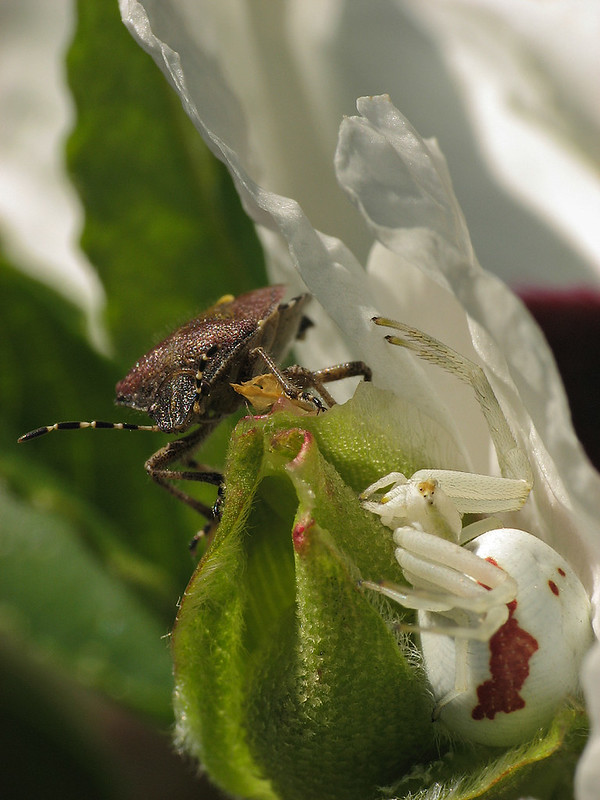

0505 5a IMG_5489-Edit-4 PS1 PSS3.75
by gardenersassistant, on Flickr
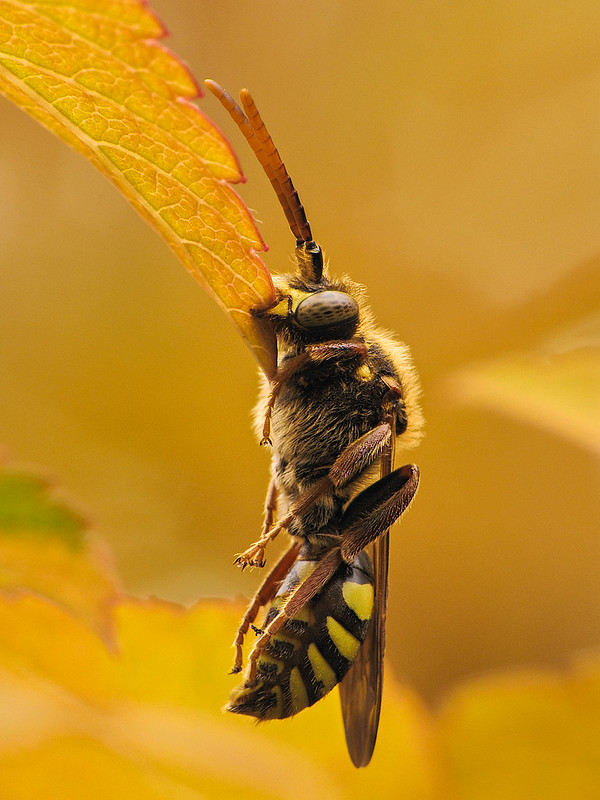

0505 2 IMG_4374-Edit-2 PS1 PSS3
by gardenersassistant, on Flickr
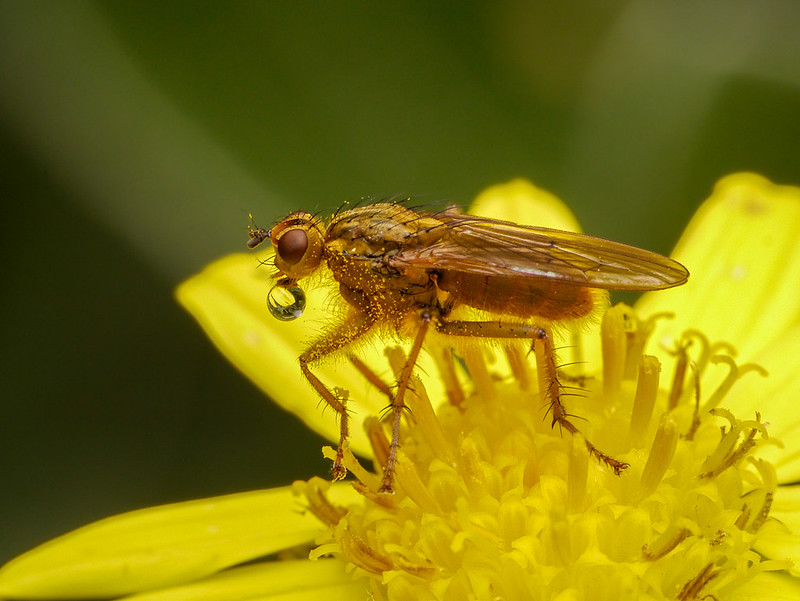

0505 1 P1460054-Edit-2-Edit PS1 PSS3
by gardenersassistant, on Flickr
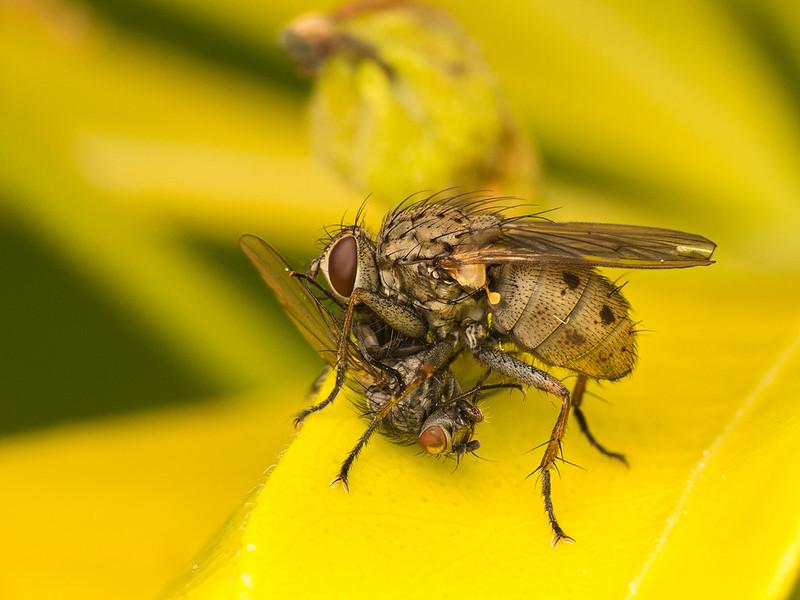

0505 5 P1040035-Edit-2 PS1 PSS3
by gardenersassistant, on Flickr

 
Last edited:
That's for your reply Nick, I think I have decided now to go for a raynox dcr-250 until such time as I can afford to buy a dedicated macro lens.
Love the pics by the way
 
Do the DCR250 work better on the longer telephoto lenses then?
 
I use mine at 70mm usually. Of course you can use it at 300mm but the depth of field becomes minuscule. So my preference is less than 150mm depending on how many plants I can get away with standing on before my wife threatens to kill me.
 
I use mine at 70mm usually. Of course you can use it at 300mm but the depth of field becomes minuscule. So my preference is less than 150mm depending on how many plants I can get away with standing on before my wife threatens to kill me.

Ha ha, I recognise the wifely issue. :D Terrific set at flickr. Great examples of what you can do with an achromat.
 
That's for your reply Nick, I think I have decided now to go for a raynox dcr-250 until such time as I can afford to buy a dedicated macro lens.
Love the pics by the way

Thanks. One thing to bear in mind as you are just starting out with this is that the 250 is a bit more difficult to use than the 150. You have to get the working distance right with achromats; if you aren't within the right range of distance from the subject you can't get a sharp image. The distance is about 4 inches for the Raynox 250 and about 6 inches for the Raynox 150. The more powerful the achromat is the less tolerance there is as to the distance from the subject at which it will work well. The 150 feels to me like it is significantly more forgiving in this respect. It is less powerful than the 250, but still ok for most flies, beetles and the like, unless you want to photograph just their eyes or whatever. If getting really close in is what you are most interested in, then of course a 250 would be better, but do bear in mind that it may take a little while to sort out how to get it to work well and reliably for you; some people find it quite difficult to get the hang of, while others pick it up and use it with no problem. (FWIW I was in the first category - I got quite frustrated with it for a few days and considered giving up until quite suddenly things fell into place.)
 
Thanks Nick! I will bear the above in mind
 
Another inexpensive option, which was quite popular for occasional use when I got involved in photography as a kid, is a reversing ring. This screws into the filter thread on the front of the lens and let's you mount it backwards on the body. They worked quite well as I far as I can remember, and I think they're still available.
 
Back
Top