

You are using an out of date browser. It may not display this or other websites correctly.
You should upgrade or use an alternative browser.
You should upgrade or use an alternative browser.
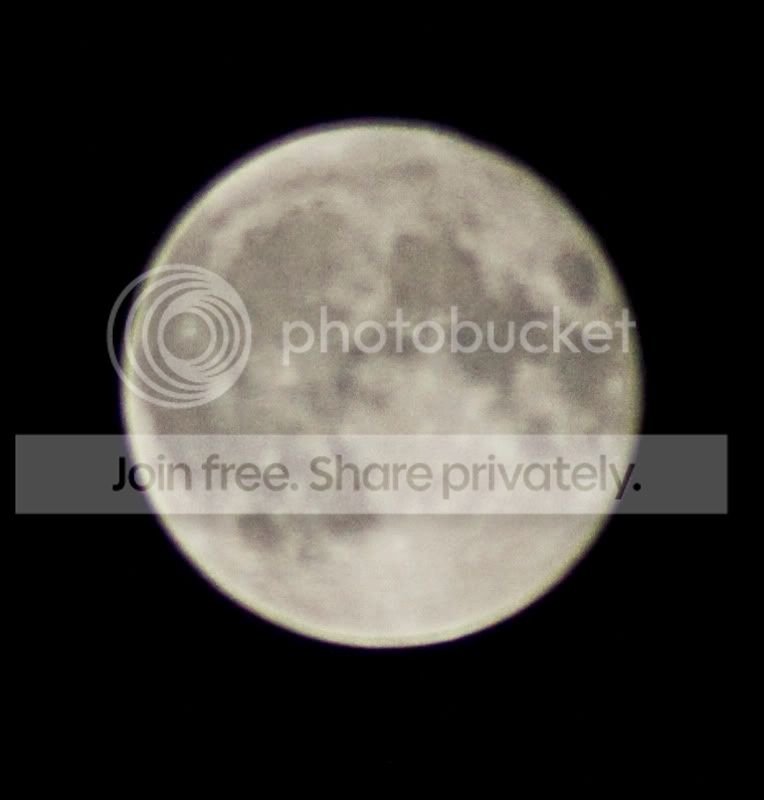
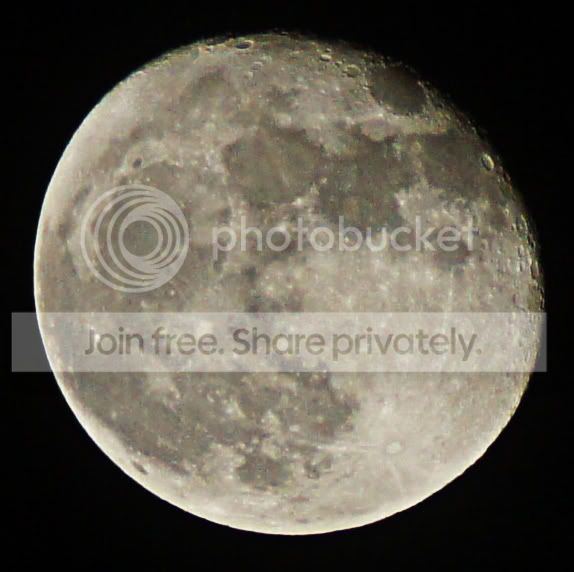
Bit of an improvement on my last moon shot
- Thread starter ki_user
- Start date


tdodd
Suspended / Banned
- Messages
- 6,481
- Name
- Tim
- Edit My Images
- No
You probably don't need 800 ISO and 1/1000 either. The moon is lit by the sun! Drop the ISO down to 100 or 200 and you'll get a cleaner image. A tripod would be best in order to minimise shake. You could/should go the whole hog and use mirror lockup and a remote release or self timer, to reduce shake even further.
As for "infinity" focus, most lenses focus past infinity so it is rarely a good idea to simply turn the focus ring until you hit the end stop. If you have Live View then it may be best to focus as accurately as possible with Live View on maximum zoom. A tripod will be essential for that, and keep the tripod as short as possible. Do not extend the centre column if there is one.
As for "infinity" focus, most lenses focus past infinity so it is rarely a good idea to simply turn the focus ring until you hit the end stop. If you have Live View then it may be best to focus as accurately as possible with Live View on maximum zoom. A tripod will be essential for that, and keep the tripod as short as possible. Do not extend the centre column if there is one.

OP

ki_user
Suspended / Banned
- Messages
- 2,675
- Name
- Lee
- Edit My Images
- Yes
You probably don't need 800 ISO and 1/1000 either. The moon is lit by the sun! Drop the ISO down to 100 or 200 and you'll get a cleaner image. A tripod would be best in order to minimise shake. You could/should go the whole hog and use mirror lockup and a remote release or self timer, to reduce shake even further.
As for "infinity" focus, most lenses focus past infinity so it is rarely a good idea to simply turn the focus ring until you hit the end stop. If you have Live View then it may be best to focus as accurately as possible with Live View on maximum zoom. A tripod will be essential for that, and keep the tripod as short as possible. Do not extend the centre column if there is one.
I know about the ISO, to be honest I didn't realise it was that high when I took it, and I wasn't going back out because it was so cold. I did everything else you said apart from mirror lock up.
OP
ki_user
Suspended / Banned
- Messages
- 2,675
- Name
- Lee
- Edit My Images
- Yes
I would love to have a go at this can you tell me if my Sigma 120 - 400 is suitable and if so what settings would I need to use:shrug:
Thank you guys and gals.
120-400 should be fine, if you read the above post it pretty much covers it

tdodd
Suspended / Banned
- Messages
- 6,481
- Name
- Tim
- Edit My Images
- No
Use manual exposure and start out at 400mm, f/8, 100 ISO, 1/200. Check the histogram to make sure that your exposure is good - you may need to adjust settings slightly, but that should get you close if the moon is clear and bright. If it's a tad dim then bump the ISO to 200. It is better to shoot slightly bright (but not too overexposed) and then reduce the exposure later, rather than to underexpose and then brighten it up afterwards.
If you shoot raw then you will have an opportunity to fine tune sharpening and make other subtle changes if you need to. If you shoot to JPEG then the camera will already have done some of those things for you, perhaps not maximising the results.
Here's one I shot some time ago. This was at 400mm, f/10, 200 ISO, 1/200. That exposure is 1/3 stop brighter than the one I suggested above, so very similar, and I have not made adjustments to the exposure at all in post.

It is worth noting that a full moon is usually the worst time to photograph it, because it is front lit by the sun and there are no visible shadows, which means features do not stand out and it all looks very flat. It is better to wait for a partial moon, when shadows appear in the craters and then it looks more interesting.
Here is a more appealing example. This was shot at f/9, 800 ISO, 1/250. I had to raise the exposure because the side of the moon facing me was not as bright as the left hand side. I'm not sure why I went for the higher shutter speed. It may have been a windy night and I wanted to reduce vibration in the camera a little bit. Assuming no wind then f/8, 400 ISO, 1/200 (or 1/160) might have been a better bet.
EDIT : I just noticed I had my 1.4X teleconverter attached for this shot, which forced me to f/8 even wide open. I stopped down just a fraction to f/9 to marginally improve lens IQ, but I could not go too far because of diffraction at smaller apertures.

If you shoot raw then you will have an opportunity to fine tune sharpening and make other subtle changes if you need to. If you shoot to JPEG then the camera will already have done some of those things for you, perhaps not maximising the results.
Here's one I shot some time ago. This was at 400mm, f/10, 200 ISO, 1/200. That exposure is 1/3 stop brighter than the one I suggested above, so very similar, and I have not made adjustments to the exposure at all in post.
It is worth noting that a full moon is usually the worst time to photograph it, because it is front lit by the sun and there are no visible shadows, which means features do not stand out and it all looks very flat. It is better to wait for a partial moon, when shadows appear in the craters and then it looks more interesting.
Here is a more appealing example. This was shot at f/9, 800 ISO, 1/250. I had to raise the exposure because the side of the moon facing me was not as bright as the left hand side. I'm not sure why I went for the higher shutter speed. It may have been a windy night and I wanted to reduce vibration in the camera a little bit. Assuming no wind then f/8, 400 ISO, 1/200 (or 1/160) might have been a better bet.
EDIT : I just noticed I had my 1.4X teleconverter attached for this shot, which forced me to f/8 even wide open. I stopped down just a fraction to f/9 to marginally improve lens IQ, but I could not go too far because of diffraction at smaller apertures.

- Messages
- 7,299
- Name
- mark
- Edit My Images
- Yes
a big difference between the two lee..well done 
