astrophotography

dan00001

Suspended / Banned
Messages
290
Name
daniel
Edit My Images
Yes
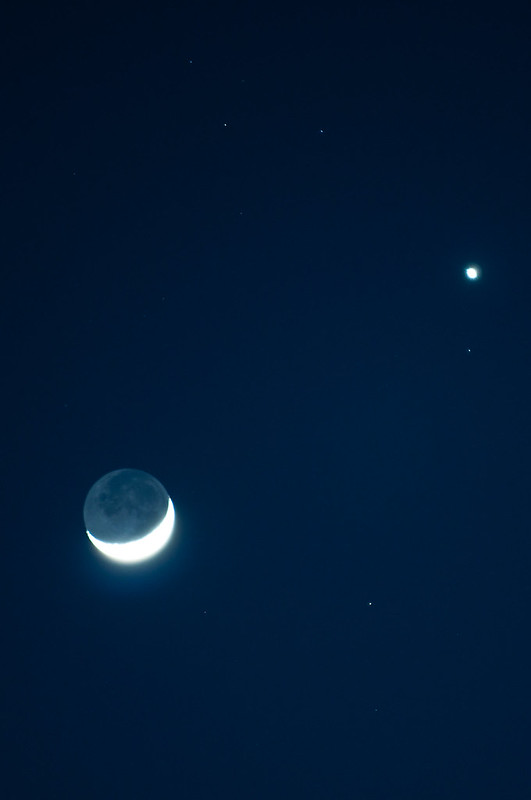
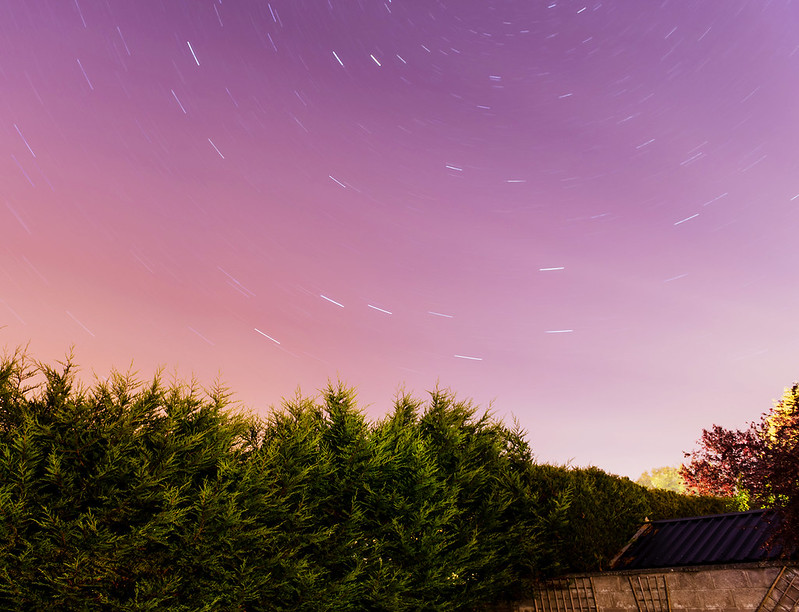
hi, has anyone had any success taking photos of stars, moons, planets, solar systems, nebules e.t.c.. without a telescope, just camera, lens and tripod or maybe some kind of tracking system? can you show some of your results? thanks, dan.
 
I know it's not on this forum, but I started a thread over on Photography on the Net asking people to post up astro photos with the proviso that they were taken without the use of a telescope. There are some nice photos in that thread if you are interested.

You won't have a lot of luck imaging planets without a telescope, at least not with any detail, but it's amazing what you can do with some fairly basic kit.

You don't need a telescope
 
Last edited:
Seen a few lovely pictures taken by a guy over in Essex. Very dark down there & when there are clear skies the images of the Milky Way are fantastic, absolutely stunning. I would like to post them but I'm sure I can't due to copyright etc?

I think for anything decent planets wise you would need a telescope.
 
Last edited:
scarecrow- im having a look through that thread now looks like some great photos! thankyou for that.

cagey-great photos i especially like the 3rd of the moon thats awsume i definetely want to give this a go i need a longer lens though, 105mm is the longest i have :( thanks, dan.
 
Just checked the exif again, and I didn't use the TC, thought I had. But I was in DX mode on the D800. It is still cropped down a fair amount. I'll have to try again next clear moon, with the TC next time :)

I think unless you have a 400mm+ lens you will always have to crop moon images. It can seem big in the sky, until you shoot it and realise how hard to fill the frame it is.
 
i think i will keep an eye out for a cheap 70-300 but i will give it a got with my 105mm in the meantime. on the link scarecrow shared page 2 theres a quite amazing photo of the m31 galaxy using a tamron 28-75mm and theres an amazing shot toward the bottom using a 12-24mm !! its cloudy right now but hopefully like last night it will clear up later on so i can have a quick go at this!
 
Seen a few lovely pictures taken by a guy over here in Northern Ireland at the Giants Causeway. Very dark down there & when there are clear skies the images of the Milky Way are fantastic, absolutely stunning. I would like to post them but I'm sure I can't due to copyright etc?

I think for anything decent planets wise you would need a telescope.

You could at least share a link, or a name :)
 
Will have a look after tea and post up something :)
 
Best way to take photos of the full moon - change your cameras exposure setting to spot metering. Works every time.
 
Best way to take photos of the full moon - change your cameras exposure setting to spot metering. Works every time.

What & that's it!? Simples!

(btw, how come you're resurrecting a number of old threads?)
 
hi, has anyone had any success taking photos of stars, moons, planets, solar systems, nebules e.t.c.. without a telescope, just camera, lens and tripod or maybe some kind of tracking system? can you show some of your results? thanks, dan.


You'll have no luck with planets and deep sky objects without a scope unless it's the larger objects like Orion Nebular, Andromeda Galaxy etc. You can do it, but results are not spectacular. Your biggest enemy is light pollution though... read on.

Here's a shot of Orion's belt/M42 with a 200mm lens mounted on driven equatorial mount. Pretty much straight off camera.

EzZMeoO.jpg


Still quite tiny in the frame and M42 is a massive object. You can crop in, but then the quality is crap...

m1Yxyau.jpg


Compare that to what you get through a 6" telescope.

FLwugev.jpg


It's not about magnification. With astro work, it's all about the size of the objective lens or mirror (front element on a camera lens), as that's what is responsible for the detail. The bigger the objective lens/mirror, the more light gathered, and the more detail you'll get. You need magnification of course, but with a small objective lens, you'll be magnifying something with poor detail. This is where telescopes score. Not necessarily with magnification (you choose your magnification by choosing eye piece focal length) but with large objective elements or mirrors. A 12" telescope will resolve more detail than a 6" telescope, regardless of magnification. So a cheap 300mm camera lenses will have perhaps, a 3" objective element.

Bigger is better.


There's larger stuff to shoot though than this though, and some of the larger nebulae and galaxies are perfectly possible to shoot well without a telescope. The M31 Andromeda galaxy is a good example. The problem is not necessarily the optical equipment, but light pollution. The above shot was literally right at the end of the Llyn penninsula in north Wales, which is a true dark sky site. That was a single exposure of around 2 minutes. Try that in an urban environment and you'll just get a bright orange mess that would have completely obliterated the nebula.

Scroll half way down this page to calculate light pollution levels in your area..... http://www.need-less.org.uk/

The orion photo above was taken here...

xv6d2Xz.jpg


Here's my home town....

cdCWpSq.jpg


To get a long, single exposure with no light pollution, you're looking for somewhere that's at least 7 on that scale. In the UK... that's pretty much parts of rural north Wales, Galloway, or the highlands.

You can process it out to a degree, but that's not the issue. The light pollution in urban areas as brighter than the objects you're trying to capture, so it's impossible,

Some will try and tell you to get light pollution filters. These only work if the light pollution is from low pressure sodium (SON) lighting. However... that is becoming rare these days, and most places now either use high pressure (SOX) or LED lighting. These can not be filtered.

If you're bothered - join some of the many campaigns against the stupid way we floodlight our streets all night for no appreciable reason.. just to make people feel safe.

Planets... forget it without a scope. Even the same 6" scope aimed at Jupiter... expect something similar to this.

Gx09b51.jpg


It is possible to get something not far off this with a REALLY good 500mm lens if you had a very solid support, but you'd need exceptional viewing conditions and a lot of luck.... and a MASSIVE crop.

As for TRACKING mounts... well.. if you mean a simple driven mount, these are not tracking mounts at all. A tracking mount will invariably use a smaller telescope and a computer system to "track" a star and make adjustments to the speed to ensure it genuinely is tracking. Cheap, driven equatorial mounts are available for around £300 or so, but you'll only get around 2 minutes max before stars trail. You also have to polar align them. You cannot just switch them on and have them track. There's some learning you'll need to do!

Do not buy a "alt azimuth" style "go to" mount. These will cause field rotation in your image. You need an "equatorial" mount for astro photography.

Astro Track make some interesting stuff though. They also do an equatorial mount, but also some interesting designs. They're not brilliant for serious stuff, but for wide field imagery with no scope, they may be the answer.

http://astrotrac.com/


 
Last edited:
What & that's it!? Simples!

(btw, how come you're resurrecting a number of old threads?)
I said full moon. And yes, it does work.
Evaluative metering, which is the default setting for most cameras, can't handle it.
I sense some hostility - why?
I must confess I'm new to this forum. Didn't look at the dates of the lasts posts of a topic that interested me. Teach me to not wear my reading glasses. But does it matter?
 
I said full moon. And yes, it does work.
Evaluative metering, which is the default setting for most cameras, can't handle it.
I sense some hostility - why?
I must confess I'm new to this forum. Didn't look at the dates of the lasts posts of a topic that interested me. Teach me to not wear my reading glasses. But does it matter?

Some members are (often rightly) suspicious of new members who go through the forum resurrecting old threads, mainly because it's the behaviour of certain "automated" spam robots, or of people who are trying to "game the system" to gain access to out classifieds forums. While I appreciate you may simply be someone interested in a certain branch of photography, who's done a forum search (its surprising how many more established members don't actually know how to work that function BTW) and replied to all the "hit threads".

I'd simply bear in mind that "thread necromancy" - i.e. dragging up a thread that's been dead for 2-3 years is likely to at least arouse comment, and possibly tailor your actions accordingly.
 
Tell you what mistake I made- I searched under 'astrophotgraphy' and 'instagram' in the search box, without noticing the dates of the last posts. Apologies for that. I'm not the most computer literate person out there and find these things a bit tricky to start with.
 
Don't worry about it, Zanshin. Just keep using the forum how you want to - no harm in catching up and even resurrecting old threads can be useful as shown by David's helpful post #13 above.
 
Thanks, Nod. I'm devouring photography mags and forum info in an attempt to get to grips with all the developments...slow process.
 
Not sure where you are but there might be a member local to you who's trying to up/recycle some photography magazines. They're usually for collection only due to postage costs.
 
Back
Top