hi, has anyone had any success taking photos of stars, moons, planets, solar systems, nebules e.t.c.. without a telescope, just camera, lens and tripod or maybe some kind of tracking system? can you show some of your results? thanks, dan.
You'll have no luck with planets and deep sky objects without a scope unless it's the larger objects like Orion Nebular, Andromeda Galaxy etc. You can do it, but results are not spectacular. Your biggest enemy is light pollution though... read on.
Here's a shot of Orion's belt/M42 with a 200mm lens mounted on driven equatorial mount. Pretty much straight off camera.
Still quite tiny in the frame and M42 is a massive object. You can crop in, but then the quality is crap...
Compare that to what you get through a 6" telescope.
It's not about magnification. With astro work, it's all about the size of the objective lens or mirror (front element on a camera lens), as that's what is responsible for the detail. The bigger the objective lens/mirror, the more light gathered, and the more detail you'll get. You need magnification of course, but with a small objective lens, you'll be magnifying something with poor detail. This is where telescopes score. Not necessarily with magnification (you choose your magnification by choosing eye piece focal length) but with large objective elements or mirrors. A 12" telescope will resolve more detail than a 6" telescope, regardless of magnification. So a cheap 300mm camera lenses will have perhaps, a 3" objective element.
Bigger is better.
There's larger stuff to shoot though than this though, and some of the larger nebulae and galaxies are perfectly possible to shoot well without a telescope. The M31 Andromeda galaxy is a good example. The problem is not necessarily the optical equipment, but light pollution. The above shot was literally right at the end of the Llyn penninsula in north Wales, which is a true dark sky site. That was a single exposure of around 2 minutes. Try that in an urban environment and you'll just get a bright orange mess that would have completely obliterated the nebula.
Scroll half way down this page to calculate light pollution levels in your area.....
http://www.need-less.org.uk/
The orion photo above was taken here...
Here's my home town....
To get a long, single exposure with no light pollution, you're looking for somewhere that's at least 7 on that scale. In the UK... that's pretty much parts of rural north Wales, Galloway, or the highlands.
You can process it out to a degree, but that's not the issue. The light pollution in urban areas as brighter than the objects you're trying to capture, so it's impossible,
Some will try and tell you to get light pollution filters. These only work if the light pollution is from low pressure sodium (SON) lighting. However... that is becoming rare these days, and most places now either use high pressure (SOX) or LED lighting. These can not be filtered.
If you're bothered - join some of the many campaigns against the stupid way we floodlight our streets all night for no appreciable reason.. just to make people feel safe.
Planets... forget it without a scope. Even the same 6" scope aimed at Jupiter... expect something similar to this.
It is possible to get something not far off this with a REALLY good 500mm lens if you had a very solid support, but you'd need exceptional viewing conditions and a lot of luck.... and a MASSIVE crop.
As for TRACKING mounts... well.. if you mean a simple driven mount, these are not tracking mounts at all. A tracking mount will invariably use a smaller telescope and a computer system to "track" a star and make adjustments to the speed to ensure it genuinely is tracking. Cheap, driven equatorial mounts are available for around £300 or so, but you'll only get around 2 minutes max before stars trail. You also have to polar align them. You cannot just switch them on and have them track. There's some learning you'll need to do!
Do not buy a "alt azimuth" style "go to" mount. These will cause field rotation in your image. You need an "equatorial" mount for astro photography.
Astro Track make some interesting stuff though. They also do an equatorial mount, but also some interesting designs. They're not brilliant for serious stuff, but for wide field imagery with no scope, they may be the answer.
http://astrotrac.com/



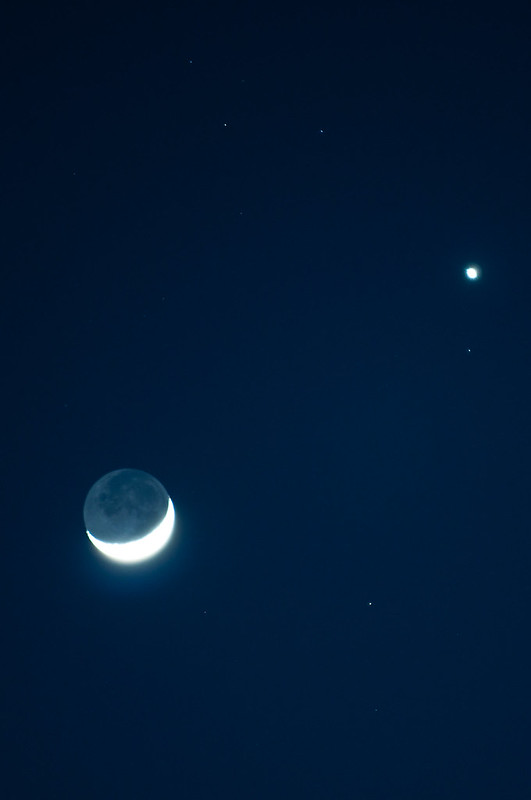
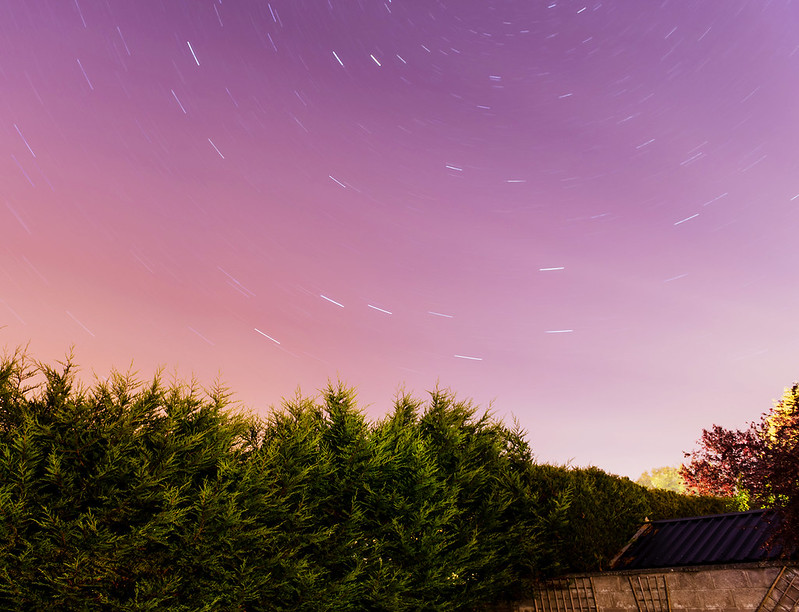

 thanks, dan.