OP

stevelmx5
Suspended / Banned
- Messages
- 10,176
- Name
- Steve
- Edit My Images
- No
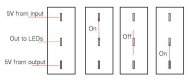
I think my best option is to wire it up and test it out :0) I can't find any data online for/against jumping off the 5v to power the leds and charge the battery but like you say, I think the charge function would just be reduced.
I started with the assumption of running two usb in feeds (either a dual port cable or two separate cables), neither of which are very neat and is where I am currently with a dedicated USB feed in after the boost module to power the LEDs directly. An alternative is that I run a 12v feed in (using a dedicated wall adaptor) and then split that internally to provide an LED power source and feed the battery charge module separately. I would then need the same switching solution to allow the leds to run on battery power but without the concerns about exceeding USB2 limitations. The main downside of this method is that a dedicated power adaptor is required instead of using any freely available USB port.
Obviously the alternative is a standard 5v usb input with a simple passthrough switch to a female USB port so the lights can be switched off and a secondary device charged using the 5v input. However, this then prevents wireless utilisation!
I'll try out the split 5v feed first though I think.
Cheers
Steve
I started with the assumption of running two usb in feeds (either a dual port cable or two separate cables), neither of which are very neat and is where I am currently with a dedicated USB feed in after the boost module to power the LEDs directly. An alternative is that I run a 12v feed in (using a dedicated wall adaptor) and then split that internally to provide an LED power source and feed the battery charge module separately. I would then need the same switching solution to allow the leds to run on battery power but without the concerns about exceeding USB2 limitations. The main downside of this method is that a dedicated power adaptor is required instead of using any freely available USB port.
Obviously the alternative is a standard 5v usb input with a simple passthrough switch to a female USB port so the lights can be switched off and a secondary device charged using the 5v input. However, this then prevents wireless utilisation!
I'll try out the split 5v feed first though I think.
Cheers
Steve
Last edited: