Wow...modern phones are amazing.......

and a 'proper' camera could have done a far better job, given time and a means to support it for a long exposure....both unavailable in this instance
The point is, a proper camera may not have required the long exposure.
 
Not, though, when it is physics that says so. There are a lot of hard limits out there.
Physics describes the world as we understood it a few years ago and changes as engineering advances.

Hanah Fry is particularly good at illustrating this and her series "The Secret Genius of Modern Life" is worth watching to understand how "what can't be done" gets done, when someone approaches the problem from a different angle.
 
Physics describes the world as we understood it a few years ago and changes as engineering advances.

Hanah Fry is particularly good at illustrating this and her series "The Secret Genius of Modern Life" is worth watching to understand how "what can't be done" gets done, when someone approaches the problem from a different angle.
Of course it's easy to pick out plenty of examples of things which were considered unthinkable now becoming almost mundane, but that doesn't speak to actual hard limits which are identified, quantified, and observed to be "hard". I'm not speaking of difficult here; I'm speaking of behaviours right down to the subatomic level which have direct macro consequencesand which can only be overcome by breaking hard physical barriers.

There are a couple of levels of "hard" here:

Technoloical or practicaL Some of these can be worked around at leels such as the quantum leve, but for daily use any such workarounds are prohibitely expensive and/or bulky, or have very specific uses and constraints (such as STED microscopy).

By principle. These are limits imposed by inerent attributes of the materials being studied. Materials play an enormous role here - more than simply practical.

For optics, things such as the Rayleigh limit for diffraction, c itself, shot noise, causality, thermodynamics, etc are limits which can see expression in daily use. OK, there are ways to sort of bypass Rayleigh, but not at the daily use level (in fact defringing has now become a quantifiable aberration to the extent that its effects become part of a lens's profile in software. It is both "hard" and predictable. Hard in that it isn't being eliminated, but predictability allows that it be post-processed to become acceptable). It inolves changing data, nonetheless. Not interpreting; changing.

I'll take a lovely example I used to use: the Chandresekhar Limit, which describes the size limit for a dwarf star. Purely theoretically and building on the work of Fermi and Dirac (among others), the limit for such a size was derived (with practically no observations needed) and was calculated to be 1.4 the size of our star. How was the limit established? Well, one of the divisors in the equations was a series which tended to zero. When other values pushed this limit zero, the equation fell apart. So does the planet, either imploding or exploding. The effects have to date been observed indirectly and the maths holds up.

Some of this stuff is immutable. It's not about rashly-predicted hard walls at Mach 1 and it's certainly not about the effects on a human when traveling faster than 30 mph. They are rigorously attested to in thepractical and the mathematical sense.
 
Some of this stuff is immutable.
Or is it; what happens if and when someone builds a propulsion system that can accelerate a payload to 299,800,000 metres per second?

The theory says we can't do that but we're not in a position to know if the theory is correct, until we build a device that can reach 299,792,458 metres per second and then pour in more fuel. Saying that "science shows we can't do that" is not the same as building something that challenges the theory in practice and showing that the theory holds true.

The same applies to a video recording device: we can only know if the theory holds up when someone produces something that challenges the theory.
 
Or is it; what happens if and when someone builds a propulsion system that can accelerate a payload to 299,800,000 metres per second?

The theory says we can't do that but we're not in a position to know if the theory is correct, until we build a device that can reach 299,792,458 metres per second and then pour in more fuel. Saying that "science shows we can't do that" is not the same as building something that challenges the theory in practice and showing that the theory holds true.

The same applies to a video recording device: we can only know if the theory holds up when someone produces something that challenges the theory.
No. We know what happens; the mass becomes infinite (I'm using the more vernacular use of "mass" here *) and time dilation extends the forces required to infinity in that frame too. This has been observed. It's why the predictability element of a scientific postulate is required in order to grant it the status of being a theory. The effects were predicted long before they were observable, and the predictions have been observed. CERN has shown that as particles approach luminal veocity they require more and more energy to increase it. Not only that, the increases match exactly those predicted by mathematical models.

So, yes, we are in a position to experimentally demonstrate some of these limits. We are also in a position to have confidence in other predictions which cannot yet be feasibly be tested.

Are you proposing that the entire Shannon framework is shaky? Aside from optics alone, being able to overcome its limits would be one of the most incredibly lucrative efforts imaginable. You can bet that it has been very seriously researched and some major funding applied to it.

* I'm not speaking to the difference between weight and mass here, but to the observed difference between the resting mass of a particle, and the fact that particles behave as if their mass increases as their velocity is increased.
 
A difficult one to answer since it depends on what constraints you'd put on the dedicated camera. The improvements on camera phones are mostly due to the processing not sensor technology (two of the top rated FF sensors are now eight years old) and you can apply that processing to older cameras as well. Larger sensors with less noise to begin with are going to clean up better as well, I have a 2012 RX1R FF camera which has usable iso 6400 shots and cleans up well without any of the excessive destructive noise reduction the photos here show. You could go a lot further back to other larger sensor cameras that would likely easy outdo the best camera phones, there's only so much you can do with a pinprick of light.
I suppose one test would be to take a photo of someone in low light without flash - at a shutter speed that freeze movement (not someone staying very still).
 
My head hurts! :oops: :$
 
Well, if you're still around in, say, a couple of hundred years time you may be in a position to say "I told that Andrew he was wrong", or perhaps you won't.

To get back to photography : let those who like phone cameras like them and let those who don't like phone cameras not like them and let those who use whatever is to hand do so.
 
Well, if you're still around in, say, a couple of hundred years time you may be in a position to say "I told that Andrew he was wrong", or perhaps you won't.

To get back to photography : let those who like phone cameras like them and let those who don't like phone cameras not like them and let those who use whatever is to hand do so.
100%
 
The only thing we can be sure about, with any technology, is that anyone who says "that can't be done" will be proved wrong.
I’m not going to carry on this as an argument but the laws of physics are quite well tested. And 5 yrs ago when I was told that computational photography would replace those rules, I knew it would be wrong.
I had no idea just how much of a mess AI would make of any task.

I had a long conversation with someone working in AI the other day. She was completely convinced it could do away with jobs, whilst also acknowledging how much of a mess it’s still making of simple tasks (photography being just one).
 
I’m not going to carry on this as an argument but the laws of physics are quite well tested. And 5 yrs ago when I was told that computational photography would replace those rules, I knew it would be wrong.
I had no idea just how much of a mess AI would make of any task.

I had a long conversation with someone working in AI the other day. She was completely convinced it could do away with jobs, whilst also acknowledging how much of a mess it’s still making of simple tasks (photography being just one).
I am biting my lip on the subject of "AI". 40 years in IT along with my reading on the subject over that period have led to utter frustration at what we're seeing. Thankfully, it will go away. The redefinitions within the field are already happening.
 
I suppose one test would be to take a photo of someone in low light without flash - at a shutter speed that freeze movement (not someone staying very still).
The alternative of including blurred movement can add to a photo. That requires allowing the blurs to happen, and their remaining untouched by any effort of the device to correct your "error".
 
The alternative of including blurred movement can add to a photo. That requires allowing the blurs to happen, and their remaining untouched by any effort of the device to correct your "error".
Indeed.

Red Arrows Sidmouth Air Show 2021 G9 P1013703.JPG
 
I'm waiting for my iPhone 17 pro to arrive ........... to me I don't see any conflict between a camera phone and a camera ......... or between a DSLR and an SLR ........ consider all that is there especially improved technology and if you can, (and in many cases afford it or wait until prices fall) ........... trying to keep up with and not be overwhelmed with new technology is my problem

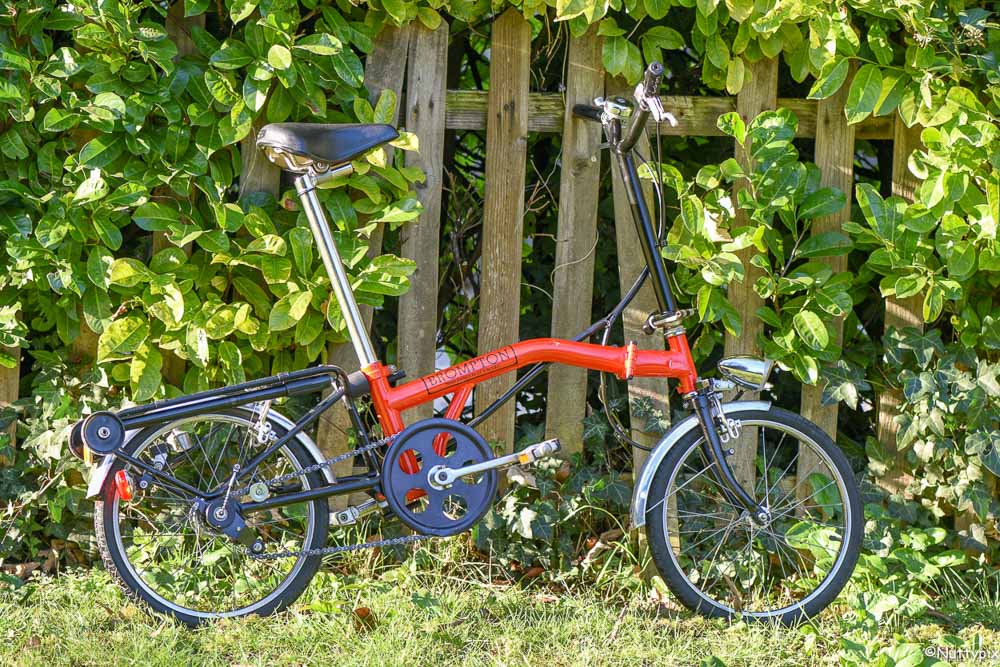
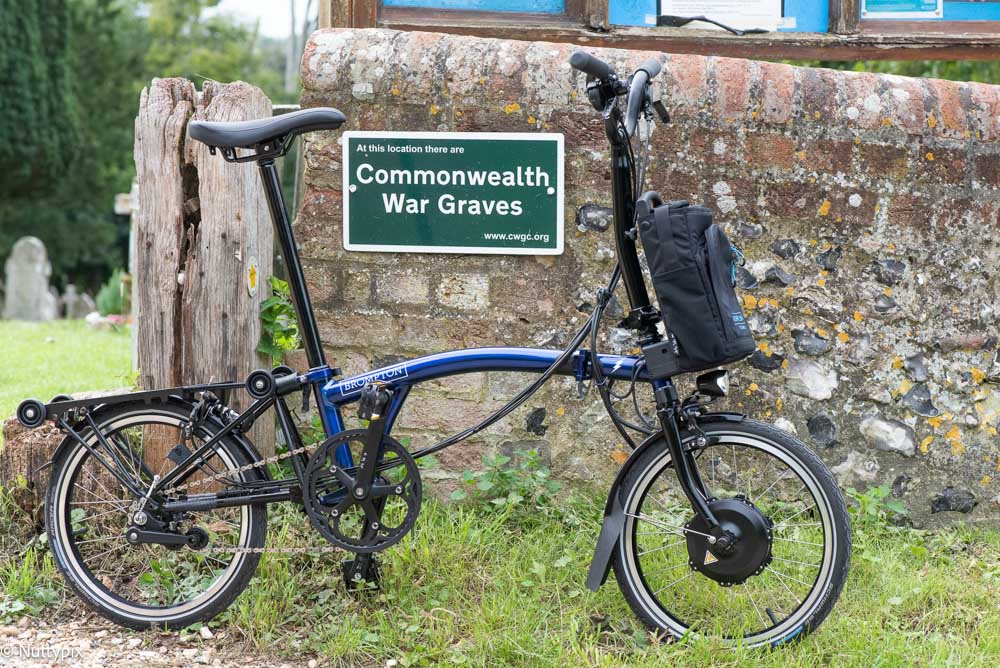
One of my hobbies is Brompton Bikes and I have quite a few ranging from 1982 to 2024 ........ including some of the first production batch made ........ to the latest "Electric" ...... the Bikes are different but I don't see one being "better" than the other, (other than the only way I can keep up with my Grand-kids is to use the Electric!!),.............. they are both "Bikes"


Built in 1982

TP_392_2.jpg


Built from 2018 to date

TP_Electric.jpg
 
Last edited:
Just got back from a weeks holiday in the beautiful city of Florence Italy. I went with my Sony A6700 and a selection of lenses as well as my Osmo Pocket 3. I got some great shots with the Sony, but to be honest, it became a pain to drag the bag around with me as it was so hot and crowded, so from day 3 onwards, I pretty much switched to my iPhone 16 Pro for almost everything.

It was extremely liberating to walk about with just a phone in my pocket rather than a small back pack, but to be honest I wasn't expecting too much from the phone (especially in low light or at night). Imagine my utter surprise then when I got the DNG files into Lightroom when I arrived home, and looked at the images. With the lightest of adjustments and a little denoise and sharpening (in Topaz Photo AI), I was to be honest totally amazed with the quality (certainly for posting on line etc). In my hand, I had a camera with 3 lenses - 13mm ultrawide, 24mm (with 28mm & 35mm options) from the standard lens and 120mm from the telephoto lens - (all optical not digital), shoot RAW and can produce 48mp images (at least from the super wide and standard lenses). Anyone else impressed with the standards on modern smart phones - I certainly think I have been guilty of big sensor snobbery and previously chuckled when I saw people snapping images with their smartphone - but then here I am now doing the same ! Yes I know they don't technically produce images of the same quality as that of say a FF or APS-C sensor camera and a good lens, and there are the inherent challenges in DOF, but for typical travel shots, I think it did just fine ?

I think I've totally underestimated them? - Some samples below:


Lovely photos. I think for things like this phone cameras can give great results, even better if shot in raw as a lot of phones tend to overbake the processing.

One of my biggest issues with using a phone is that they’re just not nice to use for taking photos and it takes the enjoyment out of it somewhat. Also, there are of course when they’re just not suitable and/or image quality falls apart.

They have come a long way though, and for all but the enthusiasts/pros they’re more than good enough.
 
The point is, a proper camera may not have required the long exposure
I looked and tried....I needed plenty of depth of field for the shot, and even with iso in the 12000's (so the extensive dark areas were noisy as hell) it still needed 1/4 sec.
 
Last edited:
I'm waiting for my iPhone 17 pro to arrive ........... to me I don't see any conflict between a camera phone and a camera ......... or between a DSLR and an SLR ........ consider all that is there especially improved technology and if you can, (and in many cases afford it or wait until prices fall) ........... trying to keep up with and not be overwhelmed with new technology is my problem

One of my hobbies is Brompton Bikes and I have quite a few ranging from 1982 to 2024 ........ including some of the first production batch made ........ to the latest "Electric" ...... the Bikes are different but I don't see one being "better" than the other, (other than the only way I can keep up with my Grand-kids is to use the Electric!!),.............. they are both "Bikes"


Built in 1982

TP_392_2.jpg


Built from 2018 to date

TP_Electric.jpg
But 1982 is a long time after bikes were first invented. Digital cameras are a lot less mature technology.
 
The alternative of including blurred movement can add to a photo. That requires allowing the blurs to happen, and their remaining untouched by any effort of the device to correct your "error".
True but I was assuming that is not desired.
 
A digital cameras IQ is greater than a mobile phone photo. That's all we need to know.

A digital cameras IQ is greater than a mobile phone photo. That's all we need to know.

Presumably you mean today

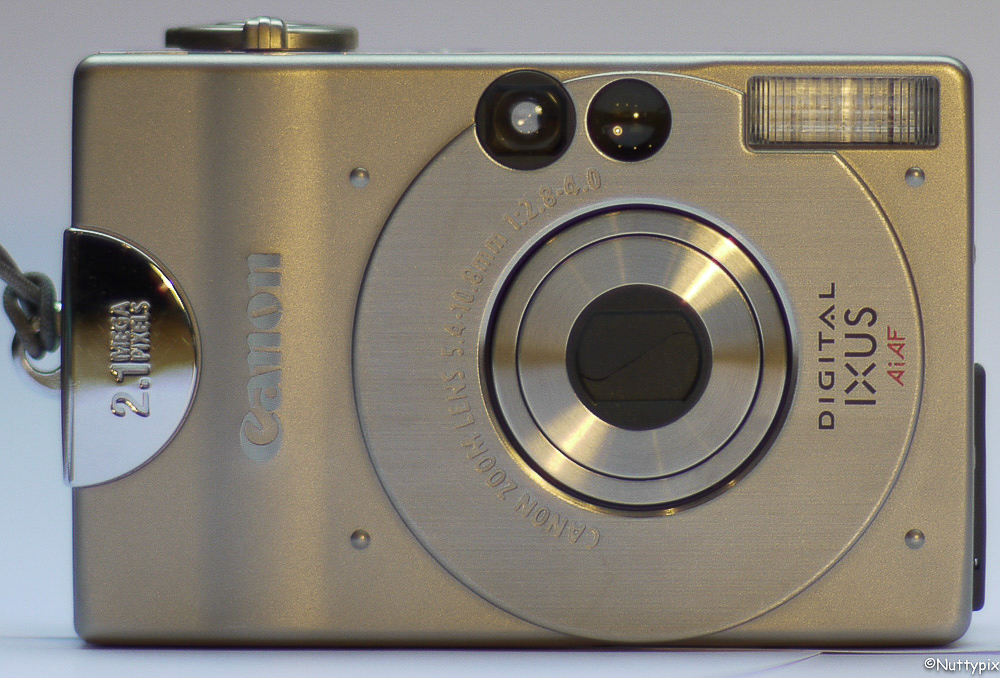
if I remember correctly my first digital Camera was a Canon IXUS in 2005 ......... I have still got it somewhere ......... I think that the sensor size was 1/1.2 inch and the Camera 2 MP versus the new iPhone 17 with a sensor size of 1/1.28 and 48MP ........ it will be interesting to compare the images

TP_IXUS.jpg
 
The op touched a Neve here for me.
I have been comparing iphone16 images with ones taken using my Hasselblad.
In truth, as I'm not a professional, I might just as well sell the Hasselblad and buy the latest phone.
 
Presumably you mean today

if I remember correctly my first digital Camera was a Canon IXUS in 2005 ......... I have still got it somewhere ......... I think that the sensor size was 1/1.2 inch and the Camera 2 MP versus the new iPhone 17 with a sensor size of 1/1.28 and 48MP ........ it will be interesting to compare the images

TP_IXUS.jpg
Careful Bill, you're in danger of turning into @AndrewFlannigan !
 
One's more than enough, anyway.
 
True but I was assuming that is not desired.
Nor was the face-smashing. But what if the blur is desired?

To look at it another way, though: if I encounter cnditions where I know that my camera is not going to give me acceptable results, then I don't take a photo.
 
There are photos I have that were taken on my phone, that simply could not have been taken with my EOS 1Dmkiv and any lens.
The venues just won't allow “cameras” in.

So as said before it's not always about have the best equipment , it's having useable equipment for the environment you're in.
 
There are photos I have that were taken on my phone, that simply could not have been taken with my EOS 1Dmkiv and any lens.
The venues just won't allow “cameras” in.

So as said before it's not always about have the best equipment , it's having useable equipment for the environment you're in.
That is really weird if phones are allowed in.
 
Presumably you mean today

if I remember correctly my first digital Camera was a Canon IXUS in 2005 ......... I have still got it somewhere ......... I think that the sensor size was 1/1.2 inch and the Camera 2 MP versus the new iPhone 17 with a sensor size of 1/1.28 and 48MP ........ it will be interesting to compare the images

TP_IXUS.jpg

I'm not even going to get dragged down this twisty road......

But just for the hell of it, how were phone cameras in 2005?
 
I'm not even going to get dragged down this twisty road......

But just for the hell of it, how were phone cameras in 2005?
The Nokia N80 was from what I remember one of the top camera phones at that time with the 3.2MP AF camera that Nokia used quite a bit, so I'd say roughly third or fourth generation phone camera technology after the initial sub-VGA cameras, then the VGA cameras, up to 1MP and then higher. No idea what sensors they were using but I suspect smaller than 1/2.3in given their performance compared to compact cameras at the time.

The Ixus above was a good bit older than 2005 though, I had the 5MP Ixus 500 in 2004 and in 2005 there was the newer 7MP Ixus 700:


The Canon APS-C cameras were at 8MP and the 1D series were up to 17MP.

What's quite fascinating looking back is how little I used my phone for actual pictures, there's not many in total and they're mostly pictures of something I needed to remember at work like a serial number or some defect.

Here's one from that Nokia 3.2MB camera and one from the Ixus 500
 

Attachments

  • 23082008050.jpg
    23082008050.jpg
    265.5 KB · Views: 9
  • IMG_2211 (Large).JPG
    IMG_2211 (Large).JPG
    176.1 KB · Views: 9
Last edited:
I looked and tried....I needed plenty of depth of field for the shot, and even with iso in the 12000's (so the extensive dark areas were noisy as hell) it still needed 1/4 sec.
Ah, so you admit you were up against the limitations of the small sensor. ‍
The immutable truth is that a bigger sensor gives more options.
 
...and in 2005 there was the newer 7MP Ixus 700
I've used an Ixus 70 for many years.

It's so small it just drops into a pocket and it can capture very acceptable images...

Tree Exeter Crematorium Ixus 70 IMG_4498.jpg
 
I've seen some cool ICM done with an iPhone with an app installed.

This kind of creative stuff is best done with an iPhone, as most of the apps don't work with Android.

Here's one https://spectre.cam/
 
Ah, so you admit you were up against the limitations of the small sensor. ‍
The immutable truth is that a bigger sensor gives more options.
Still intrigued about how I 'admitted' I was up against the limitations of the small phone sensor?
 
Still intrigued about how I 'admitted' I was up against the limitations of the small phone sensor?
So this isn’t you describing the limitations of the smaller sensor?
I looked and tried....I needed plenty of depth of field for the shot, and even with iso in the 12000's (so the extensive dark areas were noisy as hell) it still needed 1/4 sec.

OK
Whatever
 
So this isn’t you describing the limitations of the smaller sensor?


OK
Whatever
I was genuinely curious.

Thank you so much for going to such trouble to prove an illuminating reply!
 
So this isn’t you describing the limitations of the smaller sensor?
Certainly not knowingly....and re reading my words, I genuinely have no absolutely no idea how that might possibly be the case.
 
Back
Top