Why have I started using film again?

Made a real mess of Roll #2 in my attempt to return to film. Put a roll of film in a camera. Few days later I tried a lens on the same camera, forgetting that I'd put a film in. Click wind on, click and wind on. SUGAR! There's a film in this one! Idiot. Went out to snap the local area and test the camera, hopefully I'll find that there are no light leaks or other problems. Still managed to accidently press the shutter button when I shouldn't have. Note to self: Don't wind the film on until you are ready to take another shot. DOH!

I wind on immediately, I must admit. Mainly it's habit. Muscle memory, or whatever. But there have been a number of times I haven't and been frustrated when I pressed the shutter. :p
 
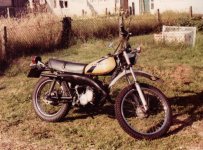
I can still recall some painful 'back of the leg' moments from kicking over motorbikes in the early 80's.

It makes me think of how a boxer must feel when he just got smacked in the head at the end of the round and he knows he's going to have to shake it off and try again................and again..............and again. :D
Most motorcycles from the 1970's had an electric start, the only way you could kick one over was if you lost your temper and kicked it off the centre stand!
 
Last edited:
I wind on immediately, I must admit. Mainly it's habit. Muscle memory, or whatever. But there have been a number of times I haven't and been frustrated when I pressed the shutter. :p
I'm one of those that does the opposite; I never wind on until I'm ready... frame, meter, focus, wind on/shutter tension, re-focus, shutter release. (I try not to use terminology from firearms when describing photography. I know it's a futile fart against the wind, but it's my little act of resistance! Sometimes it gets a little tricky, though.)
 
I'm one of those that does the opposite; I never wind on until I'm ready... frame, meter, focus, wind on/shutter tension, re-focus, shutter release. (I try not to use terminology from firearms when describing photography. I know it's a futile fart against the wind, but it's my little act of resistance! Sometimes it gets a little tricky, though.)

It's a curious thing. The perceived wisdom, when using your camera with stop down metering is to focus first and then take your exposure. I always find that counter intuitive, because your focus can shift while metering. Consequently I always meter first, because the light won't alter that much. I then focus. I suppose we all have our foibles. :D
 
Most motorcycles from the 1970's had an electric start, the only way you could kick one over was if you lost your temper and kicked it off the centre stand!


Even Japanese bikes from the '70s had kickstarts (Z1, CB750/4 etc.).
 
I almost agree but they were still not the main way of starting a modern (then) Japanese bike. I had my 1st bike, A Suzuki T10 250cc in 1965 and that had an electric starter as well as kick start pedal. (Largely unused) Like wise I also owned a Honda CB450 (Black Bomber) which was the same. But these were a pussy cats compared to the big singles still being used in England at the time. Even the Triumph/BSA/Norton twins did not kick back with the ferocity of a BSA DBD34 or a Velocette 500 single. I have right knee damage caused by a kickstart. But the knee damage is not behind my knee, but to the cartilage at the front. When you think about it when a kick start reacts adversely, the strain is taken by the front of the kn.ee which causes the damage, not the back which bends (folds) away from the mechanical reaction which will limit any damage. These are not my words the are from a Consultant who assessed me for a knee reconstruction.
(I am referring to post 14 about back of the knee pain)
 
Last edited:
It was a 500 twin (Triumph Daytona) that sent me over the bars! The 88" Shovel could be a little (tempra)mental at times too! My 2010 Royal Enfield Bullet has a kickstart as does Mrs Nod's Herald 125.
 
It was a 500 twin (Triumph Daytona) that sent me over the bars! The 88" Shovel could be a little (tempra)mental at times too! My 2010 Royal Enfield Bullet has a kickstart as does Mrs Nod's Herald 125.
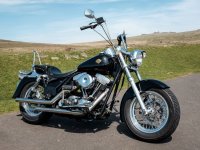
My 92 FXR didn't come with one so I fitted one myself and it has saved me on a few occasions.

002 FXR 02-1647 PS Adj upload.JPG
 
  • Like
Reactions: Nod
My 92 FXR didn't come with one so I fitted one myself and it has saved me on a few occasions.

View attachment 446336
Probably a worthwhile modification. With the BMW fraternity, there is a claim about Harley's, that of all of the Harley Davidsons ever made 70% of them are still on the road. The other 30% actually got the owners back home.
 
Last edited:
t was a 500 twin (Triumph Daytona) that sent me over the bars!
WoW never heard of that with triumph twins, the ignition timing must have been out?
 
Last edited:
WoW never heard of that with triumph twins, the ignition timing must have been out?
Likewise. 41bhp never had that much oomph! Timing must have been far too advanced. Come to think of it I have never heard a twin have the same likely hood to kick back, never mind throw you over the handlebars. A damaged knee/ankle/hip would have been far more likely.
 
Last edited:
Likewise. 41bhp never had that much oomph! Timing must have been far too advanced. Come to think of it I have never heard a twin have the same likely hood to kick back, never mind throw you over the handlebars. A damaged knee/ankle/hip would have been far more likely.
IIRC a 500cc twin is only firing on a 250cc cylinder at one time in it's cycle?
 
WoW never heard of that with triumph twins, the ignition timing must have been out?


Wouldn't surprise me in the slightest! I was 14 and around 1/2 the weight I am these days so not much effort required to throw me about. Not much technique in the kicking either.
 
It's a curious thing. The perceived wisdom, when using your camera with stop down metering is to focus first and then take your exposure. I always find that counter intuitive, because your focus can shift while metering. Consequently I always meter first, because the light won't alter that much. I then focus. I suppose we all have our foibles. :D

It can depend on the camera. Some Zeiss models had dim viewfinders unless you manually opened the aperture or cocked the shutter by winding on as that opened the aperture to its widest. With my Rank-Mamiya rangefinder or my old Contax III the metering and settings have to be done first as the selenium meter is not connected to the exposure system.

I find the limitations to modern film photography are the price of films and processing, the increasing lack of choice of fim stock and the limit of around 5Mp in commercial scanning. That said, I enjoy the more relaxed and slower way of taking film photos.
 
It can depend on the camera. Some Zeiss models had dim viewfinders unless you manually opened the aperture or cocked the shutter by winding on as that opened the aperture to its widest. With my Rank-Mamiya rangefinder or my old Contax III the metering and settings have to be done first as the selenium meter is not connected to the exposure system.

I find the limitations to modern film photography are the price of films and processing, the increasing lack of choice of fim stock and the limit of around 5Mp in commercial scanning. That said, I enjoy the more relaxed and slower way of taking film photos.
The cost of film, processing, scanning fades into insignificance when you consider the constant repetition of updated cameras which appear with monotonous regularity which 'promise' be the nirvana you have always wanted which will be the end of your photographic woes.

I have what were in their day the top end camera bodies made by Nikon, a F6 and a F2a, which together cost me less than a 2nd hand top prosumer Nikon digital camera body and which will be "out of date" as soon as the moon enters the next stage of its course through the heavens. The F2a is about the same age as a very early D100 if you can find one in working order!
Perhaps I exaggerate a little, but look back since the 1st Digital SLR's reared their heads such as the Nikon D100 or the 1st Canon digital SLR (I forget the designation) and see how many models there have been since then from both manufacturers. How many of these are still available 2nd hand?

So spending thousands on a regular basis just to have the newest 'bling' will out cost the price of film D&P over a given period of time.
 
Last edited:
The cost of film, processing, scanning fades into insignificance when you consider the constant repetition of updated cameras which appear with monotonous regularity which 'promise' be the nirvana you have always wanted which will be the end of your photographic woes.

I have what were in their day the top end camera bodies made by Nikon, a F6 and a F2a, which together cost me less than a 2nd hand top prosumer Nikon digital camera body and which will be "out of date" as soon as the moon enters the next stage of its course through the heavens. The F2a is about the same age as a very early D100 if you can find one in working order!
Perhaps I exaggerate a little, but look back since the 1st Digital SLR's reared their heads such as the Nikon D100 or the 1st Canon digital SLR (I forget the designation) and see how many models there have been since then from both manufacturers. How many of these are still available 2nd hand?

So spending thousands on a regular basis just to have the newest 'bling' will out cost the price of film D&P over a given period of time.
I was only thinking the same thing today. Made me feel a lot better about my foray into film.
 
Apart from the hardware such as the cameras and lenses there is the computer, which we we promised by Microsoft that this would be the last version and only updates would follow. They must have gone to the same school of truth as Mr Trump! Some tools on my photoshop version will not update because my computer is out of date (according to them) Just think of the amount of film I could buy for the price of a new desktop and the various programmes.

As for printer inks. Canon ask, sorry demand around £150 for a full set to fit my Pro 300 printer. For that sort of money will provide me with , C41 developer, bleach and fix and film for almost a year.

In place of my printer, think of my enlarger, (LPL7700 which I bought 25 years ago for around £250 and lens another £200, a Rodagon 50mm 2.8 Apo). So far I have yet to get a message from Kodak of Ilford on my computer telling me that it needs updating or they will stop working. (Sarcasm intended!)

Actually I am changing a little. I am having to give up RA4 printing due to a returning allergy to colour chemicals. It is ages since I used and processed E6 slide film, and won't do so again, so I am about to use the enlarging side entirely for B&W.. The C41 film will still be processed, then scanned on my 'outdated' Nikon LS5 Scanner and project them like slides via a quite old DI projector. I actually found processing E6 boringly mechanical so I am not loosing anything.

Even my Nikon Scanner which was new in 2006 is still going strong, and given a clean bill of health when it was serviced last year. Old as it may be it is/was the only scanner that will scan in RAW and has a higher D Max than any consumer flatbed in production today, Even the computer used in conjunction with the scanner is an ancient Dell laptop with Windows XP as the operating system. So is film more expensive than using digital? Who knows, because of different likes/dislikes, but I certainly get far more satisfaction by having personal input into the finished picture rather than letting a machine do it for me.

(Possibly in a similar way, this is why I prefer a manual gearbox car, compared to an automatic)
 
Last edited:
I think the digital vs film cost thing is pretty subjective & in a way, hard to exactly price outside of the 'basics' - As said, do you include the PC costs as part of 'digital'? I guess any Adobe subscription etc should be... But then the camera & SD card can be sold on for some value returned, whereas a strip of used film can't....

For me & my local dev/scan place, with a 'cheap' Kodak Gold as an example....

35mm is around 91p a shot.

120 is around £3.85 a shot at 9x6 or £1.93 a shot at 4.5x6

My Fuji X100f cost me £685 & I have 376 photos with it on Flickr which puts it at £1.82 a shot. But, I've probably fired the shutter about a 1000 times which makes it 68p a shot. But, if I could sell it tomorrow for say £550, that makes the 376 photos about 40p a shot..... ;)

But then my Yashica FX3 Super 2000 was maybe £150 new. And I've had that since the mid 90's - So £150 over 30 years is £5 a year....

And I've easily taken thousands of photos with the £1100 A7Riii...... including about a thousand per night, several different times, for night sky timelapse sessions.

Cost is very, very dependant on HOW you work it out & which one you want to appear to be cheaper :) I think we should all just do what we enjoy :)

As a side note, I don't chase the latest gear either (apart from the 35GM) so that don't apply to me personally.
 
I use film because I have done so for the last 60 years. Developing and printing my own photographs has was a big part of my early life. In a moment of madness I sold a large medium format outfit to buy a digital camera. I used it for about two years before until I realised how much I missed 'proper' photography.
I do use the digital occasionally for images which need to go on the net but I still love developing film. I am happy to write off my failures but also to enjoy any good images I may produce as all down to my decisions rather than AI or computers.
 
My current favourite way to shoot is a blurred version of film and digital.

Digital body, with manual, film-era lenses.

You get the instant gratification (or not) of being able to see what you've shot, but having to manually focus makes it feel (to me at least) much more like it did in the days of shooting film. Take your time, check your levels, pay more attention to composition.

Last year I bought a Sony A7i to use with my Minolta lenses. I also upgraded my 5D to an R6ii. I've barely touched the Canon. Most of the stuff I've shot in the last 12 months has been on the Sony, then on my two Minoltas (both X-500s).

I don't know whether or not the film bug will hit me enough again to consider home dev, but it would be one way of making it more affordable again. That said, while I studied photography at college in the early 90s, I don't ever remember developing our own film. Prints, yes, but not film.
 
Last edited:
Building up a collection of old cameras for a display and a thought crossed my mind. "Why not have another go at film photography?" Scoured fleabay for a Canon AE1 Program and then bought film for it, plus film for a Yashica Matt I've had for over 50 years. Film isn't cheap, you hope that the settings are correct, no instant check on whether exposure and speed were spot on, are the images in focus, 36 exposures to get through, post the film off, wait and pray something reasonable appears in the form of negatives. More expense.
Why on earth am I putting myself through this?
It's fun, it's different, it's creative, it slows you down, it makes you think.
Good afternoon. I've never made the leap to digital, out of conviction. Whenever I buy a camera, I check it personally, and if it's seriously damaged, I take it to a technician. When I get it back, I'm confident that if I buy a 36-shot roll of film, all 36 photos will turn out well. When you only think about light and speed, without looking at the light meter, you already know the ISO, aperture, and shutter speed required for each shot. That comes with experience. That's why, for me, it's not doubt I feel when I wait for results, but excitement. There's nothing more exciting than holding a roll of film taut with your fingers against the light from a window and seeing the frames reflected.
 
Building up a collection of old cameras for a display and a thought crossed my mind. "Why not have another go at film photography?" Scoured fleabay for a Canon AE1 Program and then bought film for it, plus film for a Yashica Matt I've had for over 50 years. Film isn't cheap, you hope that the settings are correct, no instant check on whether exposure and speed were spot on, are the images in focus, 36 exposures to get through, post the film off, wait and pray something reasonable appears in the form of negatives. More expense.
Why on earth am I putting myself through this?
It's fun, it's different, it's creative, it slows you down, it makes you think.
I don't think in the course of things that film is expensive per se'. When I started out in 1961/2 the price of film in UK money was about 5 shillings and 6 pence (27.25p in decimal) My take home pay at the time was about £4-5 a week. Ramp up the prices over the intervening 63 years and it is about on par with modern prices. It just sounds a lot for what it is/was and can only be used once to take a picture so you were careful to get it right!.

Or the original Kodachrome was only 10asa (ISO). and cost around £1.10 shillings (£1.50) incl processing for a 36 exp cassette - that was about 1/3rd of my weekly pay and left little over for beer money!
What you get today is a vastly improved film source with finer grain. All this development comes at a cost which, when compared to inflation is almost insignificant.

Or in the 60's you could cut your costs and buy bulk film (still available today). Or if you were really desperate, search the classifieds in the Amateur Photographer and buy the dregs - otherwise known as out of date film, sold off by the armed services. Truly dreadful stuff!
 
Last edited:
For forty years, when film was the only game in town, I used it.

I went on using film for a further ten years, alongside digital. Then digital became better for my needs and I've stopped using film. I still have some film cameras, a developing system and the kit to copy the negatives and print them on my laser printer. However, I have no reason to spend that time and money to achieve no more than I can by using digital.

Everyone takes a different route to their destination and I see no evidence that any particular route is better than another.
 
Well I need a passport photo, the shot my son took (on a mobile indoors), was rejected as the cream background wasn't uniformly lit o_O, so we will have another go outside with a white sheet as a background on a bright day with no direct sun.
........digi has some use for trial and error (y)
 
Well I need a passport photo, the shot my son took (on a mobile indoors), was rejected as the cream background wasn't uniformly lit o_O, so we will have another go outside with a white sheet as a background on a bright day with no direct sun.
........digi has some use for trial and error (y)


I/we did ours recently and after faffing around with assorted lights trying to get the wall behind us evenly lit, we ended up just standing a yard away from it and using the camera's onboard flash. The results were as flattering as you'd expect but were accepted by the passport office.
 
For forty years, when film was the only game in town, I used it.
Everyone takes a different route to their destination and I see no evidence that any particular route is better than another.
I do use digital 'when I have to or when it is expedient to do so' , but I do like a challenge now and then. The latest one is using the new Kodak C41 colour developer which has made a welcome return to the market place. I needed more C41 so when I saw it was back on sale I bought a kit and when I checked the instructions I could see they didn't make it easy for the low volume user. The kit is enough to make 2.5ltr but as I prefer to use once and discard and splitting the contents down to enable me to make 160cc working developer per film was a real brain teaser. Some of the liquid concentrates finished up with quantities with a 3 decimal place figure. Thank goodness for syringes and certified glass measuring tubes.

I won't go into the faffing about to get it as close to what they say I needed, but I processed my 1st film with this 'brew' and whilst I have not printed anything yet because the film is still wet, the density is not far off what I like. Printing them will show up any discrepancies with the colour balance and I may scan them first to see what there is.

Yes it was a bit of a challenge, something you don't really get with digital, but I feel quite pleased with what I have managed. More so than I would have achieved with a digital device.
 
Last edited:
  • Like
Reactions: zx9
I think the digital vs film cost thing is pretty subjective & in a way, hard to exactly price outside of the 'basics' - As said, do you include the PC costs as part of 'digital'? I guess any Adobe subscription etc should be... But then the camera & SD card can be sold on for some value returned, whereas a strip of used film can't....

For me & my local dev/scan place, with a 'cheap' Kodak Gold as an example....

35mm is around 91p a shot.

120 is around £3.85 a shot at 9x6 or £1.93 a shot at 4.5x6

My Fuji X100f cost me £685 & I have 376 photos with it on Flickr which puts it at £1.82 a shot. But, I've probably fired the shutter about a 1000 times which makes it 68p a shot. But, if I could sell it tomorrow for say £550, that makes the 376 photos about 40p a shot..... ;)

But then my Yashica FX3 Super 2000 was maybe £150 new. And I've had that since the mid 90's - So £150 over 30 years is £5 a year....

And I've easily taken thousands of photos with the £1100 A7Riii...... including about a thousand per night, several different times, for night sky timelapse sessions.

Cost is very, very dependant on HOW you work it out & which one you want to appear to be cheaper :) I think we should all just do what we enjoy :)

As a side note, I don't chase the latest gear either (apart from the 35GM) so that don't apply to me personally.
Photography is probably my main hobby alongside ridding my motorcycles so for me cost does not feature as much as it probably should. For me it is more akin to taking the picture, doing what I have to with it, in the hope I get it right. Quality comparison between the two mediums does not come into it. I do not do it intentionally to make money but if I do who am I to complain?
 
Photography is probably my main hobby alongside ridding my motorcycles so for me cost does not feature as much as it probably should. For me it is more akin to taking the picture, doing what I have to with it, in the hope I get it right. Quality comparison between the two mediums does not come into it. I do not do it intentionally to make money but if I do who am I to complain?
:plus1:
 
More so than I would have achieved with a digital device.
The best way to proceed, I think, is to accept that all "artistic endeavour" is equally valid and the only thing that matters is whether you are satisfied that you have achieved whatever you wanted to achieve.

What others think of the outcome, is up to them.
 
Back
Top