Why can't I take in focus photos of the moon?

Set_Nights

Suspended / Banned
Messages
387
Edit My Images
Yes
I'm a bit frustrated by this. I have been hoping to take some good shots of Venus and Jupiter while they are so bright in the sky and last night was the first clear night I have had (and probably the only one I will get for ages). I just couldn't seem to get the moon in focus though! All I ended up with were moon shaped blobs of light, NO detail whatsoever :(.

I was using:
  • Canon EOS 450D
  • Canon EF-S 18-55mm f/3.5-5.6 IS kit lens at its widest for some shots of the moon with the planets
  • Canon EF-S 55-250mm f/4.0-5.6 IS zoom lens at its greatest magnification to get some close shots of the moon
  • A tripod
  • Shutter speeds of approx 2s
  • Aperture of between f7 and f14
  • Manual focus and the moon was in focus through the viewfinder!
  • No filters

So why was it all going wrong :(? I don't have the photos from last night to hand but will post them later if that helps, but if you literally just imagine a moon shaped blob of light you will probably have it about right.
 
If it's not a focus problem then it's probably camera shake.
Did you use any of these modes:
shutter timer
mirror lock-up
remote or cable release?

No, no and no :p. I don't even know what the first 2 are :help:. I am very new to having to use tripods/long exposures. I had hoped that using a tripod would be good enough. It WAS windy where I was taking the shots so I was stabilising the tripod by hand to try and keep it as still as possible.

Do the rest of my settings sound about right for this kind of shot?
 
Your shutter speed seems far too slow.This is a shot I took of the moon:


If you check out the exif you'll see that my shutter speed was only 250th of a second.

There are lots of resources on the web about moon photography, just do a google search and have a good read.
Don't worry about your first efforts, we all had to start somewhere!
 
Last edited:
I suspect the shots were over-exposed too.
Obviously the patch of sky with moon is quite 'dark' but the moon itself is as bright as a sunlit scene on earth so you need to reduce that shutter speed to more like 1/100 than 2 seconds.
This will reduce any shake/moon moving issue too.
http://www.flickr.com/photos/4wdcowboy/6318921571/in/photostream
 
Last edited:
When using a tripod, i'm pretty sure you need to turn off the image stabilisation as this will cause movement of the lens.
 
Your shutter speed seems far too slow.

If you check out the exif you'll see that my shutter speed was only 250th of a second.

I suspect the shots were over-exposed too.
Obviously the patch of sky with moon is quite 'dark' but the moon itself is as bright as a sunlit scene on earth so you need to reduce that shutter speed to more like 1/100 than 2 seconds.

Hmm, perhaps you are right and I maybe got confused. I needed to use the longer exposure definitely for the planet shots. I tried using faster shutter speeds there but they just wouldn't show up. I then kept using the same sort of shutter speeds for the moon zoom shots. Does that mean I won't be able to get an in focus shot of the moon with the planets because the shutter speeds I will need for the moon will be too fast to catch the planets?
 
IS should always be switched off if you're using a tripod.

In addition to the advice above, and to he honest the strong wind was probably the biggest factor here, remember that the camera will meter for the predominantly dark sky, so if you were using an auto mode or Av/Tv, it will result in an over exposed moon with no detail regardless of the other factors.

Edit: I was beaten to it. :)
 
Last edited:
When using a tripod, i'm pretty sure you need to turn off the image stabilisation as this will cause movement of the lens.

Thanks, that will something else I can try then if the weather is kind enough to give me another shot!
 
The moon probably was in focus, but as the sky is so dark and the moon is so bright you have overexposed the moon. If you look at the exif in the shot I took of the moon with a 450D and 55-250mm IS you can see there is still quite a bit of detail. Please be aware you will still need to do a lot of cropping.

6483264893_5bf67b3c14_z.jpg

EXIF

I hope that helps!
 
PS as I took this at 1/400 I may have got away with not using a tripod, however I still used a tripod with the IS off.
 
Thanks everyone. I will have a go with IS off and with faster shutter speeds next time and report back :D!

Any tips on trying to get the moon and planets in one shot seeing as the planets aren't bright enough for fast shutter speeds? HDR maybe :|?
 
If you can't get a good exposure for both in a single shot, then take two at different settings and merge in PP. You need to do this for Jupiter and it's moons.
to get a decent shot.
 
2s is far too slow for the moon, it is constantly moving after all. If your trying to shoot it for half an hour its quite suprising how far its moved across the sky.
 
Last time I shot the moon I had to use shutter speeds between 1/600 and 1/800, f7.1-f11 and ISO settings between 100 and 200 with a 7D and a Sigma 150-500 OS. I used live view to manual focus with mirror lockup and 2 second timer and got some excellent results. The moon at full size on the computer is much bigger than my screen and I've even tried it with a Kenko 1.4x TC as well, but the moon just looked too big.
 
Last time I shot the moon I had to use shutter speeds between 1/600 and 1/800, f7.1-f11 and ISO settings between 100 and 200 with a 7D and a Sigma 150-500 OS. I used live view to manual focus with mirror lockup and 2 second timer and got some excellent results. The moon at full size on the computer is much bigger than my screen and I've even tried it with a Kenko 1.4x TC as well, but the moon just looked too big.

What is this mirror lockup that people are mentioning?
 
What is this mirror lockup that people are mentioning?

I don't know how to do it on Canon, but on the Nikon there is an option to flip the mirror up approx 1 second before the shutter opens to allow the mirror "slap" to die away, the mirror moves at a fair old rate and can cause the whole camera to shake, which will usually shows when you have a super long focal length
 
Set_Nights said:
What is this mirror lockup that people are mentioning?

Assuming the interface is the same as my 30D, from your 450's main menu, scroll down to "custom functions" (sometimes abbreviated to cfm) and select it to see the full range if custom fuctions. Have a look through them, being careful not to accidentally change anything, until you find "mirror lock up" and change its value to "1". This means that when you take a picture, the first press of the shutter release button will raise the internal mirror, and keep it raised until you press the button a second time to actually release the shutter, take the picture and return the mirror to its starting positipn. This prevents any vibration caused by the movement of the mirror from affecting you image quality.
 
Last edited:
Assuming the interface is the same as my 30D, from your 450's main menu, scroll down to "custom functions" (sometimes abbreviated to cfm) and select it to see the full range if custom fuctions. Have a look through them, being careful not to accidentally change anything, until you find "mirror lock up" and change its value to "1". This means that when you take a picture, the first press of the shutter release button will raise the internal mirror, and keep it raised until you press the button a second time to actually release the shutter, take the picture and return the mirror to its starting positipn. This prevents any vibration caused by the movement of the mirror from affecting you image quality.

I see :). Why doesn't it do that as default? Is there any disadvantage to just leaving it set to 1 all the time?
 
Set_Nights said:
I see :). Why doesn't it do that as default? Is there any disadvantage to just leaving it set to 1 all the time?

The disadvantage is that you have to press the shutter release twice to take a picture, usually leaving about 1 second inbetween each press to allow the vibration to dampen. You can't see anything through the viewfinder when the mirror's raised so unless you're a Jedi, using it to shoot anything other than still subjects/landscape from a tripod is not practical. :)
 
Last edited:
The disadvantage is that you have to press the shutter release twice to take a picture, usually leaving about 1 second inbetween each press to allow the vibration to dampen. You can't see anything through the viewfinder when the mirror's raised so unless you're a Jedi, using it to shoot anything other than still subjects/landscape from a tripod is not practical. :)

I think it's quite clear that the OP isn't a Jedi or they would have just jumped in there Jedi Starfighter for a closer view! :lol:
 
The disadvantage is that you have to press the shutter release twice to take a picture, usually leaving about 1 second inbetween each press to allow the vibration to dampen. You can't see anything through the viewfinder when the mirror's raised so unless you're a Jedi, using it to shoot anything other than still subjects/landscape from a tripod is not practical. :)

Ah, fair enough :p. Thanks for explaining :).
 
Set_Nights said:
Ah, fair enough :p. Thanks for explaining :).

No problem. You'll see what I mean the first time you forget to change it back to "0" and go shoot something else. I've lost count of the number of times I've though for a moment my shutter's packed in! :D
 
Last edited:
The moon probably was in focus, but as the sky is so dark and the moon is so bright you have overexposed the moon. If you look at the exif in the shot I took of the moon with a 450D and 55-250mm IS you can see there is still quite a bit of detail. Please be aware you will still need to do a lot of cropping.

6483264893_5bf67b3c14_z.jpg

EXIF

I hope that helps!

Your EXIF (and thanks for linking that) shows

'Subject Distance 4294967295 m'

That's more than 2 1/2 million miles! Clearly the OP is a Jedi - and he's stealing our bloody moon :help:
 
+1 to all those saying that the shutter speed is too low. Just checked my moon shots and depending upon what ISO and aperture I set they in the region of 1/200 - 1/800.
 
My last moon shot was taken at 1/250th @ 560mm hand held manual focus. Best thing is not to try shooting a full moon as you lose detail. Do one a few days before or after.

That's a very nice shot! Although there is no way I could hand hold at that focal length and shutter speed, I'm just not that stable ;)
 
Possibly I'm a bit astronomically challenged but could you explain this?

I think he means shadows. When the moon isn't completely full the sun illuminates it at an angle so you see the shadows from the mountains and craters on it. Leads to the impression of more detail and depth the same as taking earth bound shots early evening or morning before the sun is too high.
 
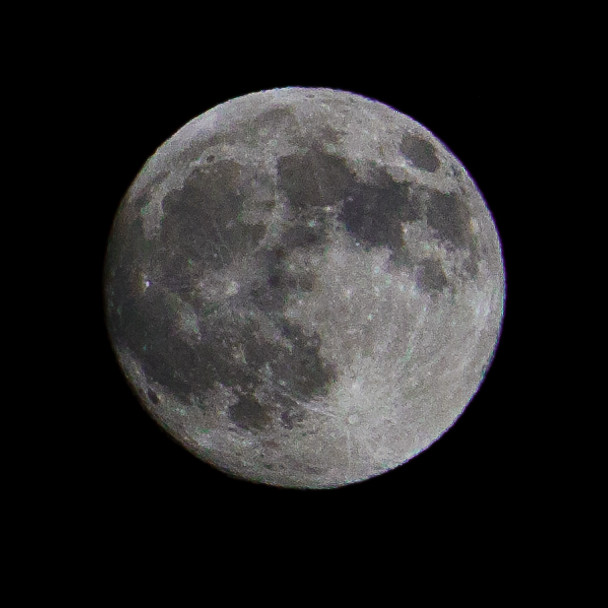
Thanks for all the help everybody :). I had another go tonight and am MUCH happier with the results. Obviously the 250mm is too short a lens and I had to do a huge crop so it is not a masterpiece but I am happy with the technique now anyway :).

My shot:
IMG_2400%2520edit.jpg


Zoomed in:
IMG_2400%2520edit.jpg


Before the crop:
IMG_2400%2520edit.jpg
 
much better, I remember setting a longer shutter speed the first time I tried - seems logical considering it's dark out :):)
 
much better, I remember setting a longer shutter speed the first time I tried - seems logical considering it's dark out :):)

It's a common mistake that most first time shooters of the moon make. Whilst it may be dark out, they forget that their subject (the moon) is bathed in full sunlight.

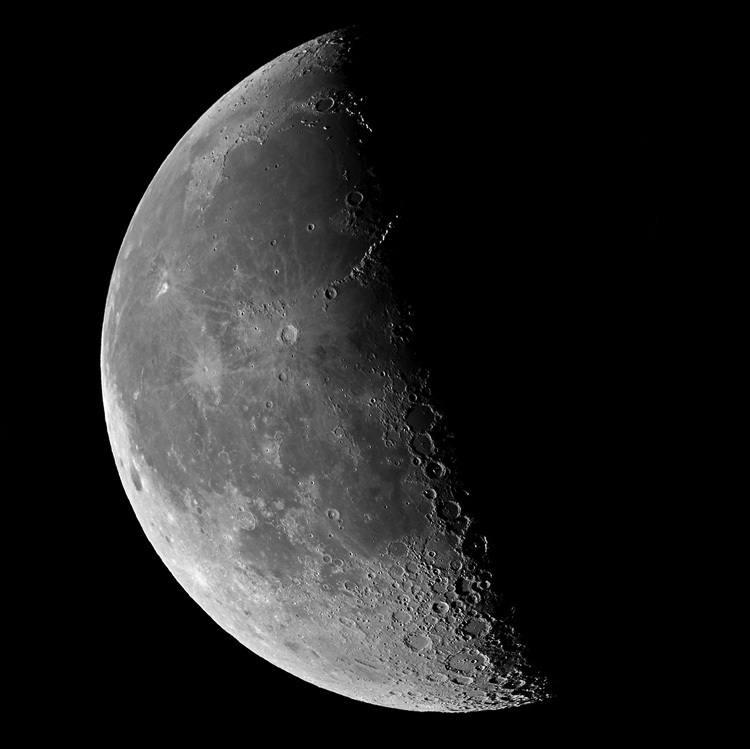
Most people also seem to get the urge to photograph the moon when it is full. As has already been said, this is probably the worst time, as you end up with a pretty flat looking disc. Shooting when the moon is anything less than full gives some nice shadow details along the terminator, giving a much greater 3D feel.

173.jpg


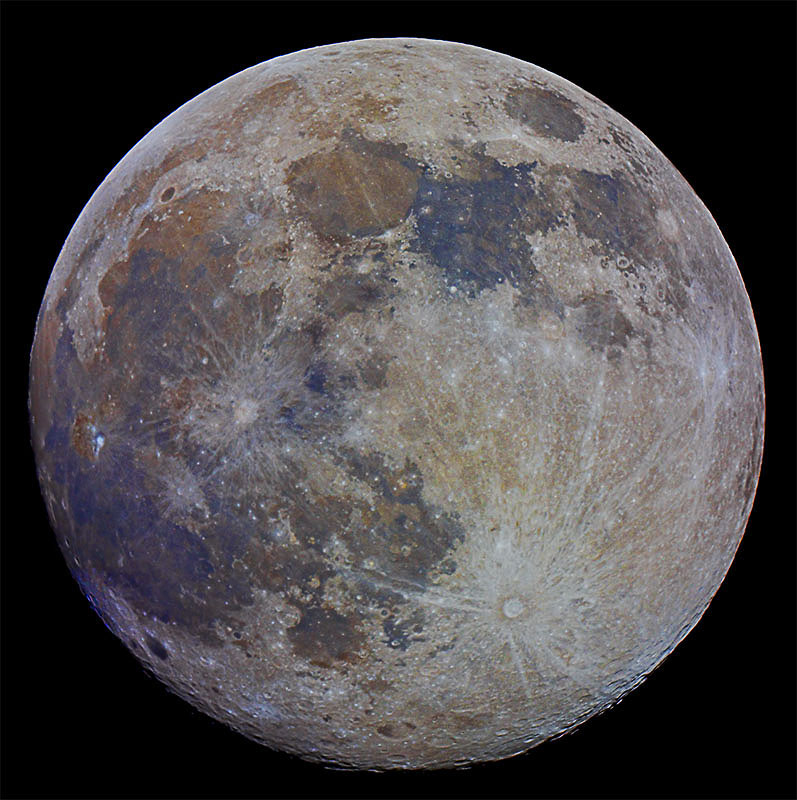
If you really can't resist the urge to shoot a full moon, try doing a bit of saturation boosting in post processing to bring out some of the colours that are there, but too faint to be discernible.

165.jpg
 
got this with my 75-300 a few weeks ago (merged exposures), I think the full moon worked here but it's not sharp enough:


February moon by Iris_255, on Flickr
 
Hi,

You say that you were using a tripod with a 2S shutter time. Did you buy any chance use the shutter release button on a timer?

If not I have experienced exactly what you are describing and found that by setting the shutter release to go off after the timer had expired gave me better results.
 
Back
Top