Why are people buying electric cars?

  • Thread starter Thread starter Deleted member 68495
  • Start date Start date
Much simpler if they abolished VED or "Road Tax" and increased the tax on fuel/diesel etc. - (as they do in France - well when we lived there that was the case) - cheaper to administer and more equitable - "the more miles you drive the more you pay"

Then EV's would be free - Andrew!!!
 
What you say is well known, however for my lifetime I've heard VED called road tax (perhaps because without it one may not park most cars on the highway).
According to Gloucester's Highways department, you actually have no legal right to park on a public highway...


However, whenever parking restrictions appear, there's generally a full and frank exchange of views between members of the public and the relevant highways department. ;)
 
Much simpler if they abolished VED or "Road Tax" and increased the tax on fuel/diesel etc. - (as they do in France - well when we lived there that was the case) - cheaper to administer and more equitable - "the more miles you drive the more you pay"

Then EV's would be free - Andrew!!!

to be fair this for me is a great option we should tax drivers that pollute more by doing more driving, but for me its diesel that needs to carry the heaviest burden
 
Then EV's would be free - Andrew!!!
Or go the opposite way: abolish fuel tax and massively increase Vehicle Excise Duty to make everyone pay equally... :whistle:
 
Or go the opposite way: abolish fuel tax and massively increase Vehicle Excise Duty to make everyone pay equally... :whistle:

you're been cheeky now aren't you :)
we should also have an upper limit on what a vehicle is allowed to pollute as well to allow it on our roads, only classic cars or cars over a certain age can have an exemption.
 
And a size and weight restriction for private vehicles.
 
According to Gloucester's Highways department, you actually have no legal right to park on a public highway...


There's not many situations where you can just leave your private property in a public space.
 
Last edited:
you're been cheeky now aren't you :)
we should also have an upper limit on what a vehicle is allowed to pollute as well to allow it on our roads, only classic cars or cars over a certain age can have an exemption.
Pollute per (unit of distance) driven or pollute over its entire lifetime based on a notional average mileage and including construction and destruction pollution? Is the pollution per unit of distance calculate on pollution directly emitted from the vehicle (exhaust gas), or does it include the pollution involved in extracting the fuel, refining it and getting it to the vehicle / generating the electricity?

I'm not arguing against BEVs, indeed I'm seriously considering one for my next vehicle, but when talking about limiting pollution it is important to make clear the methodology in calculating the limit. Construction and destruction are very significant contributors to the total lifetime pollution created by a vehicle. The last data I saw suggests BEVs are better overall despite higher pollution in those phases, provided the mileage is high enough (long time since I looked but IIRC the crossover is pretty low, over around one or two thousand miles per year where BEVs start to win on lifetime emissions).


Calculating this stuff is hard - in an entirely different context (amateur sport) an organisation I'm a member of looked at calculating what one event cost in CO2 emissions with a view to offsetting. When you get into how far each competitor travels and how they travel, same for all the officials and volunteers, infrastructure providers (e.g. delivering portaloos, burger van, on-site ambulance, paramedic, doctor etc etc) it begins to get massively complex.
 
you're been cheeky now aren't you :)
we should also have an upper limit on what a vehicle is allowed to pollute as well to allow it on our roads, only classic cars or cars over a certain age can have an exemption.
But it would hit poorer people the hardest. As they tend to run older cars.
 
...only classic cars or cars over a certain age can have an exemption.
I can see many discussions about the definition of a "classic car" and arguments that old cars are smelly... :exit:
 
But it would hit poorer people the hardest. As they tend to run older cars.
Which brings us back to the hefelump in the middle of the room: the only fair taxes appear to be income and wealth.

Which, in turn, raises the question of enforcement. It's hard enough gathering V.A.T. and the various duties and well known that the richer you are the less you pay in wealth taxes. Every discussion on the subject comes down to how to stop the cheats while being fair to those who are honest.
 
But it would hit poorer people the hardest. As they tend to run older cars.

I think that's the plan. They don't want the average Joe having a private vehicle for their freedom and enjoyment.

I can see many discussions about the definition of a "classic car" and arguments that old cars are smelly... :exit:

Mine is smelly. Smells of petrol and oil normally :) :ROFLMAO:
 
I think that's the plan. They don't want the average Joe having a private vehicle for their freedom and enjoyment.
Indeed.

Let's face it: too many people are just outright dishonest and such people are massively over represented in politics and among the wealthy. Given that turkeys are not famous supporters of Christmas, this is not an easy one to dent, let alone crack...
 
Another thought crossed my mind re charging at motorway service stations which just confirmed our reluctance to buy an EV. A couple of weeks ago, we stopped at a service station near Sheffield and in the 20-30 minutes we were there none of those cars charging, when we arrived, had left. Two vacant slots became available at the Tesla station. I've done a Google about it.

"Charging an electric vehicle (EV) at a UK motorway service station typically takes 30 minutes to an hour for a rapid charge, aiming to get you to 80% battery capacity.The exact time depends on factors like the EV's battery size, the charging point's power (kW), and the car's maximum charging rate, as well as ambient temperature and battery state.

Ultra-Rapid Chargers:
Offering even faster charging, these chargers (100kW upwards, with some reaching 350kW) can add over 250 miles of range in under 20 minutes for compatible EVs

That waiting can add quite a lot of time to a journey. Last week, the government announced a £63 million package for charging infrastructure. I'm sure most people would think that was an investement into public charging points throughout the country, ie... motorways, A and B roads, but no.

The £63 million includes a £25 million scheme for local authorities to make home charging viable for residents without driveways. . You have to go to the Dept's website to see the breakdown. Infact, when Heidi Alexander was interviewed by Laura Kuensberg a week last Sunday..13th. she said this. “We do need to make it easier and cheaper for people to buy an electric vehicle. So today we’re announcing a really big investment, £63m in charging infrastructure across the country – £25m for councils.” I stand to be corrected but that, sort of, implies that the £25million for local councils is 'in addition.' She could have said..."which includes' £25 million for councils " She did go on to say it was for cabling across the pavements in streets where people have no drives.

From the government website. The £63 million includes
  • Major boost to charging investment to break down barriers to electric vehicle ownership and boost charging infrastructure across the UK, cutting costs for families, businesses and the public sector.
  • £63 million package to support at-home charging for households without driveways, transition NHS fleets to save millions for the health service in England, create thousands of chargepoints at business depots across the UK

So, it includes, quote.. "£8 million to power the electrification of ambulances and medical fleets across over 200 NHS sites, saving millions in costs which can be invested into patient care."

It goes on...This latest investment is part of a major plan including £1.6 billion invested to tackle potholes and bring down and freeze fuel duty at 5p until Spring 2026. It's claimed the fuel duty freeze is saving the average motorist £50 to £60 over the year. I obviously can't recall what was said at the announcement of that major investment by the DoT but I assume it would have included this £63million and Heidi Alexander should have said that during that interview. ..eg.. "It's part of the (whatever sum) commitment we made which is now being actioned". You can see why I'd never have made the grade as a politician.

It seems that there's a commitment of £6 billion,too for charging infrastructure from the private sector. Does that also include home-charging for those without drives ,I wonder ?

As an aside. The 'Drive Electric' website has listed the fastest charging stations at motorway services. Rugby-Reading-Hopwood Park(M42 Birmingham) Exeter and Hilton Park (Wolverhampton) Here's the best to worst stations. Scroll down to see the list with a score out of 10. https://www.drive-electric.co.uk/press/ev-service-stations-2024/

Btw. The Conservatives pledged £950million for motorway charging stations but Labour said it hadn't allocated any funding for it.

 
Which brings us back to the hefelump in the middle of the room: the only fair taxes appear to be income and wealth.

Which, in turn, raises the question of enforcement. It's hard enough gathering V.A.T. and the various duties and well known that the richer you are the less you pay in wealth taxes. Every discussion on the subject comes down to how to stop the cheats while being fair to those who are honest.
My reply had nothing to do with taxes.
 
My reply had nothing to do with taxes.
I think it all got mixed up with the people who were talking about taxes and electric cars. Possibly with something else...
 
The MOT deals with this quite effectively.

i meant a maximum of how much CO2/KM there are to many cars out there that are just polluting to much because a certain group of people have bottomless pockets for VED costs
 
And a size and weight restriction for private vehicles.

Agree some SUVs by companies like JLR are just silly and just take the complete mickey out of the environment.
 
@JohnC6 in the EV world basically no one charges more than they need to get home on the motorway charges but Tesla do have very good deals for frequent flyers.
 
Charging an electric vehicle (EV) at a UK motorway service station typically takes 30 minutes to an hour for a rapid charge, aiming to get you to 80% battery capacity

That waiting can add quite a lot of time to a journey. Last week, the government announced a £63 million package for charging infrastructure. I'm sure most people would think that was an investement into public charging points throughout the country, ie... motorways, A and B roads, but no.

Just because it can charge to 80% in 30 minutes doesn't mean you have to charge to 80%*, you put in what you need when you need it, so maybe you only stop for 10 minutes..
If you really need to add a lot of power then make the charging stop a rest break, plug in, go for a pee, buy a drink, stretch your legs, just sit back and close your eyes.

I actually think this is a fundamental error all advertising makes when they talk about charging. It gets this idea in people's heads that you always have to be sitting around waiting when you really don't. I think it would be a much better idea just to quote a charging speed, though obviously they would have to dumb it down for all the stupid people they think are watching the advert.
 
Last edited:
Extra to the above ^ I literally just watched a YT video about a chap's Nissan Ariya, a seven months of ownership review. He says in 7 months he's never once had to use a rapid charger.
This is by far the most common experience EV owners will have, 95%+ journeys well withing the range of the car with the odd trip where you have to top up somewhere.
 
Probably too few on the second hand market at the moment.
 
China is realy playing with the numbers and high density cells it has this currently out

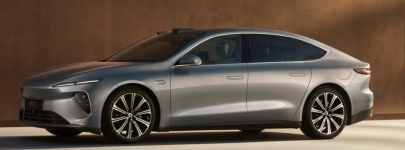
The Chinese EV with the longest range is the NIO ET7, boasting a range of up to 1,044 km (649 miles) on a single charge with its 150 kWh battery. This impressive range is achieved through a combination of a large battery pack and high energy density cells.
1753265567754.png
 
It actually looks pretty good as well. The really interesting thing I've been reading about China and EV's is this battery hot swap thing. That would certainly be appealing to those here who can't, or struggle to, charge at home.
 
China is realy playing with the numbers and high density cells it has this currently out

The Chinese EV with the longest range is the NIO ET7, boasting a range of up to 1,044 km (649 miles) on a single charge with its 150 kWh battery. This impressive range is achieved through a combination of a large battery pack and high energy density cells.
View attachment 458575

You omitted the £75,000 price tag.
 
You omitted the £75,000 price tag.
I didn't ommit anything i simply wanted to point out battery range can be very large now and given the NEO IT7 is an extreme luxury sedan it was never going to be £18.50p
 
It actually looks pretty good as well. The really interesting thing I've been reading about China and EV's is this battery hot swap thing. That would certainly be appealing to those here who can't, or struggle to, charge at home.
Hot battery swap did sound like the holy grail, but car batteries, like laptop batteries, are currently designed around the car, rather than the other way round. Lower capacity.
 
Back
Top