Which is better quality?

E481FA2E-D6F7-44BE-9302-B23A4DD33045.png BECBDD09-2BEC-4F92-84EB-26DFCDBB380D.png EC860FC3-1142-4B69-844B-2C1423097F5F.png 84395AC9-4895-492D-A53A-D59280467D5E.png
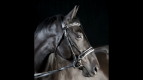
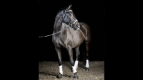
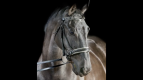
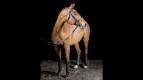
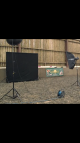
With full credit to the photographer Charles Waller here are some examples. I’m using these photos for example purposes only
These are taken in an arena using a black backdrop sheet.
This is somewhat the outcome I hope to achieve, just need the right lighting kit.

Cheers
 
I’m just after a starter kit nothing too expensive, some kits can fetch for a thousand plus so I’m quite happy to one day invest in something substantialy more expensive but not right now.

Which makes sense, start with the basic kits from Lencarta, Essential Photo etc. They should cost around £350 and as Gary says an umbrella and a softbox as starting modifiers, if you find you need specific stuff later it's easy to add on.

Something versatile in a sense that it can be set up in a small studio for portrait work, not interested in product work. Also keen to do some equine portrait work as well, so that would be in doors ie, small arenas, covered barns etc etc. Lighting can be quite dull in these types of areas so I guess the wattage output would be up for suggestion.

I would stick with your initial plan, get the basic kit then expand from there. If you find yourself needing to go on location you can add a battery inverter or (preferably) a Godox AD200/AD600. Eventually Lencarta/Essential Photo/etc will start selling the budget flash heads with the radio system built in so that's incentive to go with Godox as you'll be able to buy a good trigger and use it through all your kit.
 
Which makes sense, start with the basic kits from Lencarta, Essential Photo etc. They should cost around £350 and as Gary says an umbrella and a softbox as starting modifiers, if you find you need specific stuff later it's easy to add on.


I would stick with your initial plan, get the basic kit then expand from there. If you find yourself needing to go on location you can add a battery inverter or (preferably) a Godox AD200/AD600. Eventually Lencarta/Essential Photo/etc will start selling the budget flash heads with the radio system built in so that's incentive to go with Godox as you'll be able to buy a good trigger and use it through all your kit.


Cheers Simon

Believe me If I’d won the lottery over Christmas it be a different story but of course I didn’t unfortunately so for now as you say start basic and build from there. As quoted before we’ve all gotta start somewhere. It seems lencarta and godox seem to be the more decent start up kits from what I can see.

Kind regards
 
For portrait work id start up with something small light and portable e.g. Speelights or the Godox AD200 360 series. That way you can do portraits of humans and headshots+ of horses. For shooting animals Id keep it as simple as possible, a key light and a rimlight or maybe a background light.
Ill recommend getting the Godox S-bracket for Bowens for mount flash and modifiers and get quality modifiers from the start. A Westcott 180cm reflective umbrella with diffusor should do with an AD360 for horses especially if you up your ISO. Same umbrella or a white showercurtain on a boomstand makes for great "windowlight" even with speedlights (showercurtain) and softboxes up around 90-120 cm will work fine also with the small flash. For big modifiers you will need omnidirectional/barebulb heads. Small lights up to AD360 with smaller softboxes or umbrellas to around 125cm will work well on Nano- and 1051 stands from manfrotto though they may be to short for horses. Here you may need something big, tall and heavy like e.g. boomstands.
I can't agree with that - having the modelling lamps and fast recycling that comes with mains powered flash is a massive benefit for all studio work
 
Pixapro is a reputable firm that rebrands products made by others, the flash heads in that link are made by Godox and are O.K., the softbox however isn't something that I could recommend - get one that has a good quality RECESSED front diffuser.

For general purpose use, get a kit with one softbox and one reflective umbrella - very versatile.

You will 'need' an enormous amount of power to light an arena or barn, and this will cost thousands, but when the overall (ambient) lighting levels are low, just turn up your camera ISO, that's what everyone does. As it happens, I know a bit about horses because I help to run a horse rescue and rehoming charity. And Mike weeks photographs horses.

Cheers Gary

When it comes to lighting it sounds much similar to that of the car industry ha ha, it’s a Vauxhall with an Opel badge or a Seat with Volkswagen mechanics under the bonnet.

I’ll keep my eye on Godox, Lencarta or Pixapro
all seem to in some way of good recommendation. I’ve attached some photos in this thread of some examples of equine photography that I hope to one day aim at.

Kind regards
 
@Spiderwebb I actually have a 3 head version of the Godox set you linked to (from a different EBay seller, that was UK stock and cheaper than the 2 head kit).

I'm certainly nowhere near as experienced as Mike, Gary, Phil, etc. but can make a couple of observations on my usage of it which may help.

The reason I go the 3 head kit, BTW, was my wife 'volunteering' me to provide a 'photo booth' style shoot at my God Daughters Alice themed 16th Birthday party - which we organised at fairly short notice (her dad had passed away from cancer earlier in the year, and her mum was not in a state to be organising a party) - anyway, this left me needing to light a background and subjects in a section of a large lit hall - so 3 lights was the simplest option I thought (I was learning as i went on this one!) - and EBay was the only way to get what I needed in the timeframe.

The heads themselves worked well - exposure was consistent, fired on demand, plenty of power - in fact, my only real criticism of them would be that I would have liked to REDUCE the power a bit more - which the Lencarta Smartflash 3's will offer. This would make it easier to get a balance between the multiple lights.

I did nor use the supplied trigger, as I use a Sony DSLR with a differnt hot show, but my existing radio triggers have a 3.5mm jack output, so worked fine triggering the units - slave mode on them also worked fine (one of my triggers stopped firing par way through the evening, so I simply switched that head to slave, and all worked as before).

The supplied stands are OK, but I'd not want to try them at full height - fortunately I had a couple of much more solid air damped stands, which I was a lot more comfortable with using.

The Godox softboxes seemed fine, but do take a while to assemble / disassemble - I've since acquired a large octabox of the quick assemble 'umbrella' style (Lencarta Profold are of this type) - which is so much easier!


In short - if you can afford to spend a bit more and get a kit from Lencarta (for example), you will be glad you did in the longer term.

The extra on more robust stands, quick assemble softboxes, and greater range of power adjustment will all be things you wish you had it you dont!


Many thanks for your advice, much appreciated.
Good overall explanation of each bit of kit in simple terms.
 
Cheers Gary

When it comes to lighting it sounds much similar to that of the car industry ha ha, it’s a Vauxhall with an Opel badge or a Seat with Volkswagen mechanics under the bonnet.

I’ll keep my eye on Godox, Lencarta or Pixapro
all seem to in some way of good recommendation. I’ve attached some photos in this thread of some examples of equine photography that I hope to one day aim at.

Kind regards
I'm ex lencarta, so not impartial, but I would recommend them because of their stability, expertise and customer service.
Most Godox products are fine, but as they don't have a customer service infrastructure it makes sense to buy from a British company that will provide customer service if necessary, I.e avoid EBay/Amazon sellers.
 
I can't agree with that - having the modelling lamps and fast recycling that comes with mains powered flash is a massive benefit for all studio work
For some. ;) Yes mains powered lights offer benefits over battery power especially speedlights but the fast setup time, portability and versatility of battery powered lights are also benefits you need to take into account especially if you don't have the space for a permanent setup, want to take it "anywhere" with you and if you are prone to trip over wires all the time. Id like a mains powered permanent setup but honestly the drawbacks in lacking modelling light and the somewhat slower recycling speed are not such big issues. The ability to do "studio like" Portraits in second are however what allows me to play a lot more with lights, easier and more often than if Id had to do the hazle with studio strobes.
 
With full credit to the photographer Charles Waller here are some examples. I’m using these photos for example purposes only
These are taken in an arena using a black backdrop sheet.
This is somewhat the outcome I hope to achieve, just need the right lighting kit.

Cheers

Most arenas have a sweet spot just inde the doors that catches the daylight just right to do these without added flash and having been there and done such shots you would be better with 1 good battery light, mains really not suitable

Mike
 
For some. ;) Yes mains powered lights offer benefits over battery power especially speedlights but the fast setup time, portability and versatility of battery powered lights are also benefits you need to take into account especially if you don't have the space for a permanent setup, want to take it "anywhere" with you and if you are prone to trip over wires all the time. Id like a mains powered permanent setup but honestly the drawbacks in lacking modelling light and the somewhat slower recycling speed are not such big issues. The ability to do "studio like" Portraits in second are however what allows me to play a lot more with lights, easier and more often than if Id had to do the hazle with studio strobes.
There are obvious benefits to both approaches, and in reality the OP will probably eventually end up with both, but I stick with my view that mains powered is much better for the studio-based work, and is also far better value for money.
 
Most arenas have a sweet spot just inde the doors that catches the daylight just right to do these without added flash and having been there and done such shots you would be better with 1 good battery light, mains really not suitable

Mike

That was my thinking. Even if mains power is 'to hand' it'll be on the end of a long extension cable that will almost certainly be restricting, possibly a safety risk.

In which case, I'd say Godox AD200 flash unit as a good starting point that can be built on, with AD-B2 adapter that has a half-decent modelling LED. Battery-powered options will smash the budget though.
 
Horses have metal shoes with nails in that are good at cutting cables and also good at conducting electricity - unless I had a full time venue with ceiling mounted lighting I would stick to battery. Whilst mains is better for a standard studio 90% of the time, in this situation battery is the answer and opens to lots of similar work

Mike
 
4bcde9dcdc26cfb8d8d2dbcca3653196.jpg


Outside about 6pm in the middle is summer, a 600W Light
 
In which case, I'd say Godox AD200 flash unit as a good starting point that can be built on, with AD-B2 adapter that has a half-decent modelling LED. Battery-powered options will smash the budget though.

Which pretty much means the budget is gone on just the AD200 and AD-B2 (assuming the budget is around £300), which is only a single light without stands, modifiers or trigger.

Not to say I think it's a bad idea, the AD200 is a great little head and even the limitations of a battery probably aren't much of an issue for someone doing this casually indoors but it's still a compromised solution for both scenarios.
 
Which pretty much means the budget is gone on just the AD200 and AD-B2 (assuming the budget is around £300), which is only a single light without stands, modifiers or trigger.

...
I think this was the predictable outcome for when the ambition and budget collide.

A cheap home studio kit is versatile and readily available. But as many have posted, horses in more challenging conditions are nowhere near as easy a task, requiring more power, probably a battery, and larger modifiers.

Now the OP has 2 realistic options, learn to light with a home studio setup, and upgrade later. Or raise his budget now to get what he needs to fulfil his ‘wish list ‘
 
A73FE4F3-85E4-4A59-87E0-E652403E7068.png
So would you say this type of set up indoors would be a bit OTT? Sorry you can’t see all the gear properly. I know it’s a each to their own scenario.
 
Nice Shot, can I just ask mike what type of battery powered light you used
Cheers

Unfortunately it is no longer available but was the Lencarta Safari Li-Ion (not version II which for this would be a step backwards in the way I used it) - neither of those 2 offered HSS and far cheaper to get the Jinbei OEM Version of the Li-Ion or the RS600P which is the Godox OEM of the Safari II but with that inherent warranty lack

An option not mentioned so far is the Godox AD360

Mike
 
View attachment 117483
So would you say this type of set up indoors would be a bit OTT? Sorry you can’t see all the gear properly. I know it’s a each to their own scenario.

I'm pretty relaxed with H&S issues given a bit of common sense, but I wouldn't want to be around that set-up with a skittish horse. Wouldn't be surprised if the venue disallowed it. And it's unprofessional. Battery power only, even though it blitzes the budget :eek:

FWIW, my equestrian experience is limited but I managed a decent result outdoors at dusk using four speedlights - two in one umbrella, two in another. That gave me me roughly 2x 200Ws equivalent and I needed every drop of power. The horses were with their very experienced owner/rider. No problem at all with the flash, but I was told to introduce the umbrellas carefully. That was good advice and they soon settled, but would get nervous again whenever lights were moved.
 
I'm pretty relaxed with H&S issues given a bit of common sense, but I wouldn't want to be around that set-up with a skittish horse. Wouldn't be surprised if the venue disallowed it. And it's unprofessional. Battery power only, even though it blitzes the budget :eek:

FWIW, my equestrian experience is limited but I managed a decent result outdoors at dusk using four speedlights - two in one umbrella, two in another. That gave me me roughly 2x 200Ws equivalent and I needed every drop of power. The horses were with their very experienced owner/rider. No problem at all with the flash, but I was told to introduce the umbrellas carefully. That was good advice and they soon settled, but would get nervous again whenever lights were moved.
I would agree with that. Horses vary a lot, for example most cobs are pretty laid back, thoroughbreds, jumpers and the like can be pretty skittish and will often react badly to anything white that flaps about. I've used everything from a bank of 600ws lights to a single flashgun, and just about any tool can be used well as long as it's dark enough.

Basically, the OP needs to decide whether to equip himself primarily for studio work and then get a cheap flash or 3 for the horses, or go the other way and get expensive powerful portable flashes that can also be used in the studio, even though they are less than ideal for that.
 
View attachment 117483
So would you say this type of set up indoors would be a bit OTT? Sorry you can’t see all the gear properly. I know it’s a each to their own scenario.

F**k me! That's not OTT, it's an accident waiting to happen if you are shooting a horse - no matter how well you (/the photographer) thinks they know the animal.

I'd be wary about using a set up like that for humans in a social context. let alone horses.
 
>SNIP
Basically, the OP needs to decide whether to equip himself primarily for studio work and then get a cheap flash or 3 for the horses, or go the other way and get expensive powerful portable flashes that can also be used in the studio, even though they are less than ideal for that.
:thinking::thinking:???? :D
Ain't this an oxymoron or what? How can the battery powered flashes recommended for the horses be both the cheap and the expensive solution? According to at least one of your earlier posts mains powered are the most affordable option. :)
BUT in this instance i find it crystal clear from other posters e.g Mike Weeks that the preferable solution for equine photography is battery powered lights and I must say given the possible hazards using mains shooting horses versa the minor drawback using battery powered strobes for portraits + the all in all greater versatility with batteries there ain't much to decide :)
 
Last edited by a moderator:
...the all in all greater versatility with batteries there ain't much to decide :)

Actually there is, because if you are using a pack & head solution, you are going to need a 1:1 ratio; ie not running two heads off one pack & therefore causing more cables to be drapped about.
 
Actually there is, because if you are using a pack & head solution, you are going to need a 1:1 ratio; ie not running two heads off one pack & therefore causing more cables to be drapped about.

So important, it is not simply going battery that is a potential solution.

Mike
 
Actually there is, because if you are using a pack & head solution, you are going to need a 1:1 ratio; ie not running two heads off one pack & therefore causing more cables to be drapped about.
Well yes. I Guess my AD360 (#39) is considered a pack and head solution. :)
 
Last edited by a moderator:
View attachment 117483
So would you say this type of set up indoors would be a bit OTT? Sorry you can’t see all the gear properly. I know it’s a each to their own scenario.

That's probably a pair of Elinchrom BXRI 500 heads (mains powered so that's why there's cables all over the shop), Rotalux 90x110? softbox, 70cm beauty dish on a Manfrotto combi boom. About £700 second hand or closer to a grand new. Nothing over the top about that but I don't see what it gives you that much cheaper options wouldn't, the BXRI/BRX heads are fairly old these days.

If you REALLY want the ability to work both indoors and outdoors then you would have a much easier time following the advice you've already been given for a battery powered flash like the AD600 or AD200, you pay more but you have a good outdoor system. In your shoes if I want both environments I'd get the AD600 but that's half a grand just for the head, as Gary says you need to figure out what's important to you.
 
I see 2 possible options, Godox RS600p take the risk but is good value https://www.ebay.co.uk/i/1125465795...=9045699&device=c&campaignid=856858697&crdt=0

Or buy into their more modern range via whatever dealer you want to (if always in indoor arenas then an AD200 would suffice, but the bigger the light i.e. the AD600 the more options and not just removing the weight to the base of the stand

Remember the scariest thing to a horse is a carrier bag being blown about so imagine one on legs i.e. a softbox with a flappy front and the fear that can cause

Mike
 
That's probably a pair of Elinchrom BXRI 500 heads (mains powered so that's why there's cables all over the shop), Rotalux 90x110? softbox, 70cm beauty dish on a Manfrotto combi boom. About £700 second hand or closer to a grand new. Nothing over the top about that but I don't see what it gives you that much cheaper options wouldn't, the BXRI/BRX heads are fairly old these days.

If you REALLY want the ability to work both indoors and outdoors then you would have a much easier time following the advice you've already been given for a battery powered flash like the AD600 or AD200, you pay more but you have a good outdoor system. In your shoes if I want both environments I'd get the AD600 but that's half a grand just for the head, as Gary says you need to figure out what's important to you.


Im in agreeance Simon, some very useful advice floating about and many factors to take into consideration. Mixed oppionions as well and some post quite amusing to read. I think some folk think your photographing dinosaurs and the flash output would need to be seen from the international space station, regardless everyone is going to have their own take on things and they’re quite within their right to do so. As I think with most set ups safety is paramount but also common sense usually prevails. My main concern was the indoor side of lighting not so much outdoor.

I’ve taken allot of valuable info from this thread so cheers to those who come under that bubble. If the budget isn’t workable at the moment then one will save more to make it doable. I’d much rather buy from a reputable uk dealer than some 2 bit dodge dealer off eBay in the Far East where you run the risk of void warranties or knock off versions.

Mains or battery powered gear I’m a little undecided still so I’ll do some more research into both set ups. never the less I’m allot more clued up on both set ups than I was last night so once again thank you for the help guys.

Kind regards.
 
I see 2 possible options, Godox RS600p take the risk but is good value https://www.ebay.co.uk/i/1125465795...=9045699&device=c&campaignid=856858697&crdt=0

Or buy into their more modern range via whatever dealer you want to (if always in indoor arenas then an AD200 would suffice, but the bigger the light i.e. the AD600 the more options and not just removing the weight to the base of the stand

Remember the scariest thing to a horse is a carrier bag being blown about so imagine one on legs i.e. a softbox with a flappy front and the fear that can cause

Mike

Portable flash with battery power and accessories at a reasonable price. Looks a good option mike

Cheers
 
:thinking::thinking:???? :D
Ain't this an oxymoron or what? How can the battery powered flashes recommended for the horses be both the cheap and the expensive solution? According to at least one of your earlier posts mains powered are the most affordable option. :)
BUT in this instance i find it crystal clear from other posters e.g Mike Weeks that the preferable solution for equine photography is battery powered lights and I must say given the possible hazards using mains shooting horses versa the minor drawback using battery powered strobes for portraits + the all in all greater versatility with batteries there ain't much to decide :)
I'm sorry if my post has confused you. I an on a mobile with poor reception and tru not to waste words.

Flashguns are the cheap flashes that fit into camera hotshoes and can also be used offcamera.

Powerful portable flash is something very different and very much more expensive - basically studio flash power but battery powered.
 
Isn't this it?

https://www.lencarta.com/safari-600-refurbished-kit

If so, despite being older tech, it represents pretty good value for money at £350!
No, the Safari Li-on suceeded this model, which is the Safari Classic. The Li-on had the same total power but much more adjustment and faster recycling. But, although pretty basic, this model is pretty well bombproof, a real workhorse.
 
It looks like it's already been covered enough in the thread, but using mains cables attached to lights with big modifiers on high stands, is really not a good idea at all. I've seen folk do it and get away with it, but its only a matter of time before you will have a potentially serious accident.

Powerfull decent battery powered lights with fast recycle times are expensive, so if you need to keep within a lower budget and you're shooting in an indoor arena, try to arrange the shoots at dusk when you don't have to worry about the ambient light and therefore not need so much flash power, and can get away with much cheaper flashes.
 
Last edited:
Back
Top