Where am I going wrong????

Kim

Suspended / Banned
Messages
759
Name
Kim
Edit My Images
Yes
I am in need of some desperate help.
At the weekend I took the camera out to a county show to get some shots, but what I am left with is cards full of images I am totally disappointed with.
I keep trying to get my head around all the speeds, apertures and other settings but I am obviously getting something wrong.

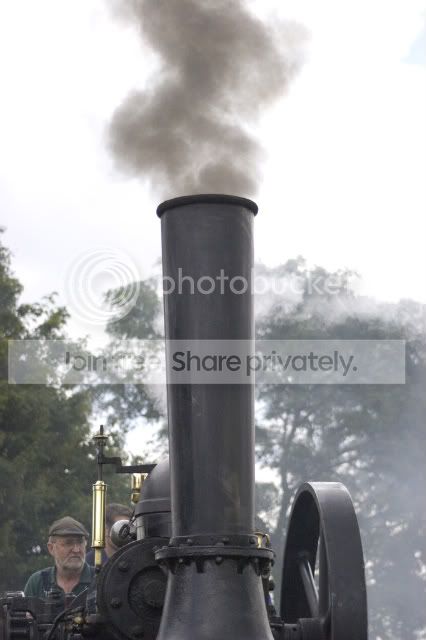
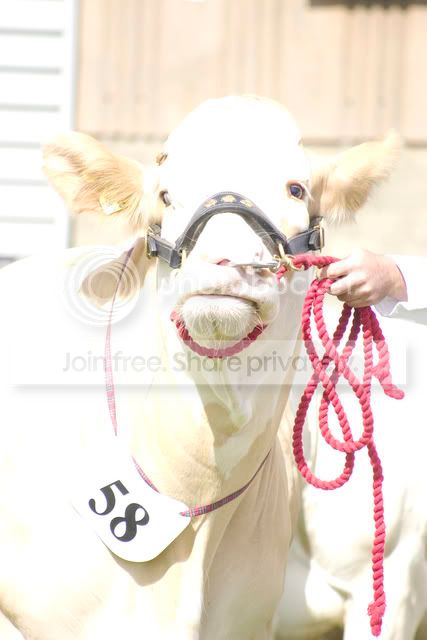
I have added two pic’s to show what I mean…………it was a fairly bright day with blue skies and white fluffy clouds.
But still in a lot of my images either the whites and bright colours are blown out or I have loss the sky detail completely…………………………….where am I going wrong??????

KentCountyShowDetling-13072008-P-5.jpg


KentCountyShowDetling-13072008-P-6.jpg
 
From the second shot:

Camera Make: Canon
Camera Model: Canon EOS 300D DIGITAL
Image Date: 2008:07:13 10:12:30
Flash Used: No
Focal Length: 180.0mm
Exposure Time: 0.0003 s (1/4000)
Aperture: f/5.6
ISO equiv: 1600
Metering Mode: Matrix
Exposure: aperture priority (semi-auto)

ISO 1600, F5.6, 1/4000 s
There seems to be your problem.
Set the ISO higher only when needed, after you aperture and shutter speed can't be lowered to get a hand shake free shot.

In that case, ISO 100, 1/250 - 1/500 and F5.6 would probably have done the job and you'd get better exposure.
You could recover some details if you shot in raw in the second one.

The first shot seems to have been exposed for the steamer, not the sky, so you got the steamer nearly right and the sky's blown. Too much dynamic range in that scene to cover for the sensor, I think.
 
I'd go with what slapo says. ISO on the 2nd image is way to high.

On the 1st one dynamic range seems to be problems.
 
As one newbie to another... change the ISO to 100.

Also, have a read thru the manual, take a little time to understand the histogram, then change the dial to MANUAL. This worked a treat for me once I remembered to review shots and look at the histogram after taking them. You can immediately see whether you need to increase/decrease exposure and can adjust shutter or aperture accordingly.
 
You're over exposured.

If you use M (Manual) you need to know about EV (Exposure Values) it lets you control the amount of light. To make it natural and correct light, keep the interval middle on the photographic exposure scale. To control the interval, you gotta to change the shutter speed and aperture.

Do some research about that and you will be okay.

For now, use TV (shutter speed) or A/AV (aperture), it is easy to use.

VERY useful info: http://www.cambridgeincolour.com/tutorials.htm
 
OMG!! How stupid is that...............you know I never thought to check what the ISO was set at :bang: so I am now feeling very stupid and shall hide my face in shame :bang:
 
The first shot is fairly typical of your situation - a dark subject on a bright day. There's no exif though so we can't see what you did. To keep the detail in the dark areas your camera has sacrificed the highlights. Try a slightly smaller aperture and then use fill in flash to bring the shutter speed back up. This should give you more detail in the sky while exposing the subject too.

Your exif is as follows on the second shot:

Camera Make: Canon
Camera Model: Canon EOS 300D DIGITAL
Image Date: 2008:07:13 10:12:30
Flash Used: No
Focal Length: 180.0mm
Exposure Time: 0.0003 s (1/4000)
Aperture: f/5.6
ISO equiv: 1600
Metering Mode: Matrix
Exposure: aperture priority (semi-auto)

You have shot on a bright sunny day with iso1600 set which makes your sensor very light sensitive. Drop it back to iso 100/200 and try metering from the bright part of the cow.

A good discussion about exposure and metering is here: http://photography-on-the.net/forum/showthread.php?t=89123
Have a read through that and I think post 47 has some good advice about how your meter can be fooled.
 
Hard to be specific on the first one as the EXIF data is not showing up for me. What I can say is that you have a very tough combination of subject and background, with a dynamic range that exceeds your camera's ability to capture all the detail in the highlight areas (brilliant white clouds) and, at the same time, detail in the darker areas of the black traction engine. I guess you're a fraction overexposed for the traction engine, but as you say, the clouds are completely blown. The best bet would be to shoot in raw and to balance your exposure to capture more cloud detail, if that is important. You really need to check your histogram and blinking highlight warnings to look for signs of overexposure and then adjust as required. You can then sort out the balance between light and shade in post processing, once you have captured the basic data you need in your raw file. If you blow anything when shooting JPEG it's gone for good. Shooting raw may let you recover some detail in post. You could also try using a graduated neutral density filter, to dim the sky while keeping the foreground bright, or simply pick a different angle of view, or moment in time, to avoid the brilliant clouds in the background.

On the second shot, it is clearly shot in daylight but you are at 1600 ISO - why? - and are shooting in aperture priority with the aperture (probably) wide open at f/5.6. The poor camera has tried to set the fastest shutter speed it can, at 1/4000, but your settings have spoilt any hope it had to deliver a good result.

Following the Sunny 16 rule, on a bright sunny day (it rarely gets brighter than that) you would use f/16 and 1/ISO as your shutter speed. You can move the settings for Aperture, Shutter and ISO around, so long as you balance out the adjustments. If we compare your settings to the Sunny 16 guidelines....

At f/5.6 your exposure is 3 stops brighter than f/16;
At 1600 ISO your exposure is 4 stops brighter than 100 ISO;
At 1/4000 your exposure is 5 1/3 stops darker than 1/100.

The net result (for a sunny day, in bright direct sunshine) is that your image is overexposed by 1 2/3 stops. I don't know whether your camera has a "safety shift" feature, like the 30D and 40D, but that would have saved you by closing down the aperture for you, despite you setting it to f/5.6.

The real puzzle for me is why on earth did you choose 1600 ISO to shoot in bright daylight? Apart from the degraded IQ that comes with high ISOs, there was absolutely no sense in using 1600 ISO for these conditions. In bright sunlight you'd be fine with 100 ISO. On a cloudy day you may want 400 ISO, or perhaps 800 ISO, if you needed to keep your shutter speed up to freeze action. 1600 is pretty much reserved for shooting indoors, or in miserable conditions outdoors when you still need a fast shutter speed - sports, for example.

 
I agree with the above - For the first shot the dynamic range is to big for the camera sensor. this is can be overcome by shooting in raw and metering more for the sky and adjust post capture to brighten the traction engine and maybe darken the sky as well.

2nd pic - only use a high ISO when its needed. The lowest iso will produce the best pictures in terms of quality.
 
OMG!! How stupid is that...............you know I never thought to check what the ISO was set at :bang: so I am now feeling very stupid and shall hide my face in shame :bang:

No need for that, we all make mistakes, it is how we learn from them and accept that we do make mistakes that is important.............:)
 
OMG!! How stupid is that...............you know I never thought to check what the ISO was set at :bang: so I am now feeling very stupid and shall hide my face in shame :bang:


No need for that, everyone makes simple mistakes, that's why they put rubbers on the end of pencils! :D

You're not stupid and did the right thing in asking, that's how we learn.
 
haha, snap!
 
I think forgetting to change the ISO is probably THE most common mistake made.

If you keep doing it maybe you could set it to Auto iso if you have that on you camera? Not sure it goes down to 100 when using certain programs but it would at least use 200 and prevent overexposure.
 
LOL. Seriously, at the stage you're at now, shoot in AV mode or even 'P' and enjoy concentrating on your subjects and your composition, Let the camera worry about the technicalities for a while, it will be more than capable in probably 95% of situations. :)
 
I've just scanned through the 300D manual and apparently there are no Custom Functions and no Safety Shift option. However, if you are feeling brave you could consider hacking your camera to add this feature, and some others. I'm not recommending you do this but just pointing out the possibility. Anything you do is at your own risk. Here are some details....

http://photos.bahneman.com/tricks/digital-rebel-tricks.html

I'm sure if you dig around the net you could find out more about the hacked firmware. Try this Google search....

http://www.google.co.uk/search?q=300d+russian+hack
 
Back
Top