When does a photograph become an image.

If I blended tomatoes with other ingredients and heated it up....

Would it be a soup, or a sauce???

Technically it could be both but it's whatever you call it.

I say image where others say photograph, I think it's a bit anal to correct on the matter since clearly nobody has a definate answer.

Nobody make the "it's a soup if it's served as the main ingredient" remark please ;)
 
I don't even know why I'm in here.... I actually say "image" myself rather than photograph.. :)
 
:D I believe you're defending calling yourself a photographer David...rightly so id say.


I say image where others say photograph, I think it's a bit anal to correct on the matter since clearly nobody has a definate answer.

:thinking: nearly right Phil....But Im pretty sure quite a few of us a had a fixed definition. :)
 
...
I say image where others say photograph, I think it's a bit anal to correct on the matter since clearly nobody has a definate answer.

I thought I'd done that ages ago (post #80) - cameras have always captured images. A photograph is the final result of that process, our OP appears to start at this point with the belief that there's a tipping point when the manipulation of the photograph steps beyond photography into digital imagery.

The 'photograph' being a tangible object you can view (pre digital I'd maybe have said touch?) - the 'image' being the result of the light hitting the receptive surface and being captured.

Making the question the wrong way round and moot.:thumbs:
 
I thought I'd done that ages ago (post #80) - cameras have always captured images. A photograph is the final result of that process, our OP appears to start at this point with the belief that there's a tipping point when the manipulation of the photograph steps beyond photography into digital imagery.

The 'photograph' being a tangible object you can view (pre digital I'd maybe have said touch?) - the 'image' being the result of the light hitting the receptive surface and being captured.

Making the question the wrong way round and moot.:thumbs:

I don't think I saw this... all I've seen is opinions. My bad!
 
I don't think I saw this... all I've seen is opinions. My bad!

It could still be described as an opinion - but it makes sense to me - exposed film is said to contain the 'latent image' and what turns up on the negative after development was an 'image' but not a photograph - the photograph comes later in the process.

This is just one of those examples of where a 'digital' photographer is seeking some kind of line in the sand where none exists, because processing tricks, multiple exposures and other photographic manipulatuions are as old as photography itself. Yet people seek to draw the line between what's created in a camera and what's created in photoshop :cuckoo:.
 
So, here's a little thought experiment :)

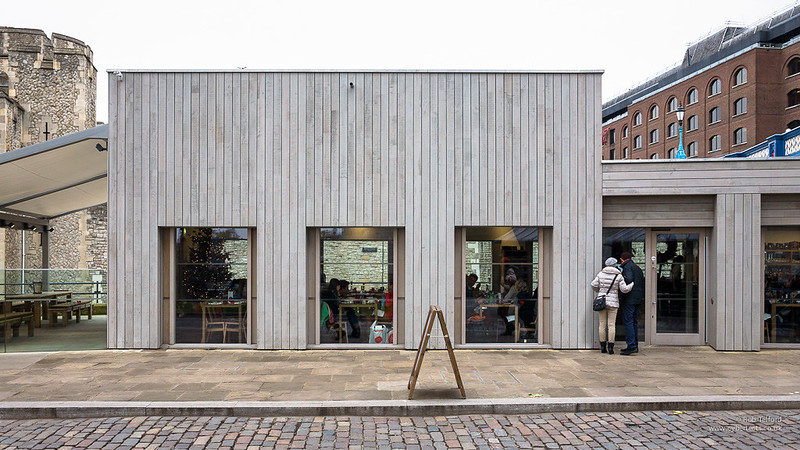
I took this photograph yesterday. For the purposes of this exercise, let's assume it is a photograph as a starting point.

Enlargement 0 - the full photograph


Perkin Reveller by cybertect, on Flickr

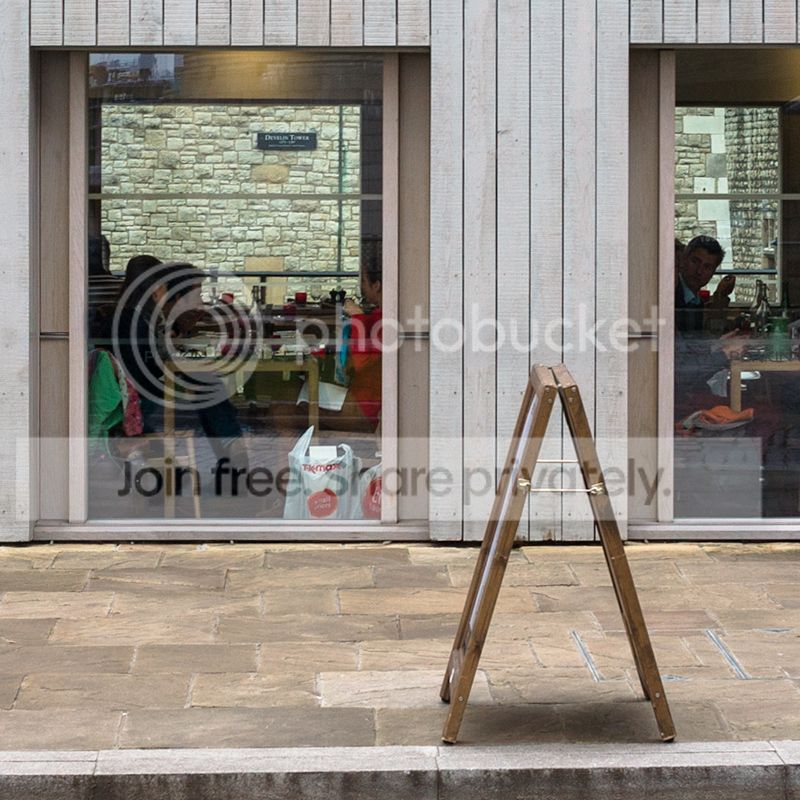
Now, let's enlarge part of the image. It's now a crop, but it's still recognisably a photograph, the same one we started with.

Enlargement 1

20121206_0045-e1.jpg


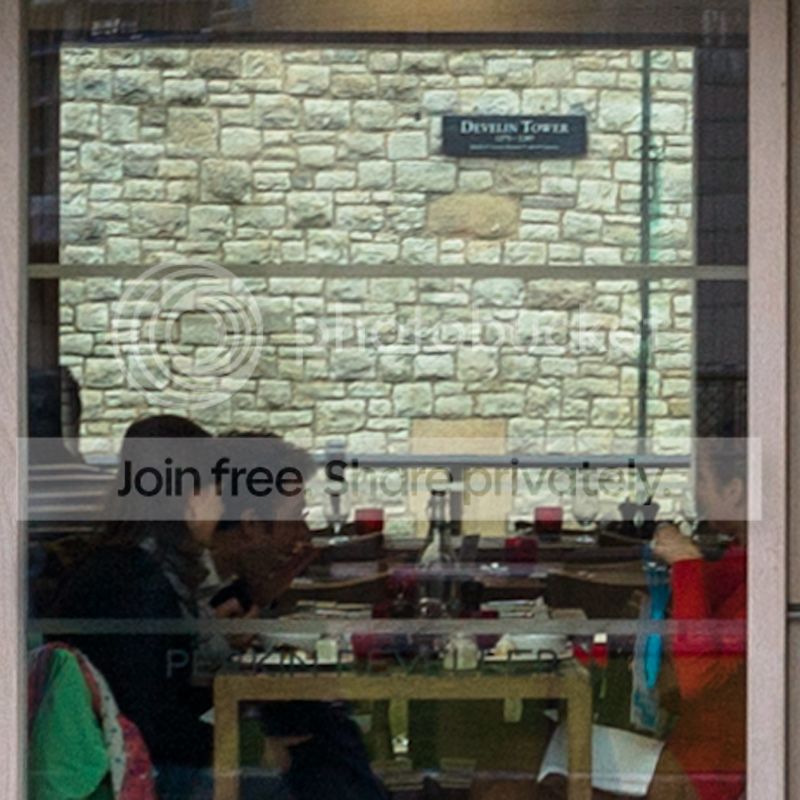
and zoom in a bit further

Enlargement 2

20121206_0045-e2.jpg


and again.

At this point, I'm now enlarging instead of reducing the image to keep it at the same 800 pixel square size, so the pixels are becoming visible. I could have just left it at its natural size, but it would become hard to see on screen.

Enlargement 3

20121206_0045-e3.jpg


and so on,


Enlargement 4

20121206_0045-e4.jpg


cropping closer and closer...
 
Last edited:
Enlargement 5

20121206_0045-e5.jpg


Enlargement 6

20121206_0045-e6.jpg


Enlargement 7

20121206_0045-e7.jpg


Until we hit the the smallest unit of digital photography; its atom, a single pixel.

Enlargement 8

20121206_0045-e8.jpg


It's still captured from the same original exposure as the very first photograph above, nothing has happened to it in Photoshop beyond a simple crop, but is it still a photograph?

If it's not, at what point did it become not a photograph? Can we say definitively that there's a hard cut-off between photograph and not-photograph?

Is it even an image when it's reduced to a single pixel?

Now, my view is that it's a fuzzy boundary. You're never going to be able clearly to separate photograph from not-photograph with a simple rule.
 
Thats like toast.

At what point does bread become toast?

What if you toast one side and leave the other side bread - what is it then?

The mysteries of the universe
 
I've never quite understood this view point ...What are facts? ..if not just someone's opinion right?

No argument intended, just pondering your take on it. :thumbs:

Facts are not someone's opinion.

2+2=4 that's a fact
London is the capital of England, fact
I just ate a peparami, fact.
 
Enlargement 5

20121206_0045-e5.jpg


Enlargement 6

20121206_0045-e6.jpg


Enlargement 7

20121206_0045-e7.jpg


Until we hit the the smallest unit of digital photography; its atom, a single pixel.

Enlargement 8

20121206_0045-e8.jpg


It's still captured from the same original exposure as the very first photograph above, nothing has happened to it in Photoshop beyond a simple crop, but is it still a photograph?

If it's not, at what point did it become not a photograph? Can we say definitively that there's a hard cut-off between photograph and not-photograph?

Is it even an image when it's reduced to a single pixel?

Now, my view is that it's a fuzzy boundary. You're never going to be able clearly to separate photograph from not-photograph with a simple rule.

If you take a picture in low light of an out of focus object that also suffers from camera movement - you have an indistinct blur - we've probably all captured something similar when we've hit the shutter accidentally - but the resulting image is still a photograph. So I don't think the line is fuzzy, the interpretation is wide open - but it's a photograph.

If we take photo of a naked person who's been bodypainted - no-one would argue it's a photograph.

If we simply project the 'body paint' onto the person and photograph it - still a photo?

What if we just photograph the person and overlay the projected image in Photoshop (or even in a wet darkroom) now is it a photograph?

To me they all are - all of these are valid photographic techniques that have been about yonks. And I'm sure they'll be joined by more in the future.
 
http://www.codex99.com/photography/images/rejlander_sm.jpg


The 1857 32 image multiple image print of two ways of life by Oscar Gustave Rejlander. is probably the earliest art image printed from multiple negatives.

He worked with many of the leading Photographers of his day. No one suggested it was not Photography, though some questioned the choice of subject matter.
 
How much post production takes a photograph to something that isn't then a "true" photograph ?

Going back to the original question, I really don't see why it's so difficult to draw a line in the sand.

My opinion has got nothing to do with what went on in darkrooms in the past, its about what goes on now to change a photograph into an image.

If you take a picture with your camera and then if you either add or remove elements from the finished crop, whether its with PS or traditional darkroom techniques, it then becomes an image, and no longer is a photograph :)
 
http://www.codex99.com/photography/images/rejlander_sm.jpg


The 1857 32 image multiple image print of two ways of life by Oscar Gustave Rejlander. is probably the earliest art image printed from multiple negatives.

He worked with many of the leading Photographers of his day. No one suggested it was not Photography, though some questioned the choice of subject matter.

Take a look at Robert Calvert Jones, he was doing multiple photo panoramas, possibly earlier than this. May not have been 'negatives' though, he did start with daguerrotypes and moved onto other photographic chemistry.
 
I've never quite understood this view point ...What are facts? ..if not just someone's opinion right?

No argument intended, just pondering your take on it. :thumbs:

But this is what I was trying to say.

I said: all we have are opinions.

2 people said: we have definative descriptions.

I said: my mistake.

Now we're back to square one in that they are indeed opinions.

Looks like contradictory posts to me.
 
treeman said:
Going back to the original question, I really don't see why it's so difficult to draw a line in the sand.

My opinion has got nothing to do with what went on in darkrooms in the past, its about what goes on now to change a photograph into an image.

If you take a picture with your camera and then if you either add or remove elements from the finished crop, whether its with PS or traditional darkroom techniques, it then becomes an image, and no longer is a photograph :)

But that's your interpretation of the ops misguided question that bit is opinion.

When you lift your camera to your eye and press the shutter you have recorded an image. That's a fact. If you then display that data on your screen that's a photograph, in digital you can alter the wb tone etc but you're still working with the photographic data.

My point is, that the start point isn't a photograph, so the question isn't as straightforward as it appears?

Should the question have been 'what is a photograph' or 'how much manipulation is allowable before a on image ceases to be a photograph'.

And if that is the question, the answer is quite straightforward. It's at pixel level editing. And the line is different in digital compared to film.

To Photograph is to draw with light. So whatever you can do in the taking or printing process is photography. Including multiple exposures crops etc. if you have to alter the negative print or actual pixels, that's retouching. In my view that's part and parcel of photography but technically it's not drawn with light, so isn't photography.
 
'how much manipulation is allowable before a on image ceases to be a photograph'.

I must confess that was how I was reading it.

To Photograph is to draw with light. So whatever you can do in the taking or printing process is photography. Including multiple exposures crops etc. if you have to alter the negative print or actual pixels, that's retouching.

Yep, I can move my boundaries and live with that.


In my view that's part and parcel of photography......

I disagree with that though

....but technically it's not drawn with light, so isn't photography.

Quite :)
 
snip
if you have to alter the negative print or actual pixels, that's retouching. In my view that's part and parcel of photography
snip

I disagree with that though

But it's always been there - I learned portrait lighting from a master photographer in the 80's and the final session of the training was about retouching eyes to make the portrait more saleable. He learnt to do it as a trainee in the 50's. The fact that to most non-photographers making someone more attractive is called 'airbrushing' ought to be a clue to the long history of improving photography post capture. Photography without retouching is like salad without dressing.

Isn't it weird that we can call dodging and burning in the darkroom legitimate - it's altering the exposure on only part of an image - but to do that in software is pixel level editing - therefore retouching? Therefore creating something that's no longer a photograph.
 
But it's always been there - I learned portrait lighting from a master photographer in the 80's and the final session of the training was about retouching eyes to make the portrait more saleable. He learnt to do it as a trainee in the 50's. The fact that to most non-photographers making someone more attractive is called 'airbrushing' ought to be a clue to the long history of improving photography post capture. Photography without retouching is like salad without dressing.

Trust me, I fully understand about re-touching, but however long the practice has gone on is irrelevant to my opinion.

As I tried to sum up my opinion in an earlier post on this thread, the only genre to be exclusively true photography, is Photo Journalism.

Isn't it weird that we can call dodging and burning in the darkroom legitimate - it's altering the exposure on only part of an image - but to do that in software is pixel level editing - therefore retouching? Therefore creating something that's no longer a photograph.

That's a fair cop, sorry, I didn't understand what pixel level editing meant :bonk:

Phil, I feel you're trying to take this down the "because we used to do some of the modern PS techniques in the darkroom, its all ok to do whatever we wont now" argument. But for me this particular discussion on Photograph or image, its not relevant.

Though I'm tempted to start a whole new thread to discuus the new movement of "Pseudo Photographers" :naughty:
 
Trust me, I fully understand about re-touching, but however long the practice has gone on is irrelevant to my opinion.

As I tried to sum up my opinion in an earlier post on this thread, the only genre to be exclusively true photography, is Photo Journalism.


That's a fair cop, sorry, I didn't understand what pixel level editing meant :bonk:

Phil, I feel you're trying to take this down the "because we used to do some of the modern PS techniques in the darkroom, its all ok to do whatever we wont now" argument. But for me this particular discussion on Photograph or image, its not relevant.

Though I'm tempted to start a whole new thread to discuus the new movement of "Pseudo Photographers" :naughty:

Firmly on the fence - also known as being pragmatic.
That's not where I'm coming from. I'm very much a 'you can't make a silk purse out of a sow's ear' school myself. However, I have to acknowledge that making the best out of our images is as old as photography - as is altering images to suit an agenda.

But that doesn't mean I believe that good photography isn't the important part. My posts for newbies are always of the 'it's all about the light' school. I don't hang around the retouching threads. I've admonished people in the past for suggesting fake shallow DoF, particularly as to do it convincingly takes so long - and doing it in camera is so quick, and always looks right.
 
When does a photograph become an image?

photograph, image ... are just words. The language evolves, new words are introduced, old words get revived, usages change.

In the old days you'd take a "picture" or a "snap", "develop" it and you'd have a "photo". Now you take a "photo" load the "file" onto your PC "edit"/"process"/"fiddle"/"photoshop" [although I prefer Paint.NET, I still call the action of layering, cloning and the rest photoshopping] it and you have a pic or piccie. Print that piccie and we're back to the good old photo [hard copy].

... or something like that. :|

"image" is a word I like to use now, in these days of digi, over the light-hearted lovey dovey "piccie" word, but the pre-digi image usage suggested a copy as in mirror image, good or bad image as in the way you sold yourself.
 
If we take photo of a naked person who's been bodypainted - no-one would argue it's a photograph.

If we simply project the 'body paint' onto the person and photograph it - still a photo?

What if we just photograph the person and overlay the projected image in Photoshop (or even in a wet darkroom) now is it a photograph?

I like this analogy..:)

The third method is a failz, I've no idea under what circumstances it could be confused with a photograph, except maybe for the sake of.....convenience ??
 
I like this analogy..:)

The third method is a failz, I've no idea under what circumstances it could be confused with a photograph, except maybe for the sake of.....convenience ??

I'm sure someone posted examples on this very forum recently asking if there'd be a market for it?

I definitely never made it up.
 
As I tried to sum up my opinion in an earlier post on this thread, the only genre to be exclusively true photography, is Photo Journalism.

http://www.museumofhoaxes.com/hoax/photo_database/category/photojournalism


http://digitaljournalist.org/issue0403/dis_light.html


You sure about that?

I could go on posting links about this all day long.


There is no truth... even if you aren't cheating. The minute you put a frame around something and arrest time, you are editing reality, your subjective choices as what to include, or what to excluse, where to place the object, and how to expose it are all changing the audience's reading of that image. You have authored it.

The one truth about photography, is that there is no truth.


I refer to all photographs as images, but I also think all images created with a lens are technically photographs. A thin distinction, and one that doesn't really matter if you step back and look at it. Strictly speaking, technically, if a lens or aperture was used to focus light into an image that's then recorded on a light sensitive medium, it's a photograph. I really don't see what the problem is there.
 
Last edited:
.


There is no truth... even if you aren't cheating. The minute you put a frame around something and arrest time, you are editing reality, your subjective choices as what to include, or what to excluse, where to place the object, and how to expose it are all changing the audience's reading of that image. You have authored it.

The one truth about photography, is that there is no truth.

You can't use that to support an argument for "anything goes its still a photograph", nobody is editing reality choosing whether to include or exclude objects or whatever by framing, they are simply saying from this angle this is what you missed.
Its quite a different thing to include something significant in frame and then remove it later, that is editing reality, but I do understand how inconvenient this can be.
Too inconvenient it appears.
And by significant, I mean.........significant;)
 
I'm sure someone posted examples on this very forum recently asking if there'd be a market for it?

I definitely never made it up.


I dunno what you mean, market for what ?, PS over layered body painting ?
The milky girls are that kind of image, so there is a market but it doesn't seem relevant to the thread.
 
You can't use that to support an argument for "anything goes its still a photograph",

I'm not using it to support an argument for "anything goes it's still a photograph". I posted in response to someone saying that the only true photograph is a photo-journalist photograph. Please read more carefully.
 
I dunno what you mean, market for what ?, PS over layered body painting ?
The milky girls are that kind of image, so there is a market but it doesn't seem relevant to the thread.

I couldn't find it when I looked, but someone posted a picture of a person where another image was overlaid in software. They said they'd developed the technique with a view to selling it as a product. And were asking whether people could see a market. Sorry I can't find it.
 

Yes quite sure. I did think that someone would post up a comment about the well known fake photographs from so called photo journalists, but I didn't expect it from you!

You know full well to what I'm referring and digging up these examples is a little desperate.

I also never said anything about a photograph having to represent the truth, I just said it should have nothing added from another image nor anything removed.
 
Please read more carefully.


Can't be bothered, I just assume that night follows day, if it doesn't then I've better things to do than fanny about with riddles.

So I'll just go with........Merry Christmas Pookey...:)
 
Can't be bothered, I just assume that night follows day, if it doesn't then I've better things to do than fanny about with riddles.

So I'll just go with........Merry Christmas Pookey...:)


Reading a thread is a riddle? :) I think you need a lie down.


Yes quite sure. I did think that someone would post up a comment about the well known fake photographs from so called photo journalists, but I didn't expect it from you!


I'm making a point, that all this honesty people refer to when making distinctions between what and what is not a photograph is clearly nonsense if it's so easy to fool people.

And why not from me? It's a great example of what I've always said - The one truth about photography, is that there's no truth. You can't assume what you're looking at is genuine or not, and furthermore, you never have been able to. Assuming we only find out about a small fraction of retouched "photo journalism" images... which is reasonable I think, there's a great many of them out there, still fooling people: Still being regarded as photographs.

It does make the distinctions discussed in this thread a bit redundant.
 
But that's a bit like saying because there are some dishonest people in the world there is no honesty!

No, it's like saying because there's plenty of dishonest people in the world we have to avoid trusting everything we hear/see. Because blind faith can be dangerous.
 
I couldn't agree more :)

However I'd rather carry on going through life not assuming that everything I see or hear is potentially a lie until proven otherwise.

I'm generally far too trusting, but I've seen too much to ever believe that a photograph is a true representation of anything.

The only form of photography I'd trust to be a true record is cataloging of art and artefacts. Because the only 'agenda' is to attempt to create a true representation'

Everything else is shot subjectively.
 
Back
Top