Beginner When did Bridge cameras die?

Nemesis

Suspended / Banned
Messages
368
Name
Michael
Edit My Images
Yes
I've been out of the game for a few years, but my teenage daughter has asked for a "fancy camera" for Christmas. As someone who learnt the basics using a nice capable bridge camera in the 2000's prior to moving to DSLR, I thought all I'd need to do was spend not more than a couple of hundred quid buying a new version. It turns out they don't really exist any more? Or at least, not in the way they used to?

There are a couple of models from Kodak (AZ255 and AZ425) which appear to be the kind of thing I'm after, albeit with poor reviews, but that's it?!

Is the current progression simply smartphone/compact straight to DSLR these days? or am I missing something?

I don't know if this post is a question, observation, or just a grumble, but since it's the only outlet I have with like minded people, I thought I'd share.

I look forward to your thoughts, suggestions, or like minded grumbles.

Michael
 
 
Thanks, although this just proves my point - only three recommended, two new each over £600, and one used at £279. It's a sad state of affairs, with little-to-no stepping stone from point & shoot to DSLR.
 
DSLRs are pretty much dead as a category of new cameras too; mirrorless cameras have seen them off.

The market for middle-ground carry-everywhere compacts, super-compacts and bridge cameras has largely been swallowed up by smartphones,

Without that mass market to support them, development costs must be spread over much smaller volumes, which is why the remaining models are more expensive, with few new ones being released.

I had been keeping an old m4/3 Panasonic aside in case my daughter outgrew her Google Pixel - she did, I gave it to her and she is enjoying it very much. I’d be looking at something second hand like that.
 
Last edited:
Possibly there are better directions to go?

You can get a used Panasonic FZ82 for around £250, but for £100 less you can get a used Panasonic G5 with 14-42 (28-84 FF eq) lens, and for less than £100 a 45-150 (90-300 FF eq) lens if you wished, and you would have something just as easy to use as a bridge, excellent features if there was a desire to use them, and image quality way better than the FZ82.

My son (doing photography GCSE this year) has two Canon dSLRs and the school has Nikons, but he only uses his Panasonic G80. He can borrow a G9 and use it easily, menu layout is the same through the Panasonic range, even the compacts. He started with a Canon bridge, but only really got enthusiastic when I gave him a G5.

The M43 lenses can be used on any one of them from the G1 to the G9.

It is hard to go back to using a dSLR after using mirrorless, what ever make you choose, mirrorless is the way forward at the moment.
 
It is hard to go back to using a dSLR after using mirrorless, what ever make you choose, mirrorless is the way forward at the moment.
I've seen this sentiment a few times and don't understand it. I use both Olympus EM1/10 as well as Nikon and Pentax DSLR's, and whilst I see the difference between an optical viewfinder and an electronic one, I'm happy with both. Sure mirrorless is the way forward, it's the current technology, but there's absolutely nothing wrong with optical vf's and if someone is looking for cheaper kit, you can get older kit cheaper. Having said that, the PanaLumix kit is very hard to beat as a recommendation.
 
I've seen this sentiment a few times and don't understand it. I use both Olympus EM1/10 as well as Nikon and Pentax DSLR's, and whilst I see the difference between an optical viewfinder and an electronic one, I'm happy with both.
My opinion also.

There is an old, old saying that you should never fix what isn't broken. I currently have digital cameras that are from three to 25 years old and even the eldest of them record images to my satisfaction..
 
There's still the panasonic bridge camera. Looks like the successor to the one I had. £379


Also this kodak water proof might be a completely fun alternative. £150


Depends on what sort of things they want to do with it really.
 
I've seen this sentiment a few times and don't understand it. I use both Olympus EM1/10 as well as Nikon and Pentax DSLR's, and whilst I see the difference between an optical viewfinder and an electronic one, I'm happy with both. Sure mirrorless is the way forward, it's the current technology, but there's absolutely nothing wrong with optical vf's and if someone is looking for cheaper kit, you can get older kit cheaper. Having said that, the PanaLumix kit is very hard to beat as a recommendation.

I didn't say there was anything wrong with them, and in most areas pretty similar to use.

I would find it hard to go back to having a camera that makes me feel I am firing a machine gun in quiet places, having weight hanging round my neck, not having focus peaking to see instantly if what I want is in focus, having all the settings displayed in the viewfinder, having a logical easy to use menu system (though not all mirrorless offer that :) )

There are many more features of mirrorless I miss when using a dSLR.

We still have half a dozen Canon dSLRs in the house, and we occasionally have a "Canon Day" when we all go out with a Canon, fun for the day, but hard to go back to for every day use.


I think the oldest Canon I would suggest to any one would be a 650D (I wouldn't suggest any of the four digit models), and that with equivalent lenses would probably be more than the G5 setup, and less future proof.
 
I think the oldest Canon I would suggest to any one would be a 650D (I wouldn't suggest any of the four digit models), and that with equivalent lenses would probably be more than the G5 setup, and less future proof.
If a digital camera records what is in front of it and doesn't add spots or greatly distort the image, I think it's a good bet that 999 people out of 1,000 will be happy with it.

Of course, these days 999 people out of 1,000 will be using the camera built into their phone, anyway...

Anorak girl taking picture with phone Exmouth beach E-PL5 P9240027.jpg
 
I didn't say there was anything wrong with them, and in most areas pretty similar to use.

I would find it hard to go back to having a camera that makes me feel I am firing a machine gun in quiet places, having weight hanging round my neck, not having focus peaking to see instantly if what I want is in focus, having all the settings displayed in the viewfinder, having a logical easy to use menu system (though not all mirrorless offer that :) )

There are many more features of mirrorless I miss when using a dSLR.

We still have half a dozen Canon dSLRs in the house, and we occasionally have a "Canon Day" when we all go out with a Canon, fun for the day, but hard to go back to for every day use.


I think the oldest Canon I would suggest to any one would be a 650D (I wouldn't suggest any of the four digit models), and that with equivalent lenses would probably be more than the G5 setup, and less future proof.
All very good points well made. I was a bit too much f1.4 when you rightly make f32 comments, ie my depth of field in commenting was too narrow.
 
I've been out of the game for a few years, but my teenage daughter has asked for a "fancy camera" for Christmas. As someone who learnt the basics using a nice capable bridge camera in the 2000's prior to moving to DSLR, I thought all I'd need to do was spend not more than a couple of hundred quid buying a new version. It turns out they don't really exist any more? Or at least, not in the way they used to?

There are a couple of models from Kodak (AZ255 and AZ425) which appear to be the kind of thing I'm after, albeit with poor reviews, but that's it?!

Is the current progression simply smartphone/compact straight to DSLR these days? or am I missing something?

I don't know if this post is a question, observation, or just a grumble, but since it's the only outlet I have with like minded people, I thought I'd share.

I look forward to your thoughts, suggestions, or like minded grumbles.

Michael

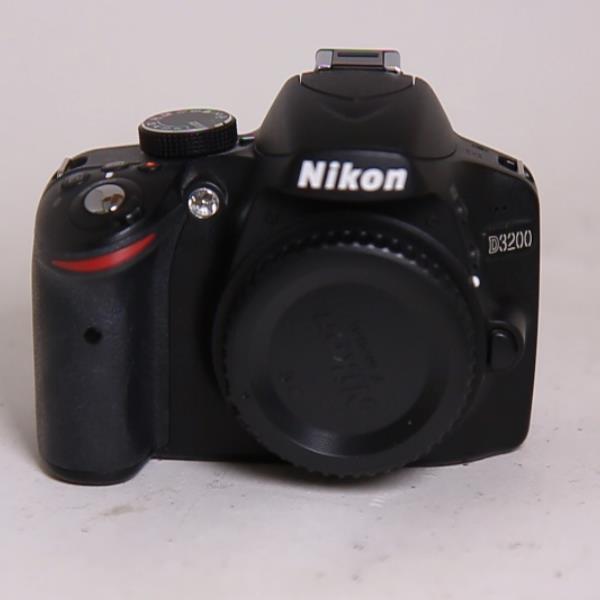
I'd probably consider a used DSLR plus superzoom as a cost-effective and more versatile alternative. Chosen carefully it won't be significantly larger or more expensive, but it will produce all but the craziest long zoom focal lengths (where bridge camera quality tends to fall of a cliff anyway).

Something like:

Or this outfit:

Nikon alternative:
and this
 
Thank you all, certainly some food for thought, I appreciate you all taking the time.
 
I've never really understood the logic behind bridge cameras.

I owned one for a short time before buying my first DSLR, looking back now, I can't see and benefits of it over buying a basic DSLR for a similar price.
 
I can't see and benefits of it over buying a basic DSLR for a similar price.
It depends what you want from a camera.

Something with a 60x zoom, where the widest setting corresponds to 21mm on a 35mm camera and can focus on very small objects, provides a great many options in a very compact package. The sales figures suggest that a lot of people see many benefits in such a device, over a basic dSLR.
 
The sales figures suggest that a lot of people see many benefits in such a device, over a basic dSLR.
Surely the sales figures (as per the thread title) show a rapidly dwindling market for them?
15 yrs ago they were very popular, and your local Curry’s would have as many bridge cameras on display as SLR’s, and compact sales generally were higher than DSLR sales.

As ubiquitous phone use has completely destroyed the compact market, it’s left a very small niche of people for whom the bridge camera is the next step from their phone.

From 2010 to 2024 the fixed lens digital camera marked fell by a massive 94% (CIPA stats). The recent small rise in sales is credited to the super little Fuji with a fixed 35mm equivalent lens, which you could describe as the opposite of a superzoom bridge camera.
 
I’m aware, but the market share of compact cameras is what I quoted.

Therefore pointing out that all camera sales are down just reinforces how very few people now buy compacts.
Again, true.

However, while they exist, bridge cameras still provide the biggest bang for their buck to some people. What's more, they belong to one of the few classes of camera that's actually bouncing back in sales, according to Amateur Photographer...

 
If one of my children wanted to get into photography, I’d certainly think about an older DSLR pro body from MPB - and a couple of lenses - something like a 5d3 and a nifty or 35mm is a great starting point and can be had for very cheap. Cameras like the older X100 series add another layer into the mix - for some styles they are absolutely all you need.

I do agree with the sentiment that whilst going back to a DSLR when you’ve used mirrorless feels like a real step backwards in terms much better AF and seeing the real exposure before you take the picture, I still love the colour and images from my older Canons and still use them where I need a couple of different focal lengths without the hassle of switching lenses.
 
It depends what you want from a camera.

Something with a 60x zoom, where the widest setting corresponds to 21mm on a 35mm camera and can focus on very small objects, provides a great many options in a very compact package. The sales figures suggest that a lot of people see many benefits in such a device, over a basic dSLR.

Hmm, regarding sales figures, how many people buying bridge cameras did it for the same reason as me, it seemed like the natural progression from a small compact before moving onto a DSLR rather sharpish?
 
Hmm, regarding sales figures, how many people buying bridge cameras did it for the same reason as me,
There is no way to know that.

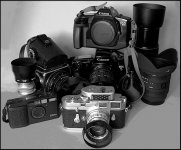
In my case, for sixty years I've used whatever type of camera I find appropriate to my needs at the time (given that I can afford it). Here's what I was using in 2000 or thereabouts...

Film Cameras.jpg
 
Again, true.

However, while they exist, bridge cameras still provide the biggest bang for their buck to some people. What's more, they belong to one of the few classes of camera that's actually bouncing back in sales, according to Amateur Photographer...

Already pointed out but how much of that boost is the Fujifilm
From the article:
Several factors appear to be driving this continued revival, including the international success of the Fujifilm X100VI, the Canon PowerShot V1 and the perennially popular Ricoh GR III, much of which has been driven by social media influencers.
 
Already pointed out but how much of that boost is the Fujifilm
Possibly.

Then again, several manufacturers with different types of products across several markets may be having varying levels of success in each market. We on the outside can't really know what's happening, beyond what other people tell us. Such claims will have various levels of accuracy, because different manufacturers will have varying degrees of openess about what is, let's face it, sensitive trade information.
 
Hmm, regarding sales figures, how many people buying bridge cameras did it for the same reason as me, it seemed like the natural progression from a small compact before moving onto a DSLR rather sharpish?

I bought a bridge camera in 2013 wanting something better than the Samsung S850 compact I'd been using. While having an incredible zoom range was great, I was completely unprepared for how soft the pictures would be - not pixel peeping, just normal screen size 1024*768. I couldn't get rid fast enough.

Worth saying that not *all* pictures were that bad, but anything using a bit of telephoto was.
 
Last edited:
Worth saying that not *all* pictures were that bad, but anything using a bit of telephoto was.
Bridge cameras have their faults, that's for sure.

However, the advantages outweigh the drawbacks, at least in enough cases to make one worthwhile to me. To other people, the opposite will be true.
 
I have a micro four thirds camera. That is very small but fully featured and, for me, is my camera that is a step up from my phone

That said, my phone can take RAW photos and is actually my 'main' camera as it is always with me

I use the micro four thirds for specific 'photography outings' and the smartphone for opportunistic photos (much more frequent)
 
Last edited:
Bridge cameras have one enormous advantage for less able users - being able to (optically) zoom by pressing a button instead of twisting a lens is massively easier for arthritic wrists.

trying to find a better wildlife / bird camera for the mother in law and there just isnt anything she can use.
 
I've been using a Leica / Panasonic bridge camera for a couple of years and before that a cheaper Panasonic for over a decade. For me it is pure convenience. A single lens, no need to carry additional ones and no need to maintain cleanliness while changing them. Macro to wide angle to 400mm zoom all in one. When taking photos of churches for the project that I'm helping with I can do the wide angle interior shots and zoom in on high detail without having to make two or three circuits using different lenses.

I realise that the image quality is not going to be up there with my S1, but ultimately it is more than adequate for what I want. Image libraries accept them. I don't shoot for billboard adverts so what more do I need? Yes, I prefer to use the S1, but that is for ease of handling, not for better image quality.

The only issue that I have with both cameras is they are prone to flare.

Three from the Leicasonic


53920743946_0db9833d93_b.jpg

54018879671_1a9fae1576_b.jpg

54019105263_8a3c173aca_b.jpg
 
Back
Top