Whats This

Barney

Suspended / Banned
Messages
3,043
Name
Wayne
Edit My Images
No
Good Morning,

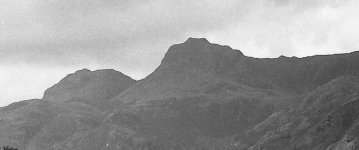
What causes this artifact on edges, this is a pronounced area. I would hazard a guess that this was about a mile away and SOOC.

Note there is a black line at the junction of mountain top and sky.

HP5+ @ 800

HC110 7 1/2 at 20.4 finish at 20.1
Lines-2.jpg
 
I'm not 100% certain on this, but I guess it's some sort of aberration caused by the camera processing the jpg? Similar to when you see shots of buildings that have a little glow around them after processing? I found that I was getting a few things like this in my shots and I've turned off all the in-camera sharpening and noise reduction; I feel like the jpgs it produces now are much more natural-looking.
 
I'm not 100% certain on this, but I guess it's some sort of aberration caused by the camera processing the jpg? Similar to when you see shots of buildings that have a little glow around them after processing? I found that I was getting a few things like this in my shots and I've turned off all the in-camera sharpening and noise reduction; I feel like the jpgs it produces now are much more natural-looking.

Hi Kerry

Its a film shot HP5+
 
Certainly looks like digital (over)sharpening to me, as there is also a white line on the sky side. Is it there on the negative?
 
You can get edge effects (where there is a lot of contrast, such as where the dark mountains and light sky meet in your picture) when developing using some developers and certain development techniques. Someone more experienced in such matters (calling @StephenM :) ) will probably be able to provide a better explanation (if, indeed, it's the cause).
 
Hi Kerry

Its a film shot HP5+
But you somehow had to scan it to show it here.

It could be edge effect from that process
 
Certainly looks like digital (over)sharpening to me, as there is also a white line on the sky side. Is it there on the negative?
I have just checked my "export file" parameters and indeed there is sharpening applied, unbeknown to me.

I will check the negative. (why didn't I think of that?)
 
Look up 'Edge Effect'.


Edit: Cross posted with Nige.

I just did, to see what was covered and if I needed to respond (other than with a "like"). It seems to be a very general term (my search engine had so many other uses that I stopped scanning down) so I tried "Mackie lines" with better success. Just in case anyone wants to look it up.
 
The artifact is present in the scanned image before exporting.

It is also present on the negative, the scan has picked it up rather nicely.

Perplexingly it is black on the negative
 
Last edited:
I just did, to see what was covered and if I needed to respond (other than with a "like"). It seems to be a very general term (my search engine had so many other uses that I stopped scanning down) so I tried "Mackie lines" with better success. Just in case anyone wants to look it up.

Acutance is another good keyword.
 
Acutance is another good keyword.
I had it in my head that Acutance was highlights for some reason, must read up a bit more.

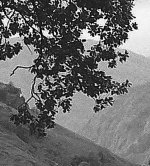
On the nearest tree the highlights are white,

Lines-3.jpg

Thats wierd that near distance they are whit and far distance black yet middle ground imperceptible from the grain.
 
I had it in my head that Acutance was highlights for some reason, must read up a bit more.

On the nearest tree the highlights are white,

View attachment 463197

Thats wierd that near distance they are whit and far distance black yet middle ground imperceptible from the grain.
There are white highlights on the distant hilltops too, they're just difficult to see against the bright sky. The black highlights are similarly difficult to see against the dark leaves, although they are still there.

The middle distance is largely unaffected because the contrast is much less in those areas (it's mostly grey on grey).
 
Last edited:
I had it in my head that Acutance was highlights for some reason, must read up a bit more.

Perhaps start with p77 and p214 in the link I gave. And honestly, I think you'd benefit from reading The Film Developing Cookbook which is very easy reading (and profitable).

Edit to add

I can't remember the name offhand, but there's a 4 volume set on black and white photography on the Internet Archive that is detailed. Plus many other standard works, usually easy to find if you look hard enough.

Someone should perhaps write a comprehensive tutorial/resource for the site, but I'll pass on doing it. After all, all the information is easily available if you search for it. And, dare I say, some is probably too arcane for most people if you only want a cookbook rather than an understanding of what's going on (only useful if you step outside the average and try something new).
 
Last edited:
Hello Stephen,

Thanks for that update, I had started reading it but your direction to the relevant pages has sped up my getting there. Unfortunately, or fortunately depending on perspective, I am of the latter temperament. I would rather understand and never use it than use it without understanding. I had a ride out to a bookshop I am familiar with at the weekend looking for old photography manuals but sadly non were evident. The archive is good for the knowledge, but leaves a lot to be desired regards the sensory pleasure. I truly believe that the combination of visual and tactile functions of a physical book increases understanding and retention of information.

Nigel - Thank you for your time trying to help and to everyone for trying to point me in the right directions,

I have learned about my export settings, how to check the negative, and the cause.

Thank you for my daily advancement in photographic knowledge.
 
If you have titles, search on the Internet. People like Abe books are useful, as are quite a lot of other places. Ebay lists sellers - search their shops.

And good titles can be expensive; my two volumes of Grant Haist's Modern Photographic Processing cost £90 each - the same price as the new Applied Photograpic Optics (Sidney Ray).

My latest buys came from a general secondhand shop (1st edition of Langford's basic book, and a manual of photography (formerly Ilford)).
 
Last edited:
I will just make a small addition to your reading list :). On developing and associated topics, Grant Haist's books are foundational. He also wrote Monobath Manual if you wish to investigate that topic. He was a chemist at Kodak; his Ilford counterpart was L.F.A. Mason, whose book is only one volume


I have them all in printed versions...

Don't ignore older dictionaries of photography (check Iliffe press's book of that title). They usually have very useful, if only brief, coverage of important topics.

You probably need to find a really useful bibliography online somewhere, although I don't know of one.
 
MY head is already in a whirl,

High speed, slow speed, high definition - knowing which chemicals do what, why and how is a revelation.

I will not be buying any further developing chems, I will be making my own. :)
 
I will not be buying any further developing chems, I will be making my own. :)

Then go the complete pig and get The Darkroom Cookbook to go with the new scales and make everything. All your own work, and all that...

All the formulae you need can be found on line - but, as with books, check carefully for errata.
 
Last edited:
Just to add; you can always tweak bought chemicals with your own additions. My cappuccino cake recipe is a Mary Berry one (which is the standard sponge cake one anyway) with a Delia Smith tweak. See Carson Graves' book on printing (not for cake recipes, I hasten to add).

And there's a whole new world to explore of reducers and intensifiers to improve negatives...
 
As you've clearly decided to at least try making your own chemicals from scratch, I'll just call your attention to a couple of points. First, with powders, sequence of dissolving matters; some components won't dissolve if others are already present. And secondly, watch the temperature of the water you're using - which ideally would be purified water.
 
As you've clearly decided to at least try making your own chemicals from scratch, I'll just call your attention to a couple of points. First, with powders, sequence of dissolving matters; some components won't dissolve if others are already present. And secondly, watch the temperature of the water you're using - which ideally would be purified water.
When I first started to attempt processing my own BNW photos my developer research led me to a product by the name of Diafine which was unavailable at the time, I like the idea of a compensating developer where the iso can be adjusted up or down mid roll and the developer will take care of it, it is still largely unavailable except through American market. The price of the developer is double or triple the price of anything else and its everlasting (that explains the price). In my head I did a few rough calculations and I can make it for less, so I will.

Thanks for the advice on the mixing and temperature, I use to brew a fair bit of beer so, recipes, water profiles, process and temperature control; doesn't intimidate me and fortunately there are hundreds of years of experience out there with detailed instructions.
 
Back
Top