what will become when we die

Simon photo

Suspended / Banned
Messages
1,220
Edit My Images
No
Ok, maybe a little morbid but its something i have been thinkin about recently. Im not dying, not planning on it any time soon and this is something trivial when compared to the grand scheme of things when we do pop our clogs but we all have growing collections of files, negatives, prints and content, some on our hard drives some in files, some on the web and so on.
Now i had my wife in tears this morning when i brought it up, feel bad now but were ok lol but i casually asked what she would do with my images. We Didn't reach a conclusion but its clear they wouldn't be destroyed.
Now im not anything special as regards to photography, im developing all the time though (no pun intended lol) but as an amateur i think im not bad and most of my work is for personal gratification.
The story of vivian maier comes to mind, she only shot for herself but on discovery of her images she became revered by the street photography community even though that wasn't her plan.
Or the designer Carlo mollino who created thousands of images in secret, mostly of prostitutes in an apartment designed in an Egyptian temple fashion which were destined to be buried with him as a kind of book of the dead.
I just wonder how much genius goes to the grave unnoticed and appreciated. And perhaps some sort of image archive could exist So us lesser known photographers work could live on, say two images chosen by the photographer and an epitaph.
 
I hope my grandchildren will keep them. As I have kept the photographs taken by my family since before the 1st world war. The ones in commercial stock photo sites will stay there. To be passed on as part of my estate
 
That's a good point, families have been around far longer than photography but i think photography plays a very important role in family life these days but unfortunately the emphasis has moved onto throw away media such as Facebook and the such as opposed to hard copies and some even happy to have their wedding albums on disc instead of an album
But what worth do our family's put on the work we as photographers love but but sometimes never show to others.
 
Donatable to museums as recorded documents of times gone-by? something i've thought of doing myself. Getting your pictures onto print is a way of them surviving outside a USB/Flash drive although there's no guarantee even the prints will survive the test of time. But look in most pubs and there's images of the locality which still survived even after a hundred years thanks to those with collective knowledge.
 
Not morbid but sensible. Many people have vast collections of music on iTunes, photographs on digital media and e-bank accounts. Technology has grown quicker than the law but at last solicitors are nor gearing up to this. If you speak with one of your local solicitors or contact the Law Society they can tell you what they can do for you. I think it's worth it for the piece of mind.
 
This is something I was thinking about, not on a personal level but in general terms, yesterday as I went through some 30 year old negatives to scan some. They're there, physically. Someone might find them when I pop my clogs and have a nosey. CDs/USB sticks/hard drives etc. won't be inspected, they'll go straight into a skip.

Making prints, as suggested, or photo books, is probably the easiest way to give your photos some chance of surviving your demise without making special provision.
 
The hard drives get shredded and the negatives skipped.. I won't be around to be bothered one way or the other. A handful might hang around in family albums, certainly not a signficant percentage of the total.

I don't know what Flickr, Facebook and the like have planned for the time when they have a significant population of deceased members/subscribers.

Given the number of boxes of slides and prints I see in junk shops, and the general maxim that you're just not that important.. odds are that you're shooting images for yourself and yourself only. Does that change what you choose to shoot?
 
You never know, taking a picture in the future may well be as easy as looking at the subject and blinking to take the shot. The new google glasses at least opens up a path for this kind of technology.
The old DSLRs, even camera phones could become obsolete even as soon as the next 10 years. The market will be similar to what you see in auction houses across the world buying/selling images that are considered vintage in the same way furniture, paintings, household items from the bygone age can sell for hundreds/thousands in their own right.
 
I was thinking about this a while ago too. I might start printing off the very best of my work onto Silver Halide so it lasts well after I snuff it so my great grandchildren can laugh at my efforts! I don't trust digital backup at all now, and would rather have something I can hold and look at for a backup plan! I will also keep my images on various disks and usb pens too.
 
The digital ones on my HDDs will just one day vanish as if they'd never been there. The ones I have printed and framed will maybe survive somewhere but my will doesn't stipulate anything. The photo album which I have from my Gt Uncle in World War 1 will however go to the Fleet Air Arm museum whilst the digitised ones from it on my website will no doubt vanish when nobody pays the bill for the web space!
 
Does anyone know what happens to your flickr or facebook accounts when your gone? Is it up to your family to inform them and have them deleted or will they just remain open for as long as the site runs? :thinking:
 
Does anyone know what happens to your flickr or facebook accounts when your gone? Is it up to your family to inform them and have them deleted or will they just remain open for as long as the site runs? :thinking:

It'll just remain there. If you have a pro account, it'll just show the last 200 photos after it expires.
 
It'll just remain there. If you have a pro account, it'll just show the last 200 photos after it expires.

Well at least a few of my pictures will remain in public once I'm gone then. Better make sure the last 200 are decent. :D
 
This is something I was thinking about, not on a personal level but in general terms, yesterday as I went through some 30 year old negatives to scan some. They're there, physically. Someone might find them when I pop my clogs and have a nosey. CDs/USB sticks/hard drives etc. won't be inspected, they'll go straight into a skip.

Making prints, as suggested, or photo books, is probably the easiest way to give your photos some chance of surviving your demise without making special provision.

Glad I'm not the only one that thinks like this. I'm only 31 and am already wondering about this stuff. My grandfather left behind a vast quantity of slides and prints that my father has catalogued. It's fascinating stuff as not only are there a lot of family members but it's also a great insight into my grandfather's life and the times in general. I hate to think that when I go, all there will be to show for it is a few old hard disks that seized up years ago. I'm going to start printing more images even if just 6 x 4 size just to keep a record. I'm not chucking out my old cd's for the same reason.

It may sound self involved but I want to leave some sort of record of what my life was about for my children and grand children and whoever else to discover.
 
Its an interesting subject and one that has caused at lot of questioning recently... If there isn't a digital heaven, where do all the calculators go?
 
The loss of a loved one is always traumatic and preservation of images is the last thing on their mind at that time. However as with all personal effects they all have significance, some intensley personal and of no interest to the genral public, at least at that moment in time, and then the other images, perhaps the front of the house before the new windows or driveway or street, later this will attain historical interest locally. So what may appear insignificant now or even on ones death, it is important that they are not lost as a historical record. How you get your reatives to appreciate this fact and how they deal with them is a whole area to be discussed and arranged.
 
This thread is pretty thought provoking. Hopefully someone will like them & want to keep them. Particularly my negatives. I hope to never be around for the day film dies out entirely but should it happen I'd love for my negatives & workbooks & notes to survive! I have tattered workbooks I'll keep forever & one day I'll have children to show them to. I want them to know what my passions have been & I hope I can inspire them to be as passionate with their own interests.
 
Last edited:
I've been thinking about making a video recollecting my childhood and memories of my grandparents and parents that hopefully will be of interest to my grandchildren when they get older. History is after all about previous lives and nowadays we have the means to record ordinary people's lives and make it personal, not just the nobility who were recorded in the past.
 
Hadn't really thought about this but it has made me think. I have photographs from my wife's great grandmother(s) and her father.
Which I suppose will end up in my daughters loft, but photographs on a computer I wonder what will happen to them.
Most don't really record much, but still some are part of our family history. Most if I am 100% honest if I lost tomorrow I would feel that sorry about losing. As most photographs I take now are for my own amusement.
 
I don't know what Flickr, Facebook and the like have planned for the time when they have a significant population of deceased members/subscribers.

Well Flickr were more than happy to give a recently deceased friend of mine an unspecified number of years of pro on her account for free. On the other hand they were not willing at all to pass the account access over to her family, perhaps understandably, perhaps not.

However the question that you raise in terms of the bigger picture is an interesting one.
 
I think the stark reality of it is that our negatives, digital files, slides etc only hold a real value to ourselves, and won't make a difference to history whether they are preserved or destroyed after we shuffle off. But photography is something a lot of us pour our hearts into and its kind of sad on a personal level to think some peoples work will expire when they do.
 
Other than family photos which may have geneology value in the future, I doubt if many of us have anything thats truly historically interesting 100 years from now.

I know for sure I don't - unless someone in the future wants to document how we p****ed away the last of the oil going round and round in circles at Brands Hatch :D
 
I guess it depends what you photograph if your pictures will have any interest to people in the future. They might not be interesting as photographs, but as historical records. In many ways it's casual snapshots that become interesting as social history - they show how people dressed, what they got up to, and what the world around them looked like.
 
I don't think you can discount seemingly casual photos as irrelevant, they will become important to later generations, if for sake of argument photos of an Agincourt archer were discovered showing him and his mates larking about, and his home life I bet people would be interested.
 
But an Agincourt archer is a significant person from history.

The way history dilutes over time, we actually care about less and less of the total sum of what has happened as time goes on - you have to, history is not about everyone, what remains in the major historical record are the outstanding events of the time.

At the same time as your Agincourt archer was sending damned frenchmen to their agonising deaths in a sea of mud, the rest of merree England was doing what? "Who cares" is what history says about that.

So by the same token, the percentage chances of your having anything of particular historical interest in your photos is pretty much b****r all in the grand scheme of things. You'll probably be lucky to have the historical record even remember the places you take your photos, let alone what they are of.

Go on then, I challenge the readers of this thread. In your photo collection, show us something that will be of historical significance in 100 years time - and to be significant it has to represent something unique photograph wise - not just one of a billion photos of some subject that everyone else takes photos of....
 
I know I would very much like to have some shots of the local shops of where I grew up as a kid, and the road to my first school which was then just a track.
 
I take a lot of record shots of my hometown, and of old cinemas around the country, so it would be nice to think that those photo's would remain for someone's benefit.

Family shots? Who knows. I've got my Grandparent's old photo's, but whether my Grandchildren are equally interested in the decades I've got documented is anyones guess.
 
desantnik said:
Go on then, I challenge the readers of this thread. In your photo collection, show us something that will be of historical significance in 100 years time - and to be significant it has to represent something unique photograph wise - not just one of a billion photos of some subject that everyone else takes photos of....

tumblr_m033gn3co71qzty65o1_500.png


Any good? :p :D

In all seriousness, one of the reasons that we don't know what was happening in England (apart from Falstaff snuffing it), is that there is a complete lack of data. Social history is every bit as important as grand events. Our time (say 1930 onwards) is likely to be one of the best recorded periods and that will continue to improve with technology. The true skill will become the ability to filter that information.
 
Wasn't there some BBC project to upload photos into a perpetual archive? I have some vague memory of it. I think they had some idea of taking all photos without copyright holder alive and snaffling those for future generations.
 
desantnik said:
The way history dilutes over time, we actually care about less and less of the total sum of what has happened as time goes on - you have to, history is not about everyone, what remains in the major historical record are the outstanding events of the time.

History had no way of documenting everyday lives 'til much more recently & as someone who finds reading & learning about History fascinating, I'd love to know more about the everyday lives of the Tudors {for example}. Perhaps thats just me.

Photography is a tool that can be used to record History & maybe not every photograph has value but I don't doubt that one day someone will take a look & be interested in our not quite as outstanding events. Everyday lives change dramatically for everyone & photographs document those moments in time.
 
Last edited:
The only stuff that I imagine will last is some of my industrial photographs that were requested by a museum for their collection. The rest will probably end up as landfill, save for the photobooks we make every year, which I hope my daughter will want to keep. But who knows, will we all soon have family archives in 'the cloud', whatever that is? With faster broadband speeds, we may not need to rely on local, fallible, hard drives.
 
At the same time as your Agincourt archer was sending damned frenchmen to their agonising deaths in a sea of mud, the rest of merree England was doing what? "Who cares" is what history says about that.

That's the talk of the sort of philistine who would close all the museums down to save a few bob... :D

The truth of the matter is that there are people who DO care about what the proletariat were doing centuries, even decades ago. History is no longer solely about those who 'make history', it's about the 'little people' who's combined actions make it possible for the history makers to do what they do. Look at the popularity of TV programmes like Time Team, and that was as much about the scum as the toffs.

One thing photographs do is record what are seemingly uninteresting details, coincidental to the main subject.

It's probably impossible for anyone to post an example of a contemporary photo that will be a valuable document in years to come, because there's no way of knowing what will be significant in the future.

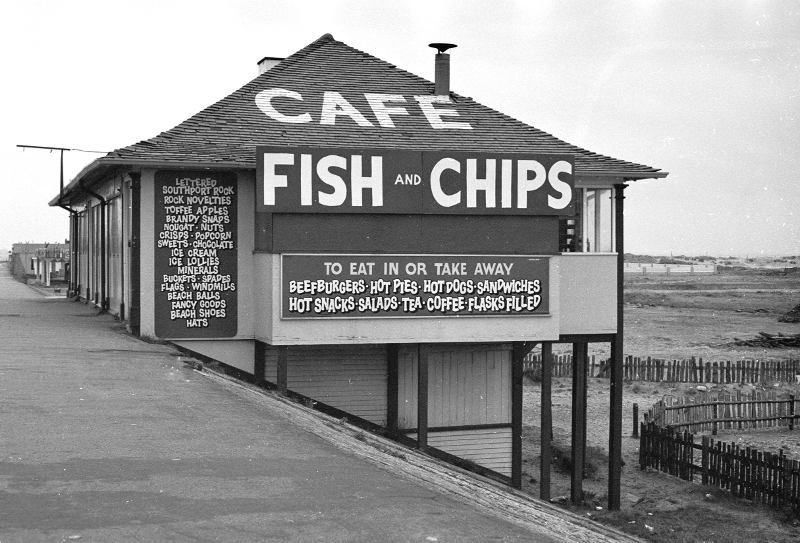
This shot was taken 30 years ago. The structure is no longer there and the land behind has been developed. It may not be a hugely significant historical document, but it is one nonetheless as it is a photograph that cannot be replicated today.

Untitled-44.jpg
 
Last edited:
The irony is that I am actually a historian of sorts. Its with that background that I can tell you about the distillation process that purges the detail.

I don't see much evidence that the nature of history will change....
 
History had no way of documenting everyday lives 'til much more recently & as someone who finds reading & learning about History fascinating, I'd love to know more about the everyday lives of the Tudors {for example}. Perhaps thats just me.

Photography is a tool that can be used to record History & maybe not every photograph has value but I don't doubt that one day someone will take a look & be interested in our not quite as outstanding events. Everyday lives change dramatically for everyone & photographs document those moments in time.

That's not quite correct. All history is based on written records and sources - anything further back is prehistory - but I suppose that's a bit of an academic distinction. We do know quite a lot about the everyday lives of the Tudors and others but it's derived from the surviving records, which are probably just a fraction of what was originally written, and we have no way of knowing what has been lost. Archeology plays a big part in this too, and the two disciplines are collaborative.

Photography provides another, and invaluable, source of material but I suspect it will have the same vulnerabilities. There are technology issues with long term storage of digital material - will it still be readable in a few hundred years - and most print records will probably be lost, or discarded, long before that too.
 
IamAshlyRose said:
I'd love to know more about the everyday lives of the Tudors {for example}.

If you are seriously interested, then read the Shardlake series by C.J.Sansom. It's a fascinating insight into life at the time of Henry VIII. He applies the same attention to historical detail of the Tudor period as Bernard Cornwell did to the Peninsula Campaign.
 
If you are seriously interested, then read the Shardlake series by C.J.Sansom. It's a fascinating insight into life at the time of Henry VIII. He applies the same attention to historical detail of the Tudor period as Bernard Cornwell did to the Peninsula Campaign.

I agree. Sansom has done the research, and Cornwell is known for it. The Peninsular campaign was comparatively recent, and the contemporary societies are well documented. The middle and upper classes were literate, and a wealth of records, books, newspapers, periodicals, personal letters, diaries and accounts have survived, and they are written in a fairly modern form of English. The Tudor period isn't so well covered because printing was a fairly recent innovation in England, literacy was more limited, the language presents more challenges and a lot has probably been lost.

The earlier ages become more difficult to research, because most people were illiterate, less documentation has survived, and language difficulties restrict access to researchers unless they can cope with handwritten script in medieval Latin and the Saxon, Danish/Norse, Old English, Middle English and Norman French variants.

The other problem - and it's a big one - is that we don't know, and will never be able to know, what earlier societies were really like and how people actually felt and thought within the context of their periods.
 
Depends who's left behind I suppose. I think the wife would go through all my pics on the hard drives and just delete the ones that aren't of interest to her (glamour) and the ones she doesn't like (macro insects) and keep the rest on the drive to look through. I think a lot of the old photos on discs taken before I met my wife would just be thrown away or given to the subjects of the photos at my funeral.
 
Last edited:
@MartynK Of course it's based on written records & sources otherwise enthusiasts like myself would have nothing to read about. I kno we kno a lot about the everyday lives of The Tudors but I often wonder if there are things that we don't actually kno, what else is there to discover?

I just wanted to describe the impact I think photography can make in History, altho I'm never particularly good at just saying whats in my head.

I think photography has made a dramatic impact in the recording of History & I hope that in the hundreds of years to come, photographs from the here & now can be viewed as frame in a different time. Who knows what'll happen but I can hope. There we go :}
 
Last edited:
Back
Top