What sort of flash?

WillyB

Suspended / Banned
Messages
353
Name
William
Edit My Images
No
I was looking at true macro lenses for my D5000 but soon realised they are a bit expensive for someone who hasn't tried macro photography yet. I may not get on with it.

Having read a lot of posts on here and being impressed with the pictures taken with the Raynox 250, I have ordered one to try.

What I am not sure of is whether I need, and if I do, what sort of flash to use. At the moment all I have is the on camera flash.

Can anyone point me at the best flash I need for the above, without taking out a second mortgage, that is!

I see a lot of SB600 and 900s for sale but they are expensive for the amount I would use a flash for.

Would any of the lesser Nikon flashes work on my D5000?

Sorry for the long winded post.:help:
 
Just an addition to the above, I have the 18-55mm VR and the 70-300mm VR. I assume I could use the Raynox on either?
 
Just an addition to the above, I have the 18-55mm VR and the 70-300mm VR. I assume I could use the Raynox on either?

Yes, but I imagine the 70-300 would be the one to use. You will get more magnification with that, and you are I think more likely to get some vignetting with the 18-55mm (quite possibly "looking through a porthole" type really heavy vignetting at the short end, not just a bit of light fall-off.)

As to on-board versus external flash - it is potentially long story. I use a bridge camera so some of the following may be different for you, but ...

My macro results improved significantly when I started using flash, even on sunny days.

I found it essential to diffuse the flash in order to get good results. A lot of people use DIY diffusers, and there is plenty of info on line as to the many approaches people have used to build their diffusers. Effective diffusers can be extremely inexpensive.

It seems to be quite difficult to use and diffuse on-board flash effectively for macro work (the lens tends to block out the light for example, and on-board flashes are not terribly powerful). I never had any luck with on-board flash, but some people get it to work fine for them.

I use a flash in the camera's hot shoe. Sometimes I use a home-made diffuser, sometimes I reflect the flash off of a white card (A4-ish in size, maybe slightly larger) on a bendy thing (18" or so in length) with clamps on both ends, one of which holds the card and the other fits to the tripod. (Tripod use btw, or using some other form of support, is a whole other issue btw, and a rather important one for some people - me included - but others work entirely hand-held.)

I'm afraid I don't know enough to advise about flash units suitable for your equipment.

You can get specialised macro flashes, but these are very expensive, and I would only think about that if you get really serious about macro work, or can spend some hundreds of pounds without having to think about it. A number of the best macro photographers use a single, general-purpose flash unit with home-made diffusers, so I really would not rush to get specialised flash equipment.

There are some wrinkles to using the 250. Please don't panic if you find it difficult to get much out of it when you first try. Just ask here and I'm sure you'll get help if you need it.
 
Last edited:
Ideally for macro you should use a ring flash. Sigma do quite a good one.
 
Ideally ... you should ...

It does not seem to be quite that straightforward to me. For example, given the equipment they use, I am sure Lordv and Dalantech could use ring flash if they wanted to, and both have experimented extensively with flash options for macro work for some years, but neither of them use ring flash.
 
please yourself - I use it and get good results. I really don't know why I bother to offer advice on here!

AW2_2648.jpg


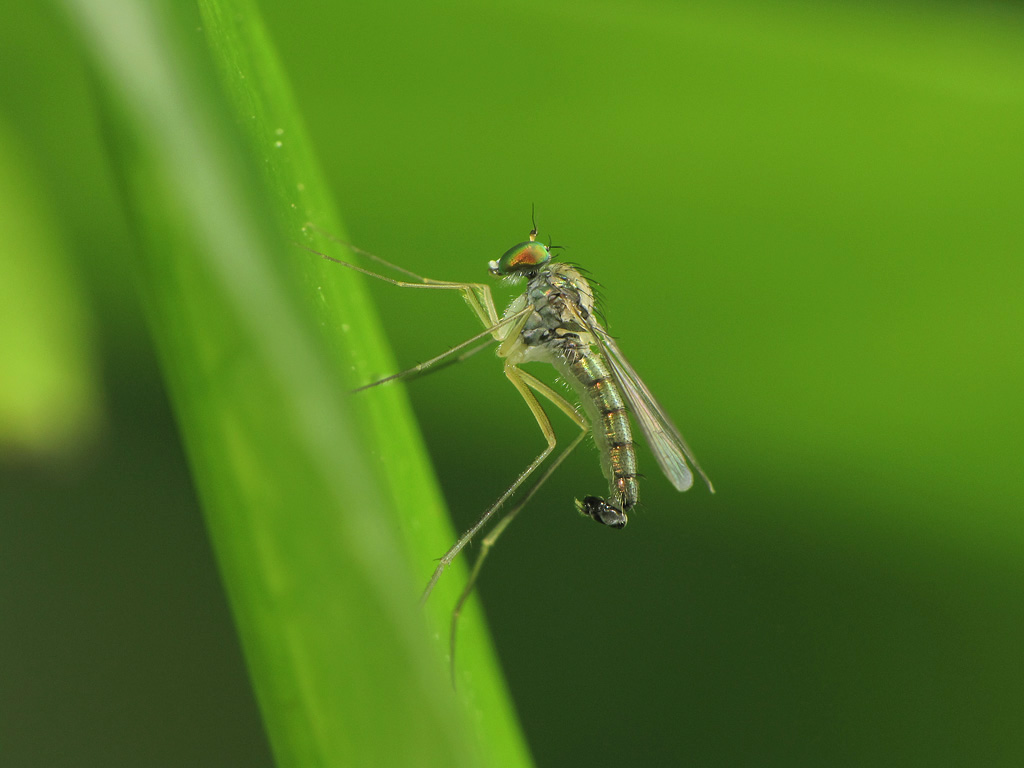
Lit with ring flash - not the only way to do it - but it works very well!

Let's see some of your macro shots GardenersHelper.
 
Last edited:
Lit with ring flash - not the only way to do it -

:thumbs:

but it works very well!

Indeed so. Nice execution (they move fast). Super image.

Let's see some of your macro shots GardenersHelper.

There are over 7,000 images on my Flickr photostream. A large proportion of them are close-ups and/or macros (depending on how you like to define these things).

Here are some that I have posted here (several of these threads have multiple additional images after the first post):

Your shots with the Raynox DCR250
Three sunlit flowers
Seven June insects
Several flies
Nigella, Geranium and Allium
Bee fly
Three July flies
Hawkbeard (maybe), Primrose and Honesty
 
some beautiful work there - thanks

Thanks.

I've been looking at the Sigma ring flash. I see the tubes can be set at different strengths. That's good. Can you do that in a TTL context? (e.g. have it work out the exposure for an overall 1/3 stop underexposure, with one tube, say, one stop lower than the other?)

Do you diffuse the light in any way? (I'm wondering what happens with subjects with reflective bodies.)

William - hopefully exploring this is still on-topic from your point of view.
 
Last edited:
Thanks Nick for your detailed advice. I'm more than happy to read the rest of the comments on here. I think I have got a long way to go but I am looking forward to trying out the Raynox.

By the way, if I can get the shots half as good as yours, I will be a happy man. Thanks again.
William
 
Just another question. Can a ring flash be used with a Raynox?
 
Thanks Nick for your detailed advice. I'm more than happy to read the rest of the comments on here. I think I have got a long way to go but I am looking forward to trying out the Raynox.

By the way, if I can get the shots half as good as yours, I will be a happy man. Thanks again.
William

Thanks.

Just another question. Can a ring flash be used with a Raynox?

I don't know, but I suspect not. It may depend on which flash.

The 250 comes with a spring-loaded adaptor, but that has stumpy "wings" sticking out. By the look of the pictures of ring flashes that I have looked at (and maybe Andrew can help here) it looks as though you could not fit the Raynox adaptor inside the ring of the ring flash.

An alternative method of attaching a 250 (which is the method I use), is to use step down rings. However, I don't know how the ring flashes attach to the camera, but it looks like they might screw into the lens' filter thread. Unless the ring flash has a filter thread on the outside (again, Andrew may be able to help with this) you wouldn't be able to use step down rings.

I also don't know how the twin mini-flash systems attach to the camera, so I don't know if you could use a Raynox with them either. (The Canon and Nikon twin-flash systems are £600-ish btw.)

Do you have an external flash? If so, you could make a diffuser for it and start with that. If you don't have an external flash, you could try making a diffuser for the on-board flash. Also, you don't actually have to use flash - I didn't for the first year or more when I was using a 250 because I couldn't use an external flash (the S3is I was using then had no hot shoe, and I was not up to trying to use a non-connected slave flash) and I could not get the internal flash to play nicely for macros (although some other people could).
 
I don't have an external flash at the moment, only the on-board one.

Thanks again, if Andrew does read this maybe he could answer the ring flash question.
 
William, you might (or might not!) find it helpful to have a look at these pictures of my diffuser and reflector setup. Please note that in the pictures where you can see the camera, the Raynox is not on the camera. I only have the one camera so I had to take the pictures in a mirror, and I couldn't use the Raynox for that.

Also, you might wonder why I have two diffusers with slightly different shapes. That is because I have three close-up add-on lenses - the Raynox 250, the Raynox 150 (less powerful, and my favourite for insects), and the Canon 500D (a lens, not the camera!) which is less powerful again, and my favourite for flowers.

With all these add-on lenses you need to get the close-up lens a suitable distance from the subject. On my camera this is about 4 inches for the 250, about 6 inches for the 150, and about 14 inches for the 500D. I use the diffuser with the sharper angle for the 150 and 250, and the shallower-angled one to throw the light further out for the 500D. That said, I am increasingly using the reflector for flower pictures using the 500D, and for some insect pictures too.

The reflector is surprisingly flexible and has for example let me get light onto subjects that I could not reach with the diffuser because of foliage that got in the way. I think this is one example where I could not have got the shot without the reflector because there was foliage in the way of the diffuser.


0321 3.07 2010_06_08 IMG_3091 PS1b Df4x30LebCoSaCuLem1024wSS70x0.3 Ex by gardenersassistant, on Flickr
 
Appreciate those pictures Nick. Looks like I will have to brush up on my DIY skills as well! Necessity is the Mother of Invention they say.
It obviously works judging by your shots.
 
Back
Top