What is the big fuss about Leica

The internet has created a lot of hype. It’s really become something of a status symbol just like any major brand. In this day and age of disposable items, it does have an attraction of some sorts as not many items are built to last. Would I ever own one, perhaps some day when I have a spare bob or two. On a side note I believe they are one of the last manufacturers of film cameras.
 
Last edited:
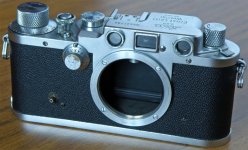
Well they created the 35mm still camera format. That alone is quite a legacy.
That is not correct.

The Leica was preceded by various cameras which used the 35mm "cine film" for stills photography. Although some patents preceeded it, the American "Tourist Multiple" was released in 1913 - just in time for the first world war. It produced up to 720 images in what is now referred to as "half frame" (18 x 24mm) format. One year later, and also from America, the Simplex was released - a multi format camera that could produce both 18 x 24mm and 24 x 36mm images on a single roll. The first patent application from Oscar Barnack for his 24 x 36mm camera came late in 1914 but the first production camera from Ernst Leitz did not come on the market until 1925 - by which time there were more than a dozen 35mm cameras in production.

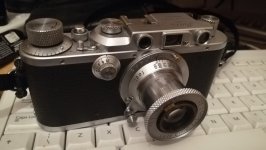
This is a Leica IIIc, possibly the most produced model with 131,000 units sold...

Leica IIIc Front.jpg

The build quality is better.
On that, I can only refer you to the London camera repair man, who many years ago told me that he was a great fan of Leica. When, being young and innocent, I asked him why, he replied with a wink: "they go out of adjustment so often that I can generally rely on having three or four on the shelves, waiting to put dinner on my table"!
 
Last edited:
I bought a Leica 3a because of all the previously mentioned reasons, build quality, a piece of history, etc.
Plus I'd always hankered after one. They just look right, and are no bigger than they need to be to get the job done.
The screw thread Leicas are very affordable as well. Mine cost £300 with an Elmar lens. My digital coolpix A cost more and died after 7 years, but this 84 year old Leica
is still working properly.
Have to admit I feel a bit of a posey t*** when I'm walking around with it hanging from my neck though!3a.jpg
 
Last edited:
Have to admit I feel a bit of a posey t*** when I'm walking around with it hanging from my neck though!
My favourite 35mm camera for photographing life as it happens was the Rollei 35B - the cheap one with a reliable Selenium cell meter.

It's tiny, very simple to use, has a good viewfinder and a sharp, 40mm lens. I've often wondered why medium format specialists Rollei produced this rather than Leitz / Leica...

Rollei 35B 1991 44-20.jpg
 
I would bet that 99.999% of people who see it don't know what it is, and the normal reaction would more likely be "Why don't his great grandchildren buy him a proper camera" :)
It's just me being self concious. Let's just say I'm not the type to be doing any Bruce Gilden style shots:eek:
 
I did have an M3 and 50mm and it was just lovely to use. It felt great, the wind on lever was buttery smooth and subconsciously urged you to take more shots just to feel the wind on! The whole rangefinder thing was awesome. Downsides were that it weighed a tonne and the film reload was a pain in the harris. Only got rid of it as I moved away from 35mm but it really was something lovely.
 
I have a iiia and iiic, both working ok-ish (the g is fine, the c tends to grab the film and not let go when rewinding). They feel good to hold, but winding on and back is horrible, setting shutter speeds a bit hit or miss as the engraving is worn after all these years, and I really struggle with rangefinder focussing with the tiny viewfinder. I also have a Nikka japanese copy from the 1930s which doesn't operate well at all. I can see why they are loved, but they are to my mind more attractive to look at and handle than to actually use. If I liked using them more, I'd pay for servicing to bring all 3 back up to scratch. I still might, but not convinced it's worth it.
 
But might a proper service turn them from working ok-ish to working properly, transforming the experience of using them? Obviously, it won't make focussing any easier but should improve them.
 
I also have a Nikka japanese copy from the 1930s which doesn't operate well at all.
Please don't mention Nicca to me.

In the mid 'nineties I turned down the opportunity to buy a Yashica / Nicca YF with the 50mm f1.8, from a Devon camera shop, for £30!

How stupid was I? :headbang:
 
TBH I'd quite like a Leica. Not really a new one but an old mechanical one. What puts me off is that my film days are well and truly over and even if they were's RF's are often not great (oh! heresy there!) and they go out of alignment. I think some things like old mechanical cameras and vintage cars are nice to look at and dream about but maybe better if owned by someone else :D
 
@Nod I may get those Leica's and the Nicca sorted out, but the one I definitely will do is the Contax iiia which is far far nicer to use and a real thing of beauty; it just has knackered vertical alignment in the rangefinder.
 
  • Like
Reactions: Nod
I sold my Leica IIIA because I found the viewfinder a bit small and I had to set the controls with my reading spex on which meant that I had to take the spex off to frame the shots. The camera was something I always wanted to own but operationally it just wasn't a fit.

I've always wondered about the post war Contaxes. How does the viewfinder compare to the Leica, I imagine it's easier to use because of the combined viewfinder and rangefinder.
 
I did find the Contax easier (despite the vertical misalignment). I totally understand your experience with the early Leica, it was similar for me
 
Leica is a little like Rolex in that no one really notices what watch you’re wearing unless they’re a watch enthusiast, and no one will know you have a Leica unless they’re a camera enthusiast.

(spend £400+ on shoes if you want to get noticed by strangers)

It’s a little bit too catch all to ask about Leica, I mean which Leica range?

Leica are basically synonymous with rangefinder cameras, if you’re a film shooter and you want a secondhand rangefinder there’s options. If you want a new one then there’s only one show in town.

If you want a digital full frame rangefinder, either new or secondhand, then there’s only one show in town.

So for me at least, Leica is THE rangefinder solution.

Of course re rangefinding in general it’s not for everyone, it’s a bit of an antiquated cult thing.. but if the rangefinder bug bites then the options to scratch it pretty much (give or take legacy film options) start and end with Leica.

The other thing I’ll mention about Leica.. with their partnerships with Panasonic, and various phone OEMs they’re the only manufacturer to offer a product in every sensor size from mobile through to medium format (possibly they’ve discontinued their APSC lines now though)

Which shows a commitment to photography products unmatched by pretty much anyone else.

The other thing with Leica rangefinders is that I don’t really consider it a luxury product (luxury pricing fk yeah)

A luxury item is basically something the same as the non-luxury one. You already know how to wear a Rolex or carry a Gucci bag or put on an Armani suit. Because it’s exactly the same as a Timex, a tesco tote bag or a primark suit, just a lot more expensive.

But without rangefinder experience you won’t be able to pick up an M and just start using it, because it’ll focus completely differently to any camera you’ve ever had.

Basically it’s an expensive tool that asks a lot from the operator to get the best from it.

If the cult of rangefinding was bigger then the market would have more options at more price points. But it’s not and it doesn’t.

And that’s the attraction of the M really. It’s niche. You have to learn how to use it (not just set stuff up in the menu), even digitally you’ll be making photos in a fairly old fashioned way and for the vast majority of people this will hold very little appeal.

But for the few who wouldn’t have it any other way… well there’s only one show in town.
 
But for the few who wouldn’t have it any other way… well there’s only one show in town.
True, but...

For a brief moment there was another show, very much off-off-off Broadway, the Epson R-D1: https://www.trustedreviews.com/reviews/epson-r-d1-digital-rangefinder-camera Yes, for those of us who remember the joys of dot matrix printers, that Epson, the printer makers.

I've never seen one in the flesh or come across anyone who has. The body, it seems, was made by Cosina-Voigtlander, who also supplied the lenses while Epson handled the electronics. Read the review above to see what one reviewer thought of it at the time.
 
I'm pretty sure an RD1 was advertised for sale on this site some time ago. They beat Leica to the 1st digital RF didn't they?

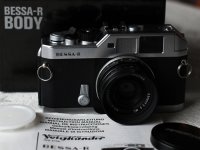
And in the film days there was the Voigtlander Bessa range. I had one and it was lovely. I sort of regret selling it, and that lens.

BR1.jpg
 
Last edited:
True, but...

For a brief moment there was another show, very much off-off-off Broadway, the Epson R-D1: https://www.trustedreviews.com/reviews/epson-r-d1-digital-rangefinder-camera Yes, for those of us who remember the joys of dot matrix printers, that Epson, the printer makers.

I've never seen one in the flesh or come across anyone who has. The body, it seems, was made by Cosina-Voigtlander, who also supplied the lenses while Epson handled the electronics. Read the review above to see what one reviewer thought of it at the time.

you could also have the Pixii (https://pixii.fr/)

but just like the R-D1 and unlike the Leica that’s not full frame either. (I did quite specifically say full frame digital)

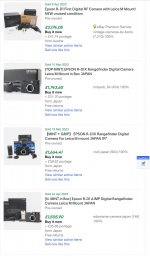
BTW R-D1s in good nick go for M8+ money… and the pixii starts at about €2700 (cheaper than the M, but hardly peanuts)
 
  • Like
Reactions: zx9
IMG_3223.jpeg

rangefinding is such a niche thing (especially digitally) that even an eighteen year old secondhand epson goes for brand new X-Pro3 money…

And that folks is the “big fuss” about THE Leica. It’s a rangefinder. It’s a niche thing. It’s got a stack of real heritage.

But if one doesn’t want a rangefinder, then seriously pass it by.
 
If Leicas were lamps then I guess more folks would actually benefit from having one (and know how to use it)
 
And in the film days there was the Voigtlander Bessa range. I had one and it was lovely. I sort of regret selling it, and that lens.
They were good, weren't they? Very good value for money.

I used a Voigtlander Heliar 15mm lens on a Bessa L in film days and it was an eye opening combination, as close as you could get to the Zeiss Hologon ( https://www.bhphotovideo.com/explor...ic-camera-review-zeiss-ikon-hologon-ultrawide ) for reasonable money (and it was 1 and a bit stops faster)...

Opticians West Swindon Voigtlander 15mm 25.JPG
 
Last edited:
They were good, weren't they? Very good value for money.

I used a Voigtlander Heliar 15mm lens on a Bessa L in film days and it was an eye opening combination, as close as you could get to the Zeiss Hologon ( https://www.bhphotovideo.com/explor...ic-camera-review-zeiss-ikon-hologon-ultrawide ) for reasonable money (and it was 1 and a bit stops faster)...

It was a lovely camera and I did read that the patch was brighter than Leica ones. Of the camera and lens I think I wish I had that lens a bit more. I've looked for another but they do seem hard to find. I liked that one because it had a conventional focus ring rather than the finger twiddle thingy (I don't know what they're called but I hope you know what I mean) as I've never liked those. I could buy another for £200-£300 or so from Japan.

I might put an ad in the wanted section just in case anyone has one they're willing to part with as I've wanted one since I sold mine.
 
They were good, weren't they? Very good value for money.

I used a Voigtlander Heliar 15mm lens on a Bessa L in film days and it was an eye opening combination, as close as you could get to the Zeiss Hologon ( https://www.bhphotovideo.com/explor...ic-camera-review-zeiss-ikon-hologon-ultrawide ) for reasonable money (and it was 1 and a bit stops faster)...

View attachment 389137

I would choose the Voigtlander above a Leica any day :)
It's like choosing a Quattroporte over a Passat :)
 
I trialled an M6 way back in about 1993 or so. Had it for a couple of weeks, put a few rolls though it. I found it awkward to use, mainly due to the focussing system. I had many shots not quite in focus. The rangefinder system is ok for static subjects, but very difficult for anything moving. I found it fairly useless for action. Plus I just didn't get used to the viewfinder framing for different lenses (I only tried a 28mm and a 50mm lens though). Having used mainly SLRs, it seemed to be a very backward step for me; I'd been shooting action and even some sports with a completely manual system. Not a chance I could do that with the M6. I also found the film insertion and replacement system far too fiddly, and really not good in inclement conditions or where I needed to change rolls quickly.

What I did like, was the build quality; everything felt so well made and put together. The shutter is so quiet, the film advance so smooth. Made even top-end SLRs feel clunky and 'agricultural'. I didn't really see the benefits of the fabled Leica lenses, as I just didn't get enough shots in sharp focus compared to what I was used to getting. I've seen many shots taken with Leicas and other cameras, and I think the benefits are mostly mythical. This was when AF had matured sufficiently to be giving photographers pin-sharp images, so hardly any pros that I knew were using Leica kit. The small size was a bonus for travelling with though. I returned the kit as it just wasn't what I needed, and would have been extremely expensive over simply adding to my existing (Nikon) SLR equipment. I think the kit would have cost me over £2000, for just the camera and two lenses, with no decent flash capability either. It was nice to have a play, but beyond that I really wasn't bothered.

I can see why such things appeal; If you work quite slowly and methodically, and have time to compose shots etc, then it could be a great tool. I can see why such things were popular 70+ years ago, but technology has long since improved. Such cameras are anachronistic and perhaps even counter-intuitive to 'modern' photography, but are surely still valid as creative tools. Many people love Leicas, good luck to them. Their value today is surprising, and I think much more to do with mythical qualities than anything else. Would I have one today? Possibly. I don't think I'd pay for one though. I just don't see what the fuss is all about...
 
The rangefinder system is ok for static subjects, but very difficult for anything moving. I found it fairly useless for action.

Hi and welcome Abdi. Great 1st post :D

One thing you can do with rangefinders or any other camera that gives you control is ignore focusing on the subject all together and go hyperfocal or zone. I sometimes do this when using manual focus lenses on my modern mirrorless cameras and it can be a quick way to shoot as once you've set the lens to the required distance and dialled in a suitable aperture and shutter speed all you have to do is frame the shot and press the shutter button.
 
On Pentax sites, it is rumoured that the new film camera project they are working on may be a rangefinder, as they've not done that before. It's just rumour, but since they've introduced the K3iiiMono DSLR, they are firmly invading previously Leica-only (well maybe Sigma too a bit) territory. Lots of conjecture.
 
If you work quite slowly and methodically, and have time to compose shots etc, then it could be a great tool.
Interesting comment.

The Leica was sold as the fastest camera to use for press and observational work. People like Henri Cartier-Bresson made a point of the ease with which it could capture a "decisive moment". Personally, I found the M3 to be the "fastest" film camera in use. It's true that digital cameras are now much faster ("see, point, shoot") but the Leica and similar rangefinders were the speed giants of their day. The other thing is that they're surprisingly unobtrusive by the standards of their time, so your subject can be captured candidly and without intrusion...

Man feeding pigeons Bristol Leica M3 08.jpg
 
with 28mm and f8 a rangefinder is point and shoot. With (say) 90mm and f2 it ain’t

A rangefinder isn’t a mythical thing, it’s a rangefinder, it’s different to an SLR and has a narrower operating windows, which by definition makes it niche.

some folks like mechanical watches over smart ones, or a physical chess set over a computer game, perhaps in the future a driven car over a driverless one

it’s nice to have choices
 
The Leica was sold as the fastest camera to use for press and observational work. People like Henri Cartier-Bresson made a point of the ease with which it could capture a "decisive moment".
Sure, when the first Leica cameras were developed, they were far quicker and more convenient to use than other types. They enabled people like HC-B to burn though lots of film, to get closer to that 'decisive moment'. I read once that HC-B printed perhaps one in 500 of all frames he shot. That's quite an expensive method. SLR cameras quickly become the favoured tool of many professionals, for many reasons. They're (mostly) simply more efficient photographic tools (for film photography at least). WYSIWYG viewfinder for one, TTL metering in most SLR cameras, no parralax issues, far greater range of lenses available, etc. Having shot in demanding situations with both types, I'd choose a SLR over a rangefinder any day. Just better for that kind of work. HC-B did work quickly, and rattled off many frames when shooting a particular image, but his style of photography suited the use of a rangefinder more than others. As reportage photography developed, so too did SLR camera technology, to the point where rangefinders were more or less all but abandoned. I do sometimes wonder, what images HC-B could have produced, had he had more modern equipment.

Returning to the subject of the OP; the 'big fuss' about Leica seems to be based more in mythology than anything else, these days. Leicas were of course once the pinnacle of camera technology, for reportage style work at least, and certainly the most desirable brand. Once it was clear the rangefinder wasn't popular any longer, they successfully repositioned themselves as manufacturers of the highest quality photographic tools available. Leica was a brand synonymous with quality. So they remained desirable products. The brand carries with it a mystique that no others can. I see that they now seem to position themselves more as a luxury brand now than anything else really. They have stayed true to the ethos of producing very high quality photographic tools though; it isn't just a fancy badge on some cheap tat. You are still getting something exquisite and quite special. I must admit I do want one, simply 'because Leica', but I personally don't see owning one will enhance or improve my photography in any way. Others may differ in opinion of course.
 
with 28mm and f8 a rangefinder is point and shoot. With (say) 90mm and f2 it ain’t

A rangefinder isn’t a mythical thing, it’s a rangefinder, it’s different to an SLR and has a narrower operating windows, which by definition makes it niche.

some folks like mechanical watches over smart ones, or a physical chess set over a computer game, perhaps in the future a driven car over a driverless one

it’s nice to have choices
Yes, totally. I for one am glad that we still have brands like Leica and Hasselbald, producing stuff I'll probably never buy, but which can enable others to be creative. Brands which may heve become anachronistic, but which still focus on making things as well as possible. We need such an ethos especially in todays instantly disposable world.
 
As reportage photography developed, so too did SLR camera technology, to the point where rangefinders were more or less all but abandoned.
That's something of a myth, in my experience.

As late as the 1990s, I came across working photographers who were still using either rangefinder cameras or twin lens reflexes, aquired many years before. I also came across several amateur photographers who were doing the same. People who had a substantial long term investment, both financial and intellectual. in tools that satisfied their needs weren't motivated to change to new tools.

The sales of rangefiders dwindled but even in 1999 Cosina spotted a substantial gap in the market and introduced the new Bessa rangefinders and a series of highly regarded lenses to go with them. They produced 12, 35mm models and a (massive) 6x9cm folder, which was launched in 2009.
it isn't just a fancy badge on some cheap tat.
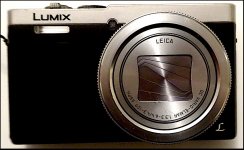
Agreed, but It appears on both Panasonic branded and Leica branded cameras made by Panasonic...

Camera Panasonic TZ70 HX90 DSC00050.JPG
 
I think Leica stuff is brilliant.
I had an R9 with 90mm f2 and loved it.

That said, 35mm cannot hold a candle to medium format so now I'm a Hasselblad fanboy.
Another brand with a cult following.
 
That's something of a myth, in my experience.
Well, sales figures would suggest that it isn't . Rangefinder sales dropped off a cliff once SLRs took hold. Many brands stopped making them or just disappeared altogether. Leica were pretty much the only recognisable brand selling a rangefinder camera system, by the 80s and 90s. I met/knew professionals that did use Leicas, but often to complement a SLR system. I didn't see many using exclusively Leica cameras. That's not to say there weren't people out there; we know that there were many who did. But they were vastly outnumbered by SLR users. The SLR changed photography. For the better, imo.
 
Back
Top