What did I do wrong?

cardiff_gareth

Suspended / Banned
Messages
2,734
Name
Gareth
Edit My Images
Yes
So this is the first time developing at home 120 film. 35mm, no probs, I've got that down to an art but 120 was new to me. I watched a YT video as you do and the dude said to remove the paper till you see the end of the film and rip this off. He said it was okay as you've got about 2 inches before the frame. Then get everything lined up etc. I did the rip off excess paper thing, got it all lined up and got my wife to then zip up the changing bag with me holding everything in place.

On a side note, 120 film loading to a reel is a bit different isn't it and not as straight forward as 35mm!

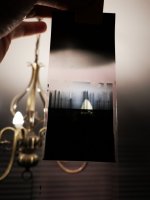
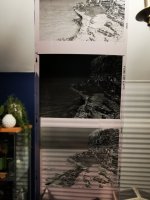
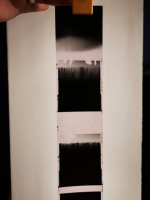
Anyway when I get the negs out I'm greeted with this. The negs are dark in some and not others as I was experimenting with different settings on the metering app as well as red filters.

Have I inadvertently done this when getting rid of the excess paper?

The camera usually has colour film in it that I get developed at a lab and the negs are always fine so I don't think the camera or film back is at fault.

Thanks.
IMG_20220114_200233.jpg


IMG_20220114_200325.jpg


IMG_20220114_200401.jpg
 
You've got damage to the emulsion in that first picture. Edge markings look ok, so I'd venture that it isn't a developing issue as such.
Could it have been exposed to light while you were loading?
 
Loading into the camera? Can't see how as with the Bronica you hand load it till the arrows line up and then stop. Then you put the back together to make it light tight and wind on with the camera crank handle to frame 1 so I don't think it's happened then.
 
I've never got rid of the excess paper and on my cameras the first frame is at a guess usually about an inch from the end so I would have thought there would be a high chance of light getting in. TBH I find 120 easier to load on a spiral than 35mm and I always do everything in the bag with 120.
 
Thanks :)

You can see the fogging from me exposing the end of the film to light when cutting that excess paper off at the top of the negs in image 1 and 2 but that weird effect is frame 1 and 2 where I presume no light could have got to as the paper backing would have stopped that?

I'm puzzled now as potentially its not anything I've done?!
 
I've always wound the film on to the spiral with the paper dangling until it comes to the end. The main gotcha I know of with 120 is making sure that the film is wound tightly onto the spool and secured properly when the film is removed from the camera, and as you use colour film in this size without problem we can discount this.
 
I don’t understand the YT advice to remove excess backing paper before going into the changing bag - that seems to me to present a strong risk of fogging.
I'm firmly with Kevin on this one as I close the bag before starting to unroll the backing paper towards me. There then comes a point where you can feel the end of the film and I then start unrolling it away from me to separate it from the backing paper and to start feeding it onto the reel. If you haven't cut this film up yet, I'd suggest using it to practice loading the reel with your eyes closed, then later in the changing bag.
 
Loading into the camera? Can't see how as with the Bronica you hand load it till the arrows line up and then stop. Then you put the back together to make it light tight and wind on with the camera crank handle to frame 1 so I don't think it's happened then.

No mate, onto the reel to develop.
 
Well lesson learnt there with the excess paper. I won't be making that mistake again.

There's a roll of Delta 100 in there at the moment so I'll have to wait until that's finished.

If the roll of Delta is fine once developed then it must have been something I've done somehow. If it has the same problem then maybe the shutter in the lens has developed a fault?
 
With 120 film, you need to be slow and gentle removing the backing paper as a rapid movement between the paper and film can generate static electricity which causes sparks to hit the emulsion . This behaves the same as light and causes dark marks on the film.

That method of loading the film onto the spiral strikes me as dangerous but did not cause the problems here are the film rebates are clear.
 
Some of the frames are mostly black. This is either massive overexposure or some part of the camera is seriously leaking. The good images in the last photo look to be from a Bronica ETR model (6 X 4.5) but the first two films the black areas are much more than that. I suspect a faulty shutter in the lens but it could also be the blanking plate behind the mirror.

The ERT range are all very old now. The camera might well gave worked flawlessly previously but it is going to give up the ghost at some point and that point might be now.
 
I wonder if some of the problems are because it hasn't wound on properly. My SQ-A has done that once, it's hard to understand how it might happen but I could clearly see the frames overlapping on close inspection. Also did you change lenses whilst using the film? As a belt-and-braces I tend to put the dark slide in the film back when changing lenses
 
I did the rip off excess paper thing, got it all lined up and got my wife to then zip up the changing bag with me holding everything in place.
"There's your problem, right there!" -- Adam Savage

I think you exposed the film when you removed some of the paper outside of the dark bag.

Editorial rant: This is why I rail against YouTube, where anyone can declare themselves an expert even thought their qualifications are only in their own mind. Contact whoever did that video -- he or she owes you a roll of film! (Following anger directed at them, not you: ) I can't think of one good reason why anyone would remove any of the backing paper prior to reeling up. It's a silly idea and whoever came up with it is not fit to mingle in polite society.

Gosh, sorry, where was I?

Next time, take the exposed (and hopefully sealed with that sticky paper/tape thing) roll into the darkbag unmolested and then close it up just like you'd do before opening a 35mm can. Remove the backing paper entirely in the dark, put it aside and reel up just the film.

More detail: Rip off the tape, start unrolling the film and separate it from the paper, then start unrolling until you find the end of the film -- I suspect this might be your YouTube cretin's reason for trimming, as it is a little tricky to find the end, but not impossible. I sometimes slide a thumb, print down and nail up, along the underside of the paper until I feel the edge of the film. Then simply pull the film away, continue unwinding (letting the film roll itself up into its own little roll) until you get to the end where it's taped to the paper. Peel that off; I fold the tape down over the other side of the film, which helps give the clip on my (metal) reel something to grab.

Just to be specific -- and you didn't specify if you did this or not -- only the film, not the backing paper, goes on the roll.

If in doubt, buy a couple cheap rolls of film, unroll them in the light and practice putting them onto the reels. That's what I did. Well worth the $4 (or $8) to practice*.

* (...until about three months later. I'd left the paper on the plastic reel and at some point stuffed it into a box (probably mistaking it for an exposed roll of film), and somehow managed to load this into my Mamiya C330. Shot the whole roll (three shots by a photographer friend whose work I loved) and couldn't figure out why the finished film said "UNEXPOSED". Had Ilford done a roll backwards? It wasn't until I got it into the dark bag that I discovered I had just shot a roll of backing paper. The kids learned some new curse words that day.)

Anyway, be wary of anything you see on YouTube, especially if it's about film -- and if you do, to paraphrase Jack Weinberg, don't trust anyone under 40. If they weren't around before digital, they likely haven't had the experience of learning film from film people like us dotards have. Best yet, ask here, or on the DPReview film forms (one of the few sane places in that house of madness) -- plenty of old film-heads to guide you!

Here's the good news... mistakes like these, you are likely NEVER to repeat. :)

HTH! And sorry about your lost pics.

Aaron
 
Last edited:
I have little to add to the excellent replies written above, except to say for me, a changing bag doesn't work. It all gets too hot, sweaty and mixed up. I much prefer a proper dark room - I use a toilet with no windows, and a cloth hung inside the door for extra light-tightness. I can sit there for ten minutes and still not see anything.

I sit on the loo in the dark with a little table in front of me, everything laid out in order and work through the tasks until the film is in the lightproof tank.

I too find 120 much, much harder to load than 35mm. For me, the extra width of the film seems to leave it less secure in the reel, and there have been times where I have had to pull it out and start again a couple of times.

After carefully undoing the tape, or rubber band, holding the exposed roll tight, I carefully work my way along the backing paper until I get to the film. I hold the roll whilst I do this, to prevent it all unrolling. I once let everything unroll and dangle below my hands, but then I had a job finding the end of the film which had flopped down. By holding everything, I work my way inch by inch until the loose end of the film pops out. Then I start to load the reel, letting the paper dangle below. When I reach the point where the film is taped to the paper, I no longer unpeel the tape, but I cut the film. I do that since, as I explained, the room is very dark and my eyes have adjusted, the one time I slowly unpeeled the tape (and it was very slow) I was struck by the static lightshow going on. I suspect the sparks were too faint to affect the images some inches away, but it scared me - so now I cut.

Drop the paper to the floor, or drape it over my knee, and complete the tasks with the reel and tank to get it light-tight.

I hope that helps
 
The static sparks are a intermittent problem. And usually are worse in very dry conditions. However they rarely cause an actual problem. It is usually prevented by peeling of the film very slowly. I have processed literally thousands of 120 films. and have occasionally seen the static sparks, but it has never caused a problem to a film.
It is something to be aware of, but not too anal about.

Where your film is black to the edges. that is caused by fogging to the light. probably when you shortened the backing paper.
The other problems are not processing related.
 
Last edited:
Interesting -- would the humid interior of a dark bag help reduce the chances of them happening?

Aaron

Possibly, but it is more about the dryness of the film and backing paper.
But it is not really a significant problem, unless you rip the adhesive from the film very rapidly.
If it were, film makers would have changed the adhesive long ago.
 
Possibly, but it is more about the dryness of the film and backing paper.
But it is not really a significant problem, unless you rip the adhesive from the film very rapidly.
If it were, film makers would have changed the adhesive long ago.
Cool, thanks. I've only ever done 120 in the bag so I've never seen this. I do peel slowly so as not to damage the film -- but now I will peel slower!

Aaron
 
Interesting to hear what other people do. I never unroll the whole film, I just unroll the backing until I find the end of the film and then start feeding the film into the spiral and it separates from the backing paper as it goes in. I do it this way because I suspect it reduces the risk of dust and scratches.

I always use a changing bag (small tent thing now but use to be just a bag) and don't find it hot or sweaty at all.

Personally I think think the "trick" to 120, and probably any film, is to make sure the film is going straight on to the spiral. Imagine if you had the spiral at an angle so that its axis was not horizontal then the film would not be going in evenly and I think that is what can make it kink a little and jam.
 
Cool, thanks. I've only ever done 120 in the bag so I've never seen this. I do peel slowly so as not to damage the film -- but now I will peel slower!

Aaron
I found, back in the halcyon days of Fuji Acros in Quickloads, that it was possible to get a static discharge when extracting the sheet in the darkroom.
 
Last edited:
Thanks all, I think I did change the lens over without the dark slide in so that could have been an issue.

I'll try to get this Delta roll finished so I can process it and see how that fairs.

Good call re the bathroom, I'll use the en suite here as it has no windows in and with the door closed it's pitch black in there.
 
Good call re the bathroom, I'll use the en suite here as it has no windows in and with the door closed it's pitch black in there.
Suggestion: Sit in there for a few minutes and see what it looks like. I had to free a jammed camera in a windowless hotel bathroom. Pitch black with the door closed, but after a few minutes it seemed like there was light everywhere. Luckily I saw it but the film didn't.

Aaron
 
Interesting to hear what other people do. I never unroll the whole film, I just unroll the backing until I find the end of the film and then start feeding the film into the spiral and it separates from the backing paper as it goes in. I do it this way because I suspect it reduces the risk of dust and scratches.

I always use a changing bag (small tent thing now but use to be just a bag) and don't find it hot or sweaty at all.

Personally I think think the "trick" to 120, and probably any film, is to make sure the film is going straight on to the spiral. Imagine if you had the spiral at an angle so that its axis was not horizontal then the film would not be going in evenly and I think that is what can make it kink a little and jam.

I'm of exactly the same opinion on all you've said here.
 
I am probably one of the few here who uses stainless steel centre loading spirals. so I never have the problem of sticking film.
However beginners to the system often have problems with kinking film and the resultant crescent shaped black marks on their developed films.

This is a very short learning curve. And is best overcome watching TV and sitting in your chair, repeatedly loading you spiral with a salvaged film.
By the end of the session you will never have a problem loading a stainless spiral again. and you will be able to load one in less than ten seconds.
the secret is curving the film across the palm of your hand, between the curve of your fingers and base of your thumb. You do not actually touch the surface of the film but just put a slight pressure on its edges to form the necessary curve to allow it to flow between the rings of the spiral.

Found this on Youtube among some other rather poor examples. but this guy is experienced. and has clearly done many films.
View: https://youtu.be/HnoJCRtXTpg
 
Last edited:
Suggestion: Sit in there for a few minutes and see what it looks like. I had to free a jammed camera in a windowless hotel bathroom. Pitch black with the door closed, but after a few minutes it seemed like there was light everywhere. Luckily I saw it but the film didn't.

Aaron
Good advice…… Obtaining 99% darkness is easy, it’s the other 1% that creeps in after you believe all is good that poses the problem.
 
Well to give an update.

Yesterday I finished a roll of Delta 100 in it so I got the dev tank, spool etc and went to the en suite which is an L shape, closed the door and waited 10 mins. Saw some light from around the door but it was really dull so I covered as much up as possible with my dressing gown and went around the corner where the light wasn't reaching.

We'll it took me about 15 minutes to get that blinking roll of film on the spool, probably more, it was hard as hell but I managed it and got it in the dev tank. Processed it and it's the same!

So I can discredit me with the excess paper rip off issue as the fault and its got to the the camera, or lens seeing as the shutter is in the lens.

Long story short I've decided to sell it, recoup some money and see what's around. Its now on eBay and had some offers already circa £300 for the outfit. I fancy a square 6x6 camera or a 6x9 so I suppose it's the push I needed to free up some cash and see what's out there.
 
How does a problem with camera or lens square with your experience of lab processed films being OK?
 
I presume when I used the lab I was shooting colour film and that was mid last year. Since then it sat on my shelf whilst I started my journey with 35mm black and white home film developing. I never plucked up the courage to try and develop 120 as the loading films onto dev spools put me off so it wasn't till this year, a good 6 months or so after using colour film did I put black and white film in it and develop it here myself.
 
Well to give an update.

Yesterday I finished a roll of Delta 100 in it so I got the dev tank, spool etc and went to the en suite which is an L shape, closed the door and waited 10 mins. Saw some light from around the door but it was really dull so I covered as much up as possible with my dressing gown and went around the corner where the light wasn't reaching.

We'll it took me about 15 minutes to get that blinking roll of film on the spool, probably more, it was hard as hell but I managed it and got it in the dev tank. Processed it and it's the same!

So I can discredit me with the excess paper rip off issue as the fault and its got to the the camera, or lens seeing as the shutter is in the lens.

Long story short I've decided to sell it, recoup some money and see what's around. Its now on eBay and had some offers already circa £300 for the outfit. I fancy a square 6x6 camera or a 6x9 so I suppose it's the push I needed to free up some cash and see what's out there.
Are you selling it as faulty?
 
Sounds very much like nothing more than a sticky shutter mechanism which can often be remedied at home.
Maybe I’ve missed some info somewhere in the thread but what brand and model camera are we talking about?
 
The shutter is battery powered iirc…… have you tried new batteries?
 
Also have you tried dry firing the shutter with film back and lens removed to asses the shutter operation?
 
The shutter is battery powered iirc…… have you tried new batteries?

Yes, first thing I did when I out the black and white film in it this year.

Also have you tried dry firing the shutter with film back and lens removed to asses the shutter operation?

With the film back off and the camera set to multiple exposure to allow the shutter to be cranked, the lens seems sporadic with remaining open for the correct time or, it doesn't close the shutter but cranking the film wind on handle closes it.
 
It’s a few years since I sold my etrs so I can’t assess one whilst trying to help.

Maybe someone has the same camera and is willing to talk you through some checks such as how the shutter should be operating etc at different settings.

Given how the camera worked fine several months ago, I wouldn’t personally rush into selling it without knowing the cause of the problem and the cost of repair.
 
Back
Top